Pickleball First-Step Reaction Drill: Train Faster Movement
A practical pickleball footwork guide covering split-step timing, transition movement, kitchen positioning, lateral steps, and safe lob recovery.
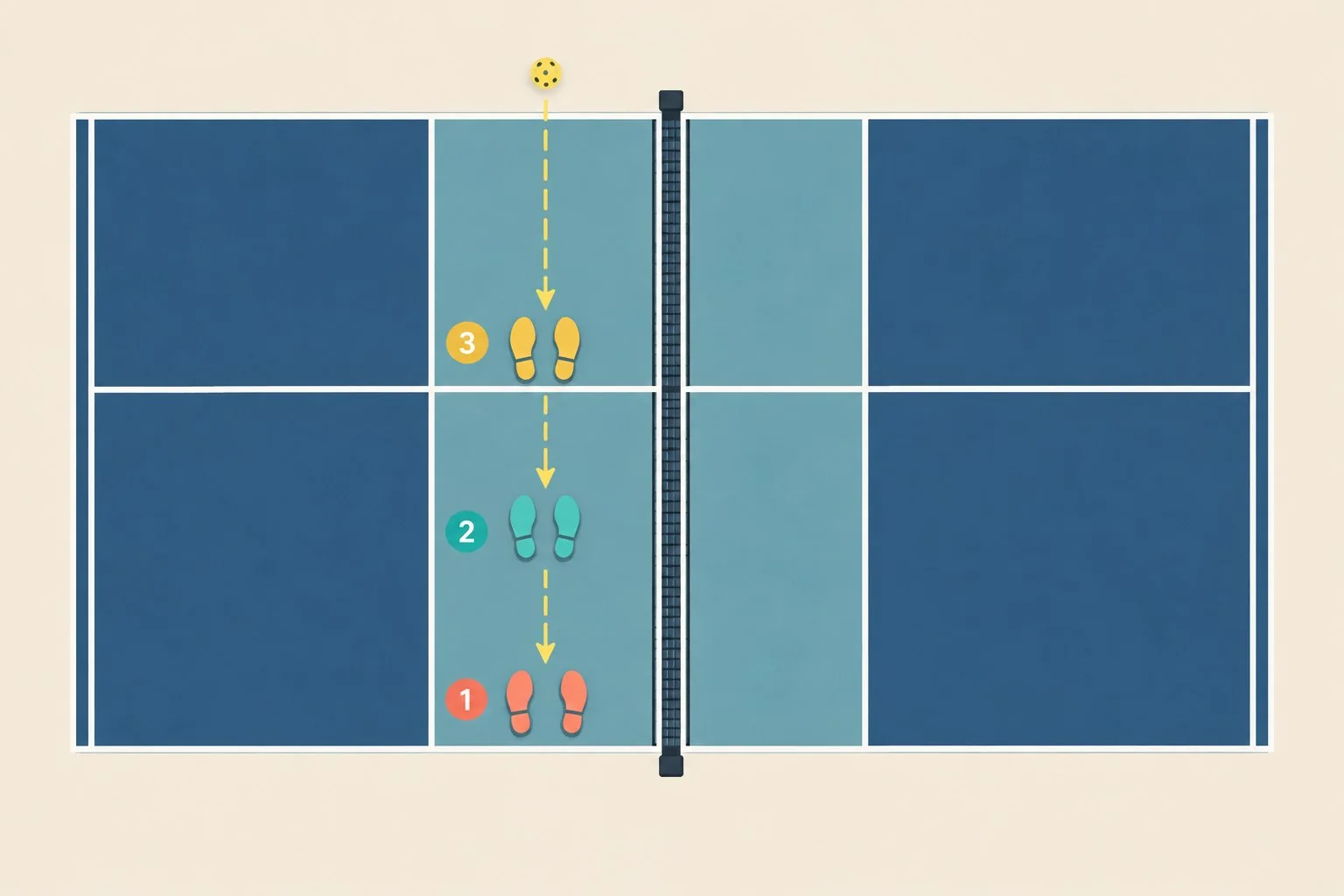
Pickleball footwork determines whether your best swing arrives on time. The useful goal is not to look busy between shots; it is to reach the ball with balance, keep the next option open, and recover before the opponent can attack the space you left. Start with the split step, then learn to cross the transition zone, hold the kitchen line, and turn safely when a lob takes you backward.
How to time the pickleball split step
A split step is a small, quiet hop that ends with both feet landing together. Keep the stance about hip-width, knees soft, and weight slightly forward on the balls of your feet. The key is the opponent’s contact, not the ball’s flight: begin the hop just before the paddle meets the ball and land as contact happens. That landing loads both legs so you can push left, right, forward, or back without first correcting a flat-footed stance.
Do it whenever the opponent hits: on a serve, during a third-shot exchange, and throughout a fast kitchen rally. Splitting early leaves you drifting before you know the direction; splitting late means the ball is already on you while your feet are still settling. A quiet landing is the practical test. If your heels slap down or your feet land very wide, make the hop smaller and keep your centre under your hips.
Move through the transition zone instead of camping there
The strip between the baseline and the kitchen line is useful only as a route. It is an uncomfortable place to stop because opponents can aim at your feet while you are too far back for a comfortable volley and too far forward for a stable groundstroke. After a third shot, take two or three controlled steps forward. If the next ball arrives low before you reach the line, stop, split, and play a soft reset; then move again when the ball gives you time.
The receiving team has a simpler pattern: hit a deep return and start forward immediately. The return and the run belong to the same decision. Keep moving while the ball travels, then split as the server or partner makes contact. Arriving at the kitchen with a balanced base is more valuable than sprinting so hard that the first volley finds you leaning.
At the line, keep your toes roughly six inches behind it, bend the knees, and hold the paddle in front of your chest. The default is to stay there. If you step in to finish a high ball, recover to the line instead of admiring the shot inside the kitchen.
Kitchen footwork: small steps keep options open
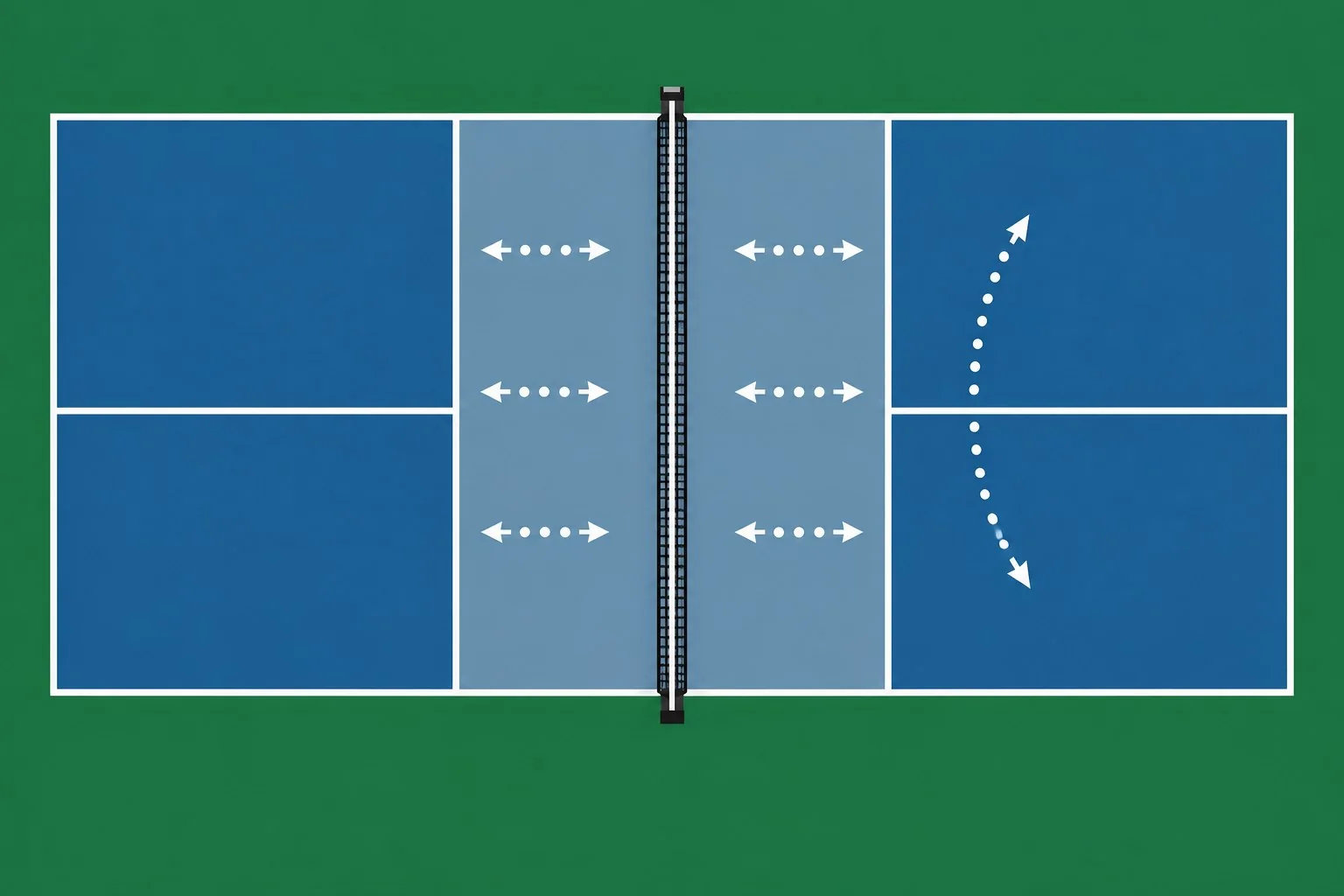
Dinks and body balls turn the kitchen into a side-to-side problem. Use a shuffle for short moves: push with the lead foot and let the trail foot follow without crossing. It keeps your torso facing the net and makes either side available. Use a crossover when the ball is farther away and speed matters, then recover as soon as you have played the ball.
Small adjustment steps are safer than one large stride. A long step can leave you frozen mid-motion when the opponent speeds up the next ball. If a dink lands wide, step toward it instead of reaching with only the arm. Contact stays in front, and the ball is less likely to float high. Your feet should keep making tiny corrections until the shot is finished.
Use a drop step for lobs
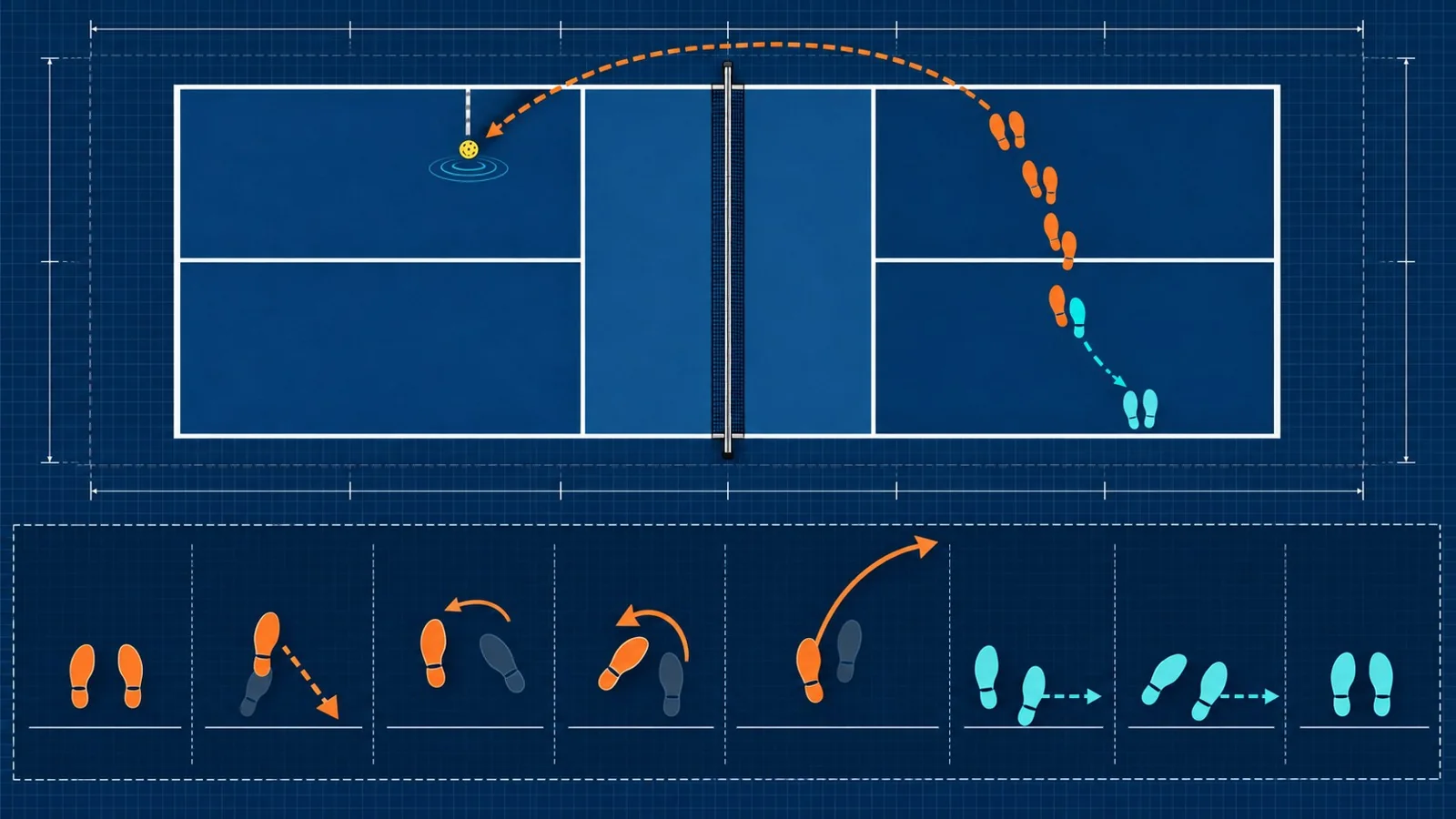
When a lob rises over your head, do not start by walking backward on your heels. Drop the foot on the side of the ball back at about a 45-degree angle and open the hips toward the flight. Move sideways or run while tracking the ball over your shoulder. This keeps your balance and gives you a better route to the bounce or overhead.
If you arrive under the ball in time, set your feet before the overhead and recover forward. If you are late, choose a controlled ball rather than a desperate jump. The goal is to re-enter the point with a playable target, not to turn a difficult chase into a second error.
Fix the footwork habits that cost points
Flat feet delay the first move. Reaching makes wide dinks rise. Stopping in transition leaves your feet exposed. Backpedaling makes a lob chase unstable. Failing to recover after an attack gives the next ball an open target. Even walking between points matters: arrive at your starting position before the score is called so your first split step is available.
You can train these patterns without a partner or paddle. Spend a few minutes on static split steps, then walk and split, then jog and land quietly. Shadow two or three steps through transition, stop, and reset. Add shuffle steps across a kitchen-line width, followed by drop-step turns on both sides. During live play, make one cue your priority for a week: land with the opponent’s contact, then add the return-and-run habit.
Footwork is not an advanced add-on. It is the platform underneath every shot. When the feet arrive early and stop under control, the swing has more room to work and the next decision becomes much easier.