Pickleball Footwork: 5 Drills for Better Movement
Five practical drills for split-step timing, lateral movement, transition control, and balanced recovery on the pickleball court.
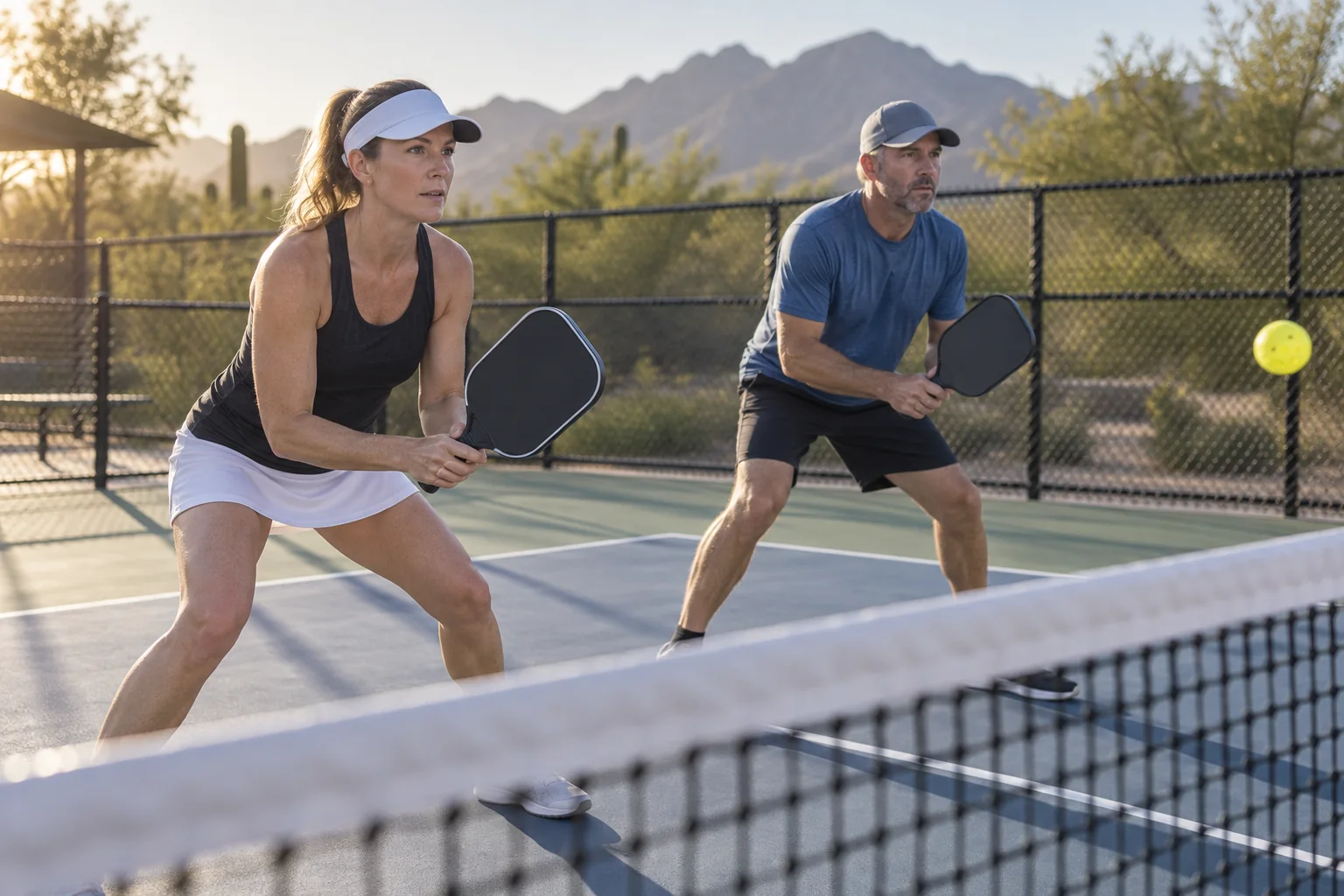
Pickleball footwork is the skill that gets you into position before the shot becomes difficult. Start with a ready stance, a well-timed split step, small lateral shuffles, and a recovery step after every contact. You do not need to sprint constantly. You need to arrive balanced enough to control the next ball.
What is pickleball footwork and why does it matter?
Footwork covers the movements that connect preparation, contact, and recovery: the ready position, split step, shuffle, crossover step, lunge, stop, and return to a useful court position. Clean movement gives you more time to choose a shot because your body is already organized when the ball arrives.
Stand with your feet slightly wider than your shoulders, knees soft, and weight toward the balls of your feet. Keep the paddle in front of your body. If your heels are heavy, your first step will be late even when your hands react quickly.
The split step is a small hop on two feet. Land as your opponent makes contact, not after you see the ball travel. For example, if the opponent strikes at 0.00 seconds and you land at 0.20 seconds, you have already surrendered part of the time needed to move. The aim is to land with both feet ready to push left or right.
How to improve pickleball footwork with five drills
1. Split-step activation drill
Stand at the kitchen line in a ready stance. Have a partner bounce a ball from the baseline or call “left” or “right.” As the cue occurs, make a low two-footed hop, shuffle two steps in the called direction, then return to center.
Complete 15 repetitions on each side. The useful measure is timing, not speed. If you jump early, you commit before reading the shot; if you jump late, you are still flat-footed when the ball arrives.
2. Figure-eight shuffle
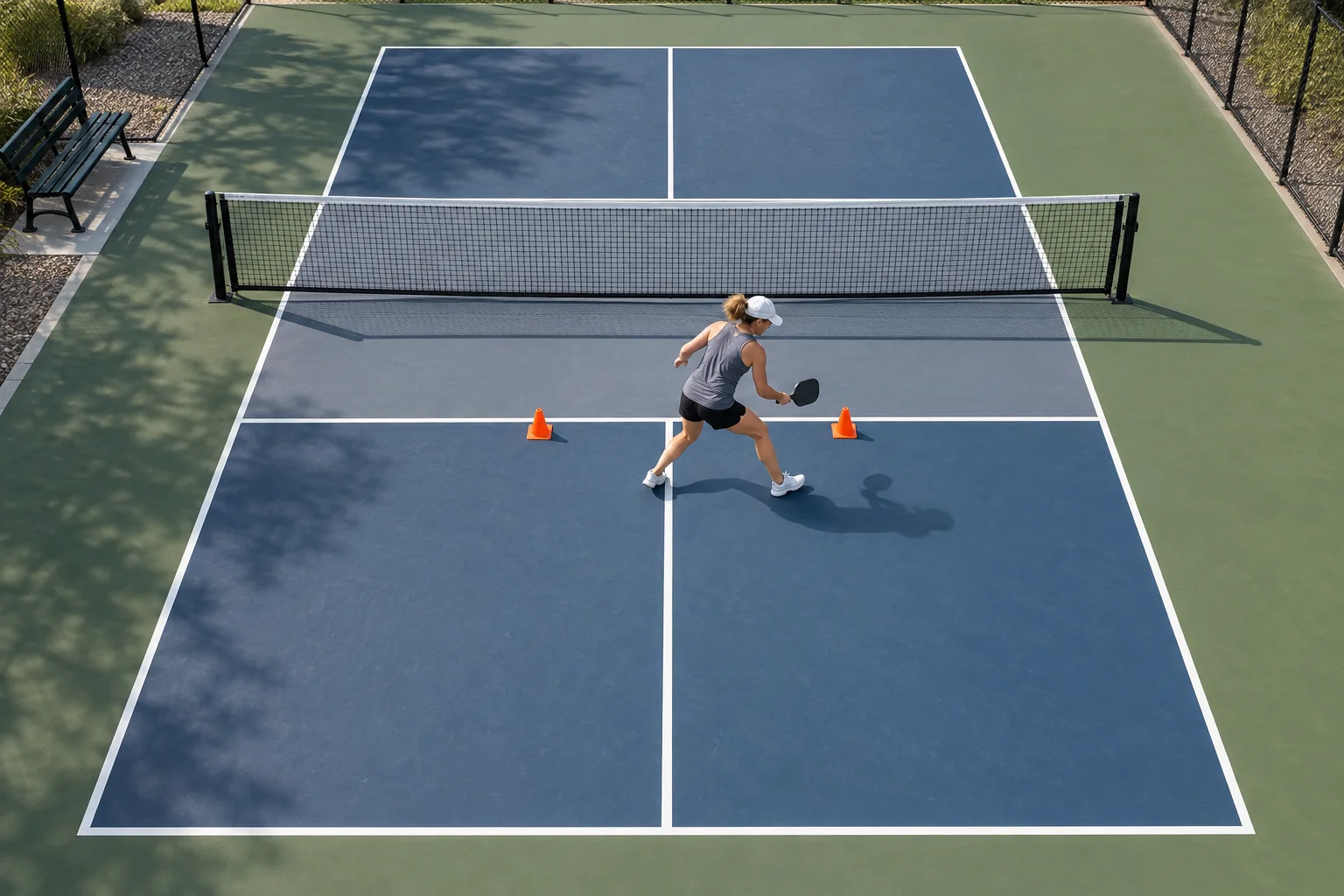
Place two cones or safe markers about 10 feet apart near the kitchen line. Shuffle around them in a figure-eight pattern while keeping your chest facing the net and your paddle in front. Do not cross your feet during the lateral portions.
Work for 30 seconds, then rest for 15 seconds. Three rounds produce 90 seconds of work and 30 seconds of rest; five rounds produce 150 seconds of work and 60 seconds of rest. Choose the shorter set if your posture collapses.
3. Transition-zone sprint and stop
Begin at the baseline. Move toward the kitchen, then stop around the service line with both feet stable, knees flexed, and your weight centered. Simulate a volley from that stopped position before recovering to the baseline.
Perform 10 repetitions. The stop is the point of the drill. In a rally, a controlled pause lets you block or reset a ball at your feet instead of striking while your momentum carries you forward.
4. Kitchen lunge and recover
From the center of the kitchen line, take a lateral step toward an imagined wide ball and reach with the paddle. Push off the outside foot and return to your starting position. Complete 10 repetitions per side.
Think in three parts: reach, contact, recover. Keep the lunging knee tracking in the same direction as the toes. Reduce the range if the knee collapses inward or your balance disappears.
5. Shadow movement drill
Call out a sequence such as “left, right, back, stop, lunge left, recover.” Move through eight cues without a ball, then rest for 30 seconds. Change the sequence each round so you respond to information rather than memorizing a route.
This drill fits in a driveway, gym, or clear room. Leave enough space to stop safely, and avoid backpedaling blindly.
How often should you practice pickleball footwork?
Use three short sessions per week. Fifteen minutes is enough for a focused routine: five minutes of split steps, five minutes of lateral movement, and five minutes of stopping and recovering. After two weeks, play a practice game to 10 points and count off-balance contacts. If you record six such contacts in one game, slow the drills down and prioritize landing and recovery before adding speed.
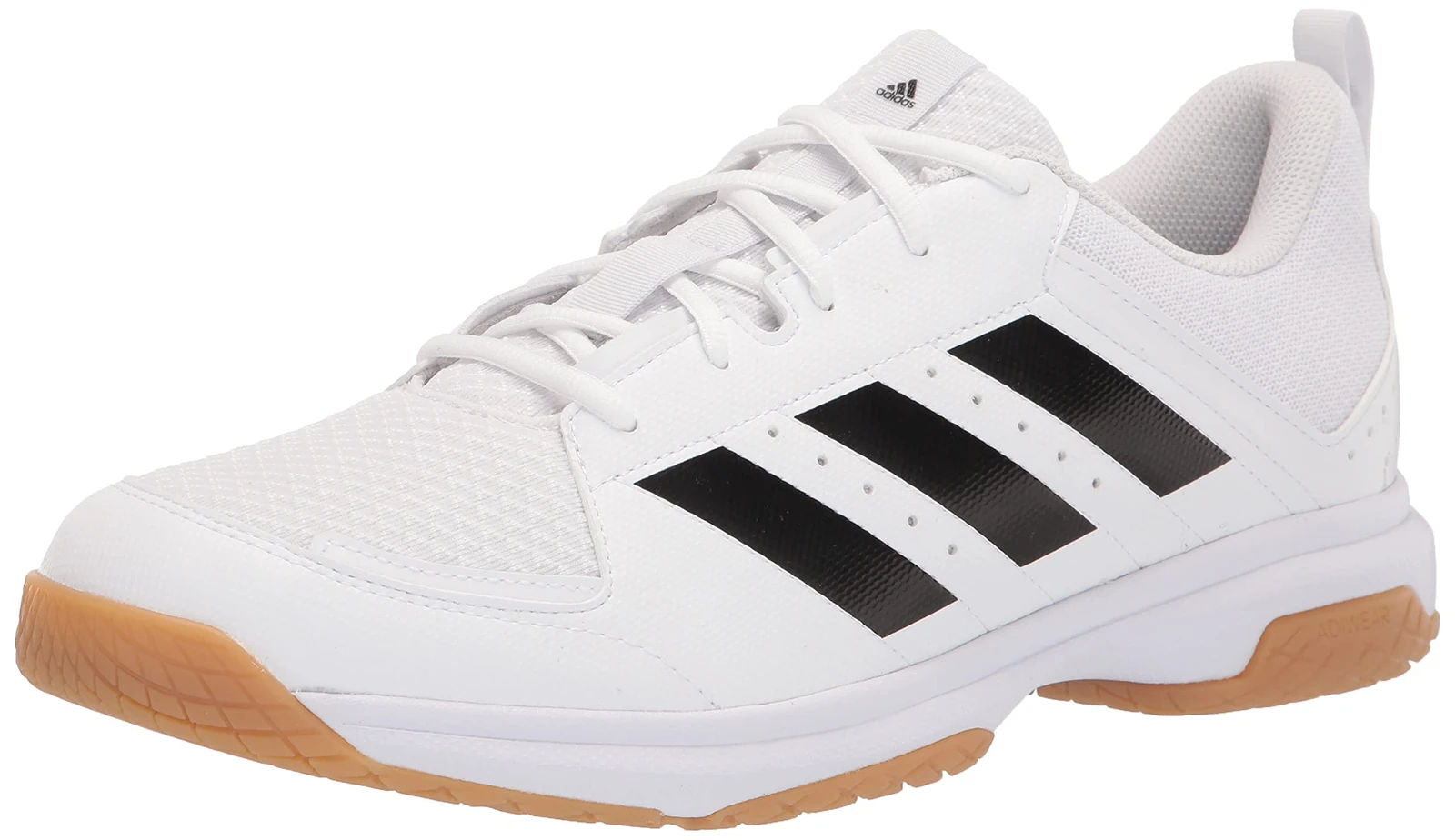
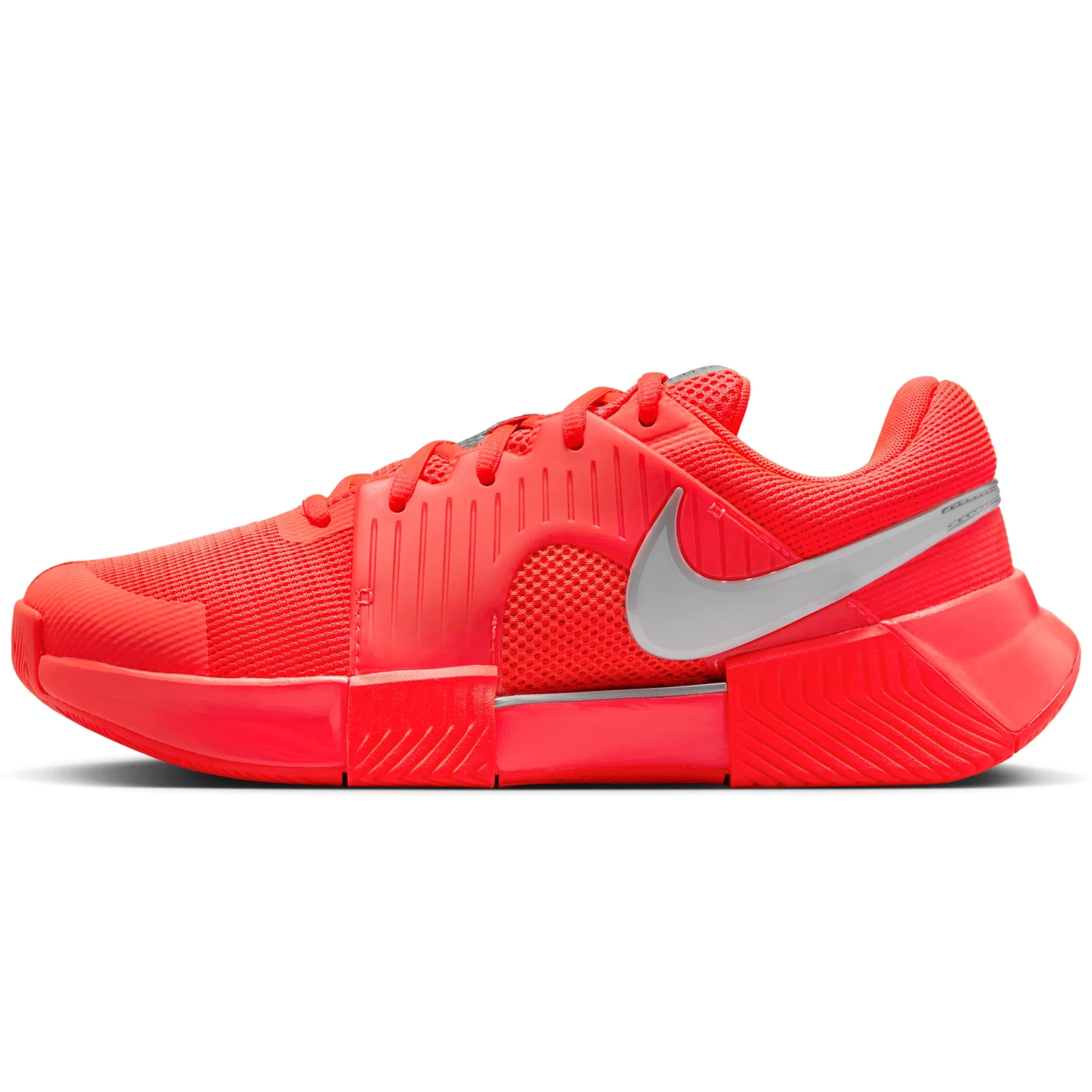
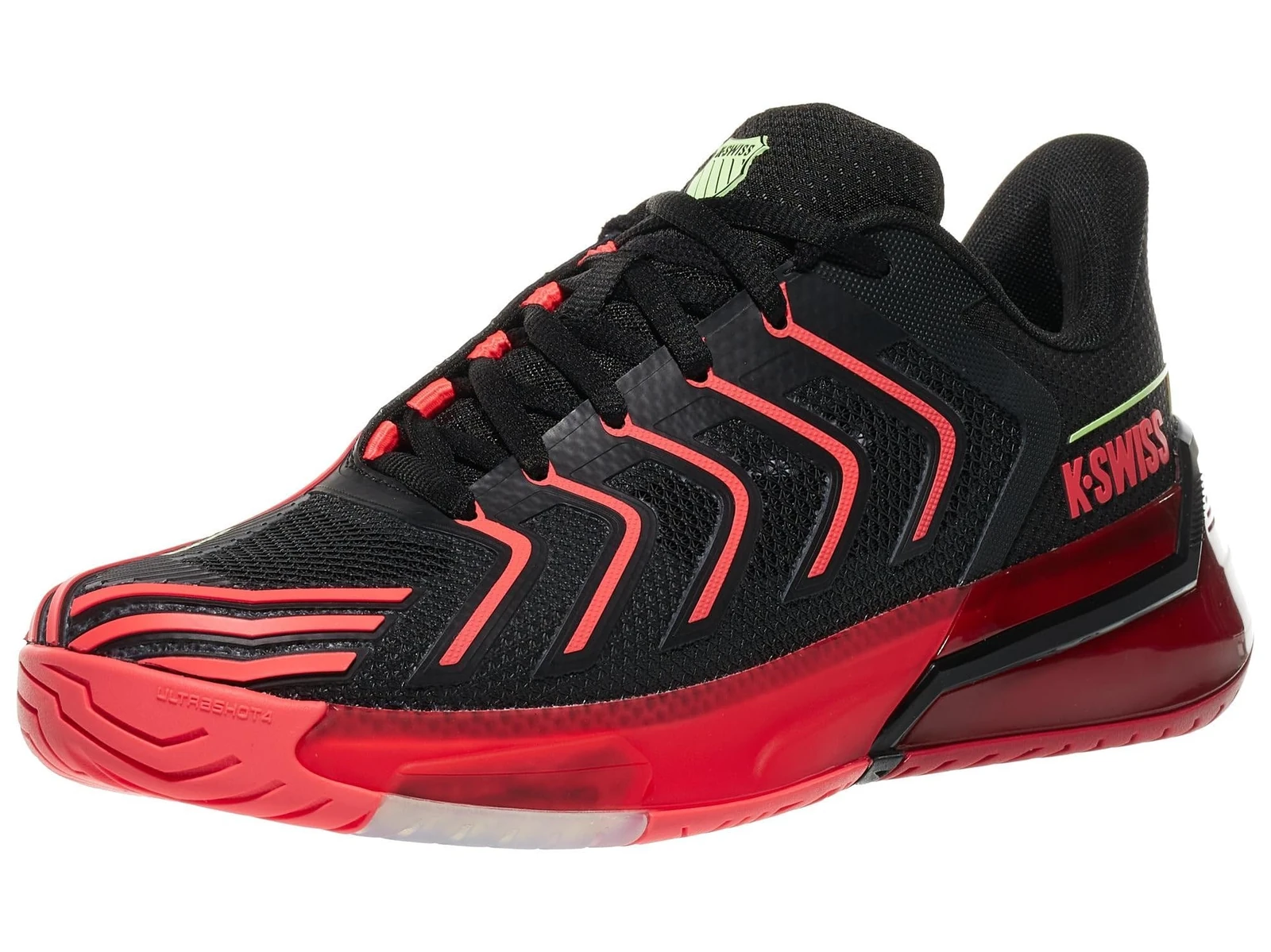
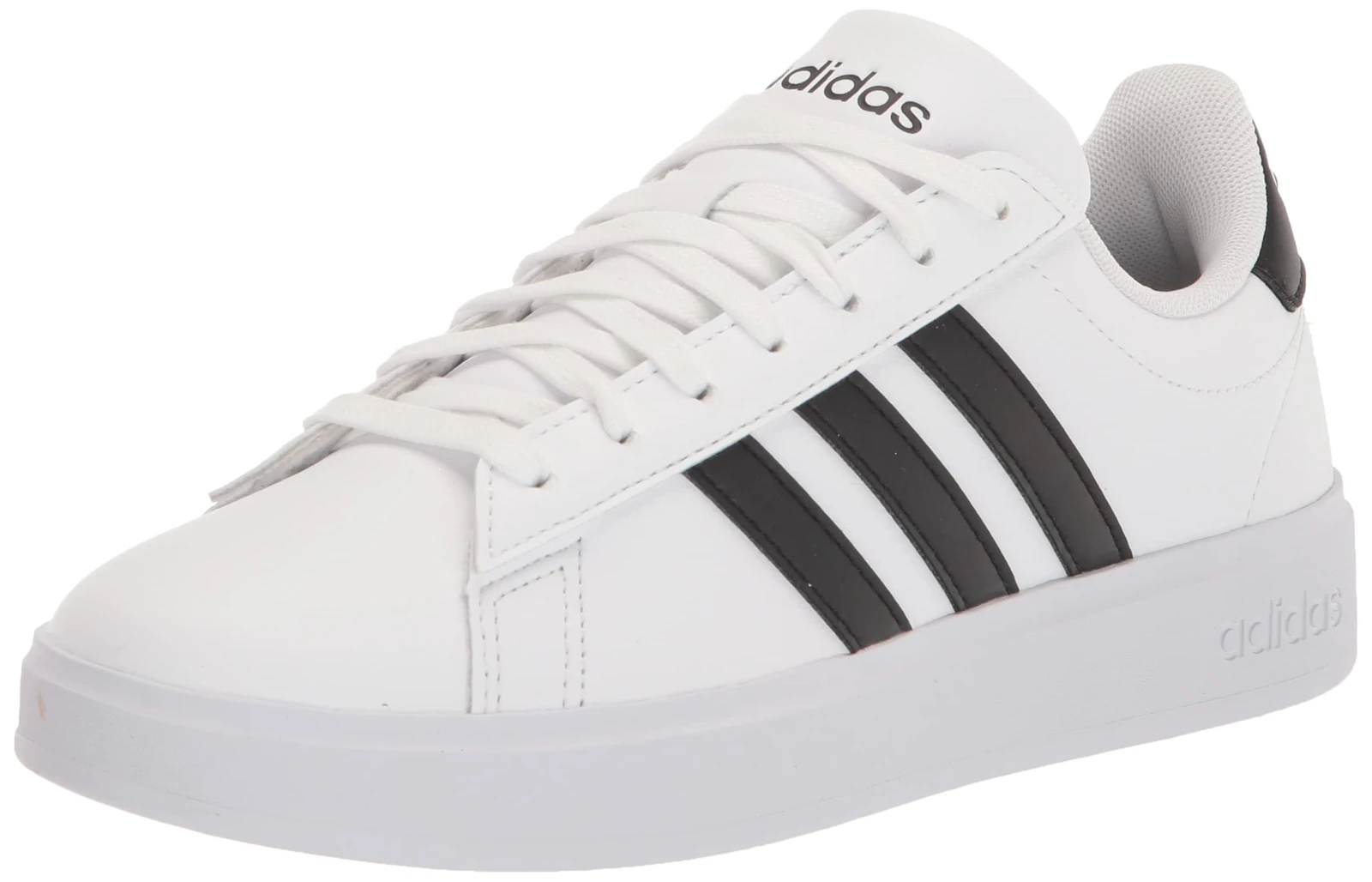
Court shoes with lateral support and a grippy outsole suit these movements better than running shoes, which are designed mainly for forward travel. Shoes do not fix rigid knees or poor spacing, but they can provide a more appropriate base for side-to-side movement.
What pickleball footwork mistakes should beginners avoid?
- Standing flat-footed at the kitchen line.
- Crossing the feet during a lateral shuffle.
- Reaching with the arm instead of taking adjustment steps.
- Continuing forward while contacting a low transition ball.
- Forgetting to return toward the useful middle position.
- Moving before the split-step cue is complete.
When a drill breaks down, do not simply increase the pace. Reduce the distance, make the steps quieter, and regain a balanced stance after each repetition. Better pickleball footwork comes from repeating the right positions, not from collecting tired steps.
Pickleball footwork FAQ
Can I practice footwork without a court?
Yes. Shadow movements, split steps, and lateral shuffles need only a clear, non-slip surface. Two safe markers can replace cones for the figure-eight drill.
Should I cross my feet when moving sideways?
Use a shuffle for short lateral movement because it keeps your base available for the next change of direction. A crossover can help cover more ground from the baseline, but practice it separately and finish in balance.
How large should the split step be?
Keep it small. You should land softly with both feet ready, not jump high enough to delay the first push-off.
What should I fix first?
Start with the ready stance and split-step timing. Once you can land as the opponent contacts the ball, add lateral shuffles, then practice stopping and recovering through the transition zone.