Pickleball Footwork: Stay Low, Split Step, and Move With Control
A practical footwork guide for staying low, timing the split step, using small adjustments, and recovering with control in pickleball.
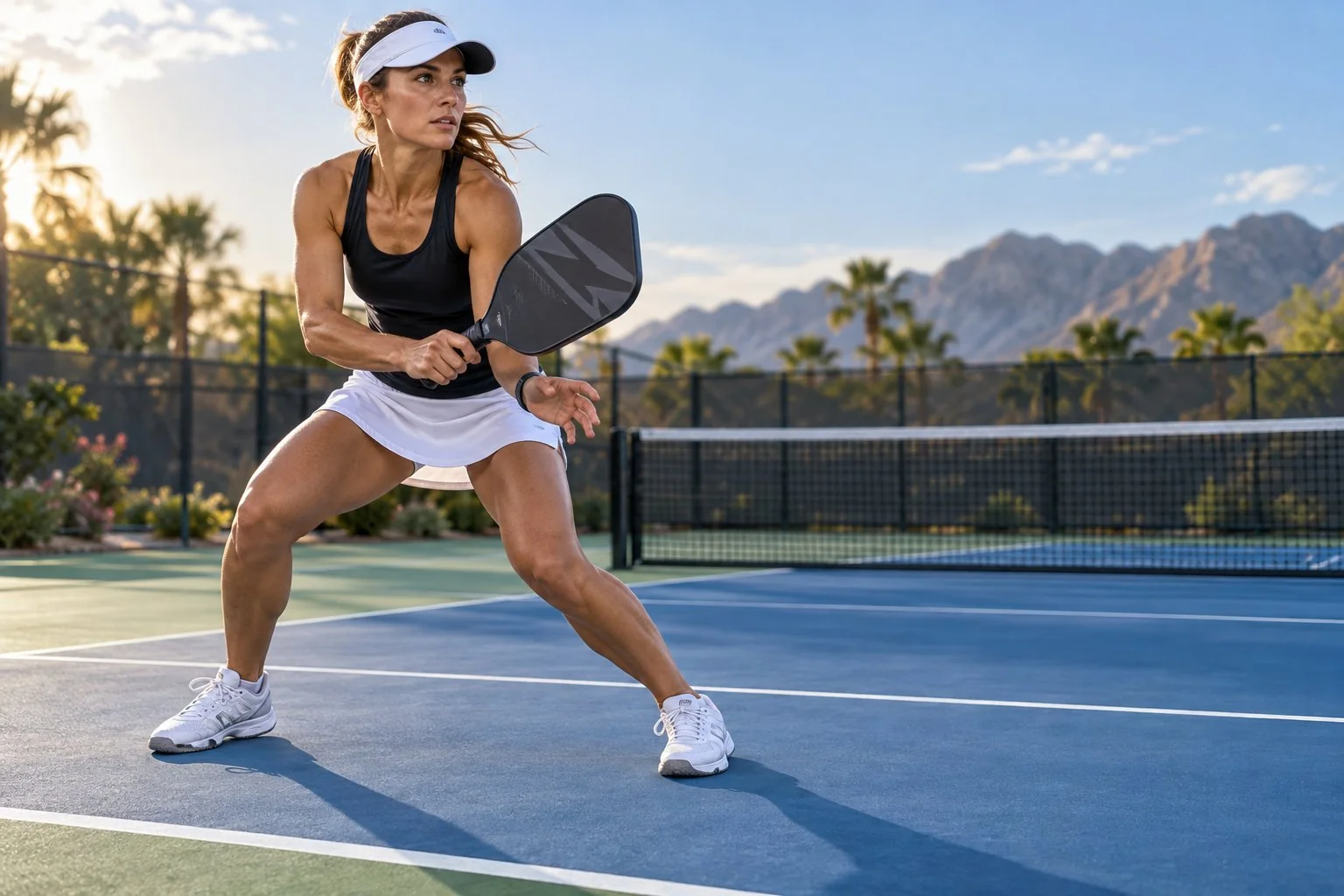
Reliable pickleball footwork is less about taking giant strides and more about arriving balanced for the next contact. A low stance, a well-timed split step, small adjustment steps, and a deliberate recovery path help you reach the ball without sacrificing control. These habits are useful for beginners and experienced recreational players because they reduce rushed reaches and make the court feel easier to cover.
Stay low without folding at the waist
Start from an athletic stance with the knees bent and the chest comfortably lifted. Think about sitting into the court rather than bending forward from the waist. A lower center of gravity makes it easier to change direction, while keeping the head up preserves your view of the opponent and the ball.
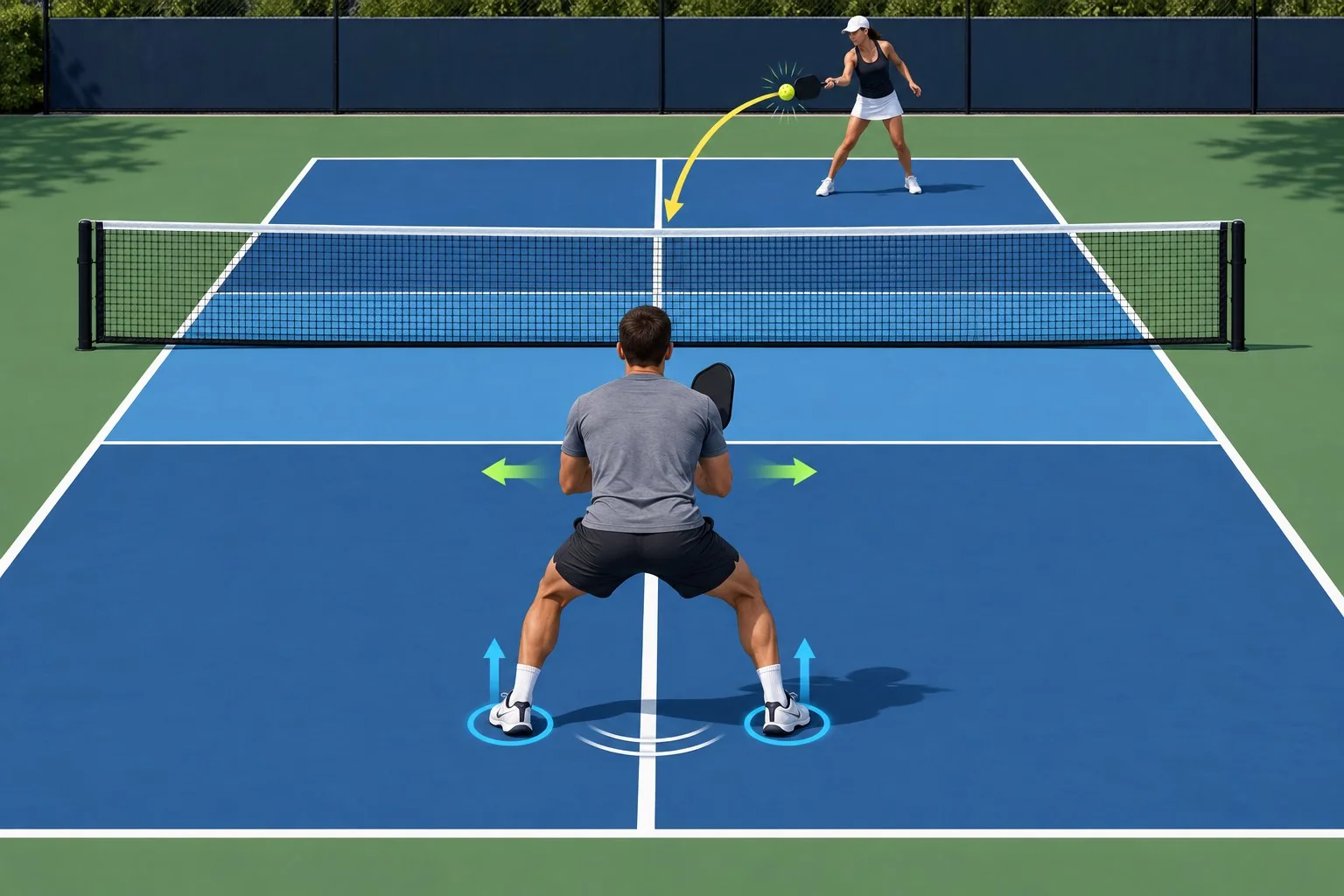
Do not turn the low position into a squat that freezes your legs. Keep the feet light, the weight over the balls of the feet, and the paddle available in front of the body. A simple chair drill can reinforce the feeling: rally gently with a partner while maintaining a steady, athletic height, then stand up and reset if the posture collapses.
Time the split step to contact
The split step is a small ready hop that should finish as the opponent makes contact. Land with the feet separated enough to push in either direction, with the heels quiet and the weight ready to move. If you jump too early, you may be stuck on the ground while the ball travels; if you wait until the ball is already moving past you, the first step is late.
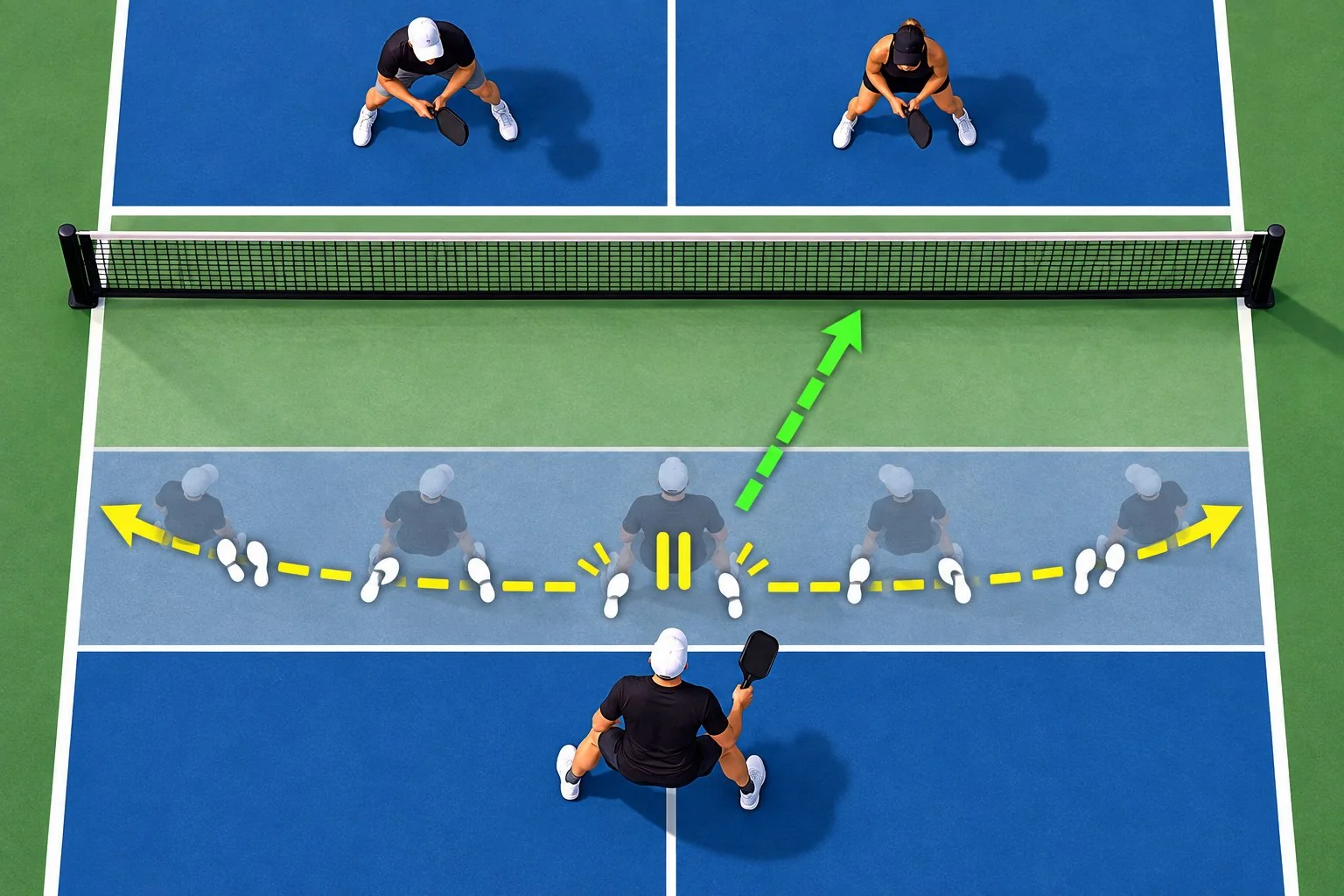
Practise with a partner across the net. The partner says “Hit!” at the moment of the swing, and you try to land the split step on that cue. Keep the motion small. The goal is not height; it is a repeatable landing that lets the next push come immediately.
Shuffle and adjust instead of reaching
Near the kitchen, use a side shuffle or crab shuffle when moving laterally. Keep the hips and shoulders oriented toward the net so the eyes and paddle stay ready. Crossing the feet can turn the body away from the play and make recovery harder. For close balls, use micro-steps rather than a long lunge. Small adjustments improve spacing and leave you better prepared for the next shot.
A useful practice game is a micro-step-only rally. A partner feeds to either side, and you limit every adjustment to roughly a shoe length. This forces you to organise the feet before contact instead of stretching for the ball from a poor base. If a ball is genuinely out of reach, accept the limit rather than twisting into an unstable swing.
Earn the move to the kitchen
When travelling through the transition zone, do not sprint continuously toward the net. Move forward, stop, split step as the opponent contacts the ball, and set the feet before the next shot. That pause protects you from running into a body shot while still moving. Keep facing the net; if a ball gets behind you, a controlled scoop-style response may be safer than turning blindly.
After a wide ball near the kitchen, recover diagonally toward the centre instead of running straight backward. The diagonal route closes more angles and helps a doubles partner maintain useful spacing. Both partners should notice one another with peripheral vision and recover together rather than leaving a large middle gap.
Build footwork under pressure
Finish practice with a short, demanding block such as a 60-second rapid rally. Keep the split step active and use the cue “feet first, hands second”: move into position before beginning the swing. The aim is not frantic speed. It is preserving soft hands, quick feet, and balanced contact when fatigue makes careless movement tempting.
Review one habit at a time. Start with low posture, add split-step timing, then layer in shuffles, micro-steps, transition stops, and diagonal recovery. Consistent repetitions make these choices automatic, so your technique remains organised when the rally speeds up.