Pickleball Forehand Drive: Build Pace Without Losing Control
Learn to build a controlled pickleball forehand drive with compact preparation, better spacing, forward contact, purposeful targets, recovery, and drills.
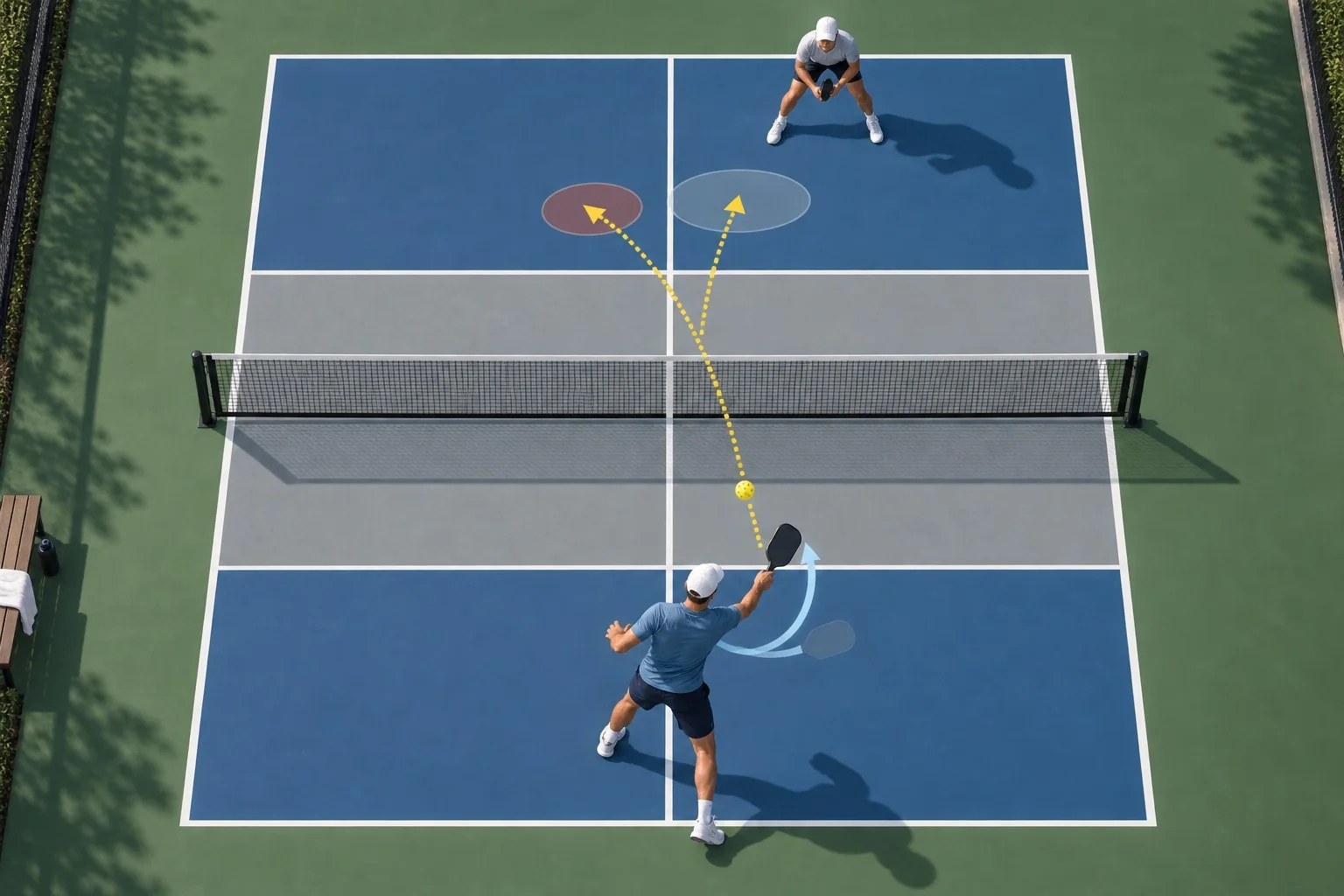
A pickleball forehand drive is most useful when it gives you a low, purposeful ball and time to recover—not when it is simply your hardest swing. The reliable version starts with early preparation, enough space from the ball, and a compact acceleration that uses the legs and torso. Think “repeatable pressure,” then add speed as your contact becomes dependable.
Set up before the ball arrives
Start in an athletic stance with soft knees, your weight centred, and the paddle in front of your body. As soon as you read a forehand ball, turn your shoulders and hips together. Let the non-dominant hand help guide that unit turn; this is quicker and more stable than taking the paddle far behind you.
Create space with your feet. If the ball is crowding your hip, do not reach with the arm and hope to rescue the shot. Use a small adjustment step, or move around the ball when the court position allows it. Your goal is to meet the ball comfortably to your hitting side and slightly in front of your lead leg. Good spacing gives the paddle room to travel forward and keeps your balance available for the next ball.
Stay low through the preparation and contact. A stable base does not mean freezing your feet. It means the knees remain available while the feet make small corrections. If you are moving laterally, brake under control before the swing rather than drifting backward as you strike.
Build the drive in six checkpoints
1. Choose a manageable ball
Attack a ball that arrives high enough for you to swing forward without lifting it recklessly. A low ball, a stretched ball, or a ball that forces you off balance may deserve a controlled reset or a safer drive with extra margin. Shot selection is part of technique.
2. Keep the swing compact
Drop the paddle slightly below the ball, then accelerate low to high and through the contact. Avoid a long loop. A short preparation buys time against a fast feed and makes the face easier to control. Keep the wrist relatively quiet so the paddle does not flick open or close unpredictably.
3. Transfer weight forward
Load lightly on the back side during the turn, then let the legs and hips begin the move toward the target. You do not need a dramatic lunge. A modest forward transfer is enough to stop the shot from becoming an arm-only slap. If you must hit while retreating, finish the movement by re-establishing balance immediately rather than admiring the ball.
4. Contact in front
Meet the ball in front of your body, around a comfortable waist-to-upper-thigh window depending on its bounce. Contact that is late or tucked beside the hip usually sends the face and swing off line. The ball should feel as though it is being driven through a window, not scooped upward.
5. Pick a target with margin
Start crosscourt when you need more distance and a larger safe landing area. Aim through the opponent’s feet, toward the middle seam, or into a space that makes their next block uncomfortable. Down-the-line drives can be valuable, but they demand cleaner direction and leave less room for error. Depth matters more than raw pace: a controlled ball that lands deep is often harder to handle than a faster ball that sits up.
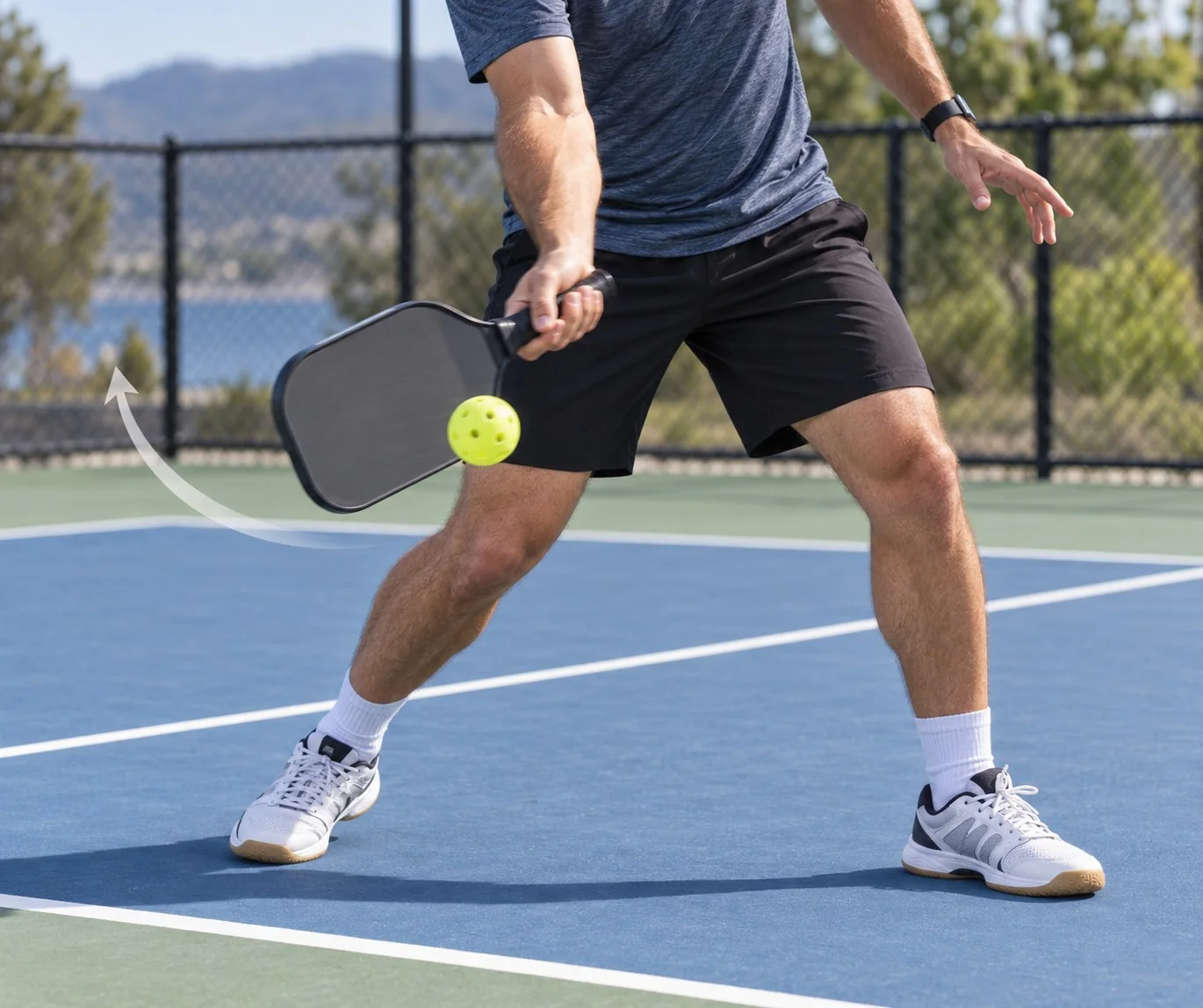
6. Finish forward and recover
Let the paddle extend toward the target before it naturally wraps toward the opposite shoulder. Do not force a sharp across-body finish. After contact, return the paddle to a ready position and recover toward the next useful court location. From the baseline, be ready for a block or transition ball; after a drive from the transition area, do not charge forward blindly if the opponent has an easy counter.
Practice the forehand drive progressively
Begin with shadow swings. Rehearse the unit turn, compact drop, forward contact, and balanced finish without a ball. Then use a self-drop: let the ball fall in front, drive it crosscourt with moderate pace, and prioritise a clean landing over speed.
Next, ask a partner for predictable feeds. Hit ten balls to one target, pause, and check whether your feet are still under you. Add movement by having the feeder vary left and right; move first, set the spacing, then swing. A useful constraint is to finish every repetition with the paddle back in front rather than holding the follow-through.
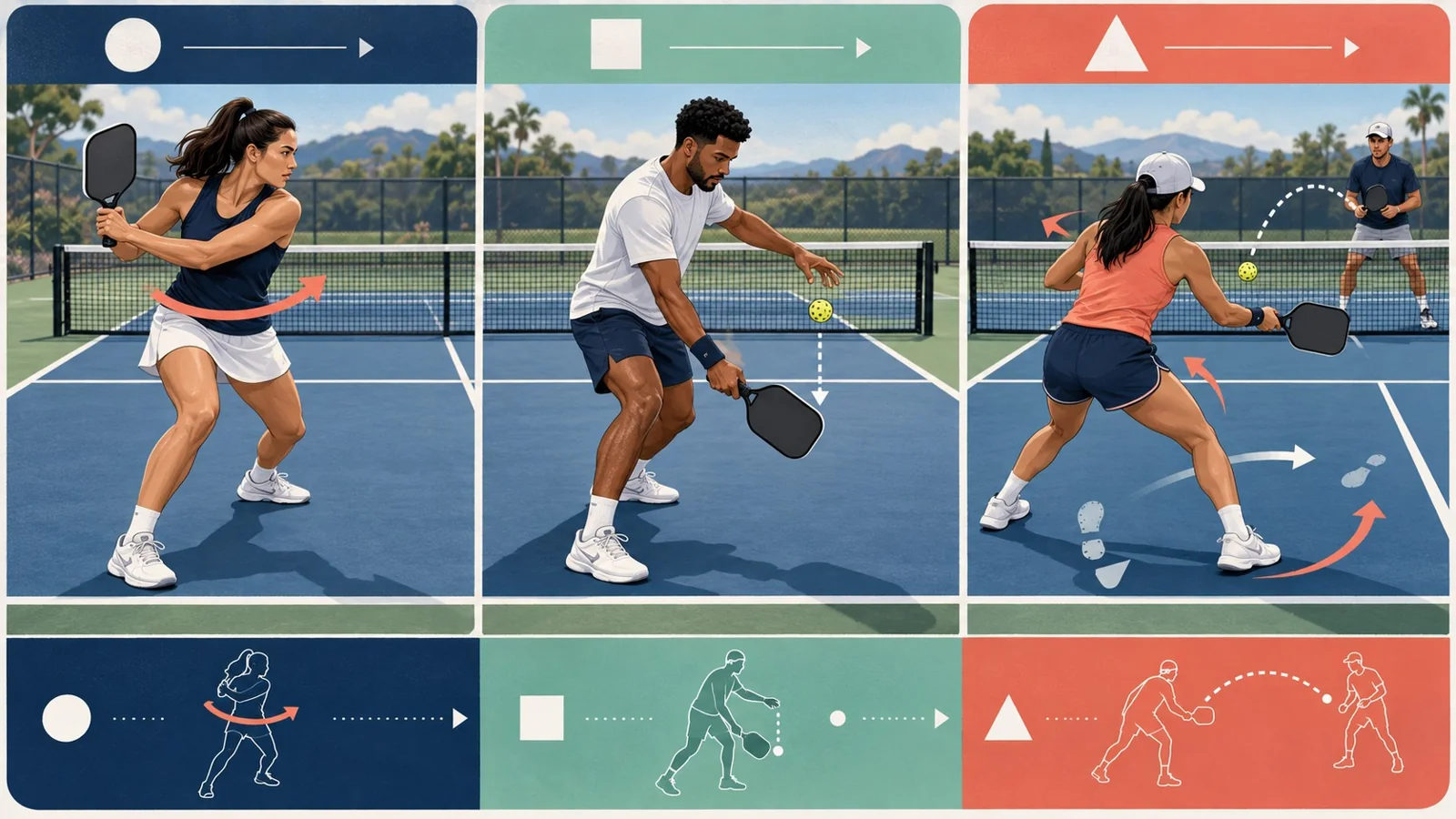
Finally, make the drill decision-based. Have the partner mix a manageable high ball with a low or wide feed. Drive the first, use a safer ball on the second, and recover after both. This teaches you not to force the forehand just because the shot is available.
Common fixes when the drive breaks down
If the ball flies long, reduce the swing and check that the face is not opening at contact. If it lands in the net, look for a late contact point, excessive downward path, or a body that stops rotating. If the ball has pace but no control, slow the feed and reconnect the sequence: turn, create space, contact in front, extend forward, recover.
The best forehand drive is a shot you can repeat under pressure. Build the shape at moderate speed, choose targets with margin, and only then let the acceleration grow.