Pickleball Forehand Finish Direction: Point the Swing at the Target
Learn where a forehand finish should point, how much follow-through each target needs, and how to recover without giving away the next ball.
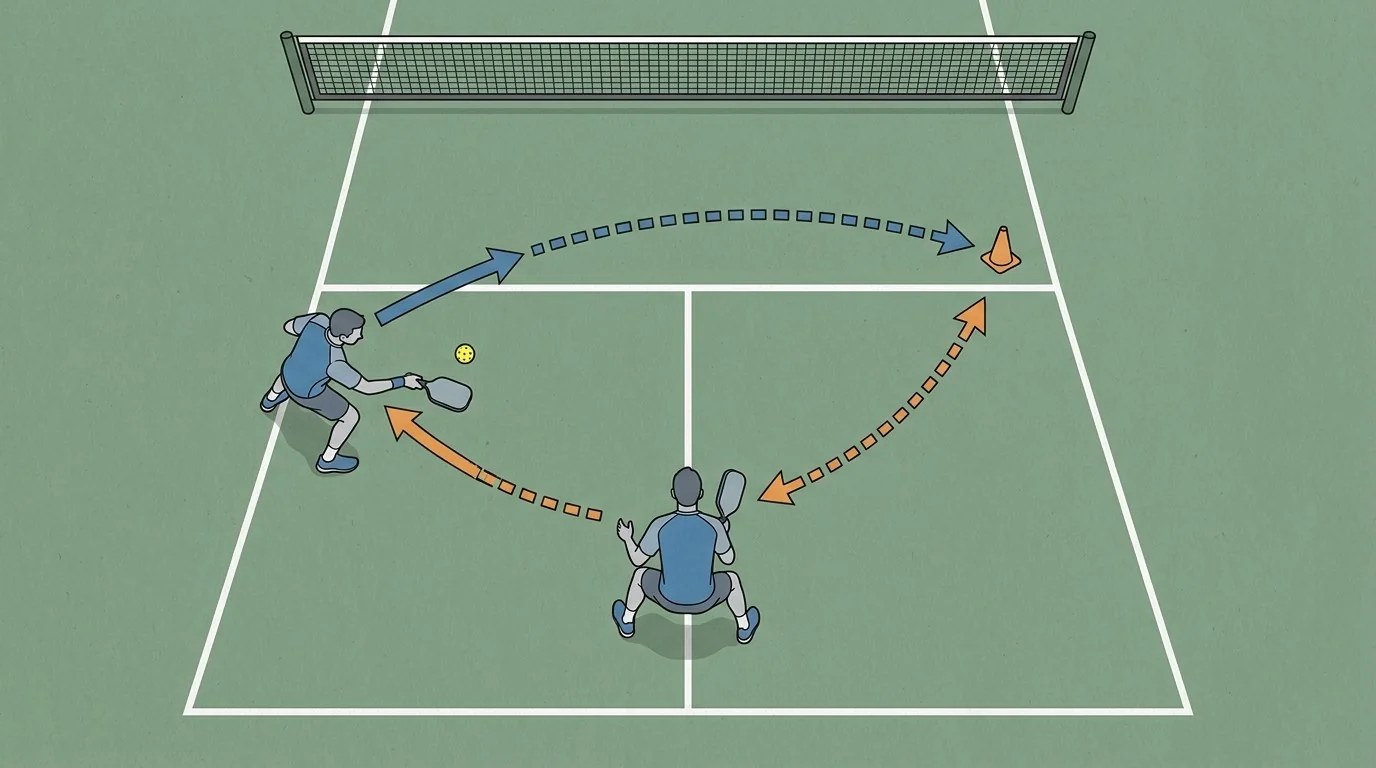
A pickleball forehand is not finished when the paddle meets the ball. The follow-through helps send the shot toward its target, and the recovery step gets you ready for the reply. A compact finish is usually more useful than a big swing that leaves you leaning or late.
Give the follow-through a job
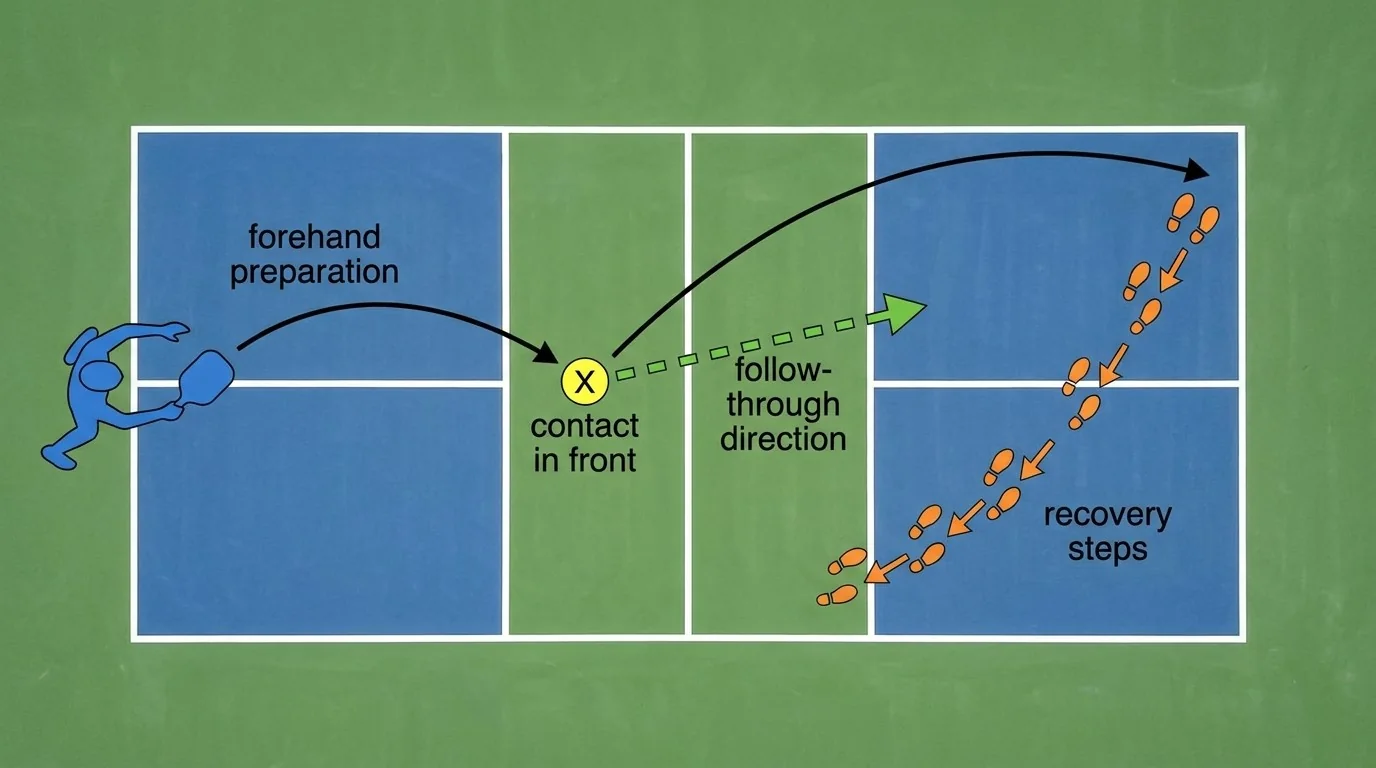
After contact, let the paddle travel naturally along the shot line, then bring it back toward a neutral ready position. The finish should fit the ball height and target rather than look identical on every forehand. A deep drive may travel farther toward the court. A softer ball needs a shorter, more controlled path that preserves touch and balance.
Keep your head steady and avoid pulling your upper body away from contact. If the finish makes you spin open or fall backward, the swing was probably too large or the contact arrived too late. You should finish able to see the opponent and make the next adjustment step.
Point the swing toward a useful lane
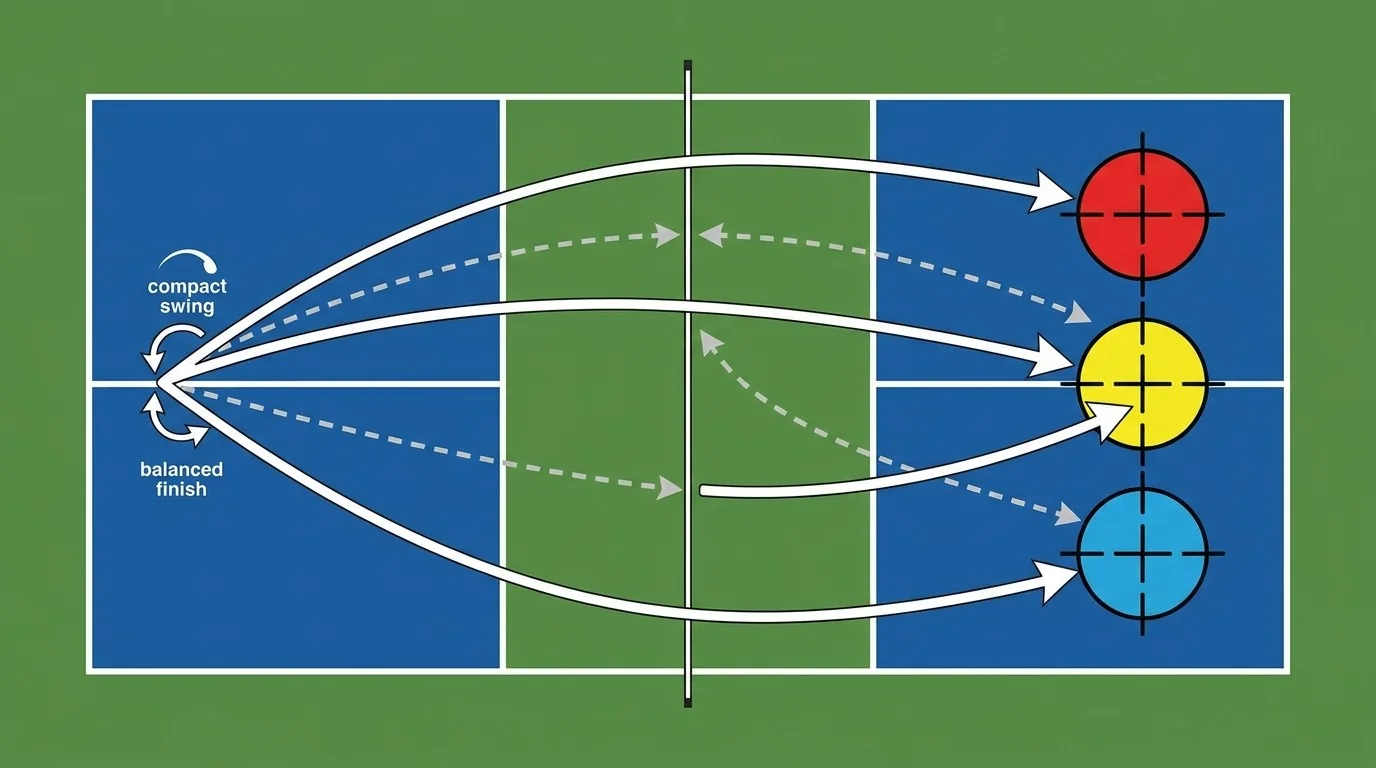
Choose the target before the forward swing is complete. Against an opponent who is deep, a lower ball with safe clearance can be more useful than maximum pace. Against a player moving wide, the open court may invite a crosscourt shot, but only if the angle leaves enough margin. Let the follow-through point along the chosen lane instead of finishing high in an unrelated direction.
For a softer forehand, keep the paddle face stable and shorten the finish to match the reduced pace. Do not chop downward just to make the swing smaller. Keep a controlled path with enough lift to clear the net. The contact point and paddle face shape the flight, while the finish helps keep your body organized.
Start recovering as soon as the ball leaves
Recovery begins after contact, not after you watch the shot. Bring the paddle back to a neutral ready position, rebuild your base, and read the opponent’s contact. In singles, recover toward a position that covers the realistic passing angles. In doubles, move back into shape with your partner so the team does not leave a large seam.
A common mistake is stepping too far across during the finish. The swing may look smooth, but that extra movement can take the next ball out of reach. Use small adjustment steps and keep your weight available in both directions. If you are pulled wide, protect your balance and choose a defensive target instead of forcing a full finish.
Practise the whole sequence
Have a partner feed moderate balls to your forehand side. At first, pause after contact and check three things: the ball was contacted in front, the finish points toward the target, and your feet are balanced. Then remove the pause and add a recovery step before the next feed.
Next, alternate deep and short targets. Keep the preparation compact, but let the finish and footwork adapt to the intended shot. End with cooperative rallies where power is not the goal. Count a repetition only when the forehand reaches a clear target and leaves you ready for the reply.
A useful pickleball forehand recovery is repeatable, balanced, and connected to the next decision. Finish without over-swinging, reset your feet, and be ready for what comes back.