Pickleball Forehand Preparation: Turn Early for Cleaner Contact
A practical guide to the two-handed pickleball backhand: shoulder turn, compact preparation, contact in front, stable direction, recovery, and drills.
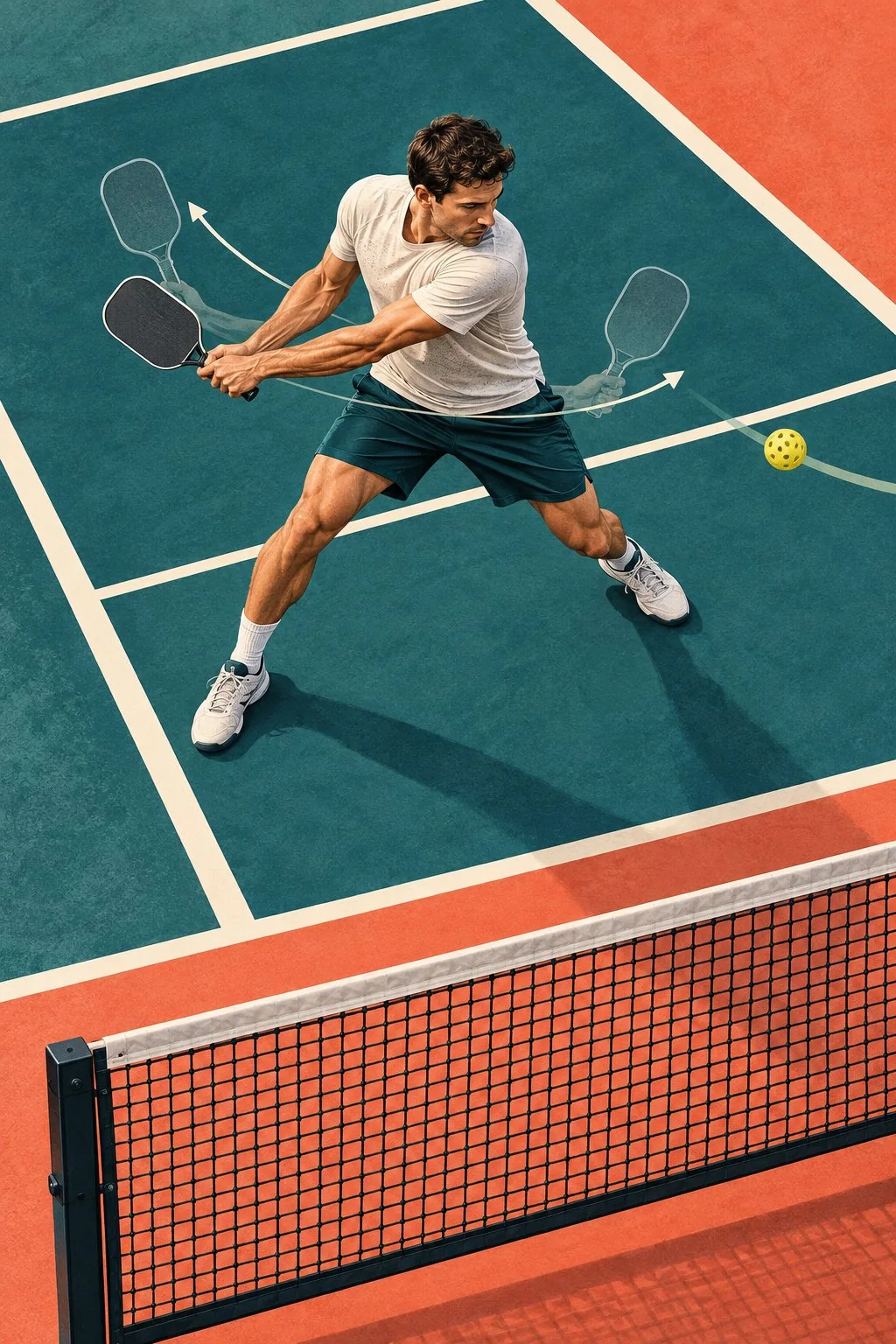
A pickleball forehand preparation gives you a stable way to handle pace from the baseline or transition area. The shot is built before the swing: turn the shoulders early, organize both hands on the handle, create space with your feet, and meet the ball in front. The goal is repeatable contact that leaves you ready for the next exchange.
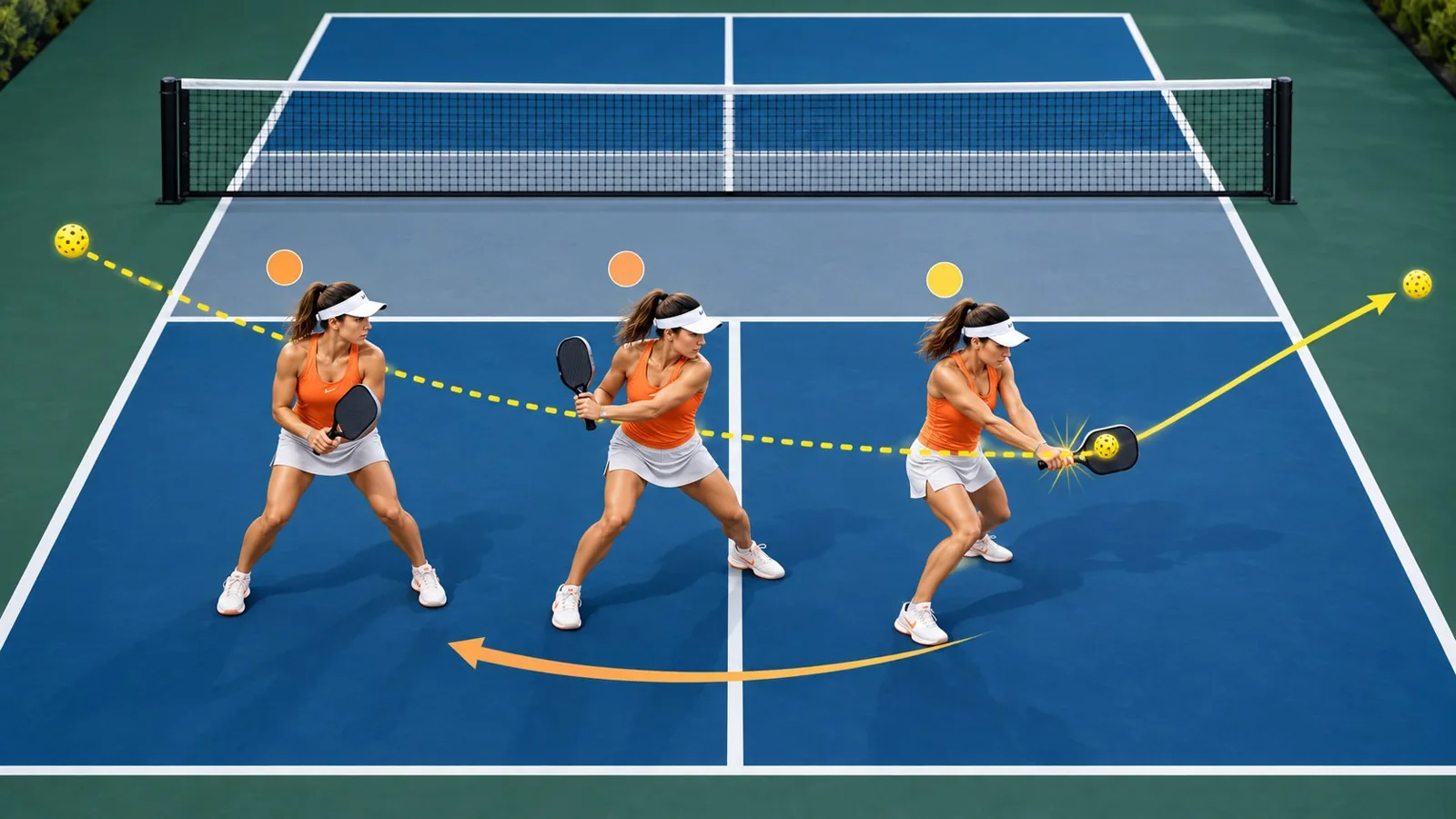
Turn early and create space
Start from a balanced ready position with the paddle in front. As the ball travels to your backhand side, turn the shoulders and bring the non-dominant hand onto the handle. Keep the preparation compact; the turn should organize the paddle without pulling it far behind you. Move your feet to create room rather than letting the ball crowd your hip.
Use small adjustment steps to place the ball in front of the lead hip. Keep the knees flexed and the head quiet while both hands stay connected to the body. If the ball is low, lower the legs instead of folding at the waist. Good spacing gives the paddle a forward path and keeps the face easier to control.
Meet the ball in front with a stable face
Let the two hands guide the paddle through contact in front of the body. The upper hand helps steer and accelerate while the lower hand supports direction; neither needs to squeeze. Keep the paddle face matched to the intended height and use the shoulder-and-arm motion rather than a late wrist roll. A compact follow-through is easier to repeat than a forced finish.
Your checkpoint is balance after contact. If the back foot spins, the shoulders open too soon, or the paddle finishes across the body, the preparation was probably late or the spacing too close. When the ball is too wide for a controlled two-handed swing, use a shorter defensive block or move first instead of forcing the stroke.
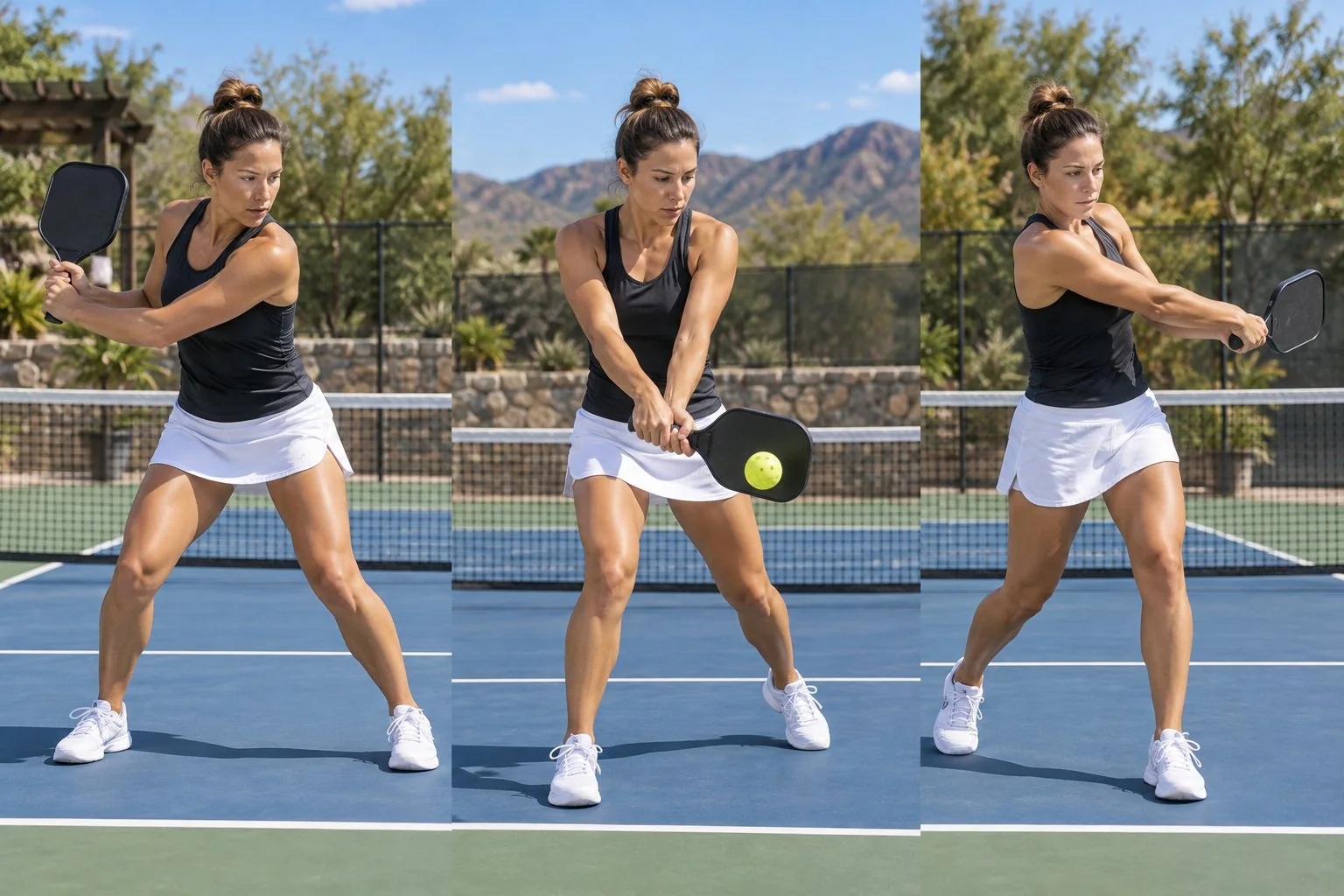
Finish balanced and recover
After the ball leaves the paddle, let the follow-through finish without freezing. Bring the paddle back to ready position and use a small recovery step toward the center or your doubles coverage zone. Do not admire a clean shot from a stretched stance; the next ball may arrive before you can stand upright.
In doubles, recovery also protects your partner. If you have been pulled wide, communicate and return to side-by-side spacing while your partner covers the middle. In singles, shade back toward the likely passing lane. The correct recovery point depends on the shot and opponent position, but the principle is constant: finish ready to move again.
Train the stroke in small progressions
Begin without a ball. From ready position, turn the shoulders, place both hands, step into the imaginary contact, and recover the paddle. Repeat slowly on comfortable and wider feeds. Then add gentle balls and judge only preparation, contact in front, and balance.
Progress to a three-ball pattern: turn, adjust, hit, recover. Have the feeder vary height and direction without making the feed reckless. Count a repetition as successful only when the paddle face stays controlled and recovery finishes with the paddle in front. A side video can reveal preparation that is too large or contact beside the body.
When fatigue changes the contact, shorten the distance and slow the feed. A reliable pickleball two-handed backhand is simple under pressure: turn early, make space, contact in front, guide the face, and recover before the next ball.