Pickleball Grip Pressure: Match Your Hold to the Shot
Match your pickleball grip pressure to the shot: stay relaxed for touch, stable for blocks, and firmer for controlled acceleration.
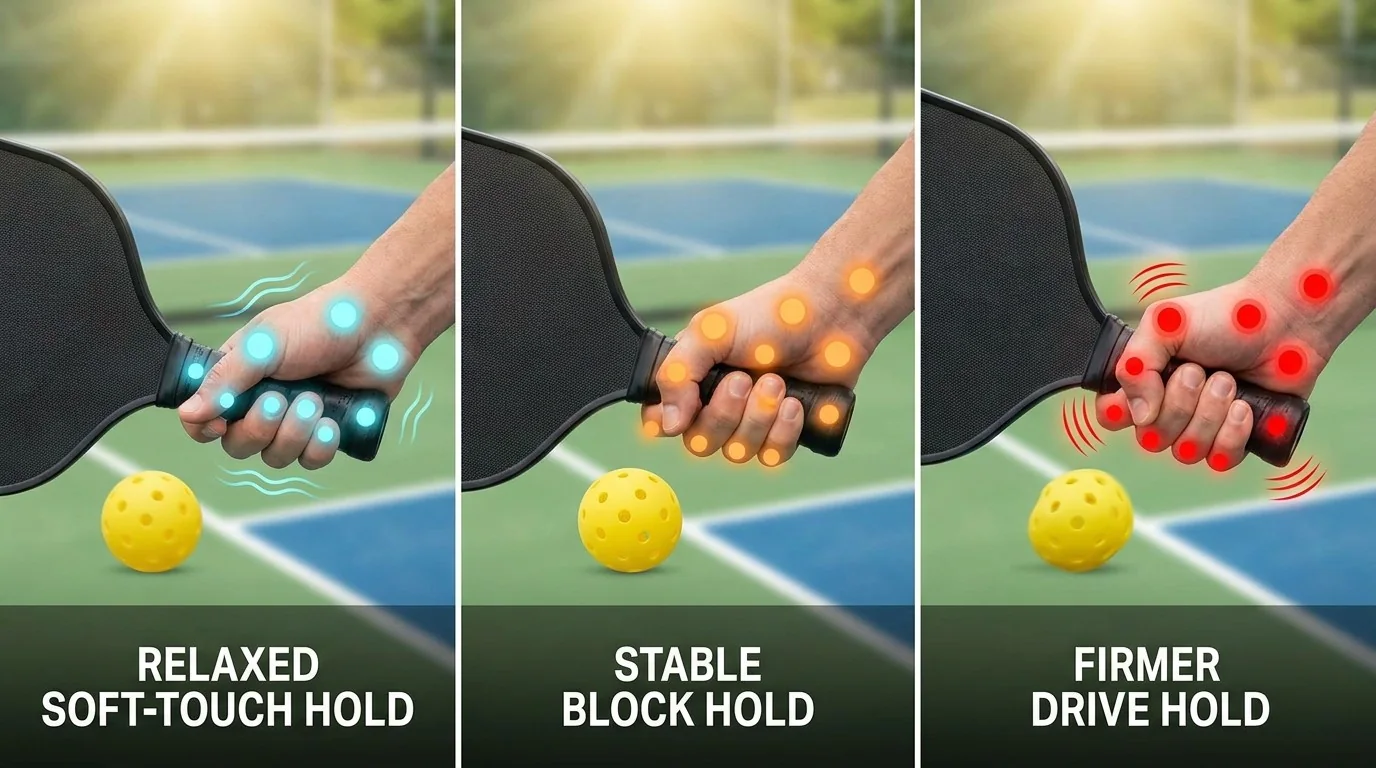
Your grip should change with the shot, not stay clamped at one setting for an entire game. A relaxed hold gives a soft ball room to settle on the paddle; a steadier hold helps the face resist a fast exchange; a firmer hold supports acceleration on a drive or overhead. The useful skill is not squeezing harder. It is noticing when the hand is doing too much and matching pressure to the job.
What grip pressure changes
Grip pressure affects more than comfort. Too much tension can tighten the forearm, slow small adjustments, and make it harder to absorb pace. Too little pressure can let the paddle twist when a fast ball arrives. Neither extreme is a permanent answer. You want a connected hand that can soften, stabilize, or firm up without a dramatic grip change.
Use a simple 1-to-10 scale as a practice language. One feels so loose that the paddle might slip. Ten feels like you are trying to crush the handle. For many routine shots, the useful middle is somewhere around 4 to 6, but the number is a cue rather than a measurement of performance. Your paddle, grip size, fatigue, and incoming pace all change the sensation.
The key distinction is timing. For a soft shot, begin loose enough to receive the ball. For a block or quick volley, add only enough firmness to keep the face stable. For a drive or overhead, let the hand become firmer as you accelerate and meet the ball. Do not squeeze at full force before the swing starts.
Match the hold to the shot
Dinks, drops, and resets
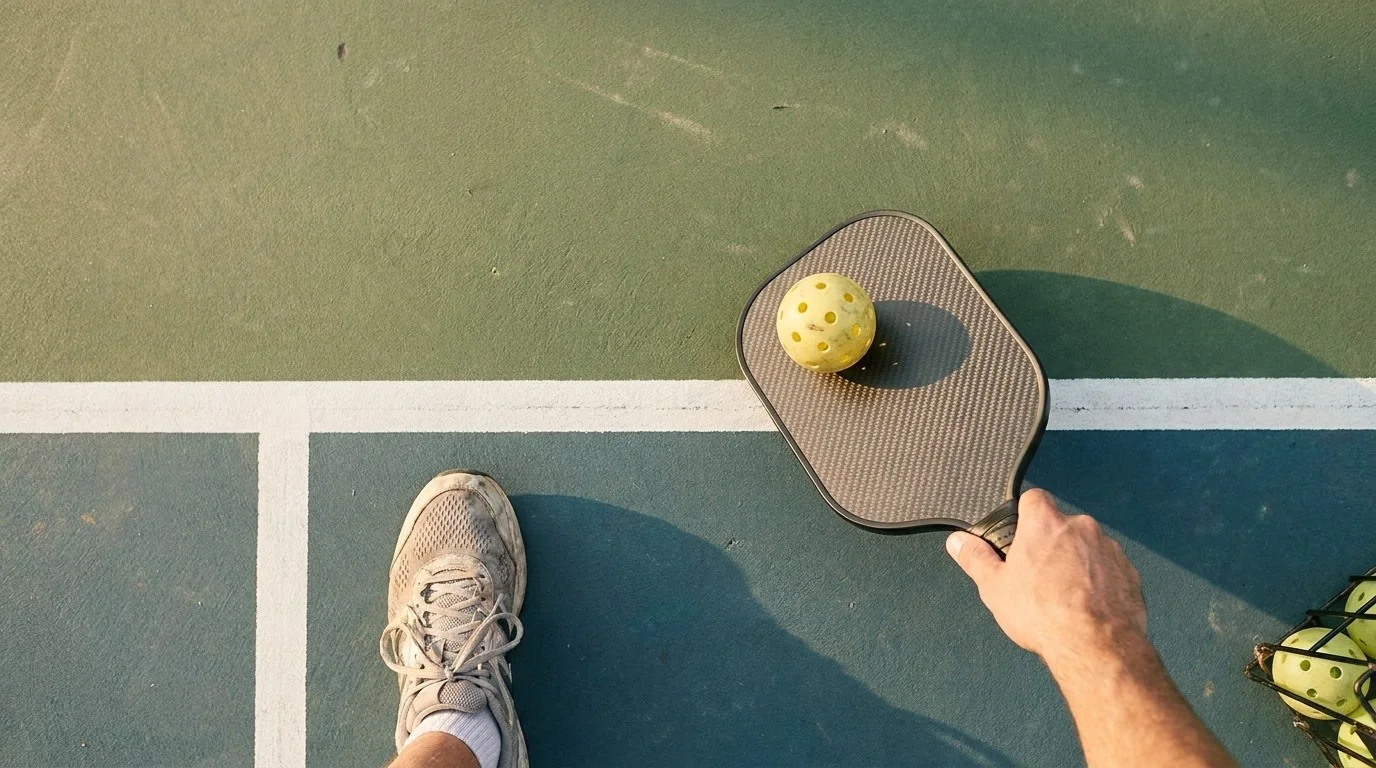
Soft shots reward a lighter hold. Keep the paddle secure, but let the hand and forearm stay quiet enough to absorb the incoming pace. If a dink keeps floating, check for a clenched hand, an overly open face, or a swing that is lifting too much. Changing pressure will not repair late footwork or a poor paddle angle, so check contact space as well.
Start with a comfortable middle pressure, then soften slightly as the ball arrives. The paddle should not wobble, and the wrist should not make a last-second flip. Finish compactly and return the paddle in front of your body so the next contact does not catch you with the hand still tense.
Blocks and quick volleys
A block needs more stability than a dink because the ball may arrive with pace, but it still does not need a large swing. Keep the paddle in front, make a small adjustment to the face, and use enough firmness to prevent twisting. Let the incoming ball do most of the traveling. If you grip so hard that the shoulders rise or the paddle cannot absorb the ball, the hold has become a brake.
Drives and overheads
Power shots can use a firmer hold, especially as the paddle accelerates toward contact. The hand should stay connected while the body and swing provide the speed. A death grip started too early often makes the swing rigid and reduces your ability to adjust. Firm up for the contact and release unnecessary tension during the recovery.
A three-part calibration drill
You can learn the difference in pressure without waiting for a match. Use a few balls and a safe space, then repeat the same checks with a partner.
- Find a baseline. Hold the paddle around 5 out of 10. Bounce the ball gently on the paddle face several times. Notice whether the face feels stable, whether the wrist feels free, and whether the handle sits securely without a clenched forearm.
- Compare the extremes. Try a noticeably firmer hold, around 7 or 8, for a few bounces. Then try a lighter hold around 3 or 4. You are not searching for one magic number. You are teaching your hand to recognize tension, wobble, and useful control.
- Add movement. Hit a few forehands, backhands, and soft shots. Keep the same general stroke while you adjust pressure slightly. Notice which hold lets you contact the ball cleanly and recover the paddle without delay.
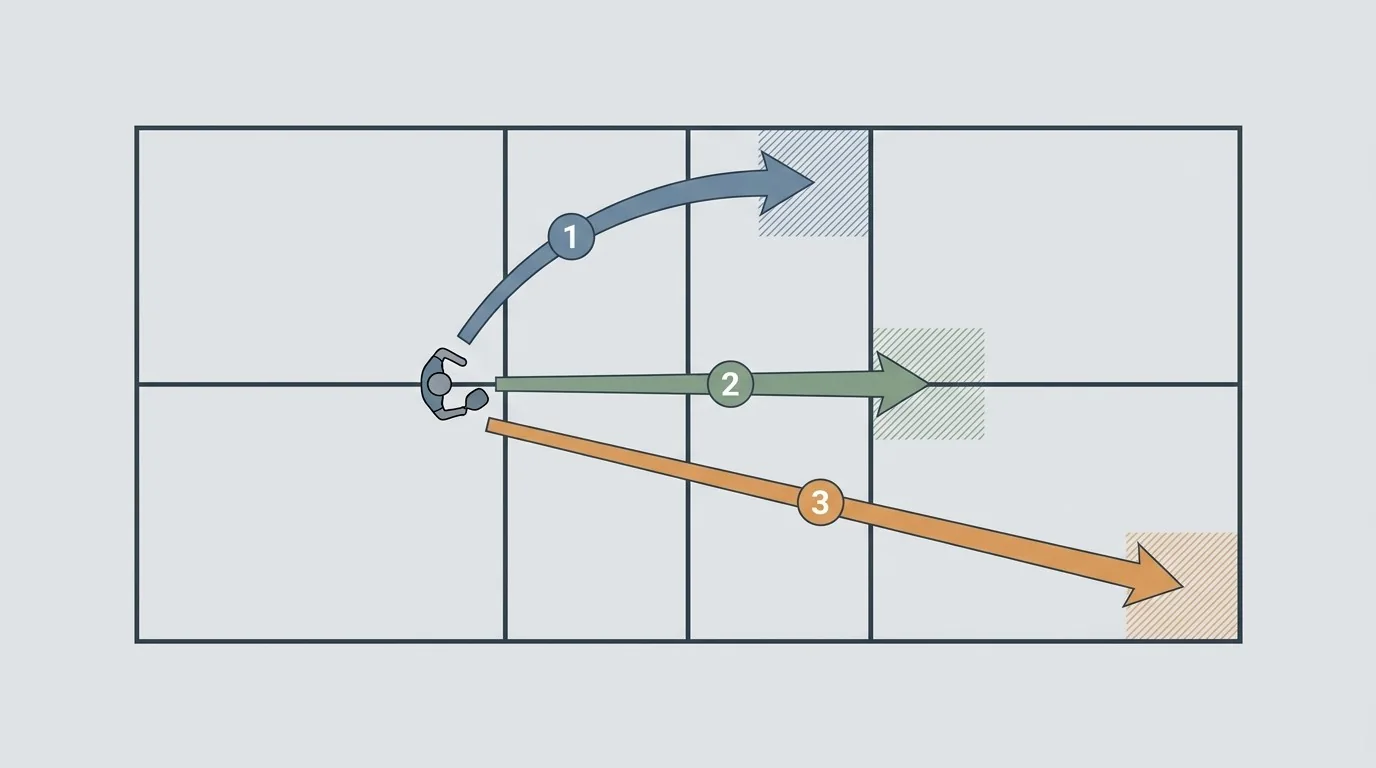
Next, use a wall or a cooperative partner. Alternate a soft tap, a compact block, and a controlled drive. Say the intended shot before each contact, then check whether your hand changed with the task. Keep the swing small during the touch and block portions. For the drive, allow more acceleration but do not confuse effort with a tighter grip.
Common grip-pressure mistakes
Holding one pressure all game. A constant squeeze makes a dink rigid and can leave the paddle unstable when you suddenly need a softer response. Use the pause before each rally to relax the fingers, then add firmness only when the shot requires it.
Gripping tighter when nervous. Stress often shows up in the hand before the player notices it. Shake the hand out during a pause, breathe normally, and return the paddle to a comfortable ready position.
Using pressure to hide late feet. A stronger squeeze cannot move the contact point in front of your body. Make room with small adjustment steps before changing the hand.
Ignoring the handle itself. If the paddle slips because the wrap is worn or your hand is wet, squeezing harder is not a reliable equipment fix. Address the handle condition separately and keep the technique cue focused on adaptable pressure.
Training only stationary bounces. A hold that feels fine in place may disappear during a fast exchange. Add movement, different heights, and a recovery check after the contact. The goal is a hand that adjusts while the rest of the body remains organized.
Use the cue during games
Before a soft rally, ask whether the hand is light enough to receive the ball. Before a quick volley, ask whether the face is stable without being locked. Before a drive or overhead, allow the hold to firm as the paddle accelerates. After contact, let unnecessary tension go and recover the paddle in front.
Grip pressure is a small part of the stroke, but it is easy to test and easy to observe. Start at a moderate hold, compare lighter and firmer versions, then connect each one to a real shot. If pain persists in the wrist, hand, or forearm, stop treating it as a technique puzzle and seek qualified medical advice.