Pickleball Grip Pressure: Relax Your Hand for Better Control
Learn how to adjust pickleball grip pressure for touch shots, volleys, serves, and more repeatable control.
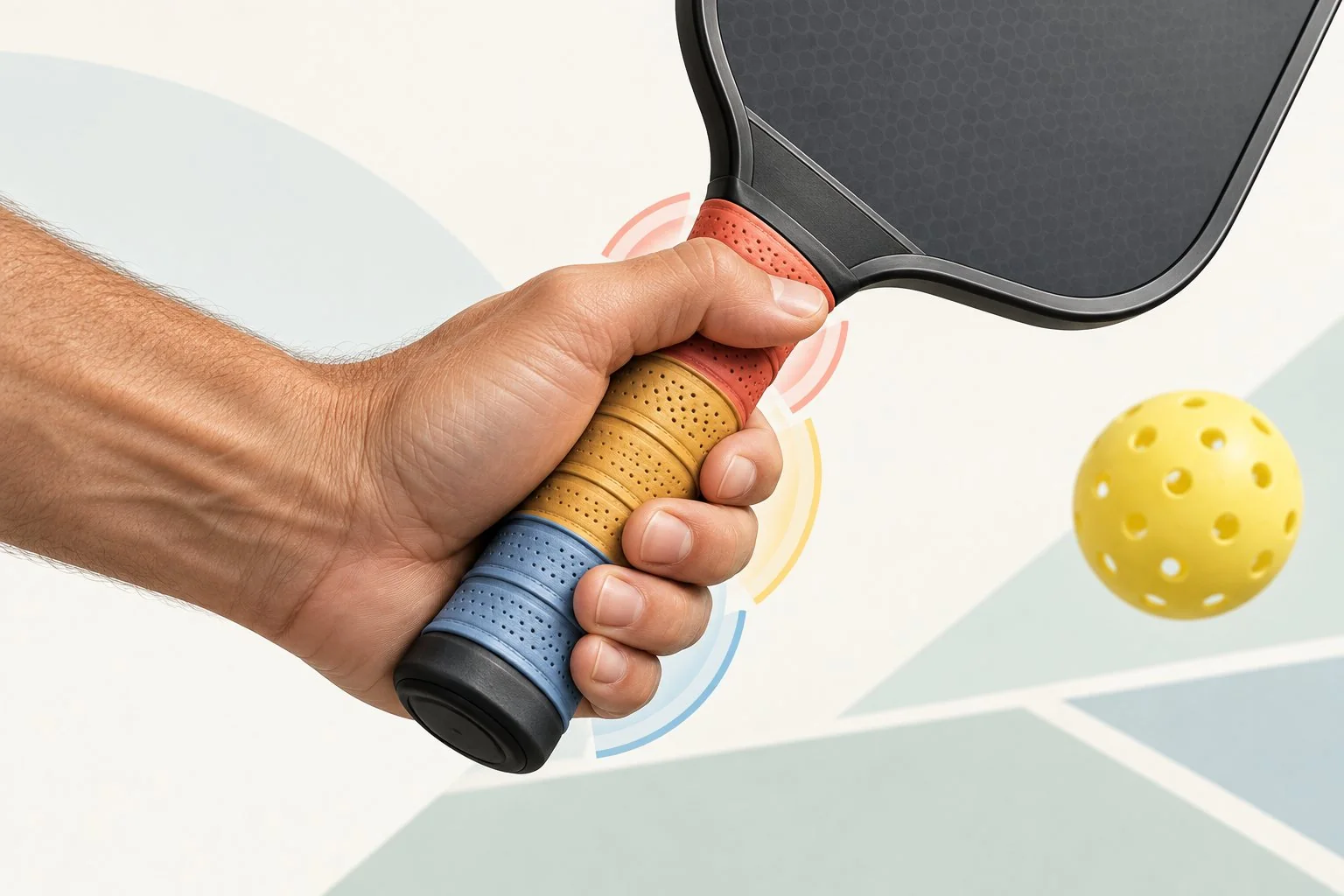
Many pickleball players squeeze the handle because they want more control. The extra tension usually does the opposite: it slows preparation, makes the paddle face harder to adjust, and turns a soft shot into a pop-up. Learning pickleball grip pressure means using a secure hold without locking the hand and forearm. The right pressure changes with the shot, but the goal is always a clean, repeatable contact.
What relaxed grip pressure actually feels like
Start in a ready position with the paddle in front and the handle resting mainly in the fingers rather than buried deep in the palm. Keep the thumb and index finger supportive, while the remaining fingers hold the handle securely enough that it will not move during contact. Your wrist should feel available to make small face-angle adjustments; it should not feel floppy or forced.
A useful self-check is to hold the paddle as if you were carrying a small bird: firm enough not to lose it, gentle enough not to squeeze it. This is not a laboratory measurement, and you do not need to count pressure units. Notice whether you can move the paddle head a few inches, breathe normally, and relax the shoulder. If the forearm is already tired before the rally begins, the hold is probably too tight.
Match pressure to the shot
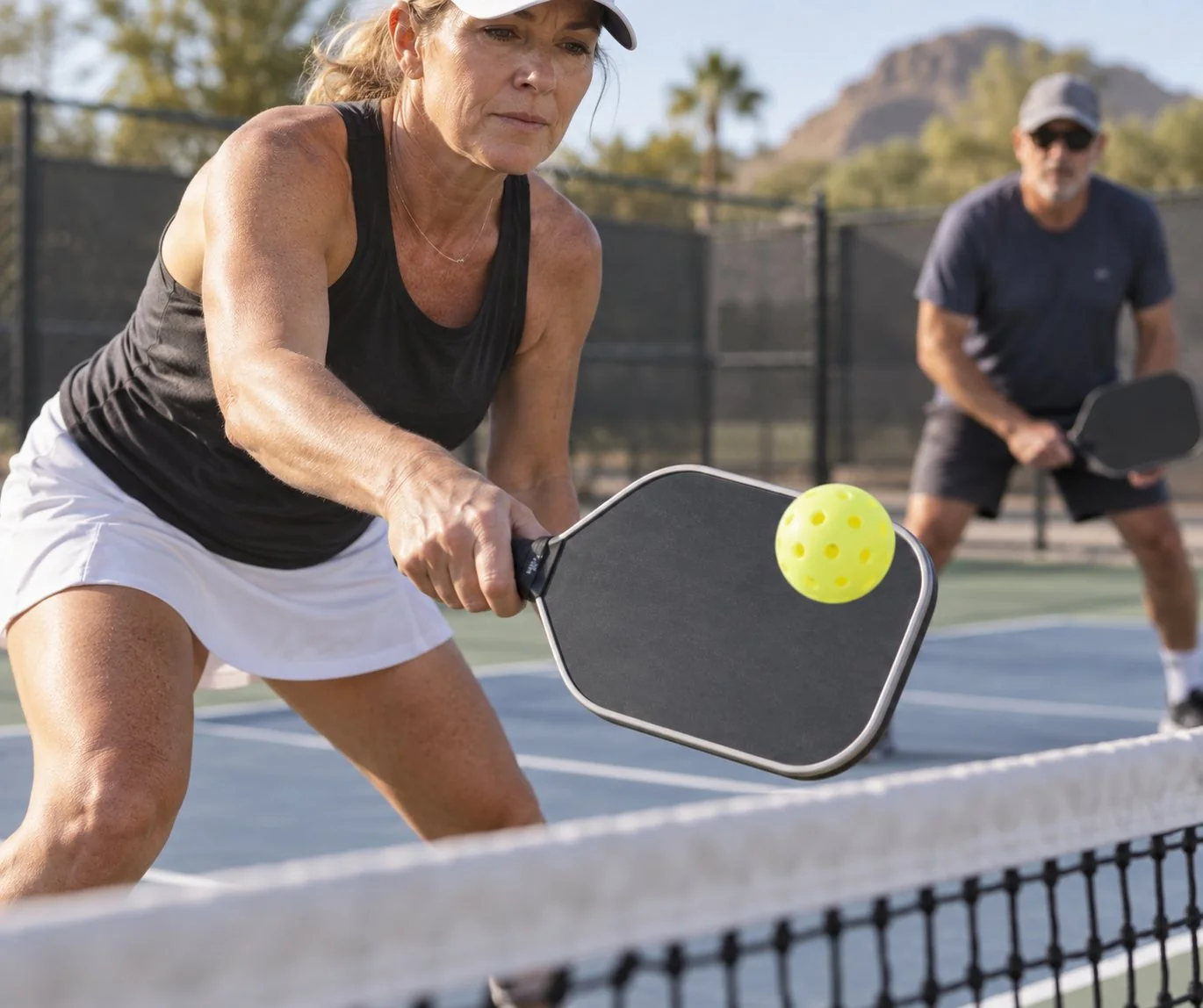
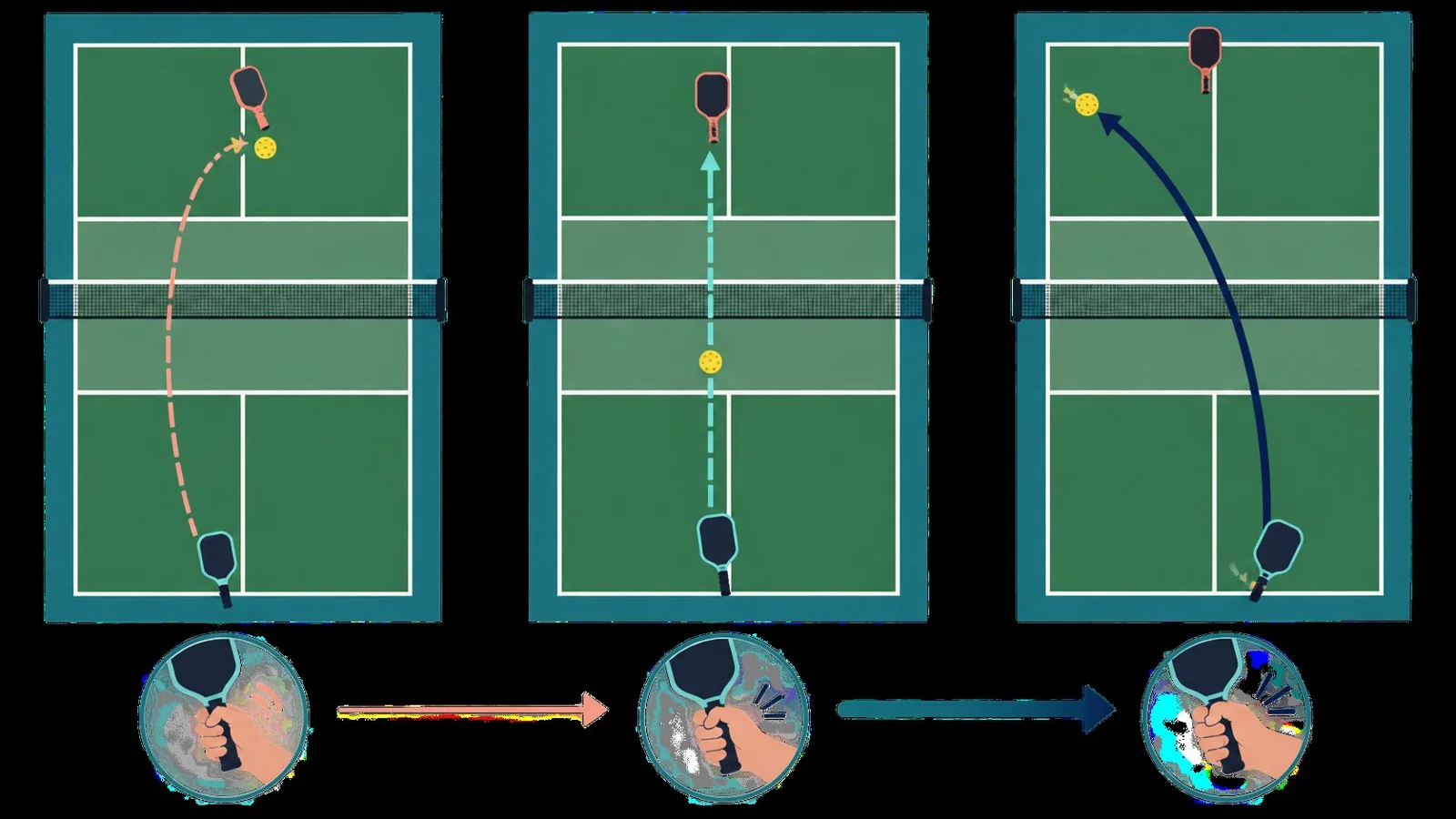
For a dink, reset, or soft drop, begin with a lighter hold. The loose hand helps the paddle absorb pace and keeps a small swing from becoming an accidental drive. Contact the ball in front, keep the stroke compact, and let the face provide a stable path over the net. If the ball is arriving faster, do not automatically swing harder; first stabilize the face and allow the incoming speed to do some of the work.
A punch volley needs a little more firmness at contact because the paddle must redirect pace. Keep the backswing short and the wrist quiet. Tighten briefly as the ball meets the face, then return to a lighter ready hold immediately. Staying clenched after every volley makes the next soft exchange feel late.
On a serve or drive, a secure hold supports acceleration and directional control, but the whole stroke still should not be rigid. Prepare early, turn the body, and use the larger movement of the shoulder and arm. Grip pressure is a support for the swing, not a replacement for body rotation.
A simple practice progression
First, rehearse without a ball. Move between ready position, dink preparation, punch-volley preparation, and serve preparation. At each stop, say “light,” “firm,” or “light again” and feel the change in your fingers rather than clenching the entire arm. Five slow repetitions on each side are enough to establish the contrast.
Next, use gentle hand feeds. Hit ten soft balls crosscourt while keeping the shoulder relaxed. Then have a partner feed manageable balls at the body and practise a compact punch volley. After every contact, deliberately soften the fingers before the next feed. This reset is important: players often find the correct pressure once, then carry too much tension into the next shot.
Finish with a decision drill. Mix low balls that require a reset, neutral balls for a punch, and higher balls that can support a controlled attack. Do not chase power. Count a repetition as successful when you choose an appropriate shot, contact in front, and finish ready for the next ball.
Common grip-pressure mistakes
If your dinks float high, check whether the hand is clenching and the paddle face is opening under pressure. If volleys fly long, shorten the swing before adding more squeeze. If the paddle twists on off-centre contact, improve spacing and preparation rather than simply gripping harder. Persistent hand, wrist, or elbow pain is a reason to stop and seek qualified medical or coaching advice.
A reliable pickleball grip pressure is dynamic: softer for touch, briefly firmer for redirection, and secure when accelerating. Practise the transitions until your hand stays calm while your feet and eyes do the reading.