Pickleball Kitchen Crossover Step: Reach Wide Balls Without Losing the Line
A practical guide to the pickleball kitchen crossover step: reach wide balls without reaching, choose safer shots, recover to the line, and train the movement.
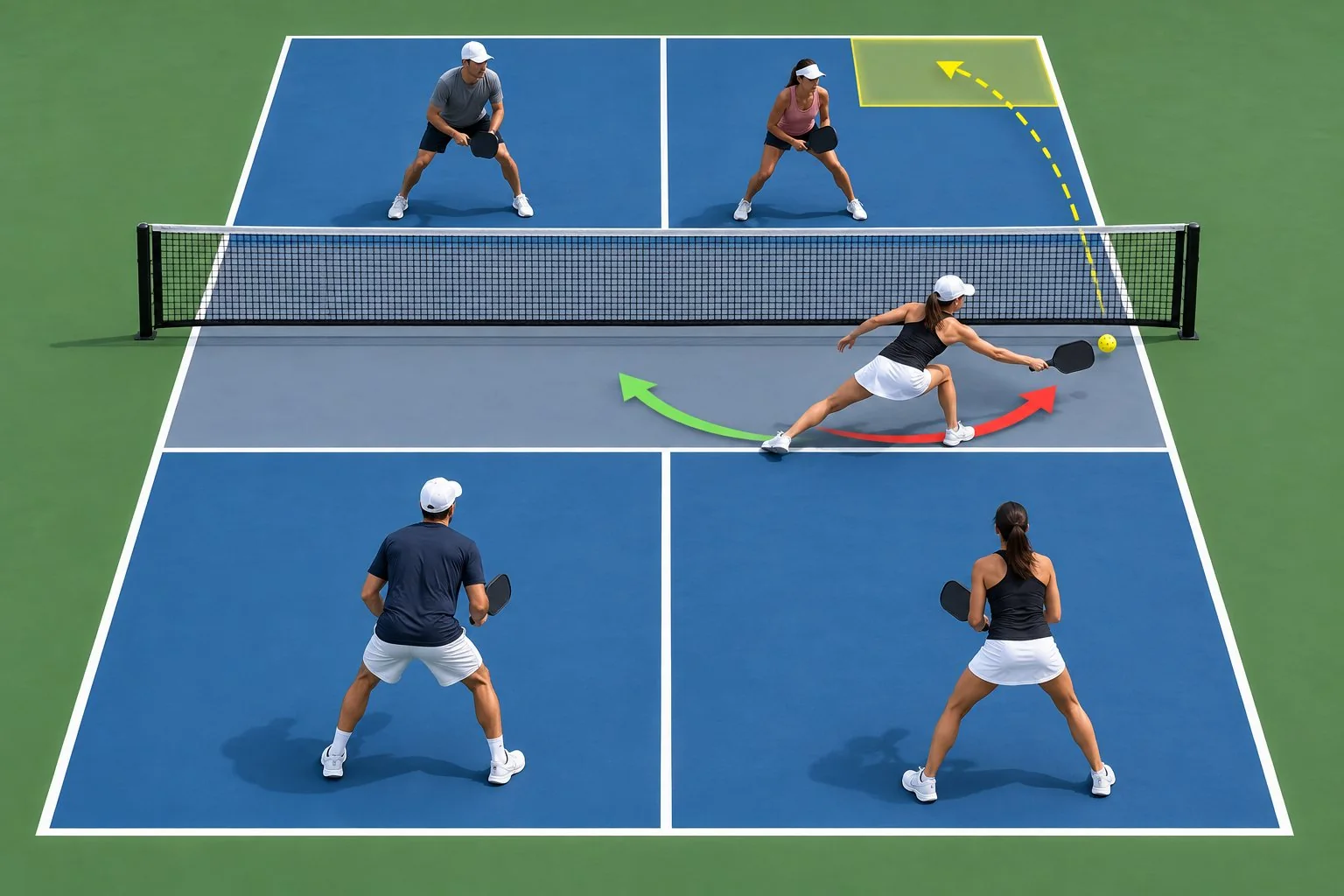
The pickleball kitchen crossover step is a recovery tool, not a replacement for every shuffle. At the kitchen line, a small shuffle is usually the first choice because it keeps your chest square and your paddle ready. When a dink pulls you far enough that shuffling would leave you reaching, a crossover can close the gap faster. The key is to arrive balanced, make the shot, and get back to a position you can defend.
Know when the crossover is the right tool
Read the ball early. If it is only a step or two away, use short adjustment steps or a lateral shuffle. If it is moving sharply toward the sideline, your outside foot can lead while the other leg crosses over to cover ground. Do not cross simply because the ball is moving; cross because the distance is too large for a stable shuffle.
Keep your knees soft and your weight between your feet as you move. A crossover should take you to the ball, not carry you past it. Keep the paddle in front of your body and your eyes on the opponent’s contact. If the incoming ball is low, accept a controlled dink or reset rather than trying to create speed while your base is still moving.
Build the movement without losing the kitchen line
Start from a ready stance with your toes a little behind the non-volley-zone line. Push from the foot nearest the ball, then let the other foot cross far enough to close the gap. As soon as you reach the hitting space, take a small settling step. That last adjustment matters: hitting while your legs are still crossing often opens the paddle face or pulls the contact behind you.
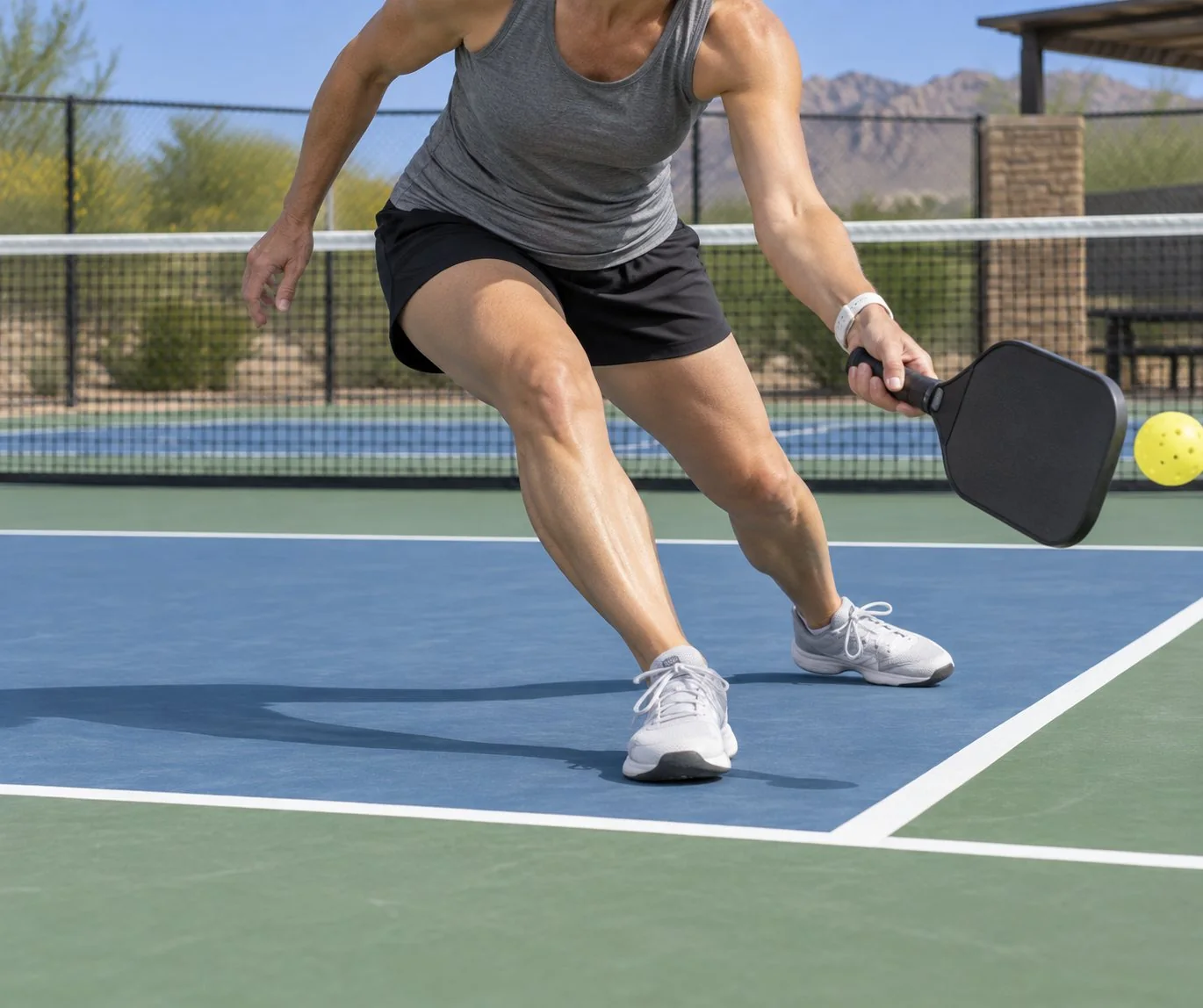
For a right-handed player moving left, the right foot may push while the left foot crosses to the outside; reverse the pattern when moving right. The exact sequence can change with the ball and your stance, so focus on the result: hips and shoulders organized toward the net, contact in front, and a base that can brake. Avoid a long lunge with a locked knee. It is slower to recover and harder on the body.
After contact, recover diagonally toward the kitchen line rather than drifting toward the sideline. Your partner needs you to close the space you just opened. If the ball was wide enough to pull you off the line, recover first toward a useful covering position, then make another small adjustment. Do not stare at your shot and assume the rally is safe.
Choose the shot while you move
A wide ball at or below net height is usually a control problem. Use a quiet paddle face, a short swing, and enough height to clear the net. A ball that arrives higher and slower may allow a firmer volley, but do not turn a difficult reach into an ambitious attack. Your first goal is to keep the exchange playable and give yourself time to recover.
A simple check helps in live play: can you contact in front, can you see the opponent’s paddle, and can you land with both feet ready to push again? If not, choose the higher-margin ball. Good kitchen movement is less about touching every shot and more about arriving early enough to make a repeatable decision.
Three progressions for safer footwork
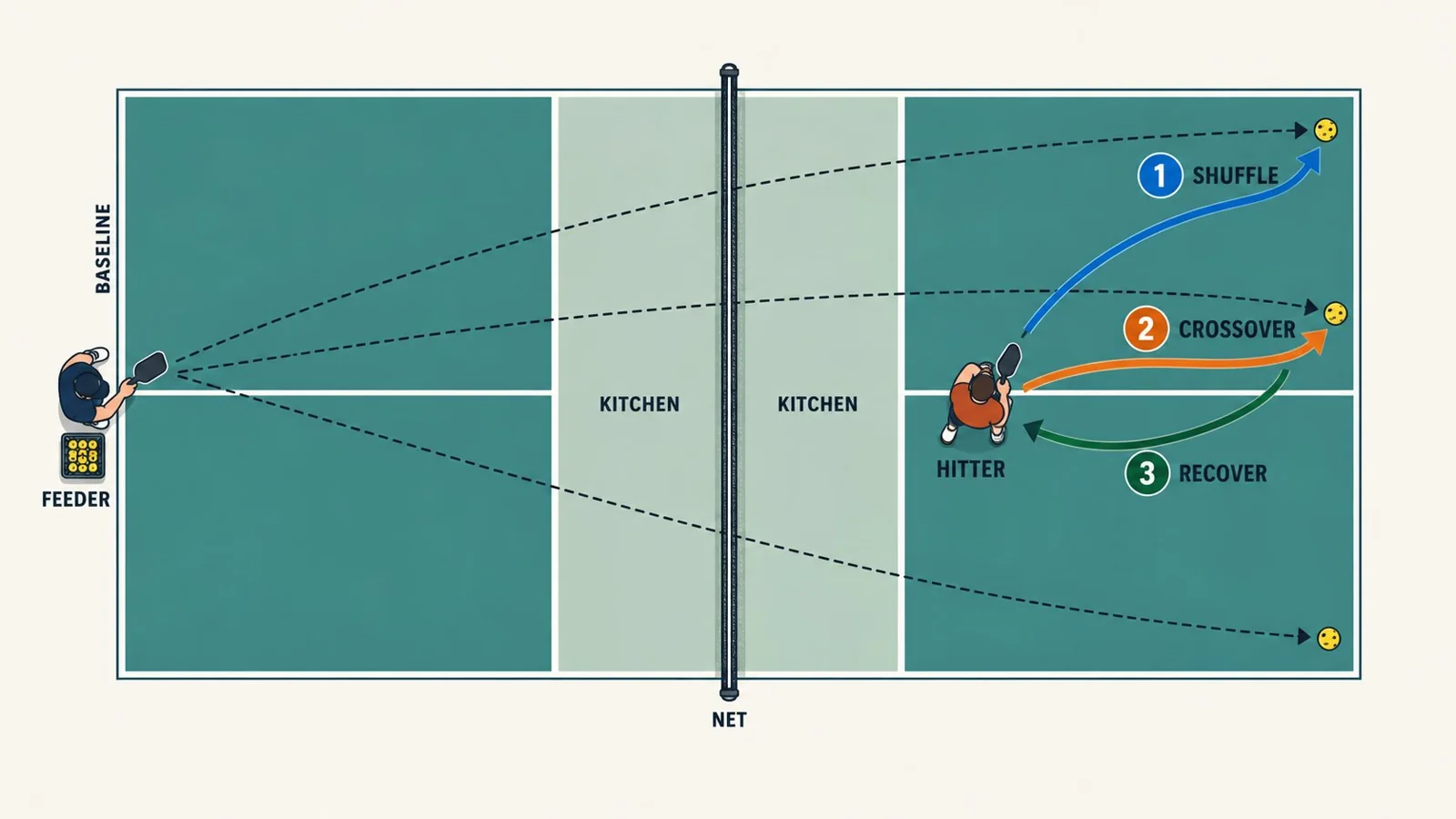
Begin with a catch-and-return drill. Stand at the kitchen line while a partner tosses balls several feet left and right. Use a shuffle for the closer feed and a crossover for the wider feed. Catch the ball in front, recover to your starting position, and repeat on the other side. This teaches your feet to create space before the paddle is involved.
Next, add the paddle. Have the feeder send gentle dinks to both sides. Hit back to a large crosscourt target, then recover before the next feed. Count a repetition only when you moved behind the ball, kept your balance, and returned near your line position. Finish with live dinking in which the feeder occasionally sends a deliberately wide ball. Keep the rally cooperative at first, then add direction and pace.
Common errors are reaching with the arm, crossing too early, standing tall, and recovering only after the next ball is struck. Make the first step earlier, lower your centre of gravity, settle before contact, and treat recovery as part of the shot. With those habits, the crossover becomes a precise answer to a wide ball instead of a desperate chase.