Pickleball Line Calls: What to Do Near the Sideline
Learn how to make fair pickleball line calls when a ball lands near the sideline, baseline, or kitchen line.
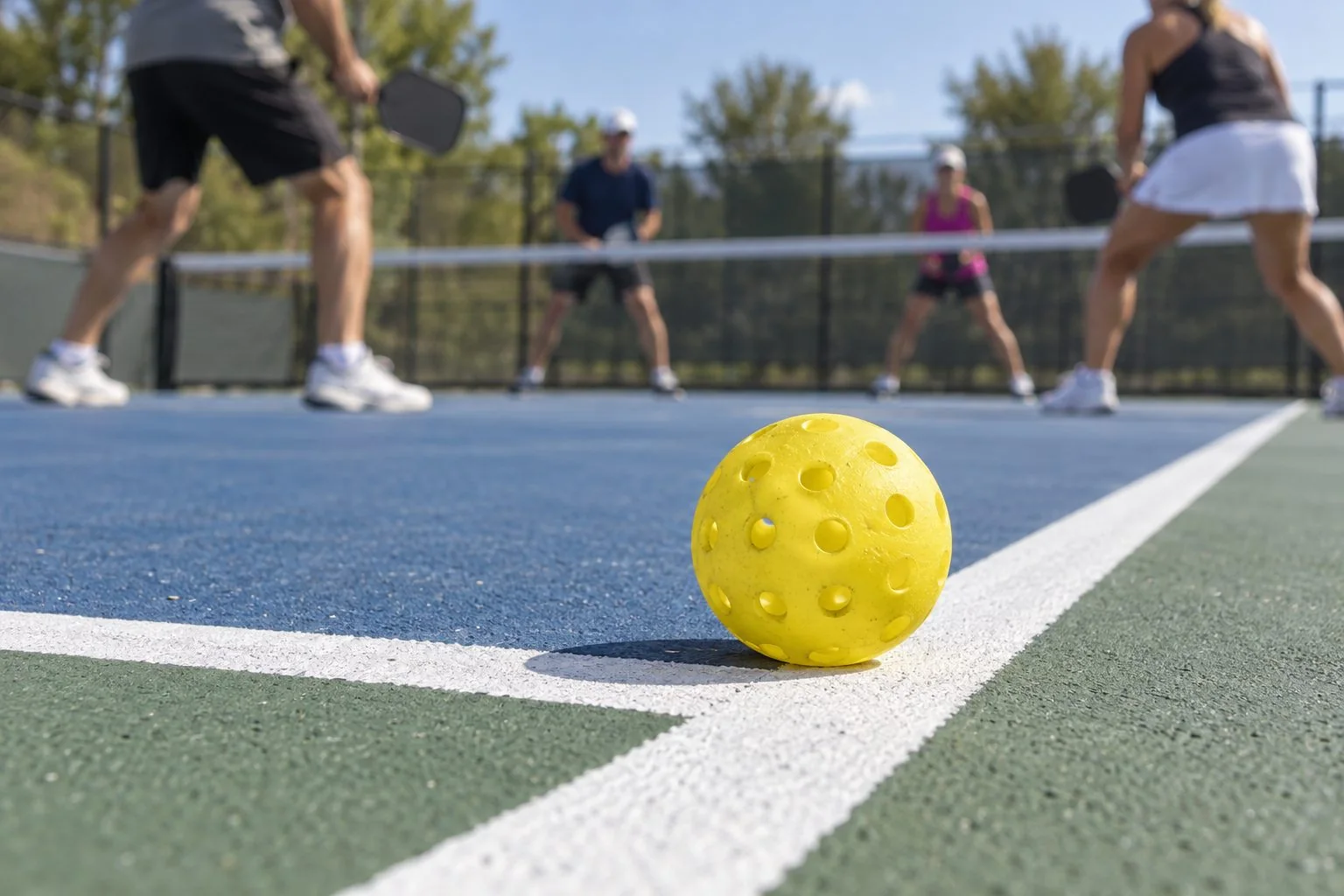
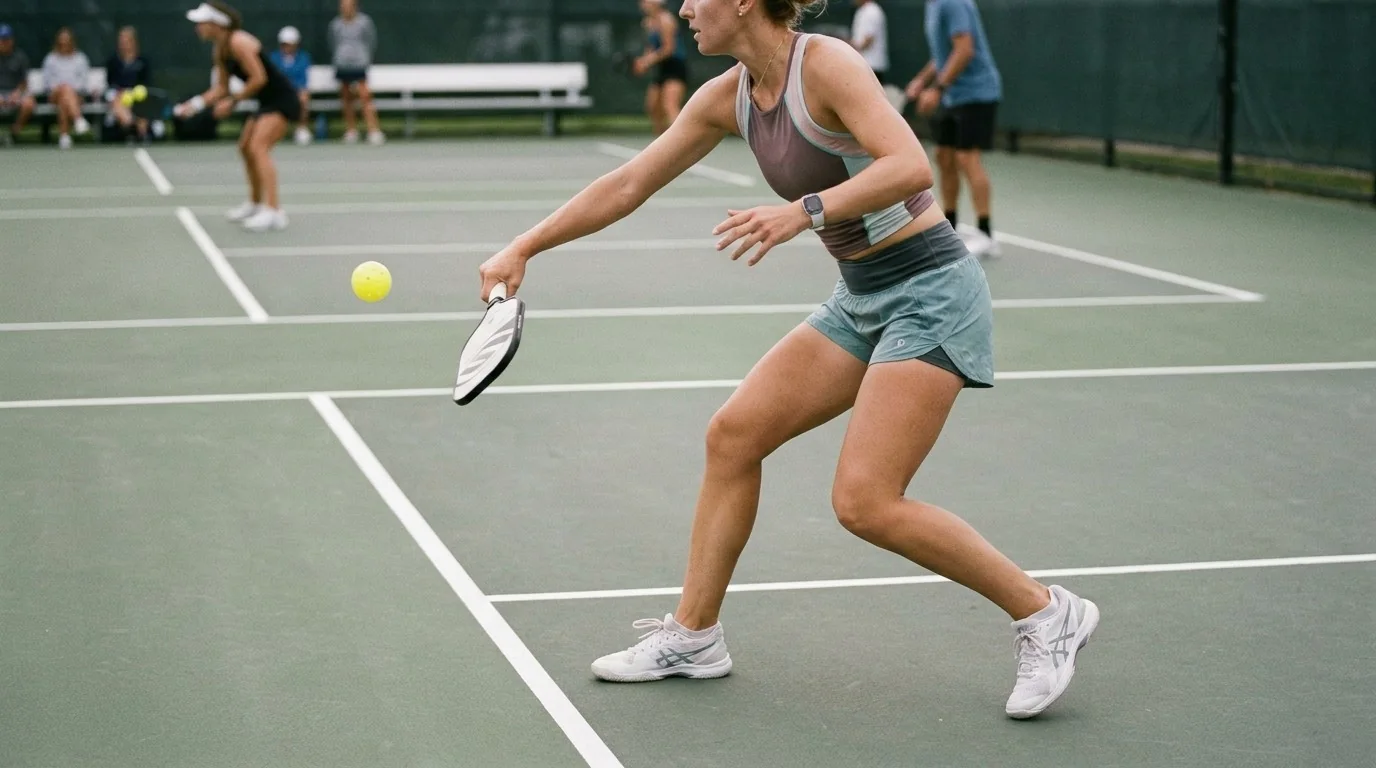
Close line calls are part of every pickleball game. A ball can land beside the sideline, clip the corner, or arrive so quickly that two players see the bounce differently. The goal is not to win an argument; it is to make a clear, timely decision and keep the next rally fair. A few simple habits make those moments much easier.
First decide: in or out?
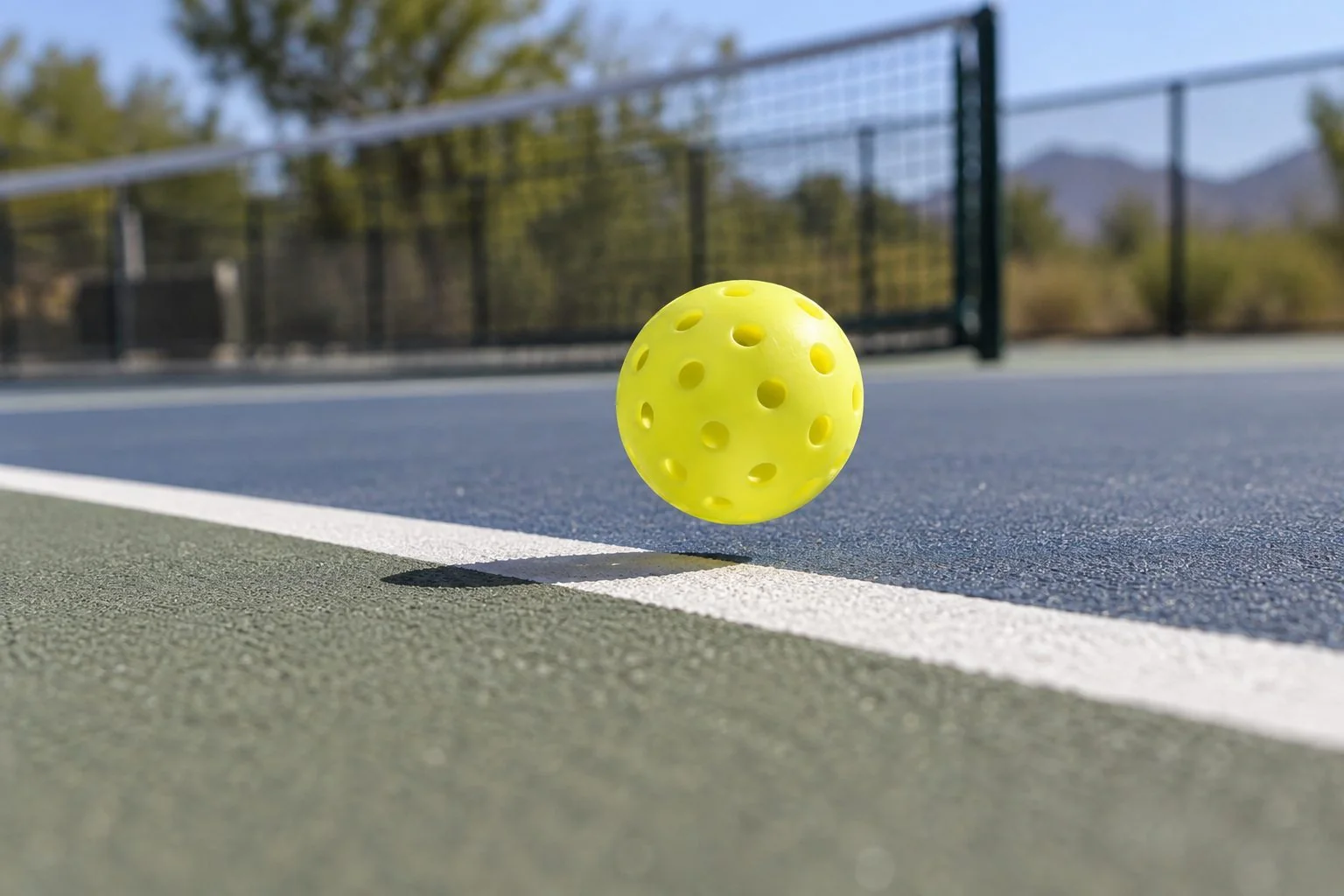
A pickleball is in when any part of it touches the line belonging to the court. The line is part of the playing area. This matters especially on the baseline and sidelines, where a ball may look out from one angle but still overlap the painted boundary. The non-volley-zone line follows the same principle for shots landing in the kitchen.
The ball must be judged from the bounce, not from where it travels afterward. A ball that lands in and then rolls or skips outside is still in. Conversely, a ball that lands completely beyond the line is out even if its flight passed over the court. Players should watch the landing area rather than point at the ball after it has already moved away.
When the ball is moving fast, do not use the sound of the bounce as your only evidence. Shadows, worn paint, and a low viewing angle can all mislead you. If you clearly saw the ball touch the line, call it in. If you clearly saw a gap between the ball and the line, call it out. If you did not see the bounce well enough to make either call, the fair response is to give the benefit of the doubt to the opponent in a self-officiated game.
How partners should communicate
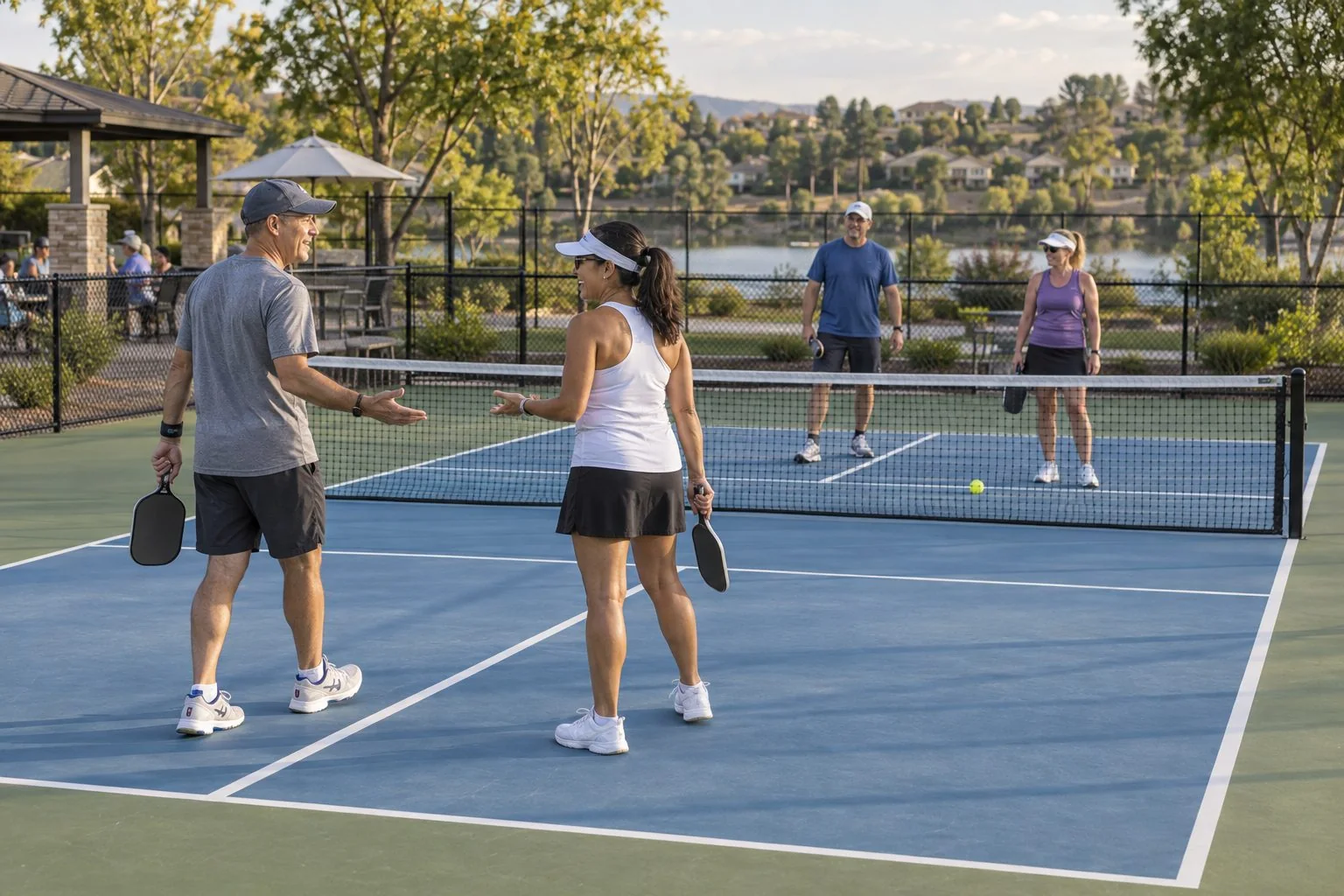
The player closest to the ball usually has the best view, but “closest” is not a licence to overrule a partner who had a clearer angle. Make calls loudly and immediately, using one short word: “out” when you are certain, or “in” when the ball touched the line. Avoid delayed calls after the opponent has already prepared for the next shot.
On a ball near the middle, agree before the game who takes priority. The player on the side where the ball lands often has the better angle, while the partner can confirm only if they had an unobstructed view. Do not combine uncertain voices into a confident call. If both partners are unsure, treat the ball as in rather than turning uncertainty into an out call.
In organized play, follow the event’s officiating procedure. A referee may make the call, or a player may be expected to make a clear call on their own side. Do not ask spectators to decide a disputed landing unless the competition rules specifically allow it. In recreational play, a brief replay can be a practical solution when nobody had a reliable view and both sides agree.
A simple routine for close balls
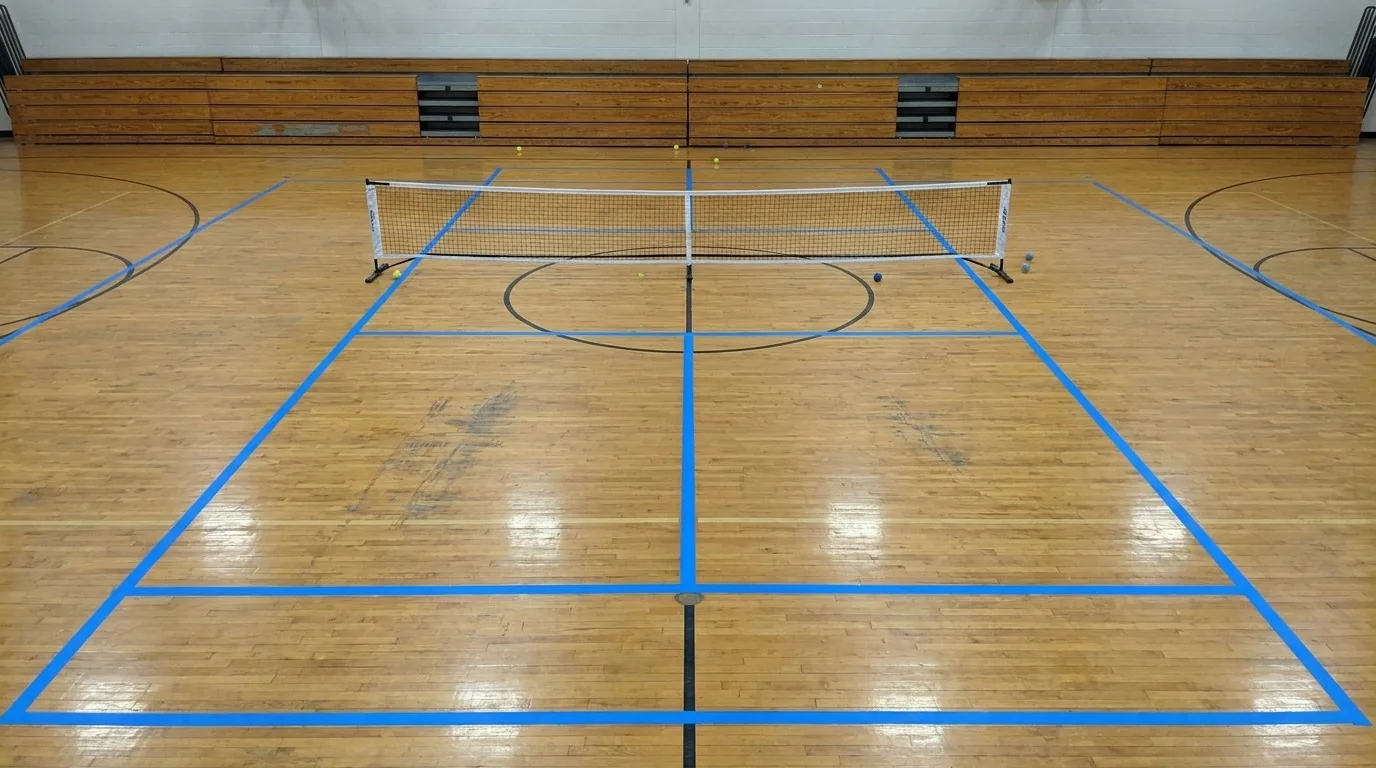
Before the game, look at the court lines and note any faded sections, patches, or shadows. During the rally, keep your eyes on the opponent’s contact and then shift attention toward the likely landing zone. After the bounce, call promptly and accept the other side’s call when they had the better view.
If a disagreement starts, pause instead of continuing the point while voices rise. State what you saw without accusing anyone: “I saw a gap,” or “I saw it touch the line.” If the evidence is genuinely unclear, choose the fair outcome and restart only under the procedure your group uses. A correct call protects the match, but respectful communication protects the community around it.
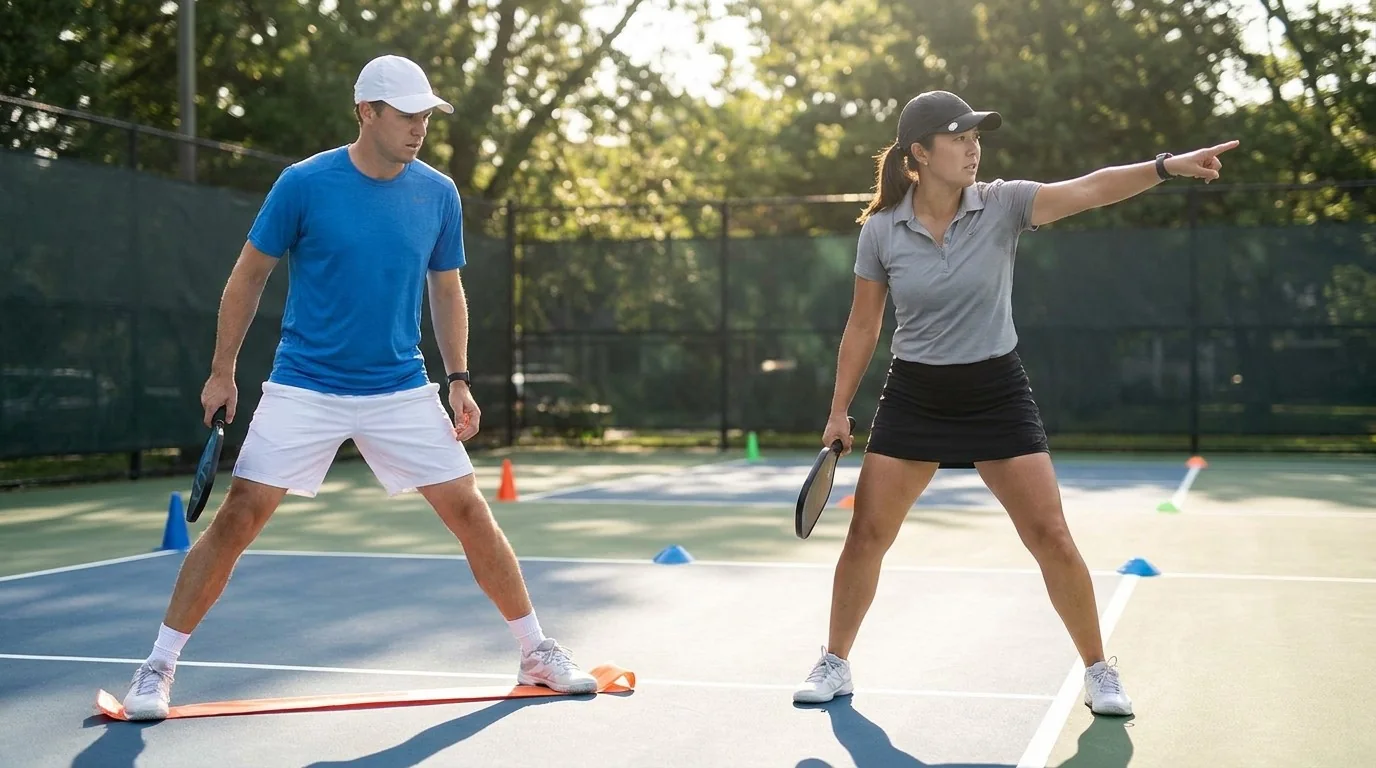
Practise line awareness with a partner feeding balls to the corners at half speed. Stand at different angles, call in or out immediately, and then compare what each player saw. Repeat from the baseline, sideline, and kitchen line. The exercise improves visual timing without encouraging dramatic gestures or late arguments.
The best line caller is not the loudest player. It is the player who watches the bounce, knows that the line counts, speaks quickly when certain, and gives the opponent the benefit of doubt when the view is blocked. That standard keeps close points competitive without letting them damage the next one.