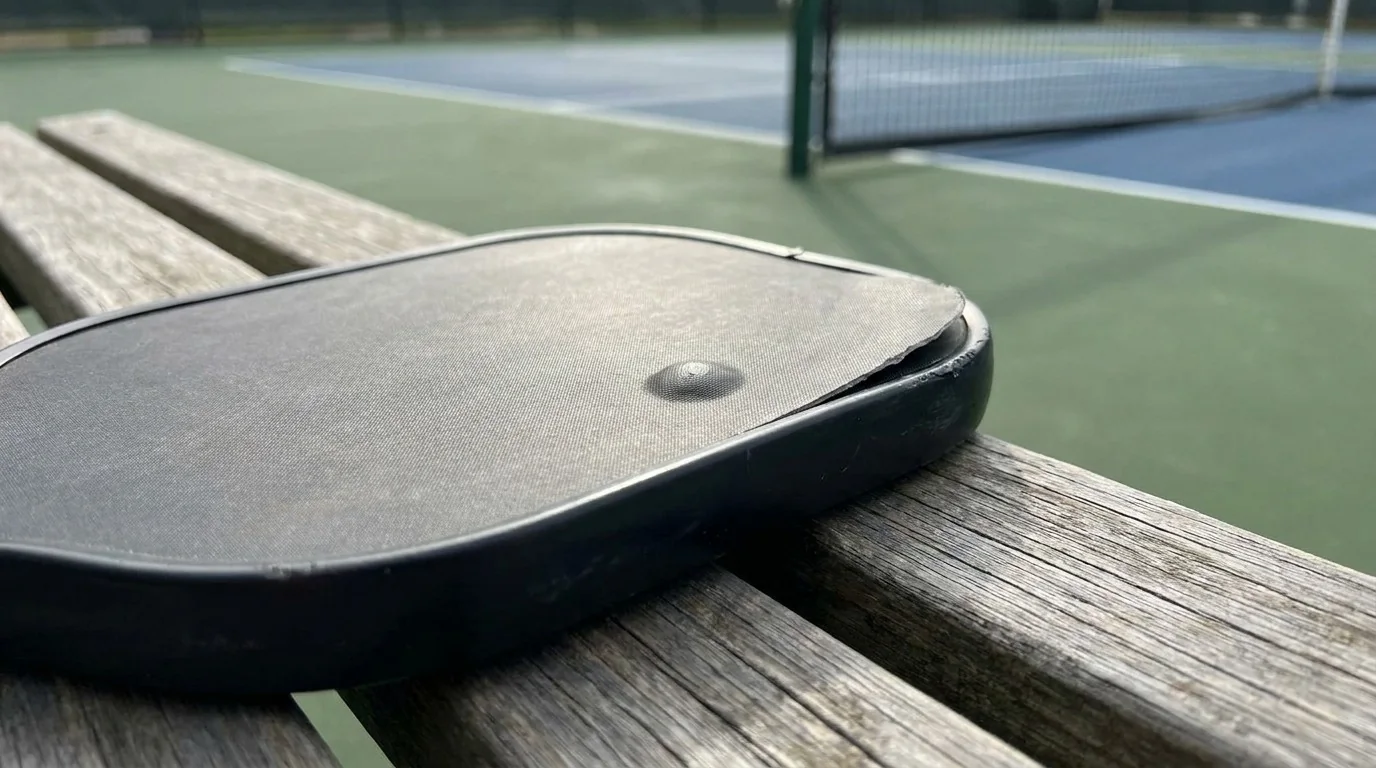
Pickleball Temporary Court Line Tape: Set Up Shared Spaces Without Confusion
A practical guide to temporary pickleball court line tape, from surface testing and accurate measuring to safe removal after play.
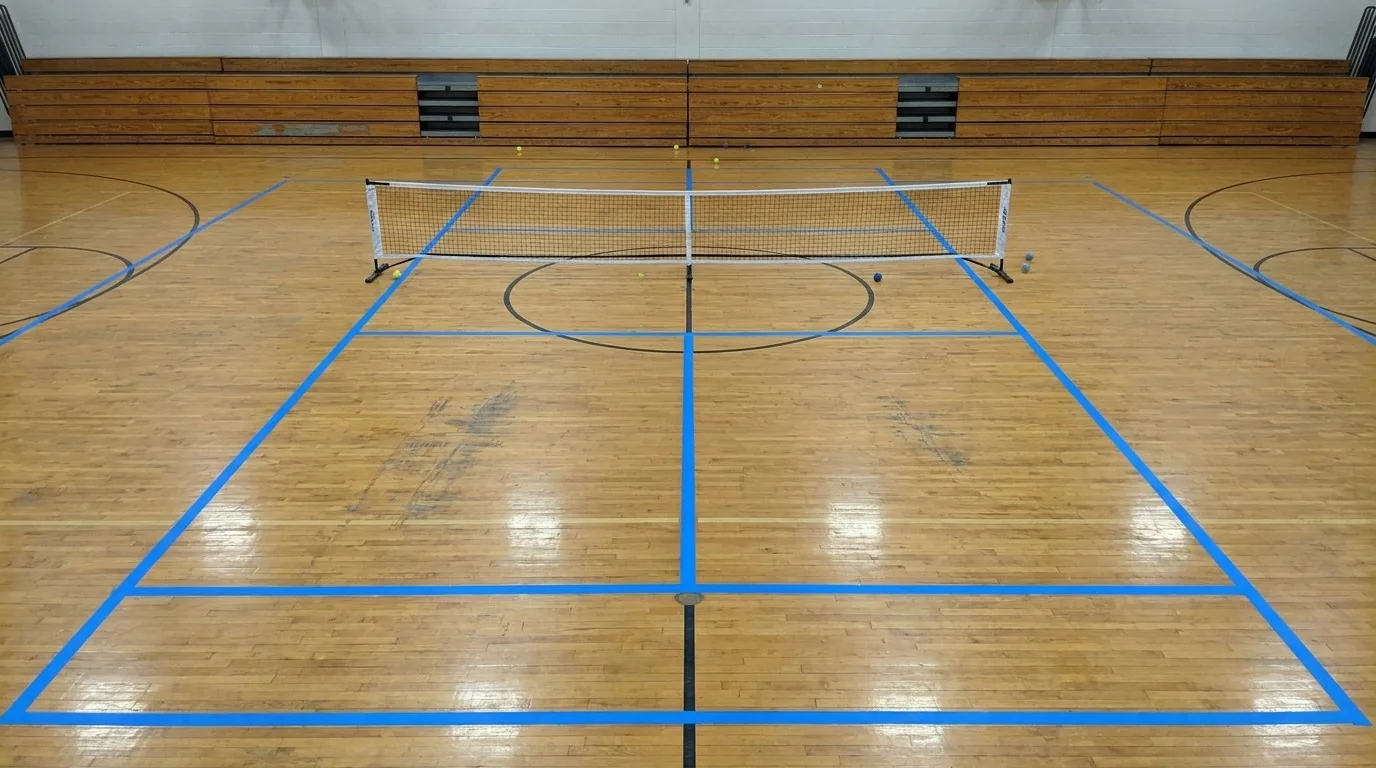
Temporary line tape can make a gym, driveway, or shared multi-use floor playable, but only if the marking is planned for both play and removal. The aim is not to cover the floor with lines. It is to create boundaries that are easy to read, stay flat under footwork, and come up without leaving a hazard or interfering with the next activity.
Match the tape to the floor
Begin with the surface. A sealed gym floor, painted concrete, asphalt, and a textured sport surface will not hold tape in the same way. Choose tape made for temporary floor marking and confirm that the facility permits it. It should hold for the session but release without pulling the finish, leaving adhesive, or creating a raised edge.
Visibility matters too. Pick a colour that contrasts with the floor and existing markings, and choose a width players can see from the baseline and kitchen without mistaking the tape for a permanent line. Test a short piece in an inconspicuous place. Tape sold for walls, packages, or construction is not automatically suitable for a surface where players shuffle and turn.
Measure the court before applying tape
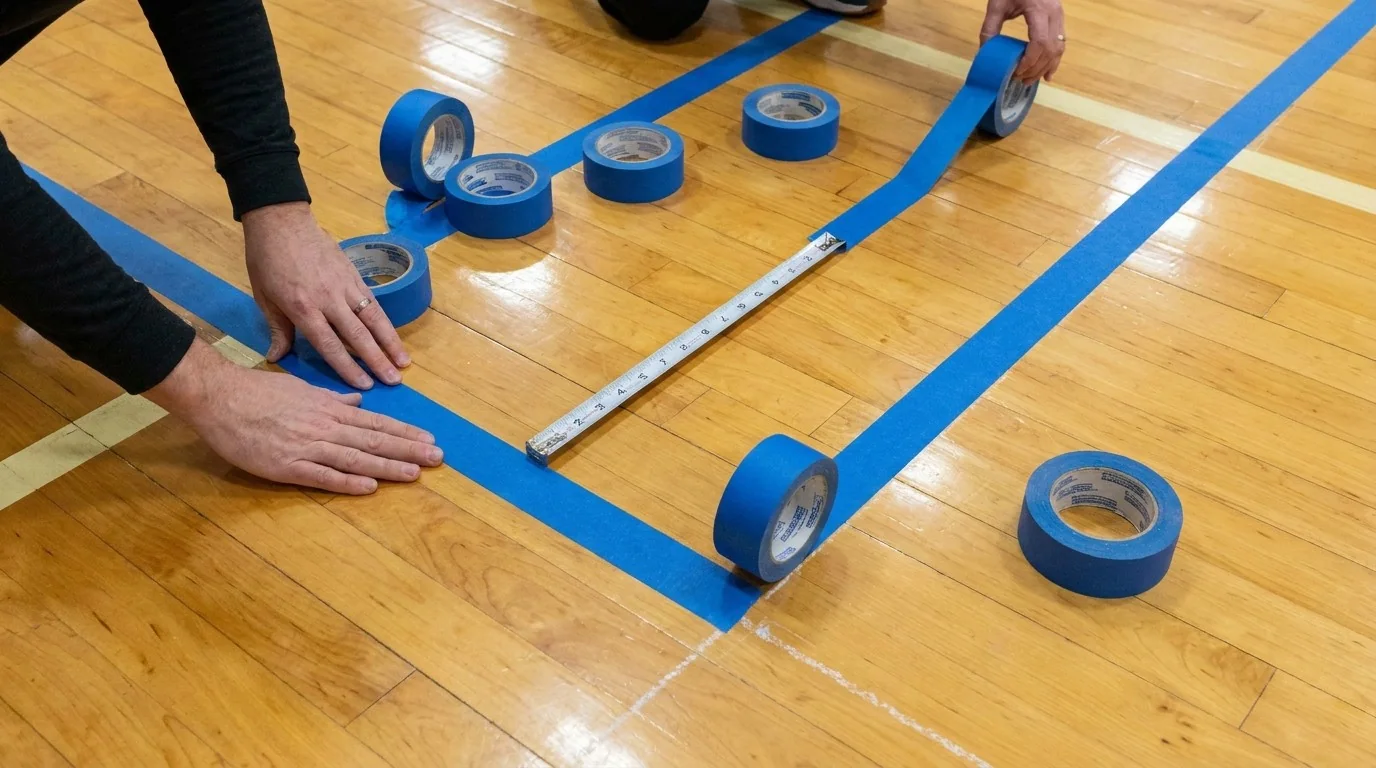
A regulation pickleball court is 20 feet wide and 44 feet long. The non-volley zone extends 7 feet from the net on each side. Those dimensions also help with a casual setup: consistent geometry makes the court easier to share and reduces disputes over close balls. Establish a centre reference first, then measure the baselines, sidelines, and kitchen lines from it instead of estimating each corner.
Use a tape measure and, only when the facility allows it, a removable pencil or low-residue marker. Apply long, straight runs with two people when possible. One person keeps the roll aligned while the other smooths the tape down. Do not pull it excessively tight. Tension can make the strip spring back at a corner or lift as the floor warms.
Inspect every line before play
Walk the whole perimeter once the layout is finished. Press down bubbles, wrinkles, and loose ends, paying special attention to corners and overlapping joins. A defect that looks small from standing height can catch a shoe during a lateral move. When the layout permits, keep joins away from the areas where players turn most often.
Make sure no tape covers an expansion joint, drain, access panel, or required safety marking. Keep doors and walkways open. With multiple courts in one room, leave enough separation for ball retrieval without sending players through an active point. Photograph the completed layout so the next session can reproduce it.
Remove the tape carefully
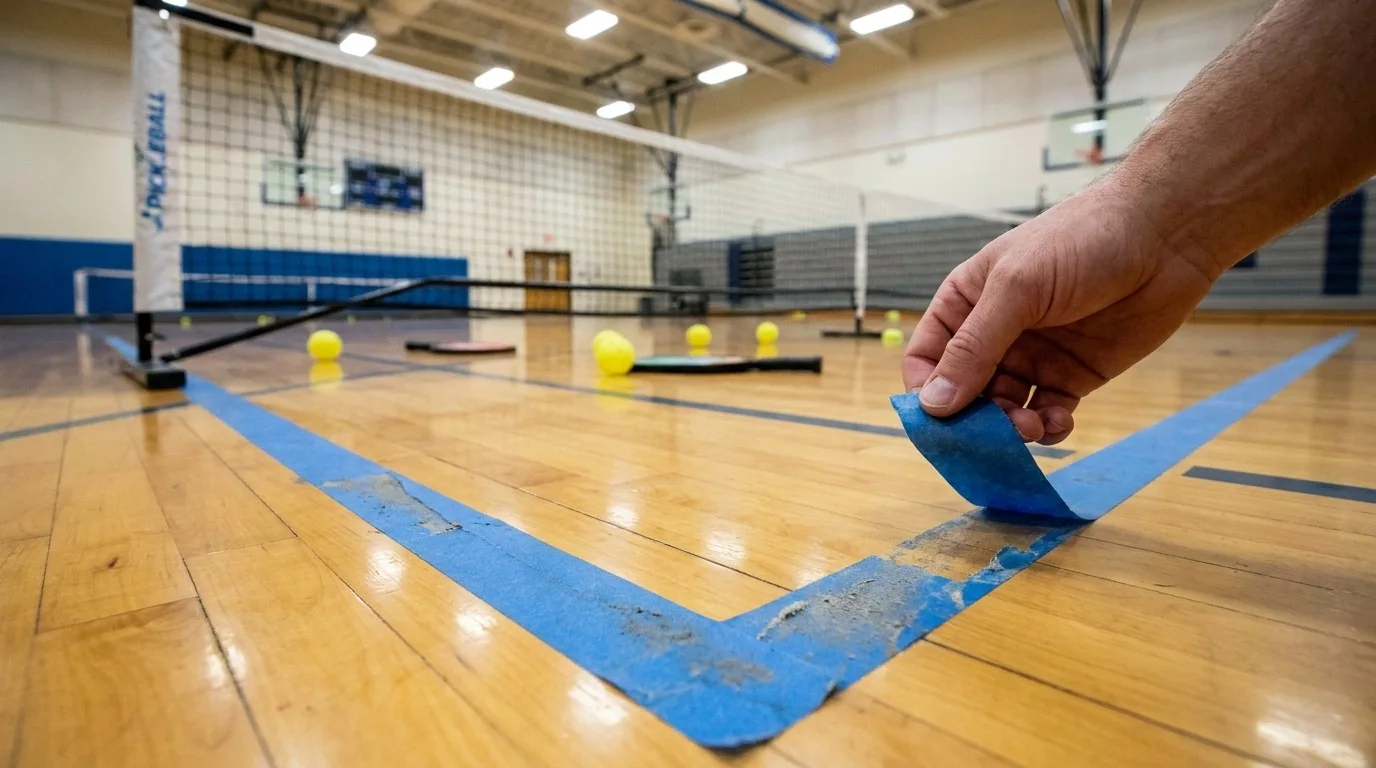
Lift temporary tape soon after play and follow the maker's instructions. Pull slowly at a low angle rather than straight up. If a strip resists, stop and check whether adhesive has bonded to a coating or the floor is cold. Do not reach for an unapproved solvent: it can dull paint, soften the finish, or leave the surface slippery.
After lifting the tape, check for adhesive, colour transfer, a lifted coating, or a change in texture. Use only the facility-approved cleaning method, and report damage before another group plays. Discard tape that has stretched, torn, or lost its clean edge instead of saving it for another setup.
Use a pre- and post-play checklist
- Permission: Has the facility approved this tape and layout?
- Compatibility: Did a test piece come off cleanly from this surface?
- Geometry: Are the width, length, net position, and kitchen lines consistent?
- Visibility: Can players see the boundaries from both baselines?
- Safety: Are all wrinkles, bubbles, raised joins, and blocked walkways dealt with?
- Removal: Is there a plan to lift the tape, clean the floor, and record any damage?
Temporary line tape works best when it respects the shared space. Measure first, test the product, smooth every edge, and remove it methodically. That preparation gives players a readable court without turning the floor into a maintenance problem.