Pickleball Lob Placement: Height, Depth, and Recovery
Use better pickleball lob placement by reading the court, shaping height and depth, and recovering with your partner after contact.
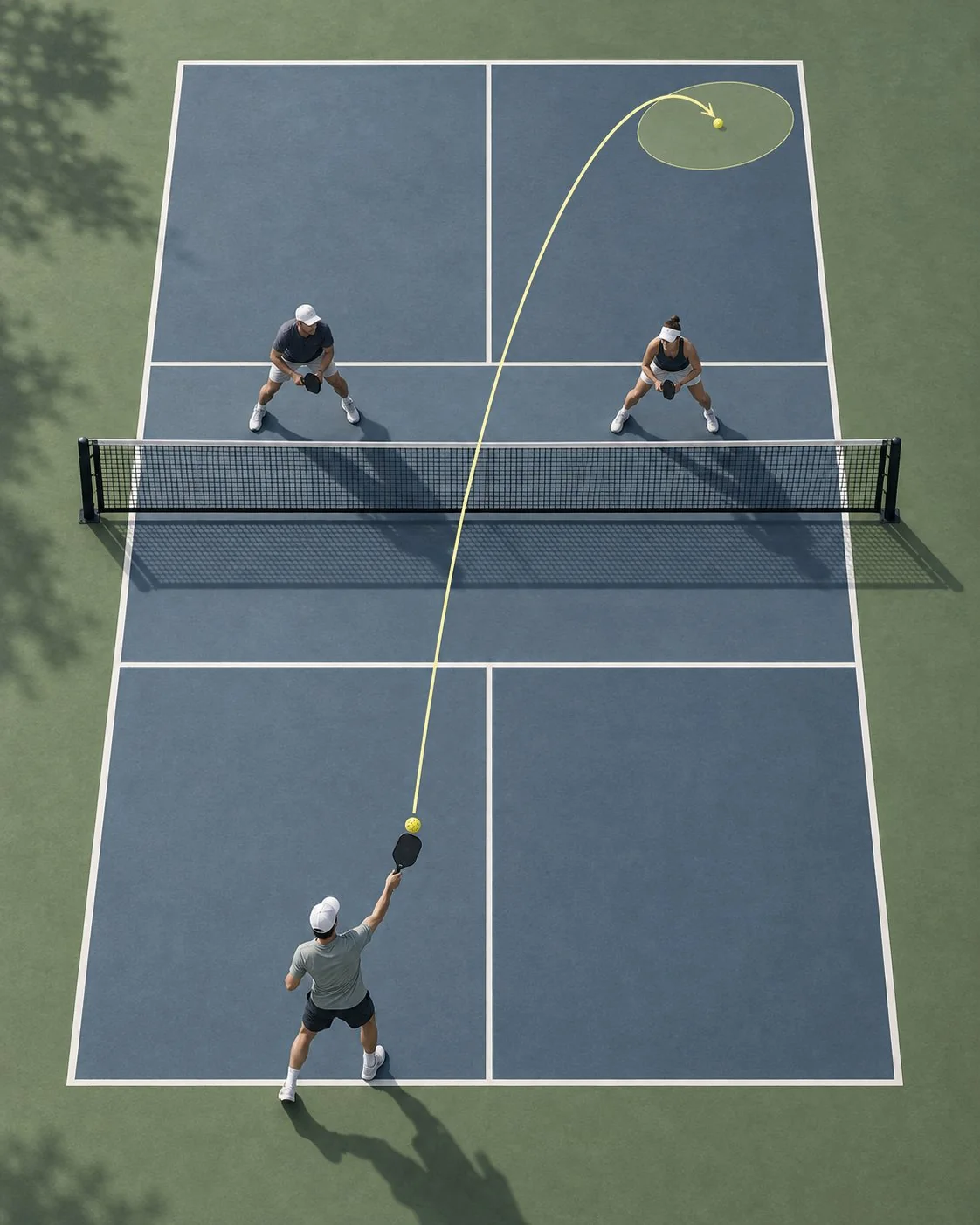
A pickleball lob is most useful when it creates time or changes the shape of the rally—not when it is simply hit as high as possible. The right choice depends on the opponent’s position, your balance, and the space available behind the defenders. Build the shot around a clear landing zone, then recover as if the ball might come back.
Read the court before choosing the lob
Start with the defenders. A player leaning into the kitchen line, moving forward, or standing with the paddle low may be vulnerable to a lob. A player already several steps back is a poor target because the shot gives away height without changing the rally. Also check your own contact: a stretched, low ball is usually a defensive problem, not an invitation to force a precise attacking lob.
Choose the direction that gives you the most usable court. Over a player’s backhand side can be effective when that side is less comfortable, but placement should not override margin. A crosscourt lob has more room to clear the sideline and often gives the ball a longer diagonal path. A straight lob can be quicker and harder to read, yet it leaves less lateral margin. Pick the option you can repeat under pressure.
The visual target is deep space, not the exact baseline. Aim to land the ball several feet inside the back line so a small error does not become long. The ball should travel high enough to clear the opponent comfortably, then descend with enough depth to make an overhead awkward. A perfect line is less important than a reliable window.
Shape height, depth, and contact
For an offensive lob, use a controlled upward swing and a firm but not frantic finish. The paddle face supplies much of the launch angle; do not try to create height only by scooping with the wrist. Make contact in front of the body when possible, keep the head steady, and let the legs and torso contribute to a smooth lift. A defensive lob may use more height because buying time matters more than immediate depth.
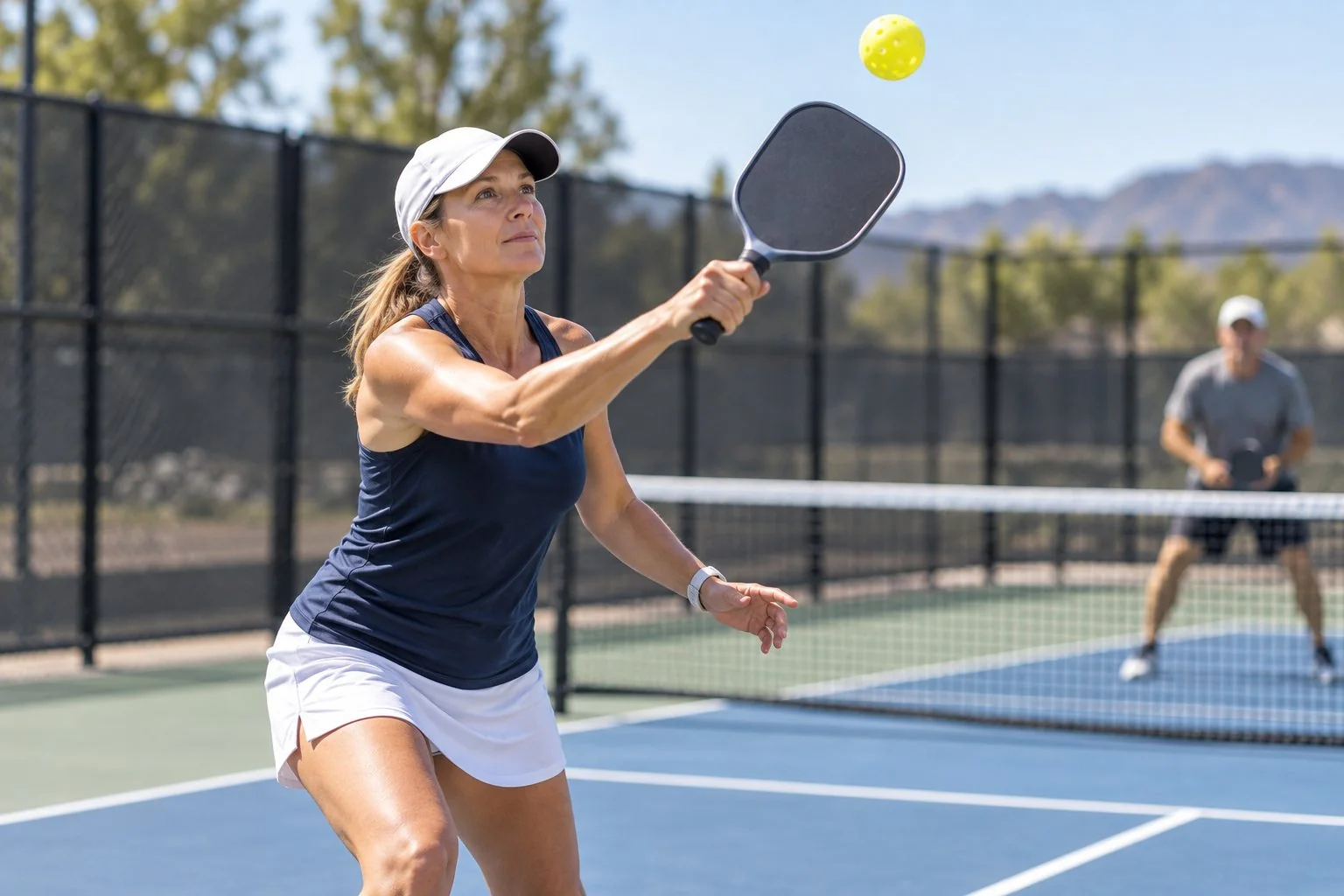
If the ball is falling behind you or your feet are still moving, choose a safer shape. A high, deep ball can reset the exchange, but a short lob from an unstable position gives the opponent an easy overhead. When the opponent is close and the ball sits comfortably above your contact point, you can reduce the arc slightly and prioritize depth. When the opponent is retreating or turning, do not rush the next shot; the lob has already done its job.
Avoid opening the paddle so far that the ball rises without traveling. Avoid hitting flat and hard when the target requires clearance. Practise changing one variable at a time: first height, then depth, then direction. That makes the result easier to diagnose than changing all three on every attempt.
Recover after the ball leaves your paddle
A lob is not complete at contact. In doubles, tell your partner early that the ball is going up, then move together. If the lob is short, both players should be ready for an overhead or a quick counter. If it is deep and the opponents turn, recover to a position that covers the likely return rather than charging blindly to the kitchen.
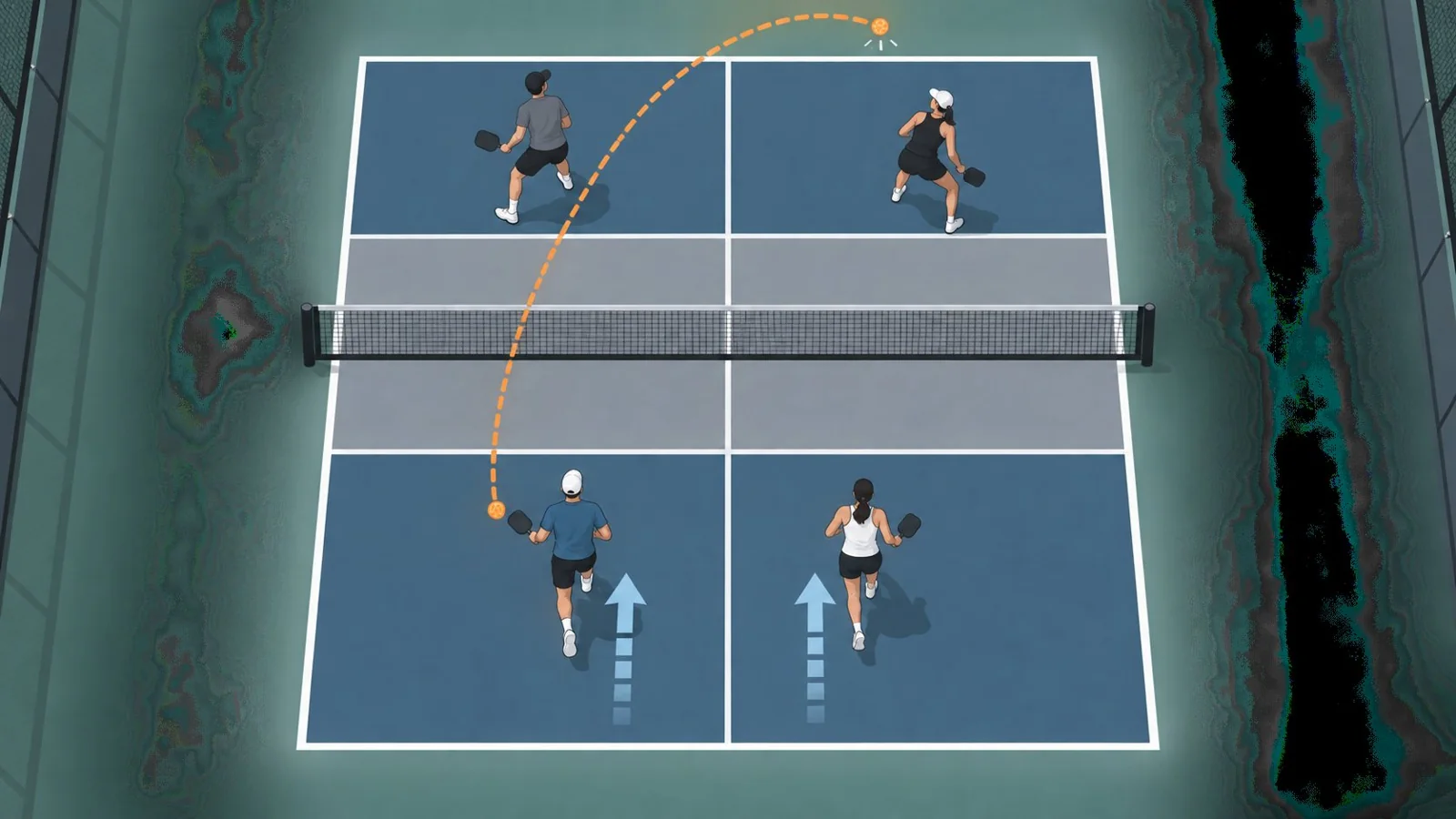
Watch the opponents’ shoulders and feet. A player who turns fully may need time to set up; a player who keeps facing you may be preparing a quick overhead. Use that information to decide whether to hold, retreat, or advance. Keep enough spacing with your partner that a defensive reply does not expose the middle or leave a large gap down the line.
A practical drill begins with two players at the kitchen and one lobber under moderate pressure. The lobber calls the target side, lifts the ball, and then immediately names the recovery action: hold, retreat, or advance. The defenders first practise turning and communicating instead of swinging at every ball. Rotate roles after a short series, and count only lobs that clear safely and land in the intended deep zone.
Finish with a decision drill. Feed a high ball, a low stretched ball, and a comfortable ball in random order. Choose a lob only when the contact and opponent position support it; otherwise reset or play a simpler shot. The goal is not more lobs. It is a better selection, a repeatable arc, and a recovery that keeps the next ball playable.