Pickleball Lob Shots: Choose Attack, Defense, and Recovery
Choose offensive or defensive pickleball lob shots with better timing, placement, footwork, and doubles recovery.
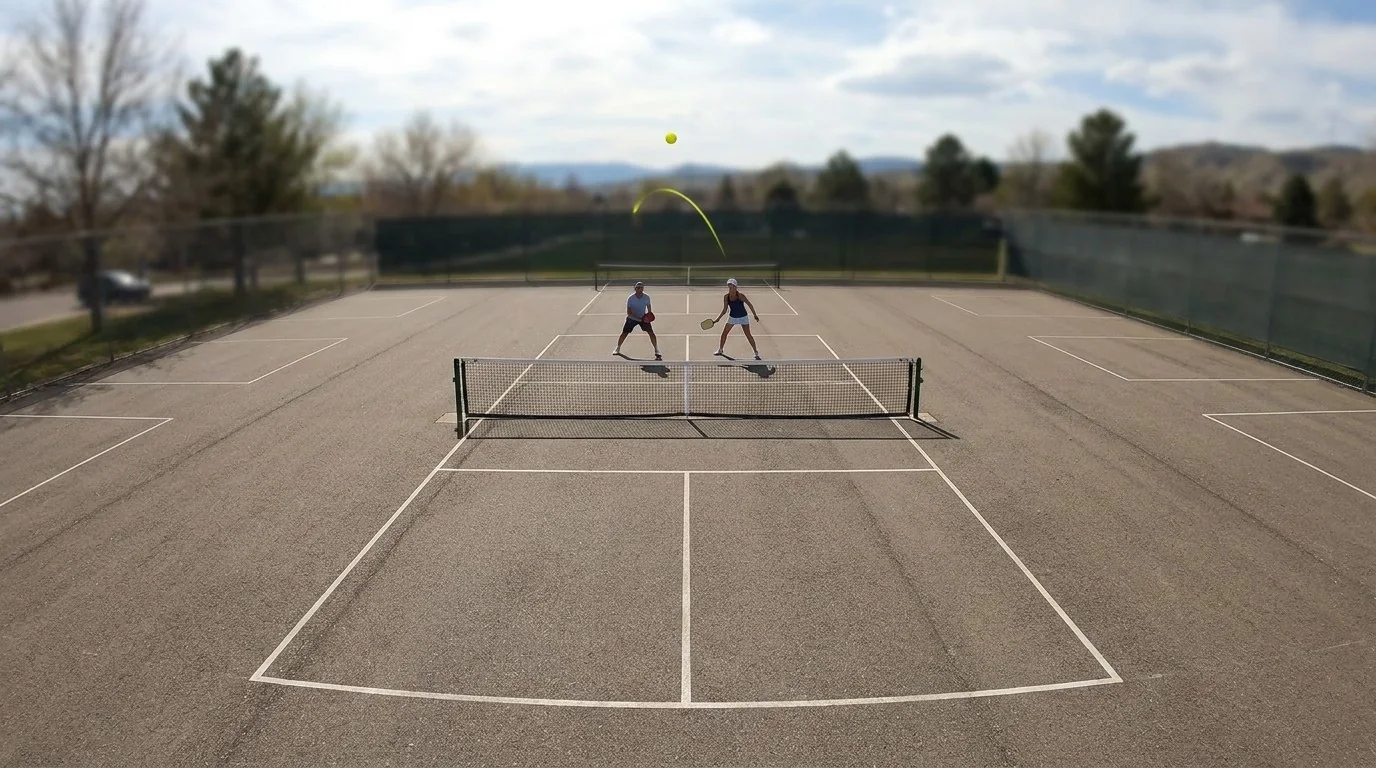
A pickleball lob can change the shape of a rally, but height by itself is not a plan. First ask what the ball needs to do: surprise opponents who are set at the non-volley line, or give your team time to recover. Then choose the height, depth, and margin that fit the court position.
Use an offensive lob as a change-up
An offensive lob is most useful when both opponents are committed to the non-volley line and expecting a drive or dink. The value comes from the change of pace and direction. Keep the preparation close to a familiar soft shot, then add the lift and follow-through needed to send the ball deep.
There is not much room between the non-volley line and the baseline. A short lob can give the opponent an easy overhead, while a long one can land out. Leave yourself a practical margin and avoid repeating the same attempt until the opponents start moving early. Once they anticipate the lob, much of its surprise is gone.
Use a defensive lob to buy time
A defensive lob has a different job. If you or your partner has been pulled wide or deep, a high ball toward the opponent's backcourt can create time to regain a useful position. The extra height can make the overhead less comfortable, but the lob does not win the point on its own. Use the next ball to decide whether your team can take control.
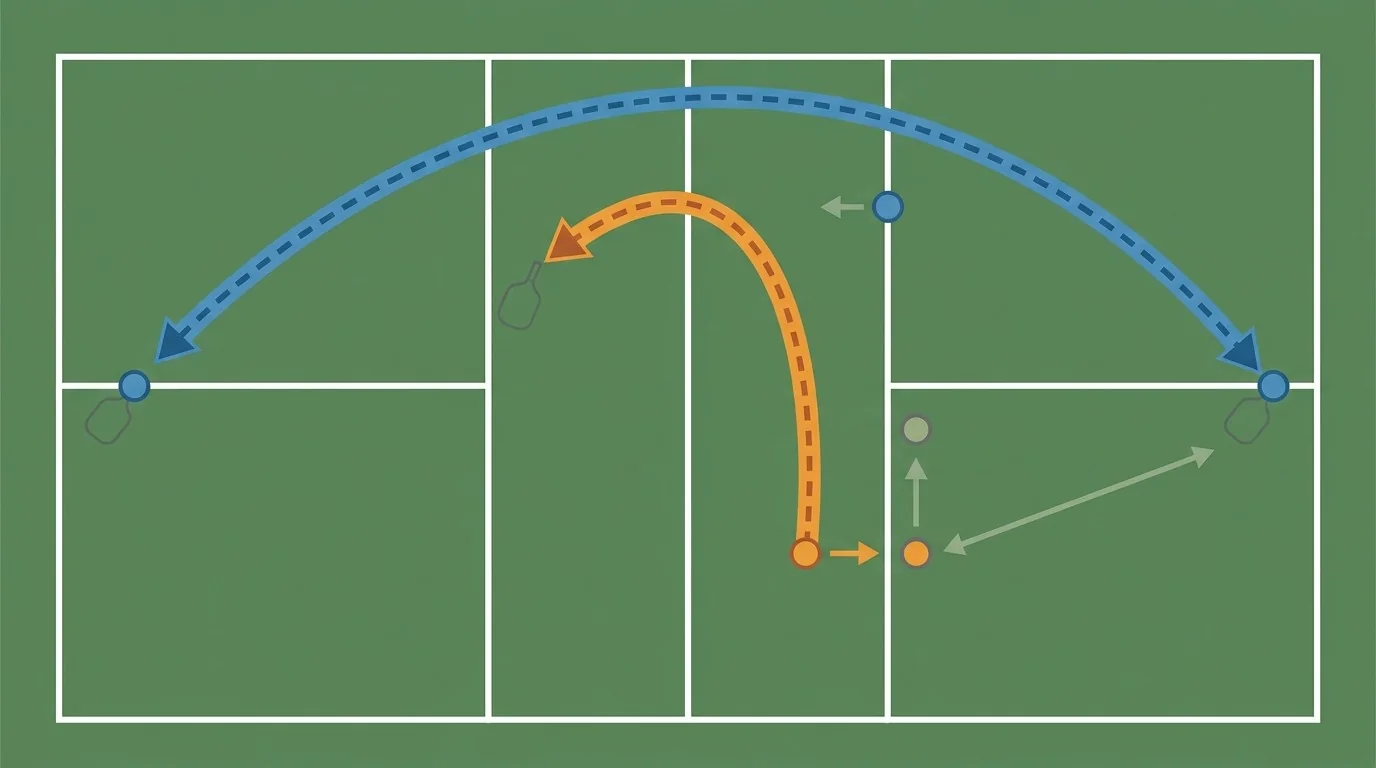
If the opponents let the defensive lob bounce, recognize the change quickly. Move toward the non-volley line as soon as the bounce is likely instead of waiting for the ball to land. That timing can turn a defensive sequence into an approach opportunity.
Move before reaching for the ball
Footwork matters whether you are hitting or retrieving a lob. Take quick steps to get under, or slightly behind, the ball before you swing. Drifting backward while reaching makes direction and contact less reliable. If turning and running gives you a clearer route, do that instead of backpedaling.
Play the ball in the air when the ball, lighting, and available time make that choice sensible. Letting it bounce gives the opponents more time to advance and removes the immediate overhead option. A bounce can still be the better decision when the sun hides the ball, you cannot get underneath it, or the ball appears likely to go out.
Coordinate the recovery in doubles
Communication prevents two players from hesitating or chasing the same ball. When a lob goes over one player, the diagonal partner often has the more natural retrieval route: turn partway and run rather than making a full turn beneath the ball. The player who stays forward should cover the space and prepare for the next shot.
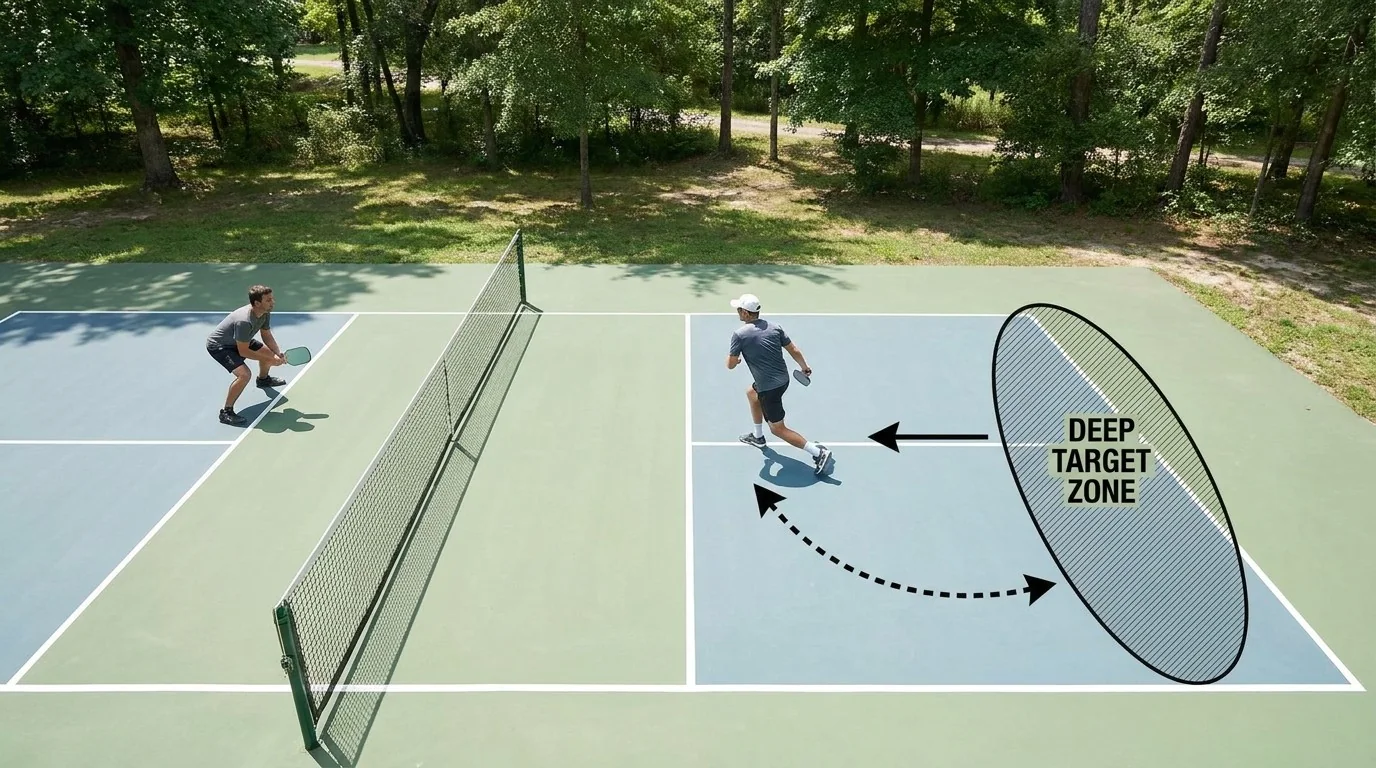
Make the call early, then adjust for mobility, court position, and the direction of the ball. The right coverage is less about a fixed rule than about making sure one player retrieves while the other protects the next space.
Practise the decision, not only the swing
Start with cooperative feeds. Alternate an offensive lob from the kitchen with a defensive lob after a player has been pulled wide. Score each attempt for depth, court position after contact, and whether the team recognized the next transition. Add an early partner call, then practise retrieving lobs without backpedaling.
The useful goal is a repeatable decision. Use an offensive lob when the court offers surprise, a defensive lob when the team needs time, and coordinated movement when the ball changes the point. A good lob is not simply the highest ball you can hit. It is the trajectory that gives your team the best next position in that rally.