Pickleball Lob Technique: Height, Depth, and Safer Targets
A practical guide to the pickleball lob: build it from a dink setup, choose height and depth, target safely, and recover for the next ball.
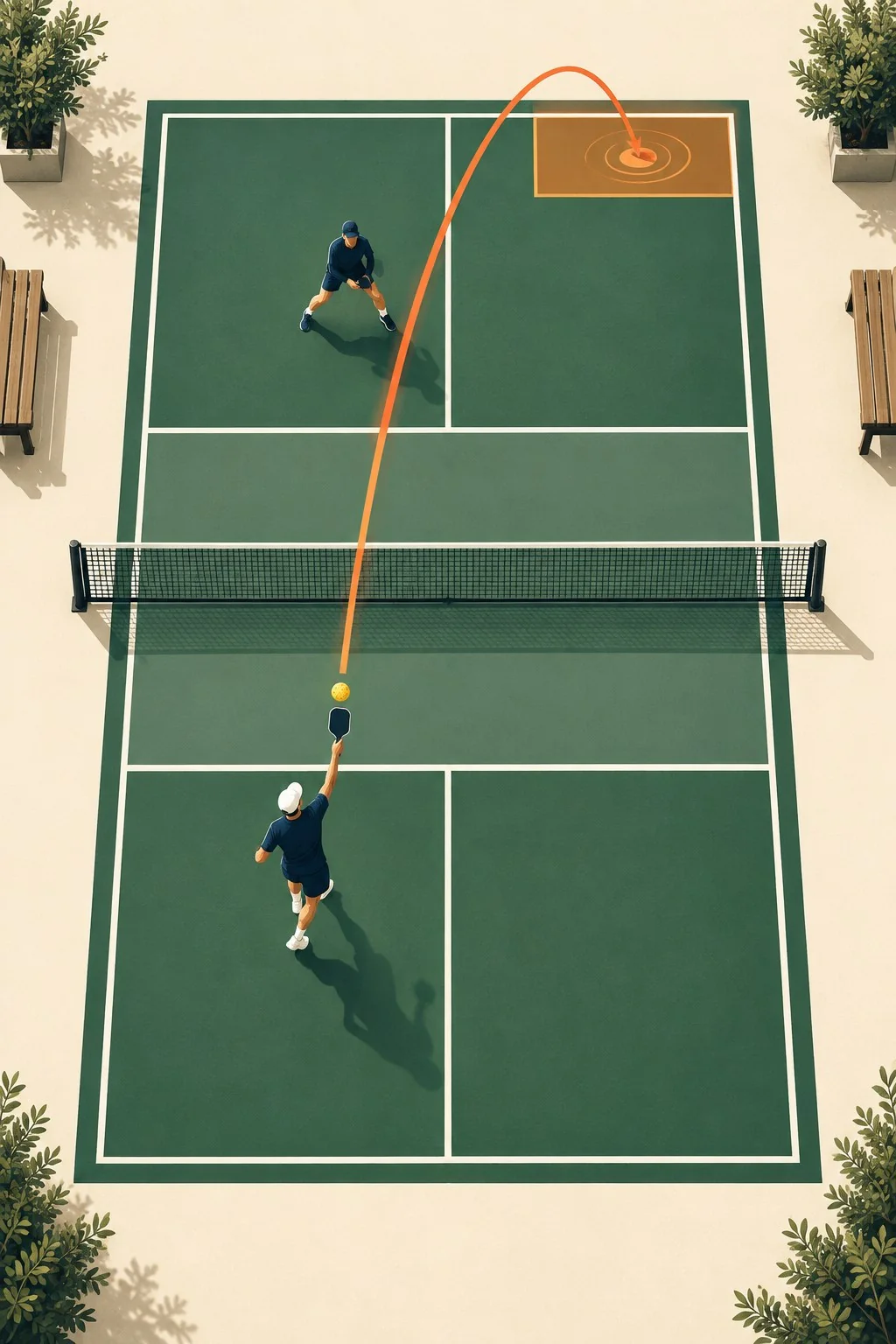
A pickleball lob is most useful when it changes the opponent’s court position without becoming a gift. From the kitchen, the shot can lift the ball over a player who is leaning forward and send them backward, but the margin is narrow: the ball must clear the reach, travel deep, and give you time to recover. The reliable version begins with the same calm setup as a dink, then adds height only when the situation supports it.
Build the lob from a familiar setup
Start with bent knees, a paddle in front, and a small forward bias in your stance. That posture keeps the shot disguised and makes it easier to change your mind if the opponent reads the lift early. Avoid standing tall and leaning backward; you lose control of the contact and often send a short, floating ball.
Move your feet before the ball reaches the strike zone. A forehand lob is usually the simpler option because it lets you turn the shoulders and load the paddle-side hip. Compress slightly, keep the ball in front, and use the legs as part of the lift. The stroke should rise through the ball rather than begin with a large backswing.
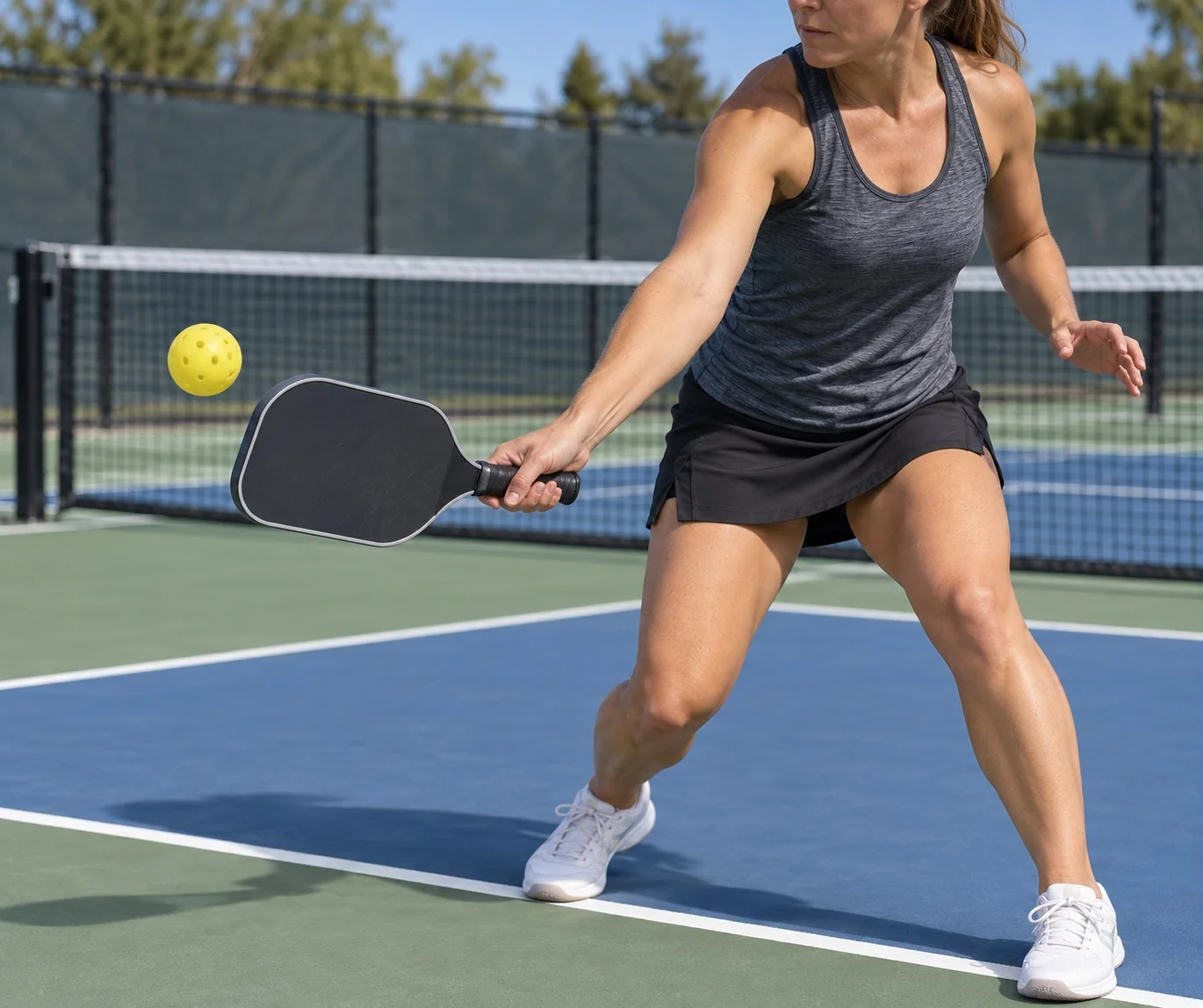
Keep the wrist quiet through the early part of the motion. A compact upward path gives you a repeatable starting point, while a late brush can add topspin and help the ball dive toward the back court. The goal is not maximum spin; it is enough shape and depth to make the overhead difficult.
Choose height, depth, and direction
Crosscourt is the safer default for an offensive lob because the diagonal route gives the ball more distance to climb and descend. Aim deep, with room inside the baseline rather than at the line itself. A down-the-line lob can be effective over a weak backhand shoulder, but its shorter path leaves less room for error and may produce an easy overhead if it lands short.
Read the opponent before choosing the shot. A player leaning into a dink, reaching wide, or holding the paddle far forward may be vulnerable behind the outside shoulder. Someone already balanced and retreat-ready is a poor target. In doubles, the middle can create hesitation, but only if both opponents must decide who owns the ball.
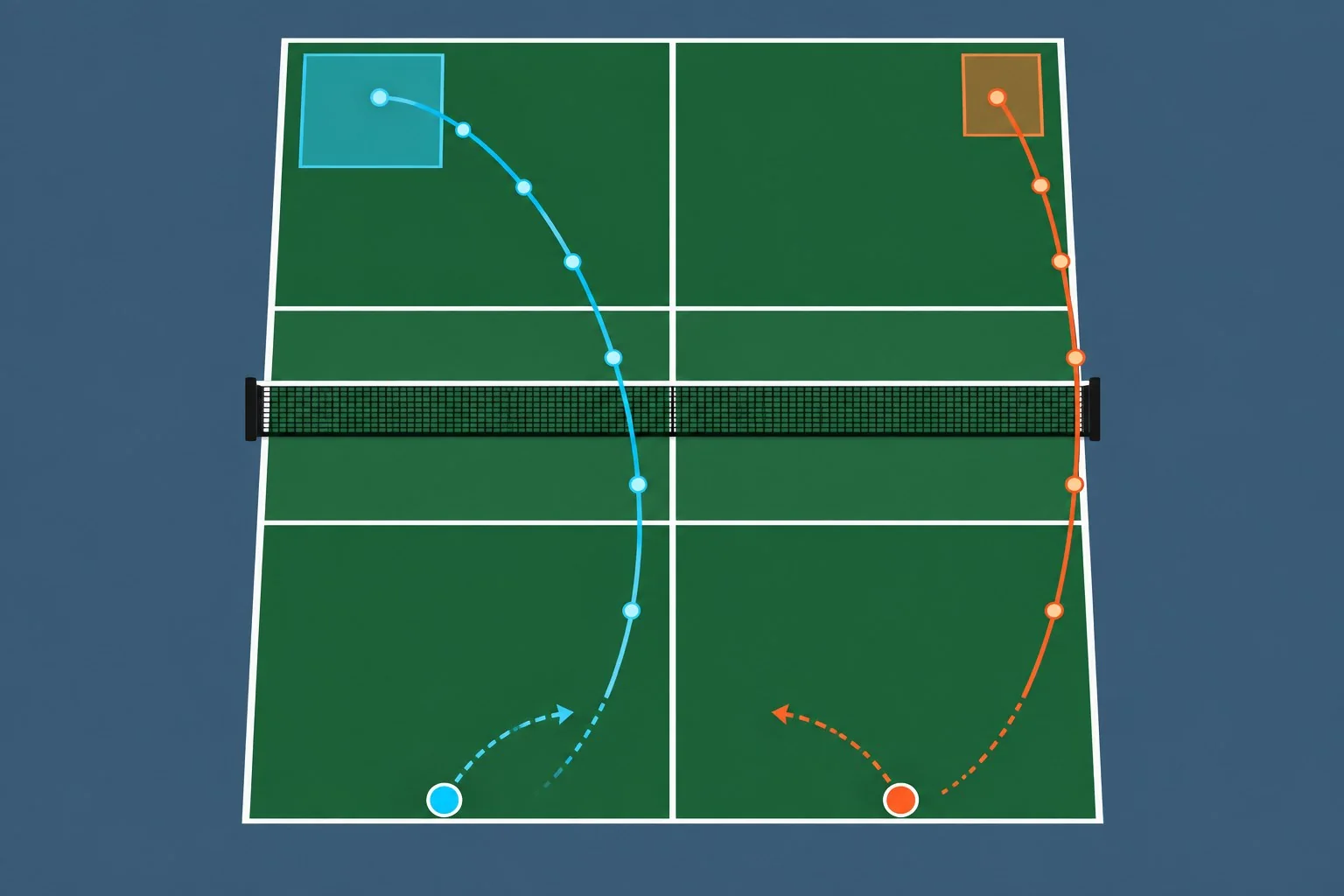
A defensive lob has a different job. When you are stretched or late, favor height and the deepest central space so you can regain position. Do not chase a perfect corner while off balance. A high ball that buys time is useful even when it does not threaten the baseline.
Recover instead of admiring the shot
After the lob leaves the paddle, read the opponents’ movement. If they turn and run, advance only as far as your next position allows; do not sprint blindly into a counter. If the lob is short, prepare for the overhead and be ready to defend. When an opponent sends a lob over you, turn and run rather than backpedaling, then decide early whether an overhead is available or whether a deep reset is safer.
Practise the decision, not just the swing
Begin with cooperative feeds from the kitchen. Hit a series of crosscourt lobs toward a deep target, counting only balls that clear the imagined reach and land safely inside the baseline. Next, alternate forehand and backhand feeds so footwork becomes part of the exercise. Finish with live points in which the lob is allowed only when the opponent is leaning forward or recovering from a wide ball.
When a lob fails, diagnose the cause in order: late feet, contact behind the body, excessive backswing, poor target choice, or no recovery plan. Fix the first mistake rather than adding force. A dependable lob is a selective change of height that preserves control of the next exchange.