Pickleball Net Clearance: Choose Height Before You Chase Depth
A practical guide to return depth, net clearance, target selection, and balanced recovery in pickleball.
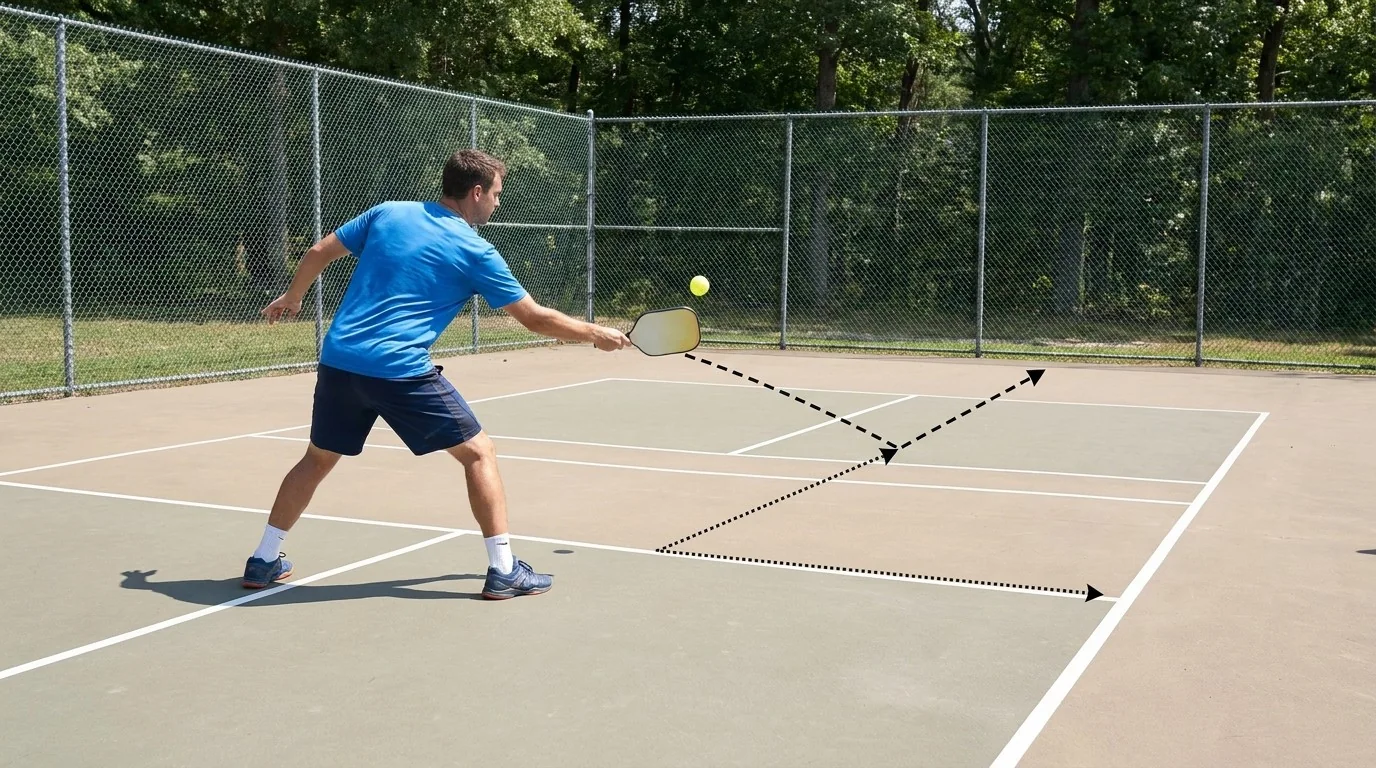
A deep return of serve is valuable because it buys time. When the ball clears the net with a comfortable arc and lands near the baseline, the serving team must let it bounce before attacking. That gives you a chance to move forward and organize the next shot. The target is not maximum power. It is a repeatable return with depth, net margin, and a balanced route to the kitchen.
Choose a deep window, not the line
Aim for the back third of the diagonal service court instead of the absolute baseline. A return that lands slightly short but remains deep is usually more useful than one that clips the line or runs long. Pick the broad target before the serve arrives. Crosscourt gives you extra distance; the middle can give you a larger margin when the situation calls for it.
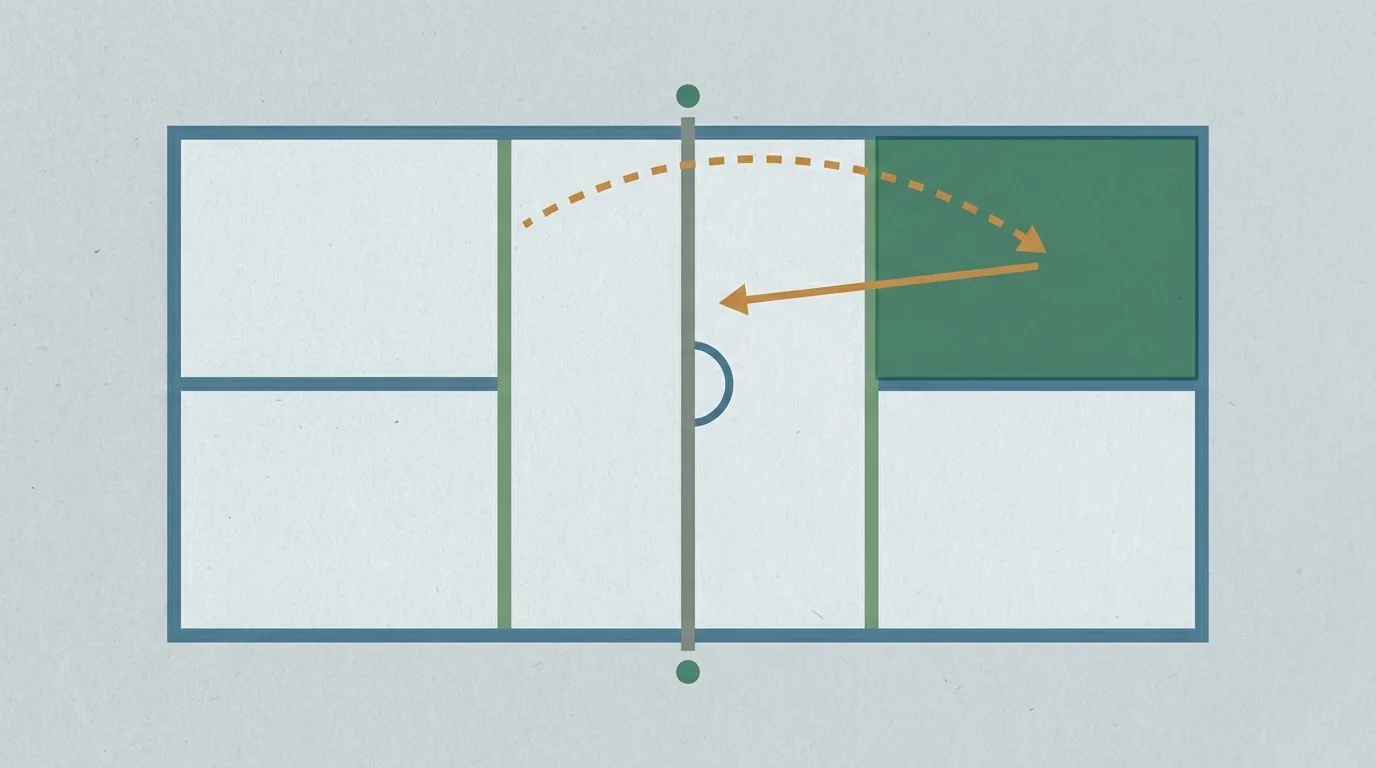
Build height and margin
Give the ball enough arc to clear the net comfortably. Contact it in front of your body and let the paddle travel toward the target rather than forcing a flat swing. On a low serve, lower the ambition: a higher controlled return that lands deep is better than a rushed drive that leaves no time to recover. Keep the swing compact enough that you finish balanced.
Move after the bounce
Do not watch the return. Start moving forward once you can read that the ball is traveling deep. Use smooth steps, keep the paddle ready, and arrive near the kitchen line only after the ball has bounced and the serving team has shown its next shot. If your return is short, stop earlier and prepare for the third shot instead of running into an exposed position.
Adapt to the serve
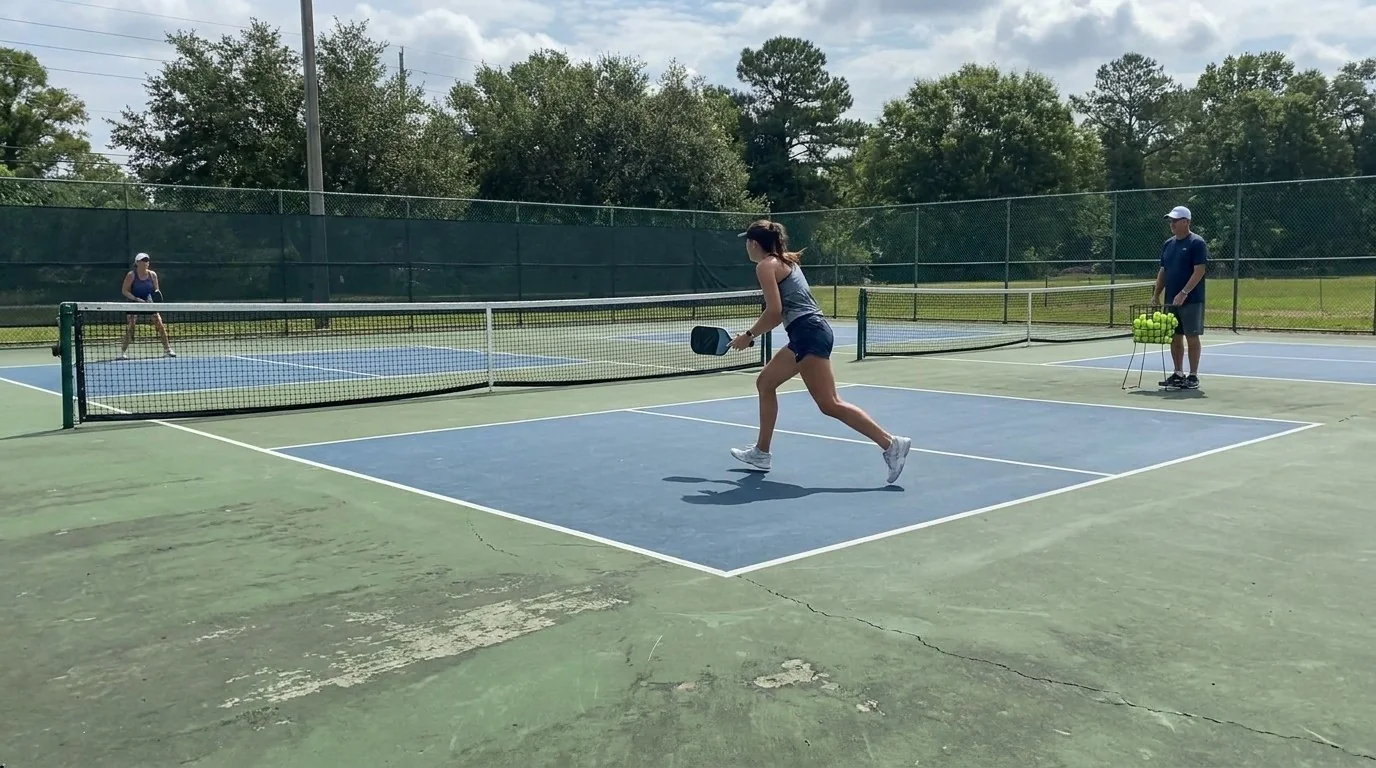
A wide serve calls for early movement and a crosscourt target with room from the sideline. A body serve rewards compact preparation and a clear contact space. Against a short serve, make a controlled approach; against a deep serve, accept that you may need a small adjustment step before the swing. Read the bounce and height instead of forcing every serve into the same return shape.
Practice depth and recovery together
Use a three-stage drill. First, return to a large deep target while staying stationary after contact. Next, add the forward recovery and freeze in a balanced ready position. Finally, have a partner vary the serve direction and depth while you choose crosscourt, middle, or a safer shorter target. Track both outcomes: deep returns out of ten, and returns followed by a balanced approach to the kitchen.
Common errors to fix
- Chasing power: shorten the swing and add net clearance.
- Aiming at the line: use a deep window with visible margin.
- Stopping after contact: make the first recovery step part of the return.
- Running blindly: slow down when the ball is short or the opponent attacks early.
- Ignoring balance: finish ready for the third shot, not leaning into the court.
A reliable return buys time only when depth, height, and movement work together. Train the landing zone first, then connect it to a calm recovery and a ready position at the kitchen.