Pickleball Overhead Footwork: Drop Step, Contact, and Recovery
Build a safer pickleball overhead with an early turn, drop-step footwork, balanced contact, smarter targets, and a clear recovery plan.
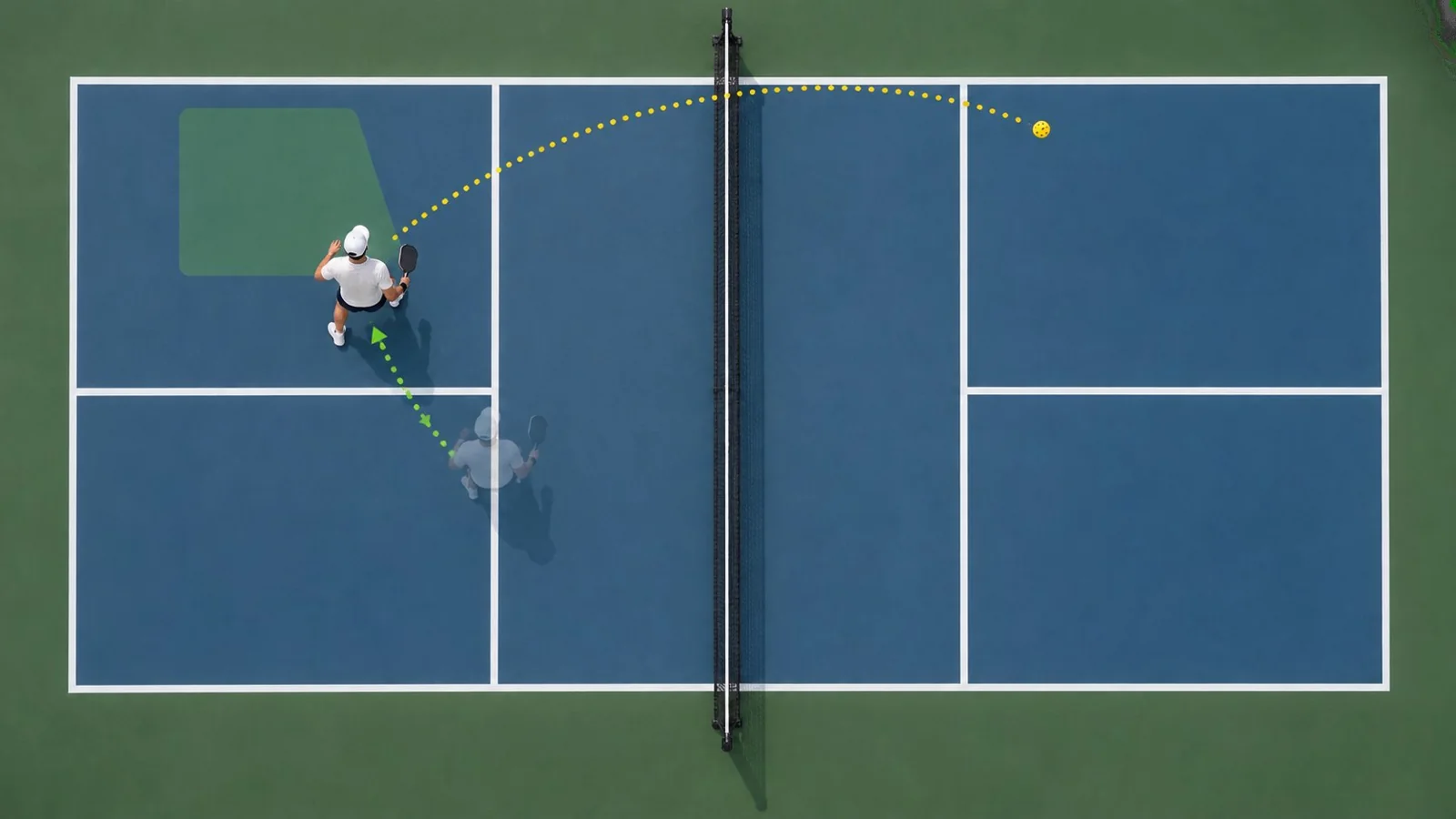
An overhead is more than a swing above your head. The difficult part often happens before contact: recognizing the lob, turning safely, creating room, and arriving under the ball without running backward blindly. Good pickleball overhead footwork gives you time to choose a controlled finish instead of forcing a late, off-balance hit.
Turn before you run
The moment you recognize a lob, turn your shoulders and hips so you can move with your chest oriented toward the back of the court. Do not sprint straight backward while staring over one shoulder. That posture makes it harder to judge the bounce and increases the chance of tripping. Use a drop step: rotate the outside foot, open the hips, and push into space behind you. Keep the paddle up as you move so the ball and your preparation stay connected.
Take quick adjustment steps once you have moved out of danger. The goal is not to stand directly under the falling ball; it is to arrive with enough room to swing forward. If the lob is deep, let your feet carry you back early. If it is shorter, brake before contact rather than continuing to drift. A partner’s call can help in doubles, but both players still need a clear view of the ball and the court.
Find balanced contact
Set up sideways with the non-paddle hand pointing toward the ball for a moment. That hand helps your shoulders stay organized and gives you a reference for contact. Reach the paddle up early, then let the hitting arm extend without locking the elbow. Contact should be in front of the hitting shoulder, not directly behind your head. A comfortable contact point makes it easier to send the ball down and forward.
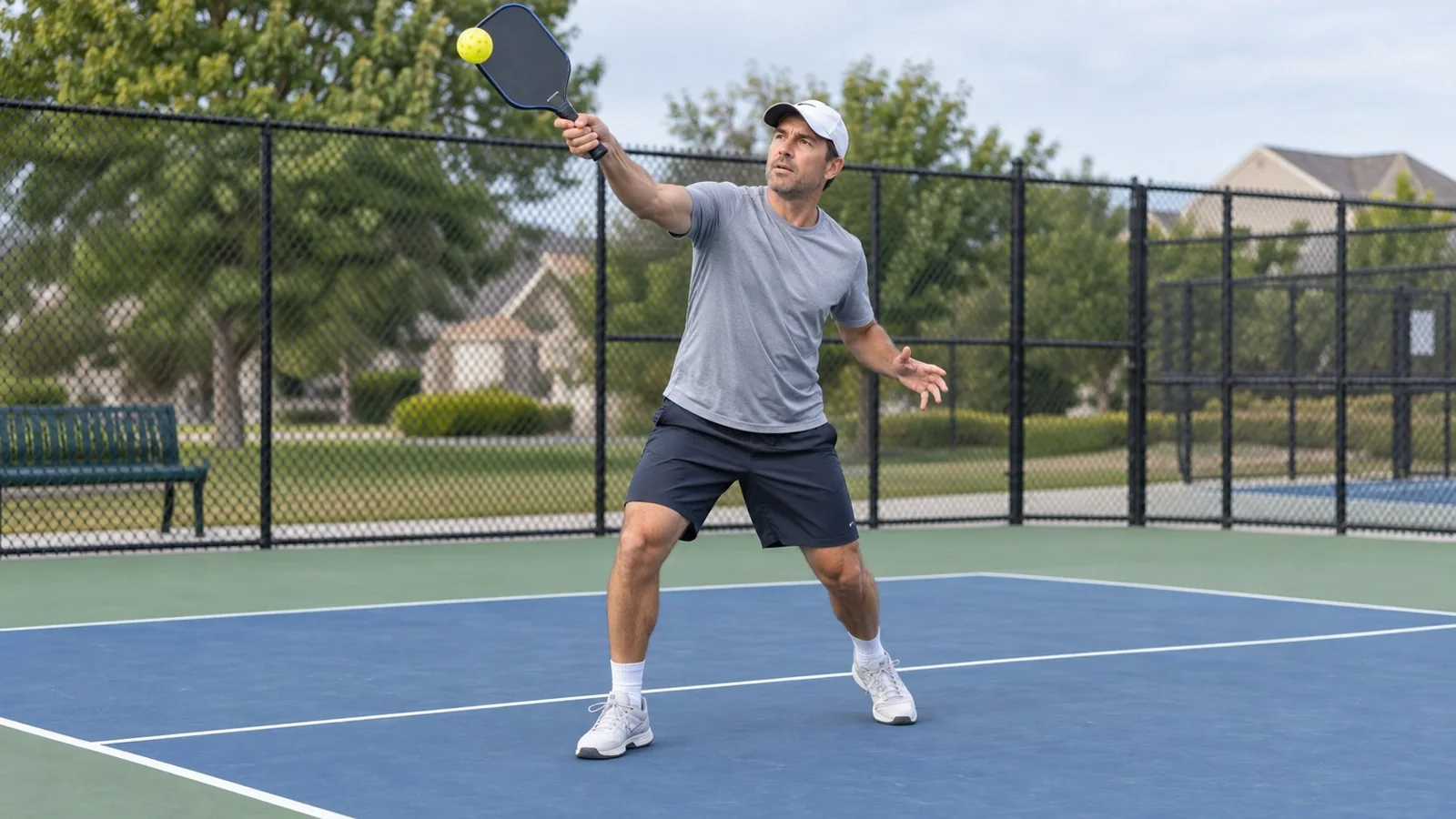
Use your legs and torso to support the swing. A compact preparation and smooth acceleration are more repeatable than a huge backswing. If you are still moving hard when the ball arrives, choose a safer overhead with height and depth rather than chasing a perfect angle. Keep the wrist quiet enough that the paddle face remains predictable. Finish toward the target, then regain a ready position immediately.
Choose the shot that the footwork allows
When you reach the ball early and are balanced, aim deep through a generous part of the court. A controlled overhead to the opponent’s backhand side or middle can be more useful than a risky sideline winner. If the ball is behind you, low, or drifting beyond your comfortable reach, do not manufacture power. A high defensive return, a reset, or a lob back may keep the rally alive while you recover.
Watch the opponent before deciding how hard to swing. If they are moving backward, depth can keep them under pressure. If they are already established at the kitchen, avoid leaving a short ball in their preferred strike zone. The best target depends on your balance, the ball’s height, and the opponents’ position—not on a fixed rule that every lob deserves maximum pace.
Recover after the overhead
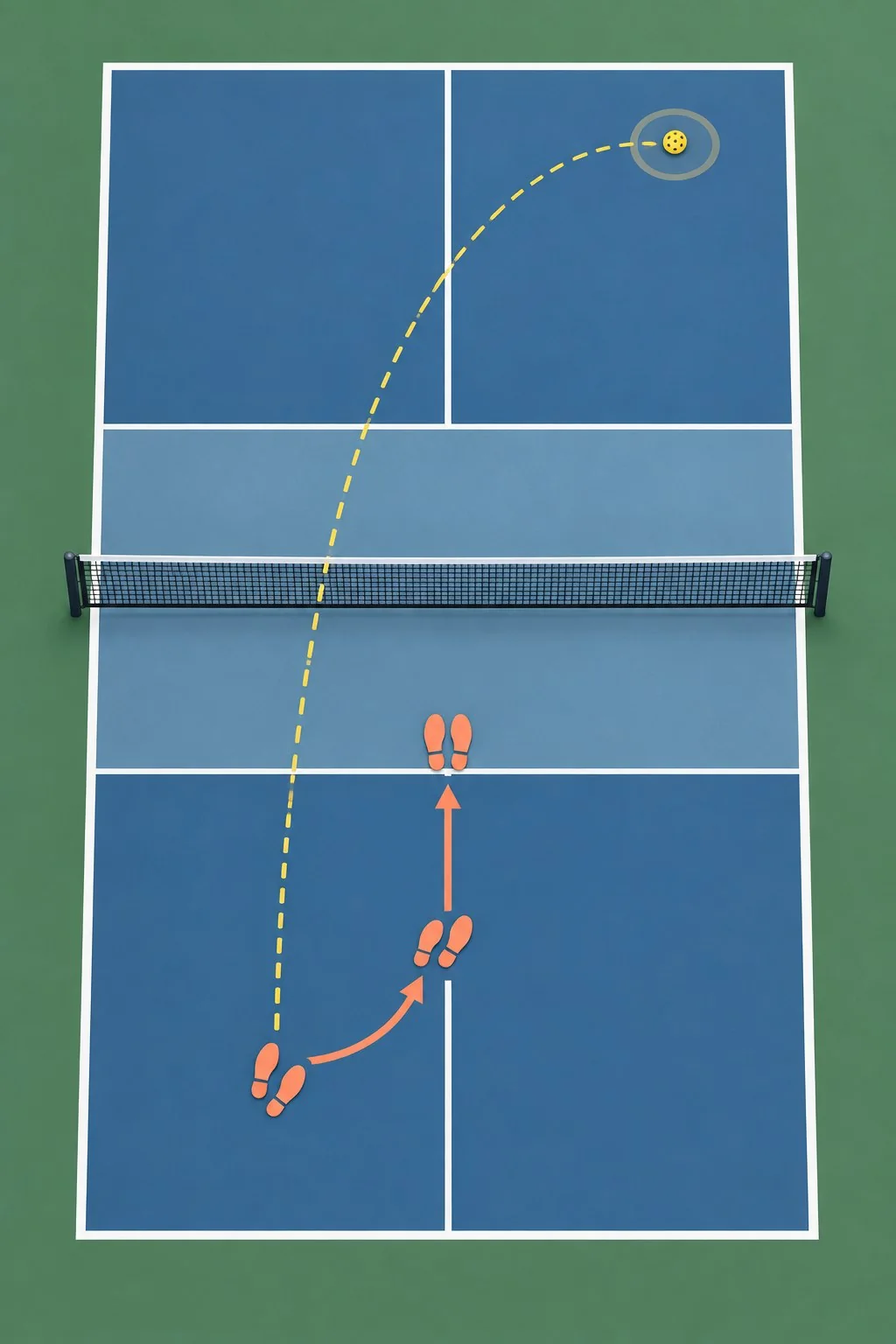
Do not admire the shot. As soon as the paddle finishes, bring it back in front and move toward the next useful position. If your overhead lands deep and the opponents are defending, advance under control. If it lands short or gives them time, stop at a balanced transition position instead of charging into a counterattack. In doubles, communicate who covers the middle and keep the partnership connected.
Practise the sequence, not just the swing
Start with shadow repetitions: turn, drop step, run with the paddle up, brake, point with the non-paddle hand, contact in front, recover. Then have a partner toss gentle lobs while you call “short” or “deep” before moving. Begin with a catch or a controlled swing so the footwork becomes familiar. Add live pace only when you can stop without falling away.
A useful progression is ten repetitions for the turn, ten for the drop step, and ten overheads to a large target. Record whether the error came from a late turn, poor spacing, contact behind the shoulder, or an overambitious target. That diagnosis is more valuable than simply counting winners. With early rotation, safe backward movement, balanced contact, and immediate recovery, the overhead becomes a dependable response to a lob rather than a desperate last swing.