Pickleball Overhead Recovery Geometry: Protect the Next Ball
A practical pickleball overhead defense guide: turn safely, track the ball, choose a deep target, protect your partner, and recover together.
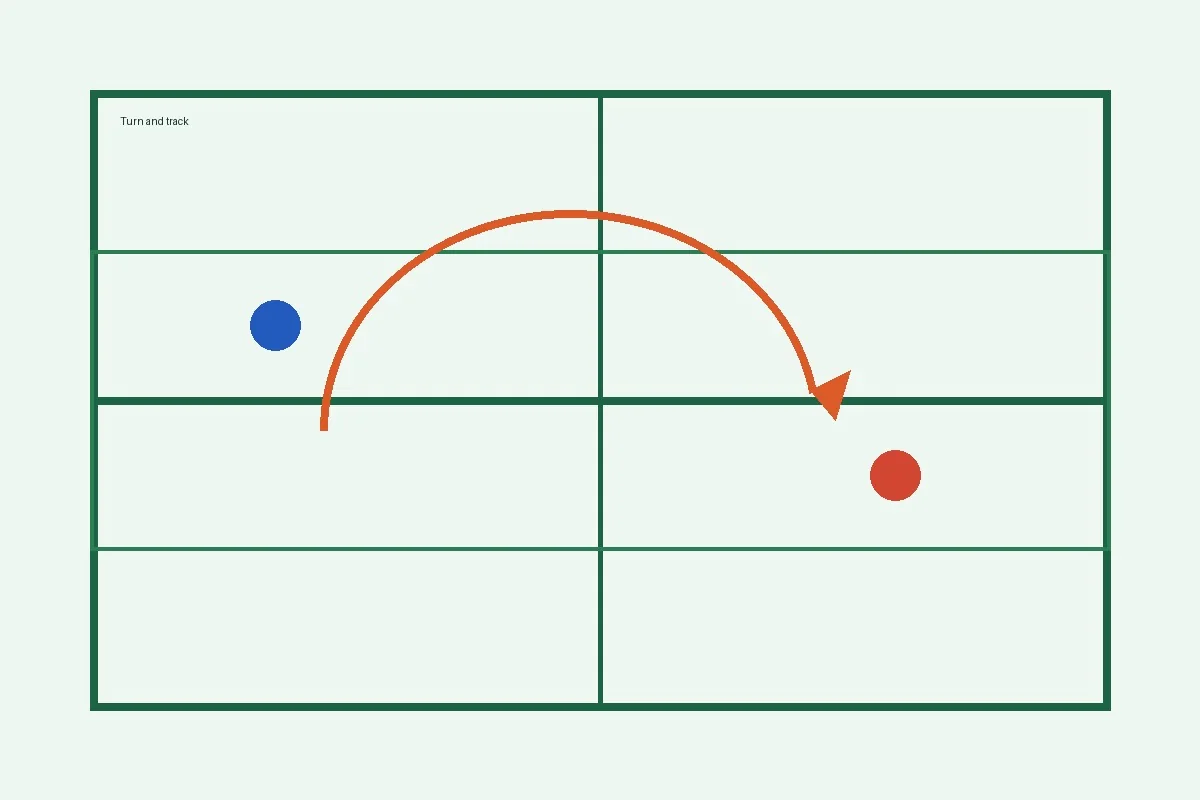
Pickleball overhead recovery begins before the ball reaches your paddle. When an opponent sends up a lob, read its flight, turn safely, and keep enough balance to make a useful defensive choice. In many cases, a deep reply with plenty of margin gives your team time to reset instead of forcing a risky counterattack.
Turn first and keep the ball in view
As soon as the ball rises above the opponent’s comfortable hitting zone, turn so your shoulders and hips can follow it. Do not run backward with your chest still facing the net. Crossover steps or side steps are safer when they let you see both the ball and the court. If the ball is moving behind you, call early and tell your partner whether you are taking it.
Keep the paddle available as you track the lob. Your free hand may point briefly at the ball, but a stable base and an unobstructed view matter more. If the sun or your partner blocks your view, stop guessing and communicate.
Judge the bounce before choosing the reply
An overhead does not always call for an aggressive counterattack. If the ball is deep and fast, letting it bounce can be the better defense when the rules and your court position permit it. From there, send back a high, deep ball. If the lob is short enough to reach comfortably, a controlled volley can keep the opponent from recovering, but only if you can make contact without falling away.
Use height, speed, and distance from the sideline as your cues. A ball dropping near the baseline leaves less time and less margin. Move early, make room, and choose the largest dependable target rather than trying to thread a corner.
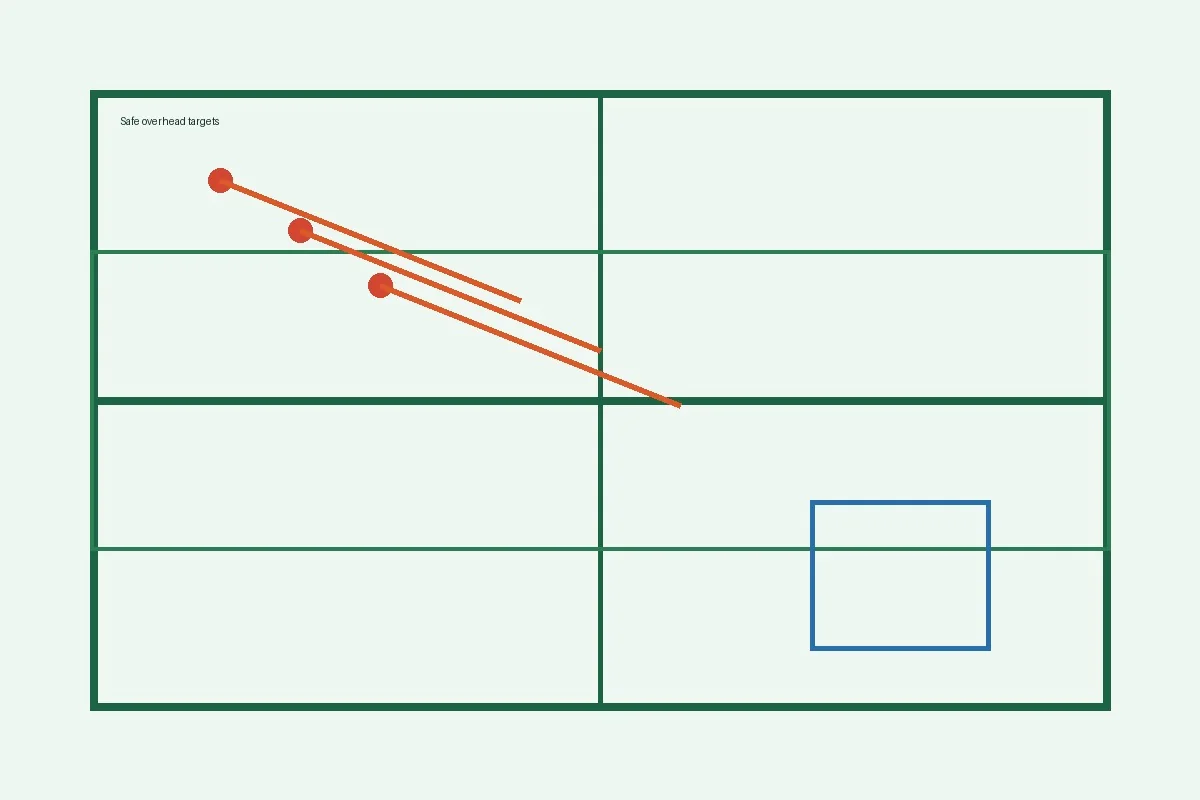
Choose a safe target
Deep middle
A deep middle return takes away some of the opponent’s angle and may create hesitation between partners. Aim inside the lines and give the ball enough height to clear the net comfortably. The job is to make the next contact difficult, not necessarily to end the point.
Deep crosscourt
A crosscourt ball gives you more court length and can pull an opponent away from the center. Choose it when your balance and contact point support the angle. If you are stretched or late, use more margin and less angle.
High reset
When you are off balance, a higher defensive ball can buy time to recover. It is not automatic protection: a short high ball may invite another attack. Pair height with depth, then use the extra time to regain a ready position.
Protect your partner after the shot
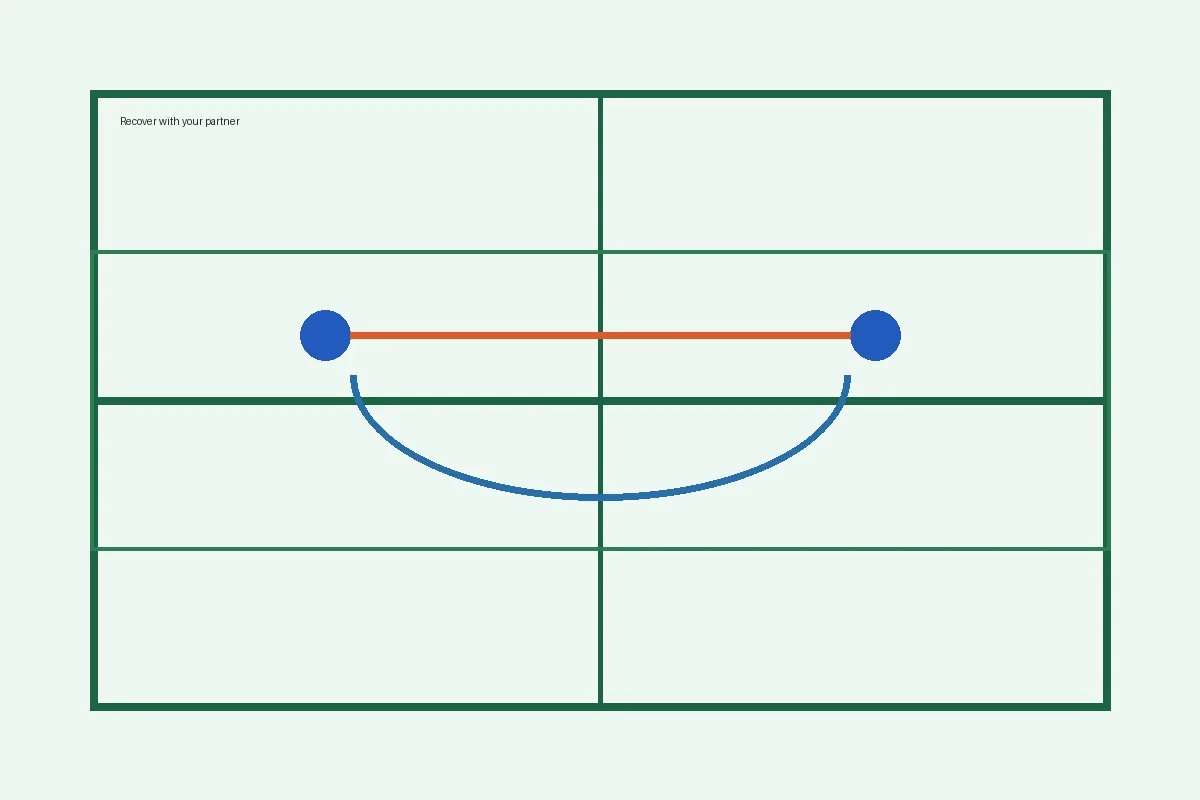
Overhead defense is a doubles decision. Your partner should read your movement and avoid standing directly behind the ball. Slide to protect the middle, keep enough distance to react, and be ready for another overhead if the first reply does not travel deep. After the shot, the defender should recover toward a useful court position instead of watching the ball.
If the ball is clearly going out, call it early and let it go. If it is likely to land in, communicate who has priority. A clear call prevents more errors than an ambitious target fixes.
Practise the decision, not just the swing
Start with a cooperative lob. Before moving, have the defender call “bounce” or “volley.” Add a deep-middle target and award the point for depth rather than speed. Then add a partner who slides with the defender and calls the open lane. Finish with live points in which the defender must recover to a balanced base before the next ball.
After each repetition, ask three questions: Did you keep the ball in view while moving? Did the target leave enough margin? Did both partners recover together? These checks build a repeatable response for sun, wind, awkward bounces, and pressure.
The sequence is straightforward: turn, track, create space, choose a deep target, communicate, and recover. That makes pickleball overhead recovery more reliable without asking a defensive player to chase a low-percentage winner.