Pickleball Overhead Shots: Set Up, Decide, and Finish Under Control
A practical guide to pickleball overhead shots, from the air-or-bounce decision and footwork to high contact, smart targets, and recovery.
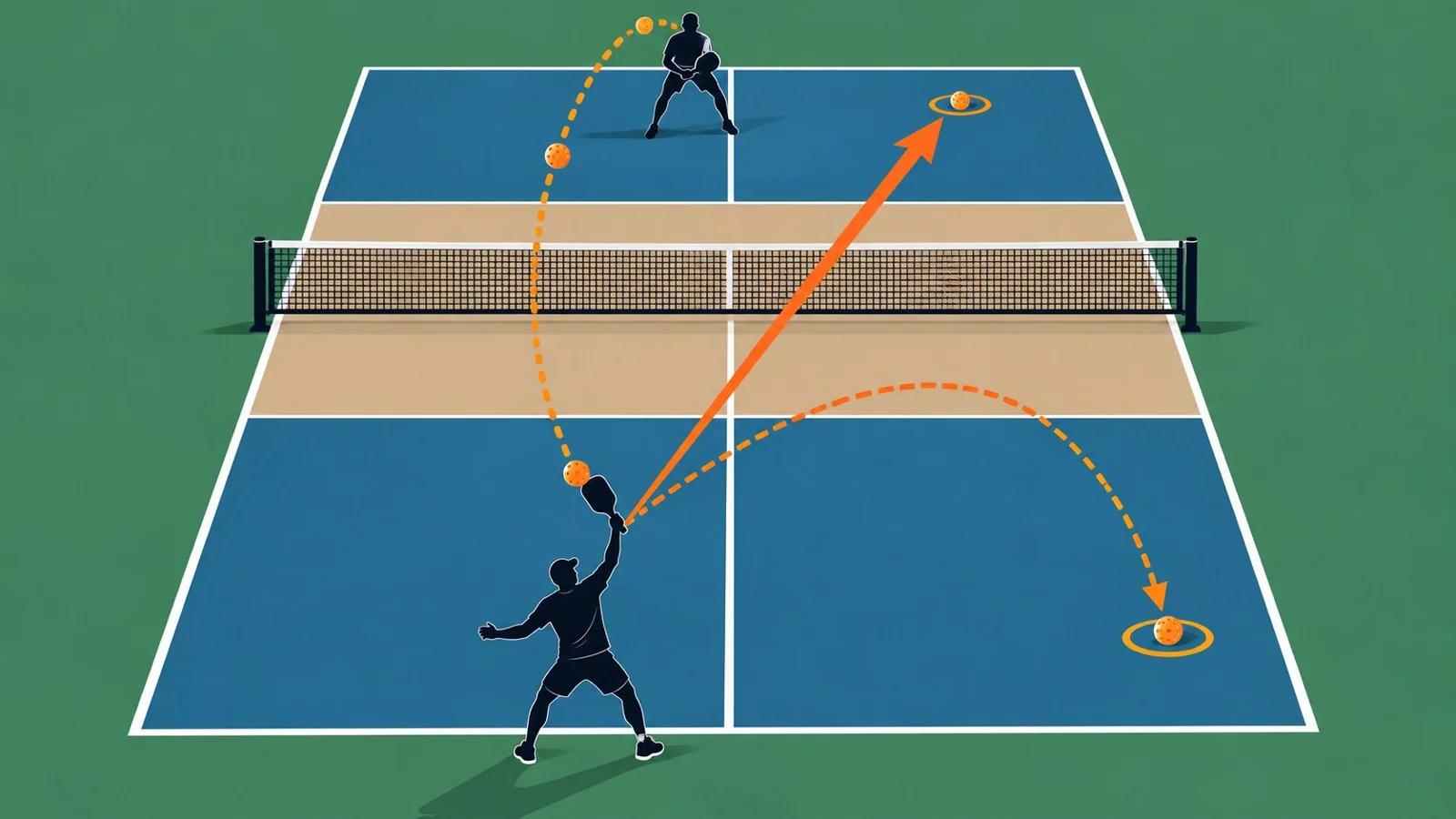
A pickleball overhead shot is a chance to turn a weak lob or floating ball into pressure, but power alone does not make it reliable. The best overheads begin with an early decision, efficient footwork, and a contact point that lets you finish toward a sensible target. Treat the shot as a complete sequence rather than a single swing.
Decide whether to hit in the air or let it bounce
Read the ball as soon as it rises. If the lob is short enough and you can get behind it with time, prepare to contact it out of the air. That option keeps pressure on the opponents and may produce a clean finish. If the ball is drifting deep, the sun has taken it away, or you cannot get underneath it safely, let it bounce and set up the next shot instead. A controlled bounce is better than a rushed miss.
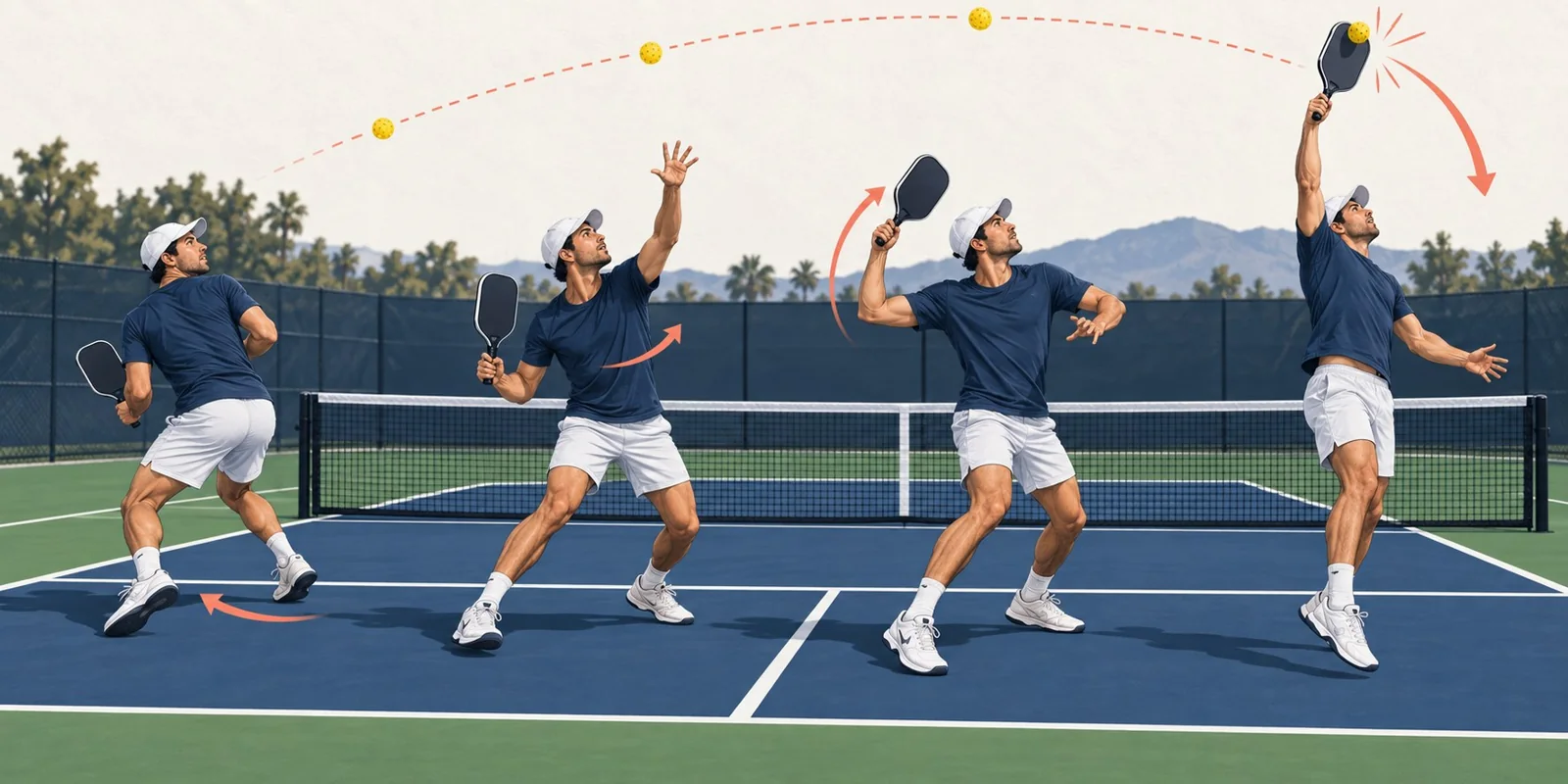
Make the decision early so your feet can do the work. Do not wait under the ball and then reach at the last moment. Turn and move into position, keeping enough space to swing without leaning backward. Once you are set, track the ball through its descent and preserve room for a balanced finish.
Move first, track high, and contact at the top
Use the non-paddle hand to point toward or track the ball. This simple reference helps maintain balance, keeps the chest organized, and makes the contact point easier to judge. Your feet should arrive before the swing: use adjustment steps, get the body behind the ball, and avoid backpedaling when a turn-and-run movement is safer.
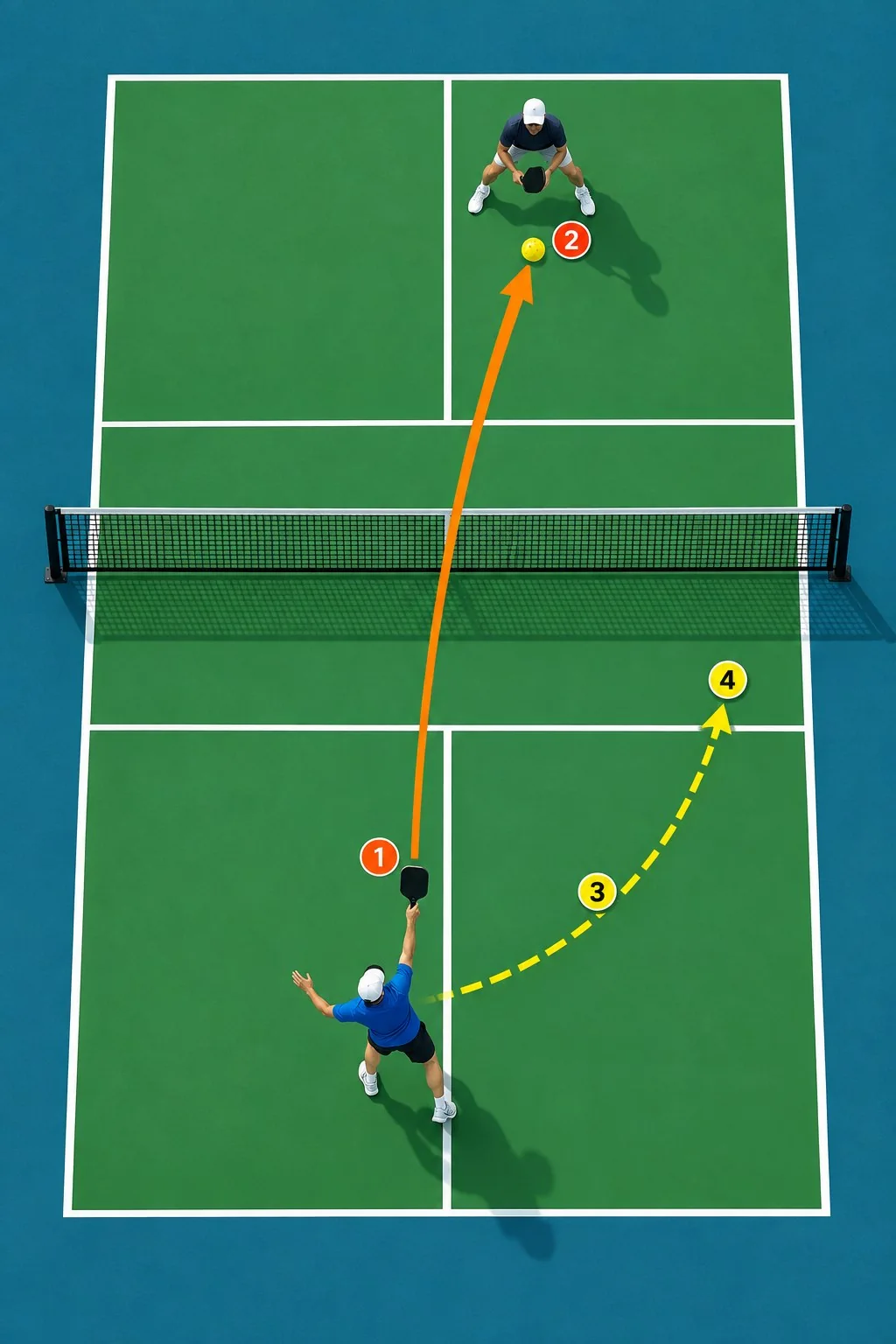
An overhead does not need an enormous backswing. Keep the preparation compact but firm, then contact the ball at a comfortable high point in front of the body. A controlled acceleration and clear follow-through are more repeatable than a desperate full-power swipe. If your balance is falling away, reduce the ambition or let the ball bounce.
Aim for a smart finish, not only maximum speed
Choose the target before contact whenever possible. Open court is a useful option; so is the opponent’s feet when the ball is dropping into a difficult zone. Aiming with purpose reduces the temptation to swing as hard as possible at the center of the court. Leave yourself margin, especially when the lob is deep or the wind is moving the ball.
After the shot, recover immediately. Watch the opponents rather than admiring the contact, return the paddle to a ready position, and be prepared for a block if the overhead is returned. In doubles, communicate so one player does not chase the same ball while the other leaves the middle uncovered.
Practice the complete overhead sequence
Start with easy feeds and call “air” or “bounce” before moving. For an air ball, rehearse turn, adjustment steps, tracking hand, compact preparation, high contact, and recovery. For a deep ball, practise allowing the bounce, moving into position, and choosing a controlled next shot. Add targets at open space and near the opponent’s feet only after the contact feels stable.
Common errors include reaching instead of moving, backpedaling, losing the ball in the sun, taking an oversized backswing, and choosing power when the bounce is safer. Review each repetition with three questions: Did the feet create space? Was the contact balanced and high? Did the target match the ball’s height and depth? Those checks turn the overhead from a hopeful smash into a repeatable decision.