Pickleball Overhead Smash: Build the Shot From the Feet Up
A practical pickleball overhead smash guide covering footwork, preparation, peak contact, target selection, recovery, and common errors.
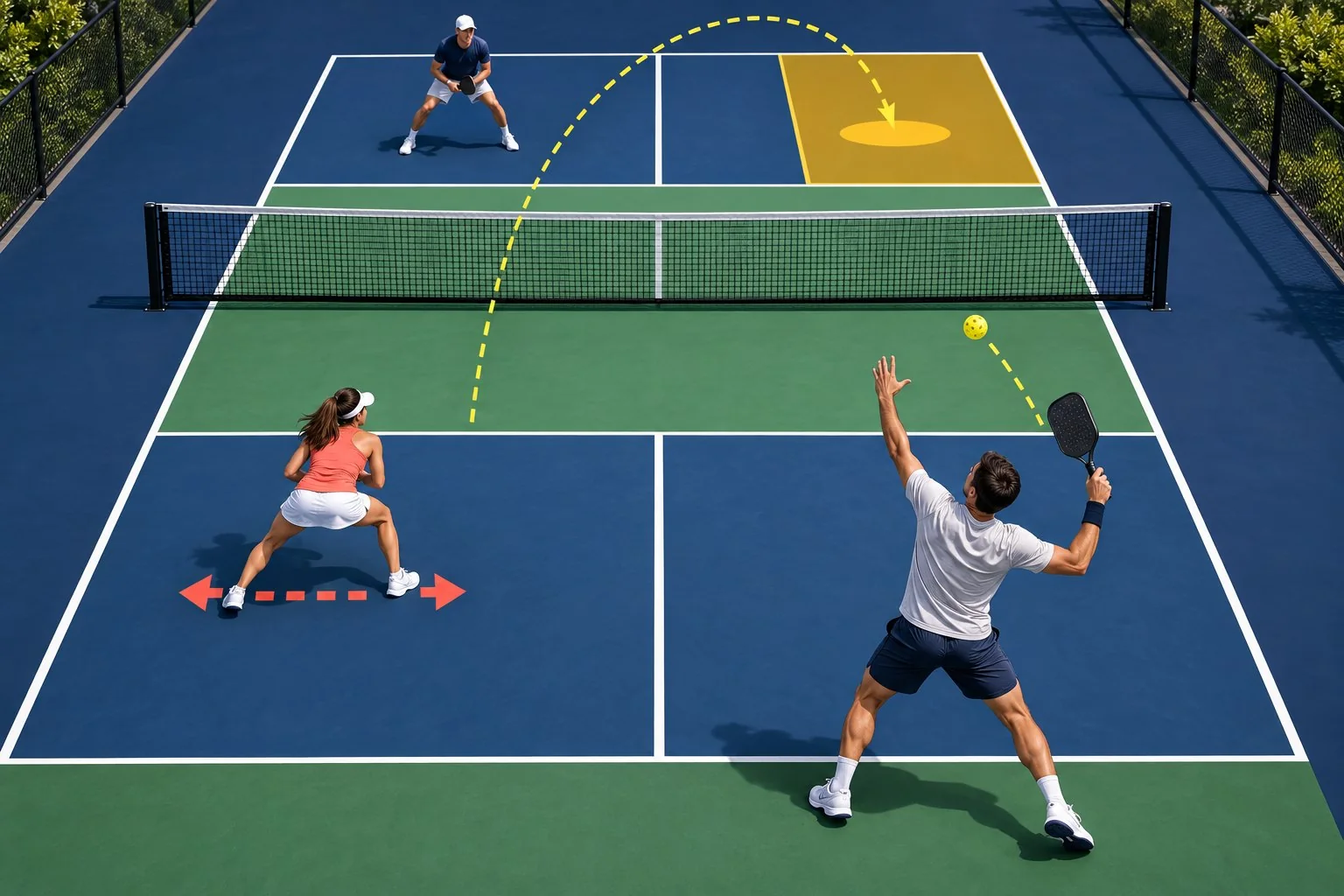
The pickleball overhead smash is a decisive response to a weak lob or a high, slow ball. It is not simply a harder swing: the result depends on arriving early, creating a clean contact point, and choosing a target before the ball drops. When the ball is carrying deep or you are moving backward, letting it bounce can be wiser than forcing an airborne finish.
Read the lob and build the position
The first decision happens as soon as the ball leaves the opponent's paddle. Turn your shoulders so your non-paddle side faces the net, keep the paddle ready, and move sideways or with a controlled crossover step. Avoid running straight backward while facing the net: it narrows your base, makes the ball harder to track, and leaves your weight moving away from the shot.
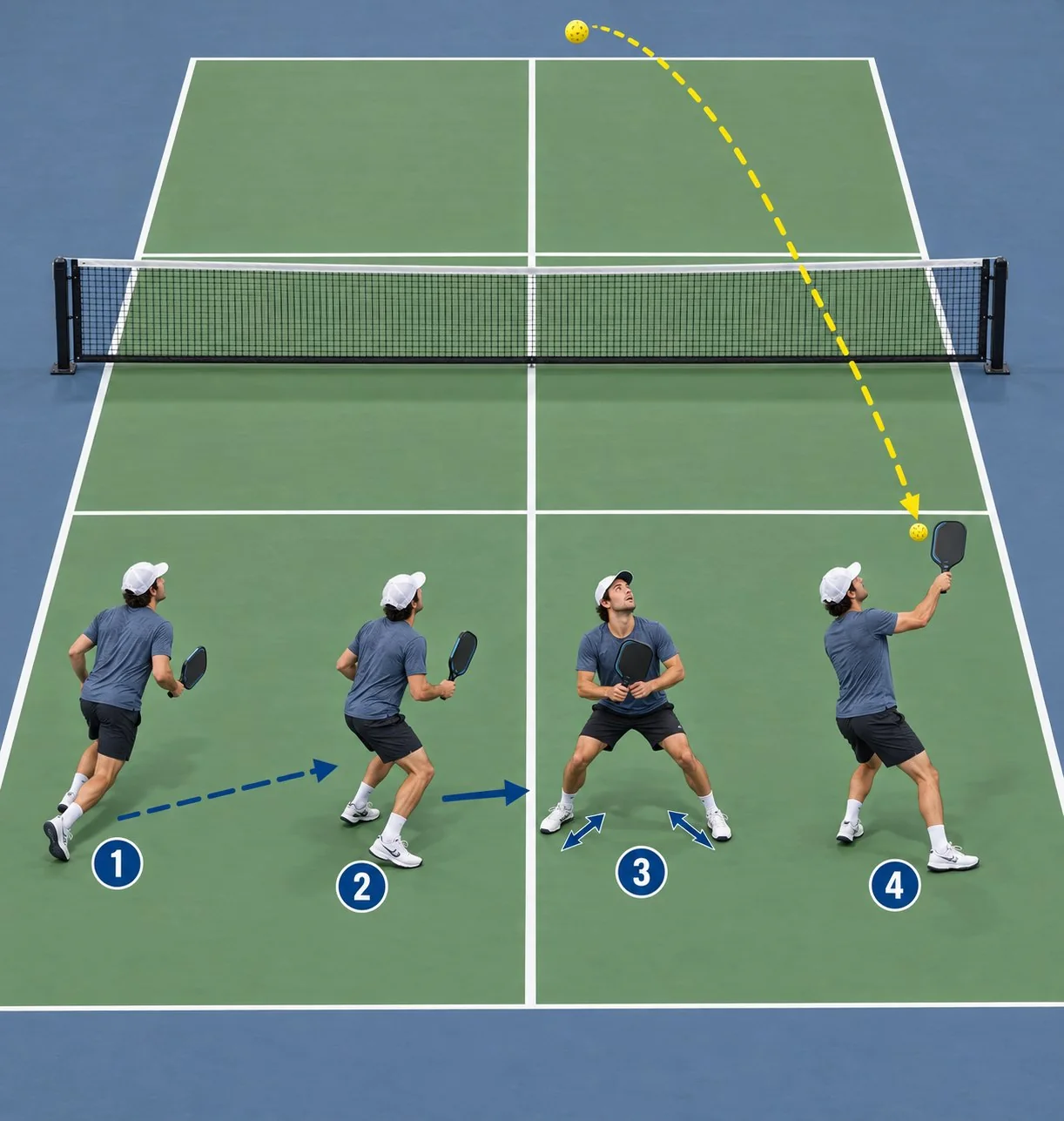
Move until the ball will be slightly in front of your hitting shoulder rather than directly on top of you. As the lob approaches its peak, use a small split step to settle your base. That pause gives you a final adjustment and makes it possible to drive your weight forward instead of striking while drifting backward.
The overhead is usually a good choice when the ball peaks shallow enough for a comfortable, high contact. If it is deep, the sun or wind obscures your read, or your momentum is still carrying you away from the court, give yourself time: retreat, let it bounce, and choose a controlled drive or reset.
Set the paddle, contact, and finish
Use a comfortable continental-style grip and prepare early. In the loaded position, the elbow is raised, the paddle is near the ear, and the non-paddle hand points toward the ball. That pointing arm is a useful visual reference and helps keep the torso balanced while the shoulders turn.
Meet the ball at the highest comfortable point, above and slightly in front of the hitting shoulder. Contact behind the head tends to open the face and send the ball long. Think of throwing the paddle down rather than muscling the ball: let the legs, shoulder rotation, forearm, and relaxed wrist work in sequence. A compact swing should finish across the opposite hip.
Choose the target before you swing
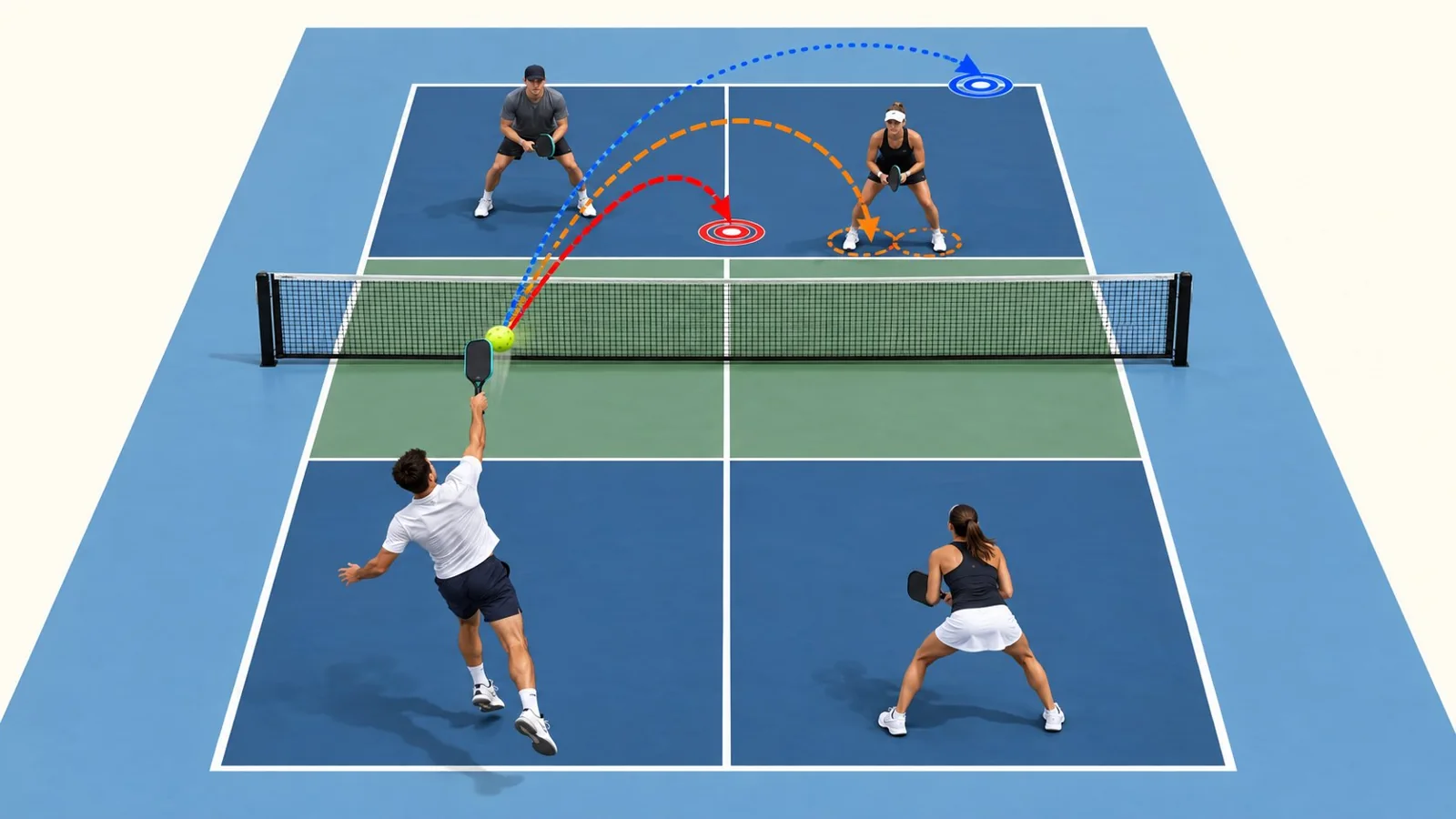
Placement is more reliable than maximum effort. Scan for the open middle, a defender's feet, or space exposed by a wide recovery. In doubles, the deepest third of the court is often a better target than a steep ball aimed straight down: a flatter, deeper shot can skid and force the defender to hit while moving backward.
Aim for roughly controlled pace while you learn the shot. A relaxed swing with clean center contact is more useful than an all-out swing that sprays long. After contact, recover immediately. In doubles, communicate so only one partner chases the ball; in singles, regain a central position and prepare for the next exchange.
Fix the errors that cost the most points
The most common fault is backpedaling. Shadow the turn and sideways shuffle without swinging until that first movement is automatic. A second fault is waiting too long to prepare. Raise the non-paddle arm and set the paddle before the ball reaches its peak. If the ball is already dropping behind you, stop forcing the smash and let it bounce.
Overhitting is another trap. Use a repeatable, relaxed motion and aim away from the defender rather than at the lines. Finally, do not let the tracking arm fall too early; it helps you see the ball and keeps the contact point organized.
For practice, begin with shadow footwork: turn, shuffle, split step, point, and freeze in the contact position. Add easy partner feeds and focus first on arriving balanced, then on placement, and only later on pace. Finish with a feed-and-recover drill in which you hit the overhead, return to ready position, and respond to a second ball. The goal is a composed decision and a repeatable contact, not a spectacular swing on every lob.