Pickleball Paddle Handle Fit: When to Use an Overgrip or Replacement Grip
A practical guide to measuring pickleball paddle grip size, checking the fit by feel, and fine-tuning circumference with overgrips.
The handle is the connection between your hand and your pickleball paddle, so a poor fit can quietly affect comfort and control long before you think about changing the paddle itself. Grip circumference is easy to measure, easy to test, and often easy to adjust with an overgrip.
Start with a measurement, not a guess
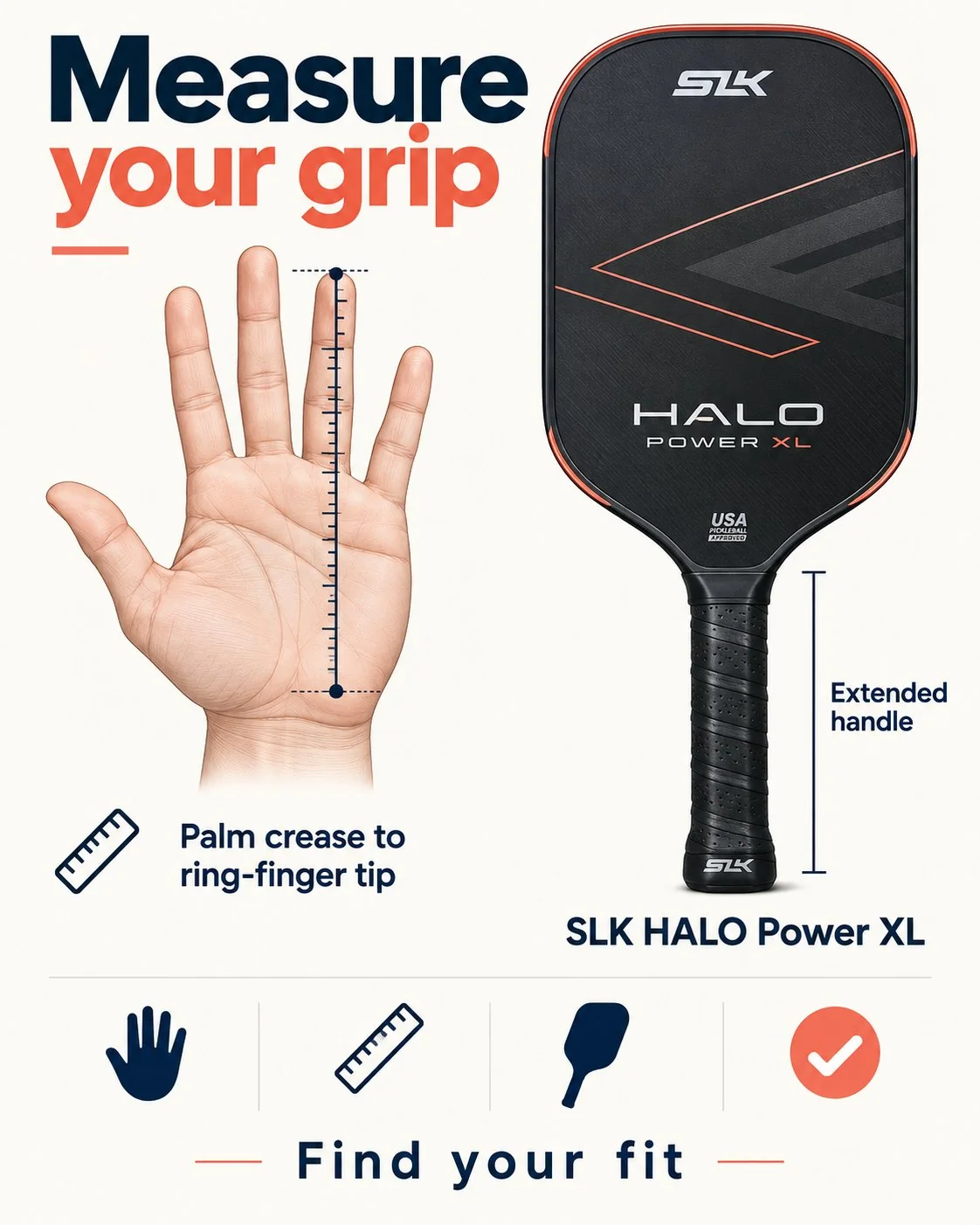
Grip size means the circumference of the handle, usually offered in eighth-inch steps from about 4.0 to 4.5 inches. To get a useful starting point, extend your dominant hand with the palm facing up and fingers straight. Place a ruler at the middle crease of the palm and measure to the tip of the ring finger. Match that measurement to the nearest available grip size.
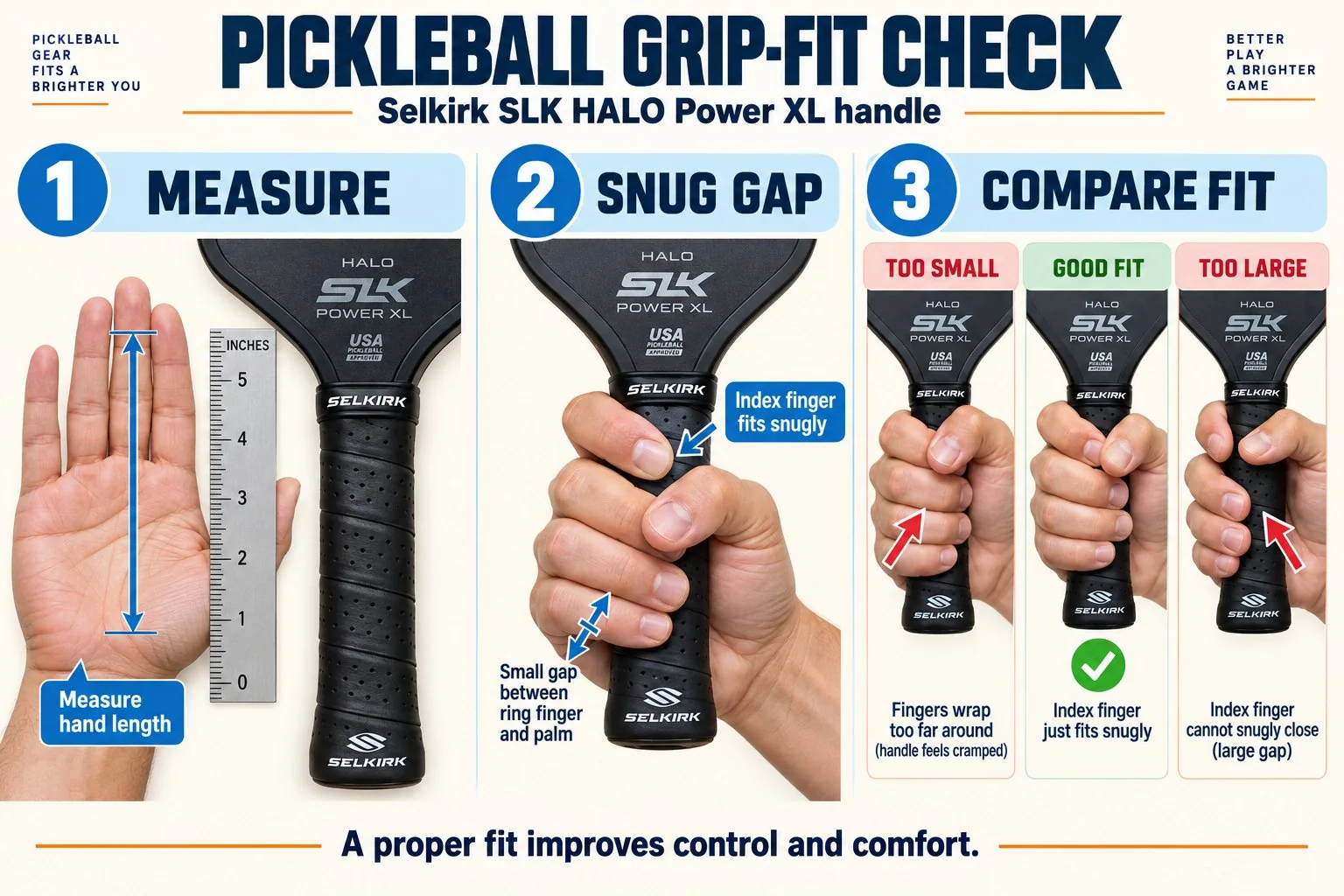
If your measurement falls between sizes, begin with the smaller handle. It is easier to add circumference than to reduce it, and a slightly smaller grip usually leaves more room for comfortable hand changes. Treat the ruler result as a starting point rather than a guarantee: hand shape, preferred shots, and the way you hold the paddle all matter.
Height can provide only a rough estimate when a ruler is unavailable. Players under about 5 feet 3 inches often start near a 4.0-inch grip; players from 5 feet 3 inches to 5 feet 8 inches commonly test 4.125 to 4.25 inches; taller players may begin around 4.25 to 4.5 inches. Slender or broad hands can make those ranges misleading, so confirm them with a hand measurement and court testing.
Confirm the fit with your hand and your shots
Hold the paddle in your normal forehand grip and slide the index finger of your other hand into the space between your fingertips and the heel of your palm. The finger should fit snugly without force. Fingertips digging into the palm, frequent squeezing, or forearm fatigue suggest that the grip may be too small. A large gap, a blocky feeling, or difficulty changing grips can point to a handle that is too large.
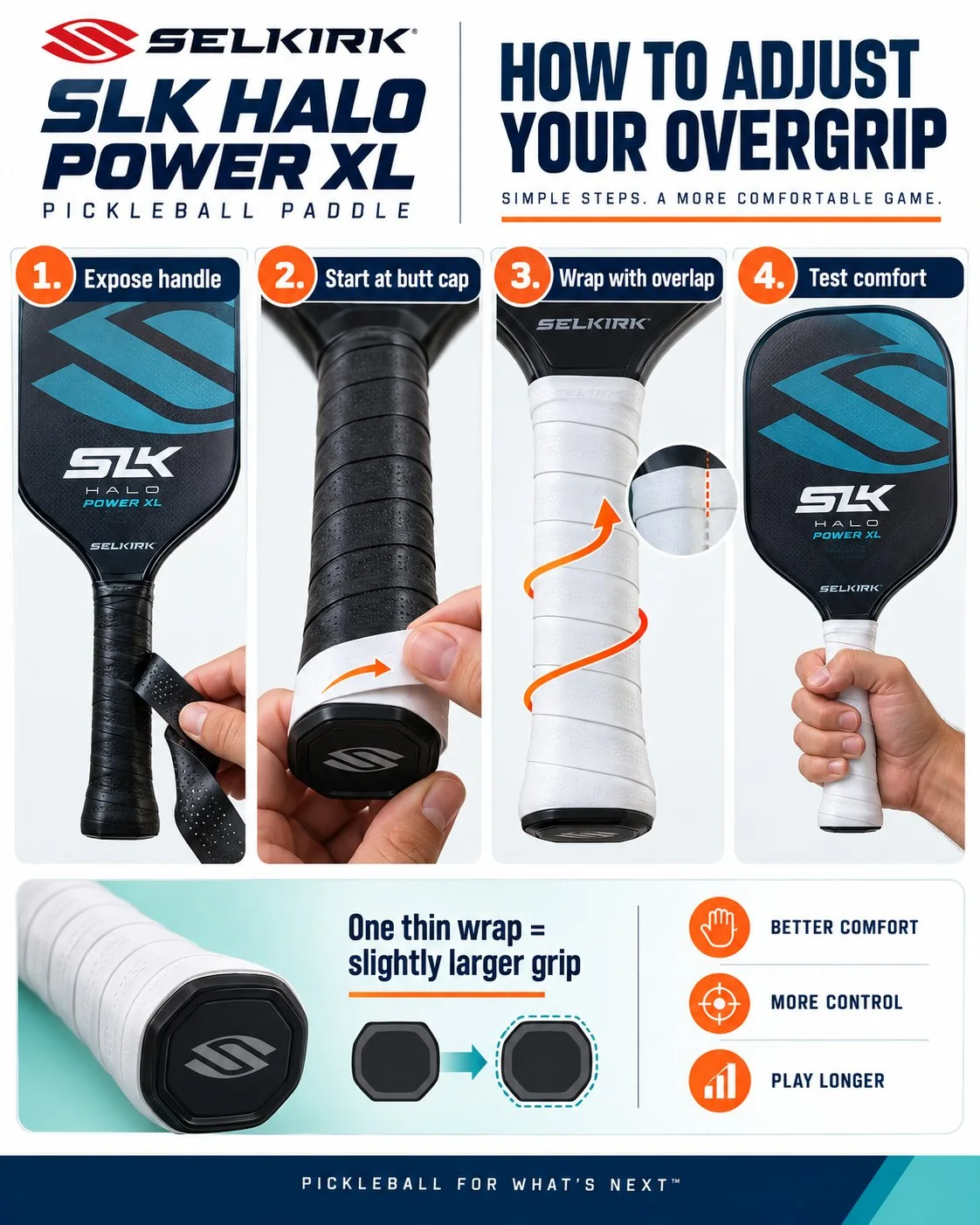
Do not judge the fit after only a few warm-up swings. Hit dinks, volleys, serves, and drives for at least fifteen to twenty minutes. The right handle feels secure without a death grip, allows the wrist to move naturally, and stays comfortable as the hand tires. If pain, tingling, or persistent elbow soreness appears, stop and reassess rather than trying to play through it.
Fine-tune circumference with an overgrip
An overgrip adds a small amount of circumference while improving tack and sweat management. One thin layer adds roughly one-sixteenth of an inch, so a 4.0-inch handle can move toward 4.125 or 4.25 inches gradually. Add one layer, play a full session, and reassess before adding another. A thicker replacement grip can add more cushioning when the factory base feels harsh or undersized.
If a grip feels too large, remove an overgrip or choose a thinner base layer. Making the factory handle smaller usually means removing the original grip, which is a more involved change and may be best handled by a pro shop. Keep the handle consistent across backup paddles so a mid-match switch does not change your hand feel.
Avoid the common fitting mistakes
Guessing from height alone, ignoring worn grip material, and choosing a large handle because it feels powerful are common mistakes. A slippery surface can make any size feel wrong, while a fresh overgrip can restore control without a new paddle. Measure from the same hand position each time, record the circumference, and test changes under realistic play.
The best sequence is simple: measure the hand, choose the smaller option when between sizes, test the fit with the index-finger check, then play a variety of shots. Adjust by one overgrip layer at a time and look for a relaxed hold, free wrist movement, and no accumulating forearm tension. The goal is not the biggest or smallest handle. It is a paddle that stays stable while your hand remains relaxed and your attention stays on the next ball.