Pickleball Paddle Preparation: Turn Early Without Losing Balance
Prepare the paddle early, turn with the shoulders, use your feet to create space, and recover balanced for the next pickleball shot.
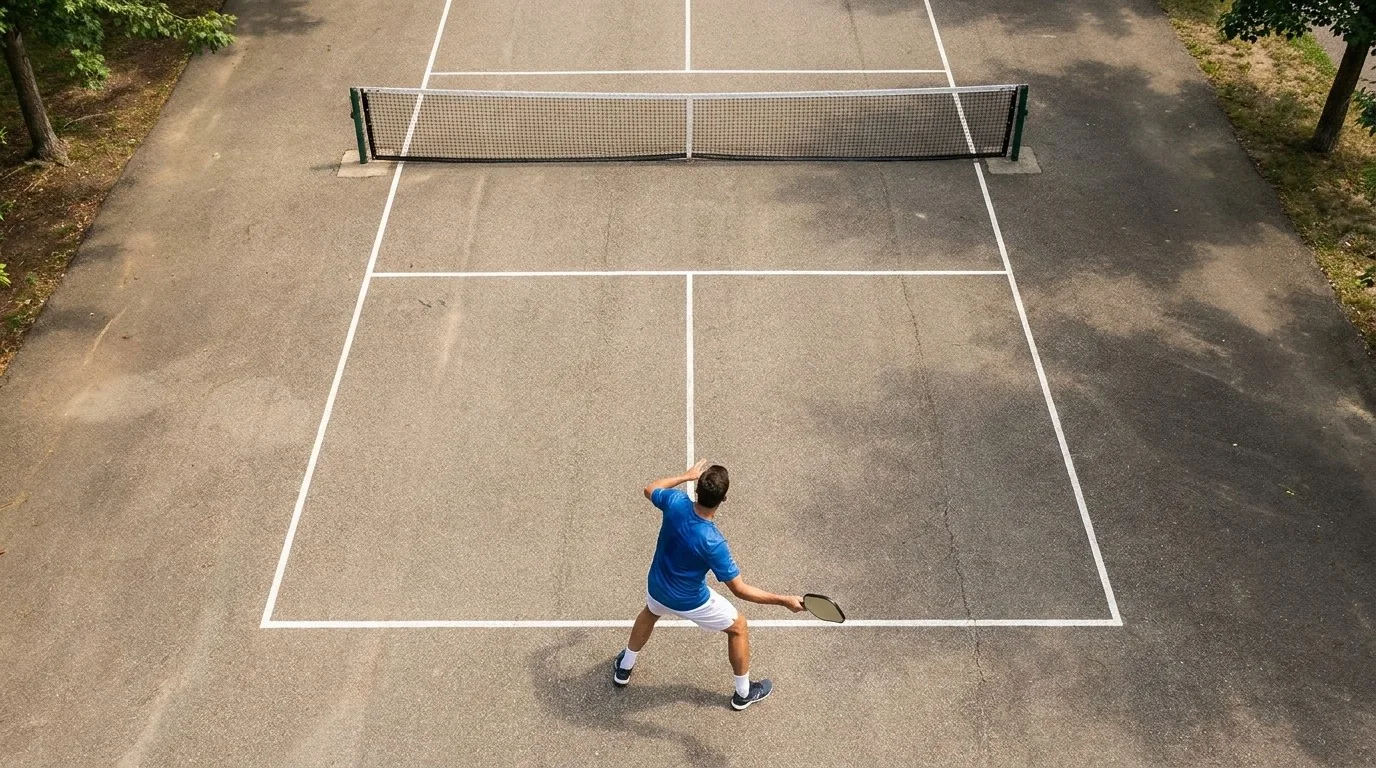
Good pickleball paddle preparation buys you time without making the stroke stiff. As the opponent's shot travels, get the paddle into position and turn your shoulders before the ball reaches you. You are not trying to predict the exact target. You are taking away the big, late swing that makes the next decision rushed.
Why early preparation helps
A late paddle often leads to a reach. The feet stop, the arm takes over, and contact drifts beside the body. Earlier preparation lets your lower body keep adjusting while the paddle is already near a useful path. You can still change the target after reading the ball, but you are not starting the swing from nothing.
Start from a neutral ready position
Keep the paddle in front of your torso, soften your knees, and stay ready to move either way. Watch the opponent's contact instead of turning automatically on every bounce. When the ball goes to one side, make a small unit turn: rotate the shoulders and hips together while keeping the paddle connected to your body.
Do not pull the arm far behind you. A compact preparation preserves time against a quick ball and makes it easier to change from a full swing to a block, dink, or reset when the incoming shot is lower or faster than expected.
Let your feet choose the side
Use the first adjustment step to make room for the forehand or backhand you want. If the ball is close to your body, do not reach across without moving. A small lateral step can create a cleaner contact window. In doubles, account for the middle as well: communication and spacing may decide who takes the ball before the swing starts.
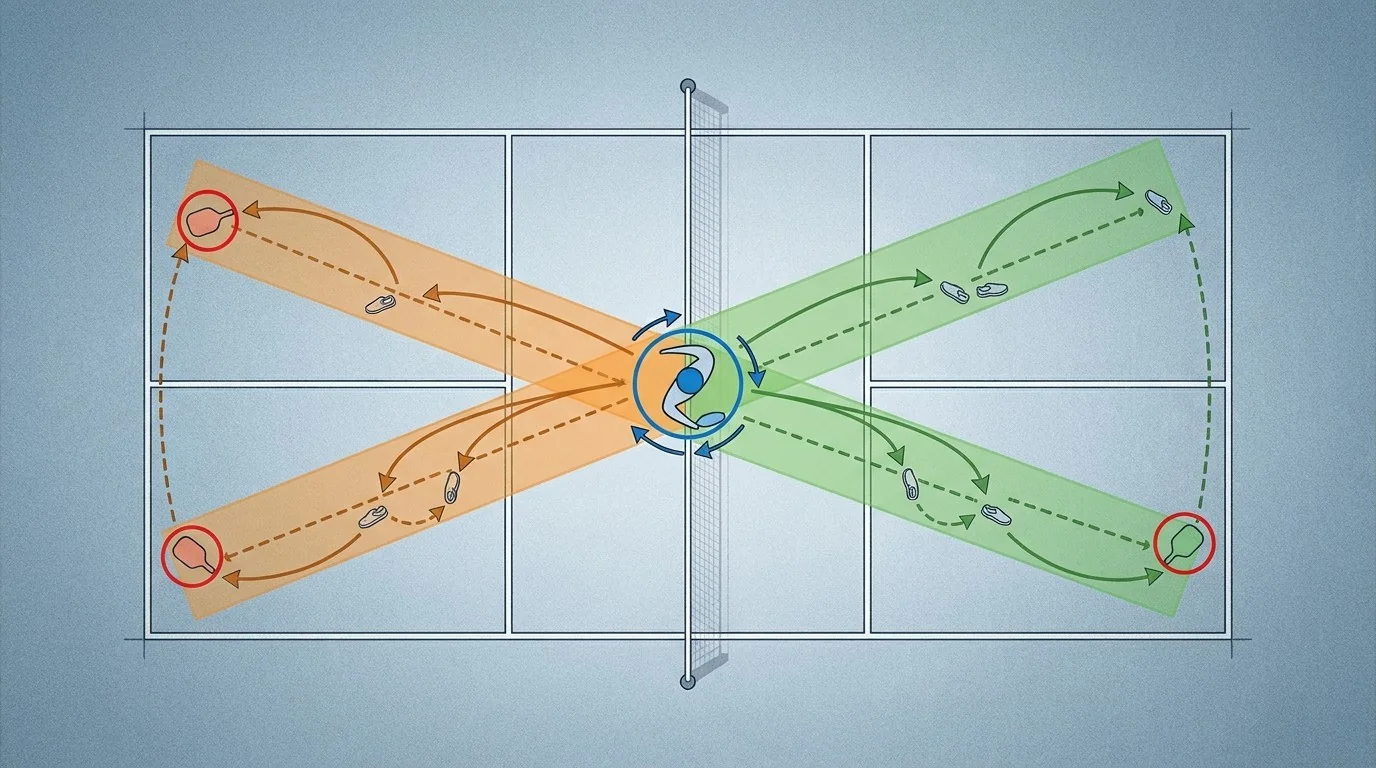
Forehand preparation is not automatically the better option. Choose the side that lets you contact the ball in front, stay balanced, and recover for the next one. A stable backhand can be safer than a stretched forehand. A forehand may create more room when your feet have time to move.
Match preparation to the shot
A drive may need a fuller turn and a longer path. A volley or reset needs a shorter preparation. Keep the paddle face and wrist quiet until you know the ball's height. When the ball is dropping, give priority to position and margin. When it arrives high enough to attack, let your legs and shoulder rotation provide the acceleration instead of adding a frantic backswing.
After contact, bring the paddle back toward ready and recover your feet. Preparation has done its job only when it improves the current shot and leaves you able to answer the next one.
Practise the pattern
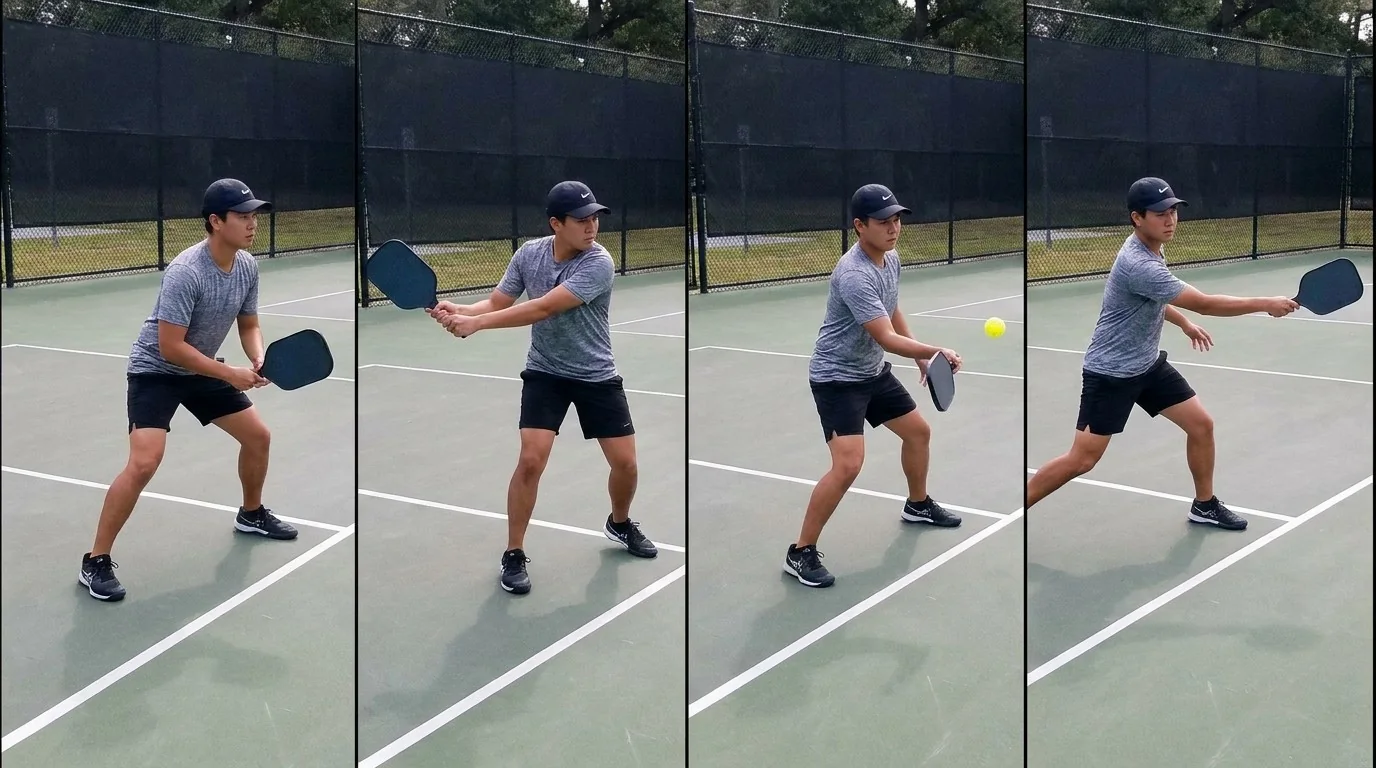
Start with cooperative feeds at a moderate pace. Begin in ready position, wait for the feeder's contact, turn your shoulders, and pause briefly before moving into the stroke. Check three things: the paddle stayed compact, the first step created space, and your head and torso remained balanced.
Next, alternate forehand and backhand feeds without announcing the direction. Add body balls and short balls only after the basic turn is reliable. Finish with a constrained rally. Count a repetition only when preparation, contact in front, and recovery happen in that order.
Common errors include turning too early and freezing, taking the paddle behind the body, or moving the arm without moving the feet. Slow the feed, shorten the preparation, and rebuild the sequence. Early preparation should make the next decision calmer, not more hurried.