Pickleball Paddle Queue: How to Join the Next Game Fairly
A practical guide to joining a pickleball paddle queue, checking local rotation rules, and handing the court to the next players fairly.
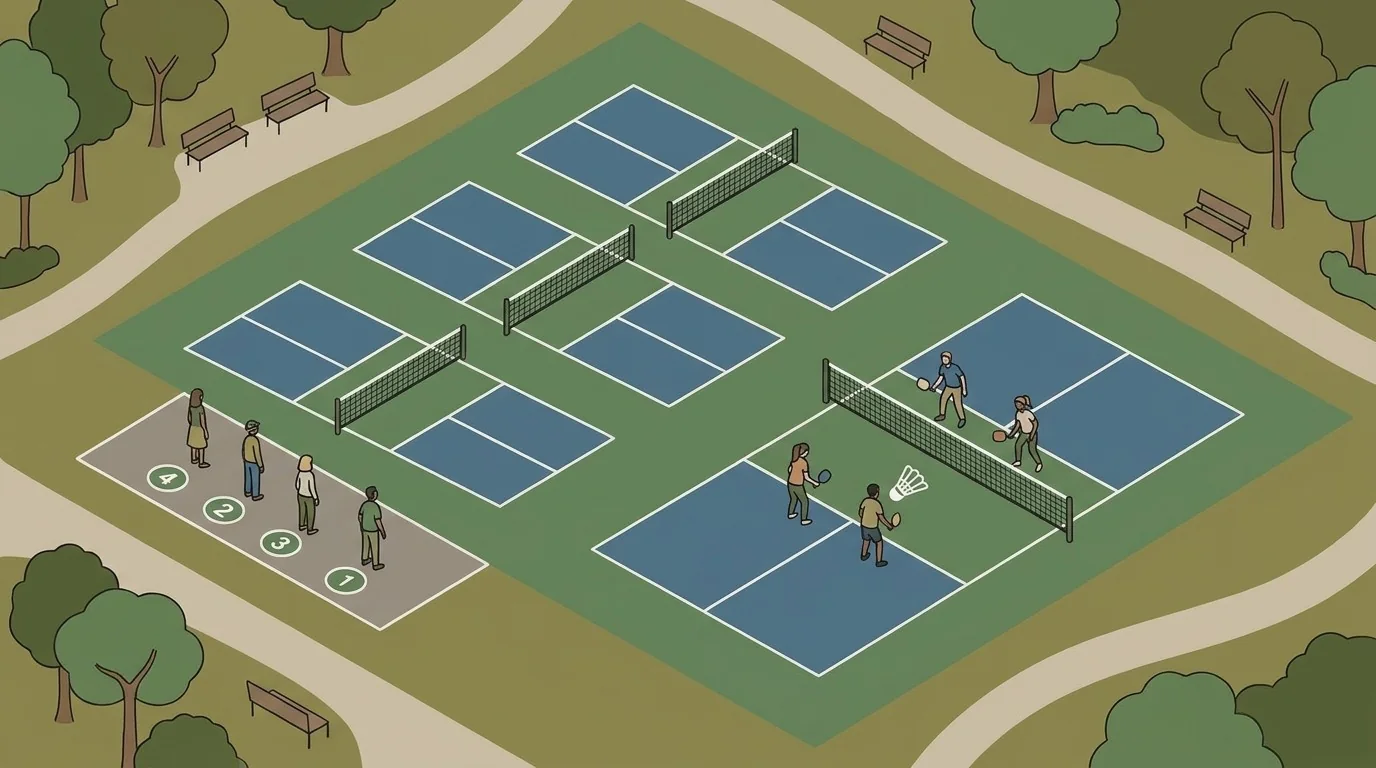
A pickleball paddle queue is a visible way to show who is waiting when the courts are full. It is not an official scoring or fault rule. It is a local open-play convention that helps people share limited court time without guessing who arrived first. Since every facility can run its line differently, start by finding the waiting area and asking how that session rotates.
What the paddle queue tells you
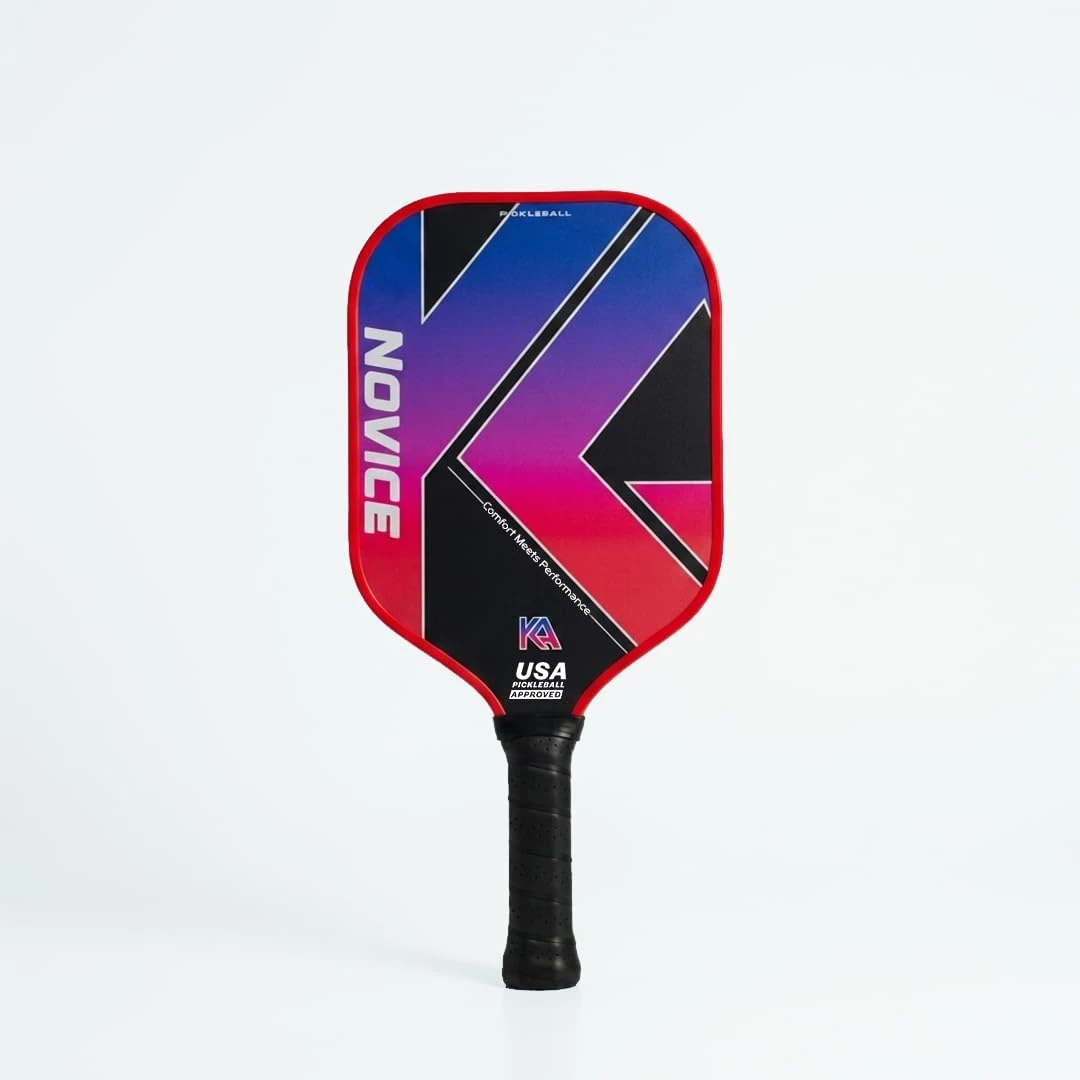
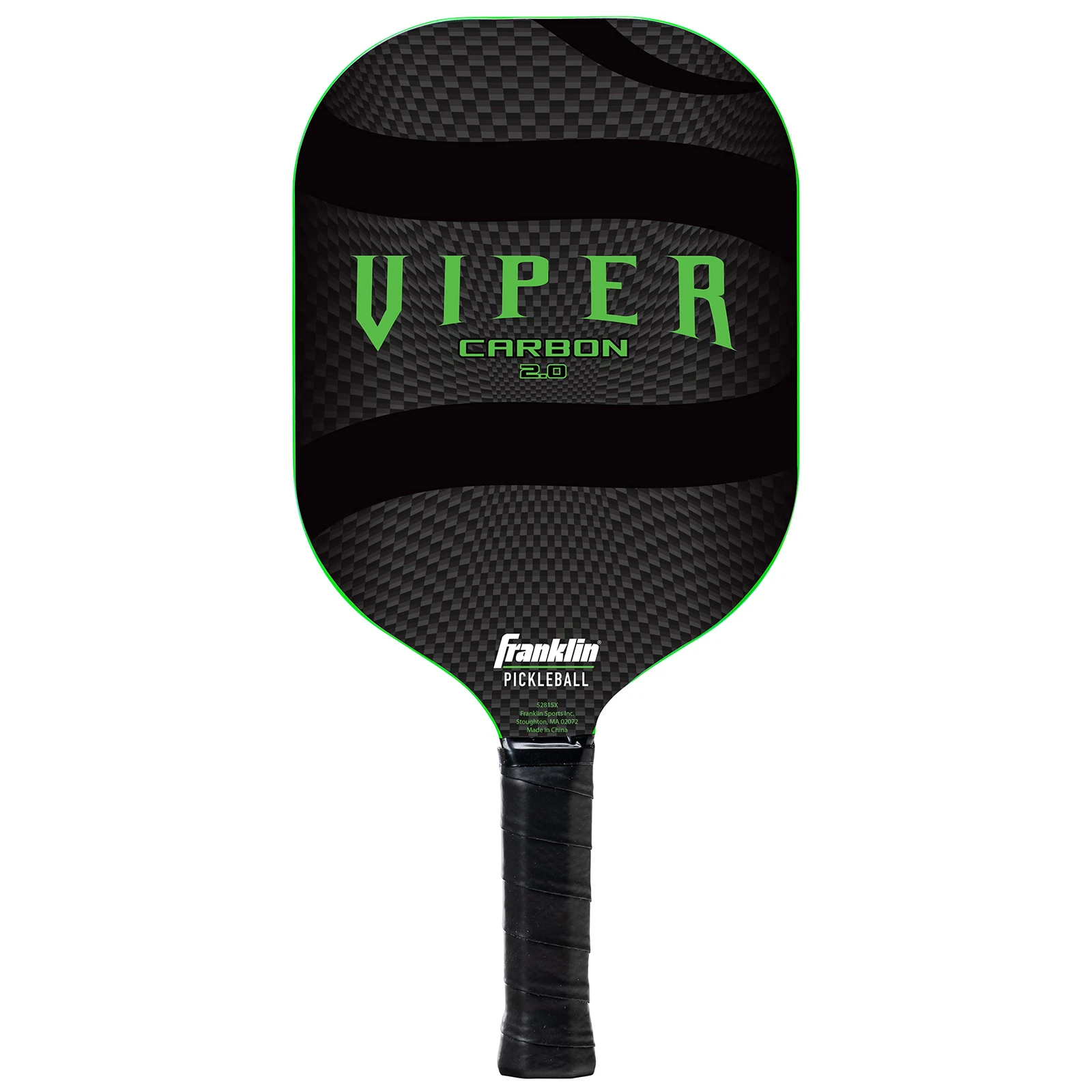
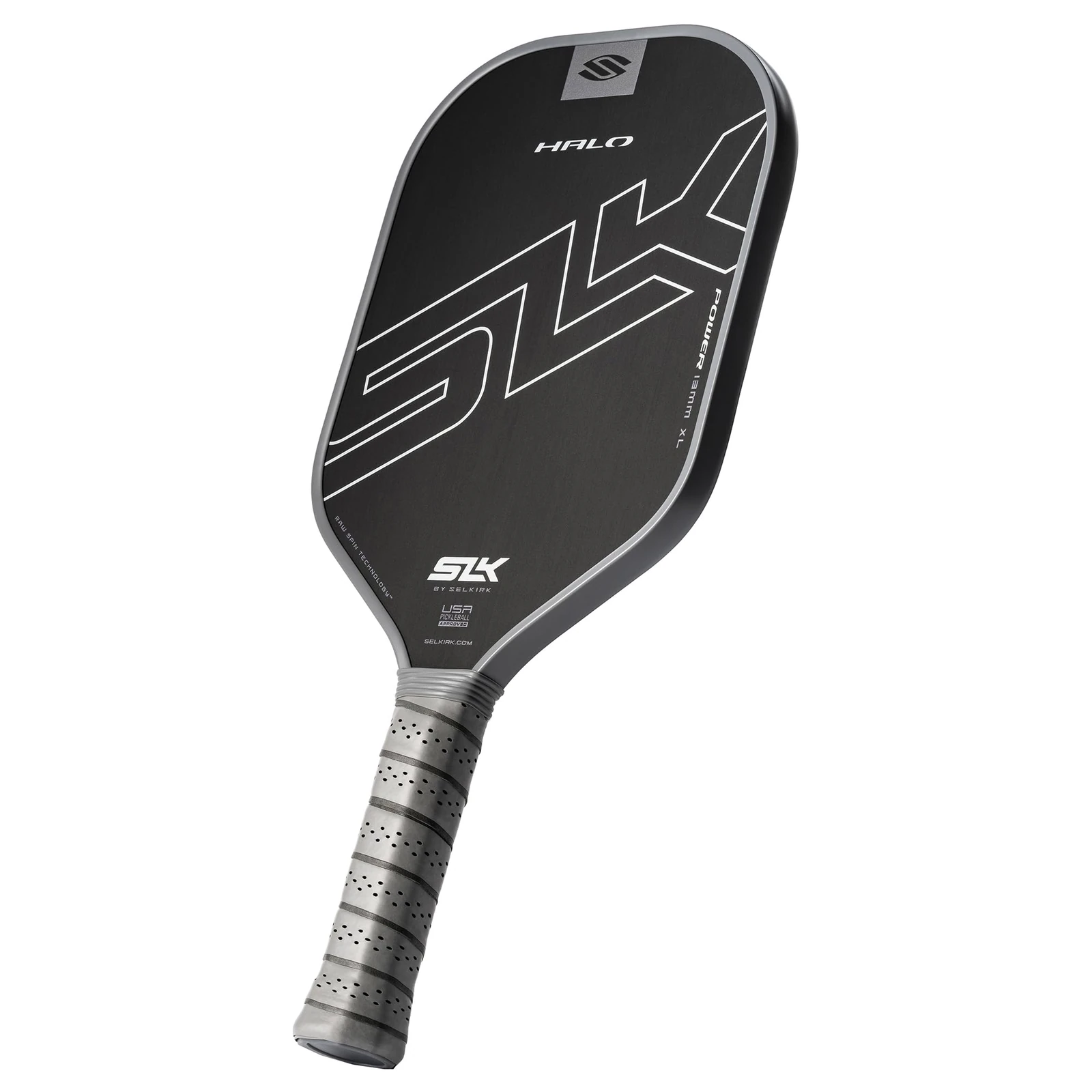
Players may place paddles in order on a rack, bench, basket, fence hooks, or another venue-provided system. Some facilities use a digital sign-up instead. Whatever the method, the queue should represent people who are present and ready to play. At many social sessions, the next four entries make up a doubles group. Other sessions use a different group size, separate skill lanes, or a winners-stay format.
That distinction matters. The queue shows the order, but it may not explain whether four players leave after each game, whether winners remain, or what happens when the next group is incomplete. Watch one rotation or ask a regular before you move anyone else's place. A system that is familiar at one park is not automatically the rule at another.
How to join without skipping anyone
Find the posted instructions or the established waiting area first. Unless the session clearly says otherwise, add your paddle or marker at the back of the line. Keep it visible, and stay nearby so you can hear when your group is called. If you leave, are not ready, or cannot play, remove your place or tell the next players to go ahead.
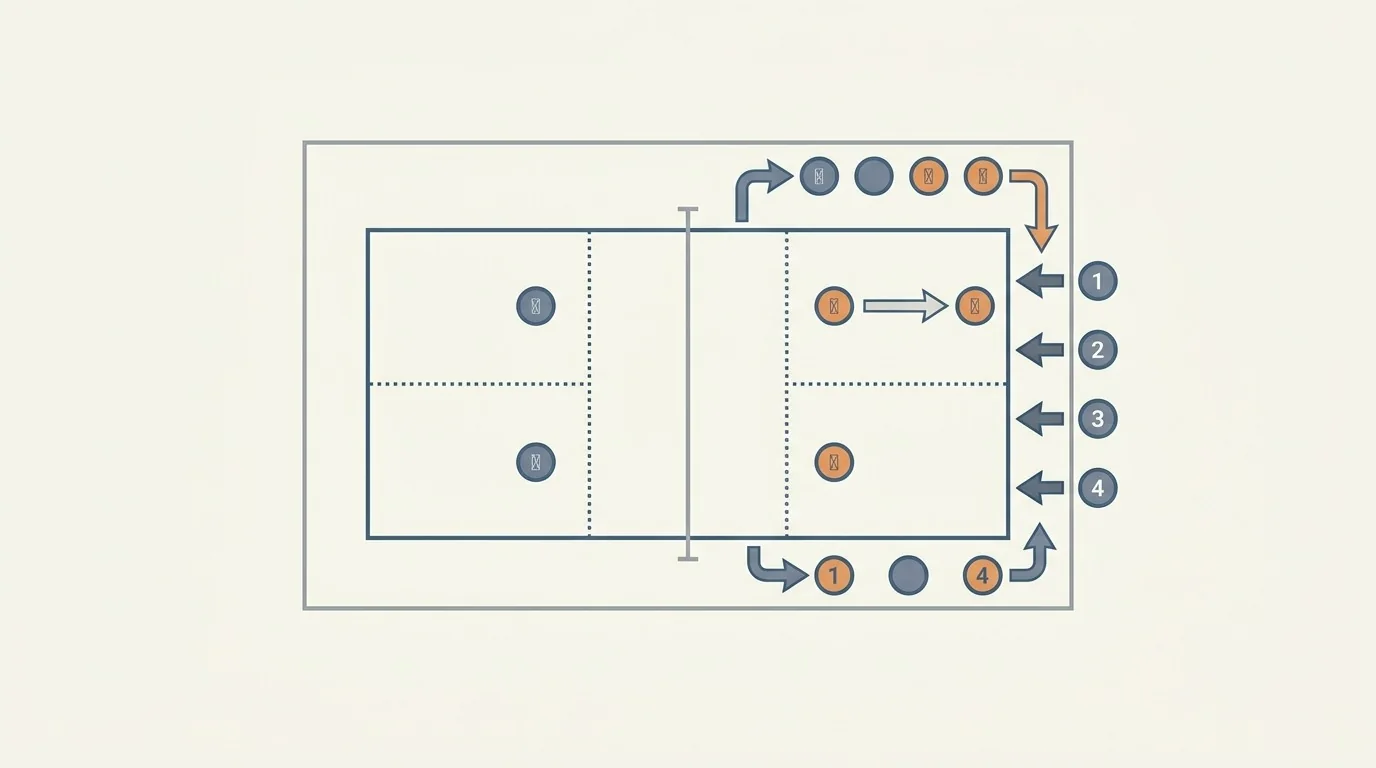
Do not move, split apart, or remove another player's paddle to improve your position. Do not add a place for a friend who is still parking or on the way unless the local group explicitly permits pre-stacking. Normally, one visible entry represents one present, ready player. If partners may enter together, confirm that before placing paired paddles side by side.
Check the format when a game ends
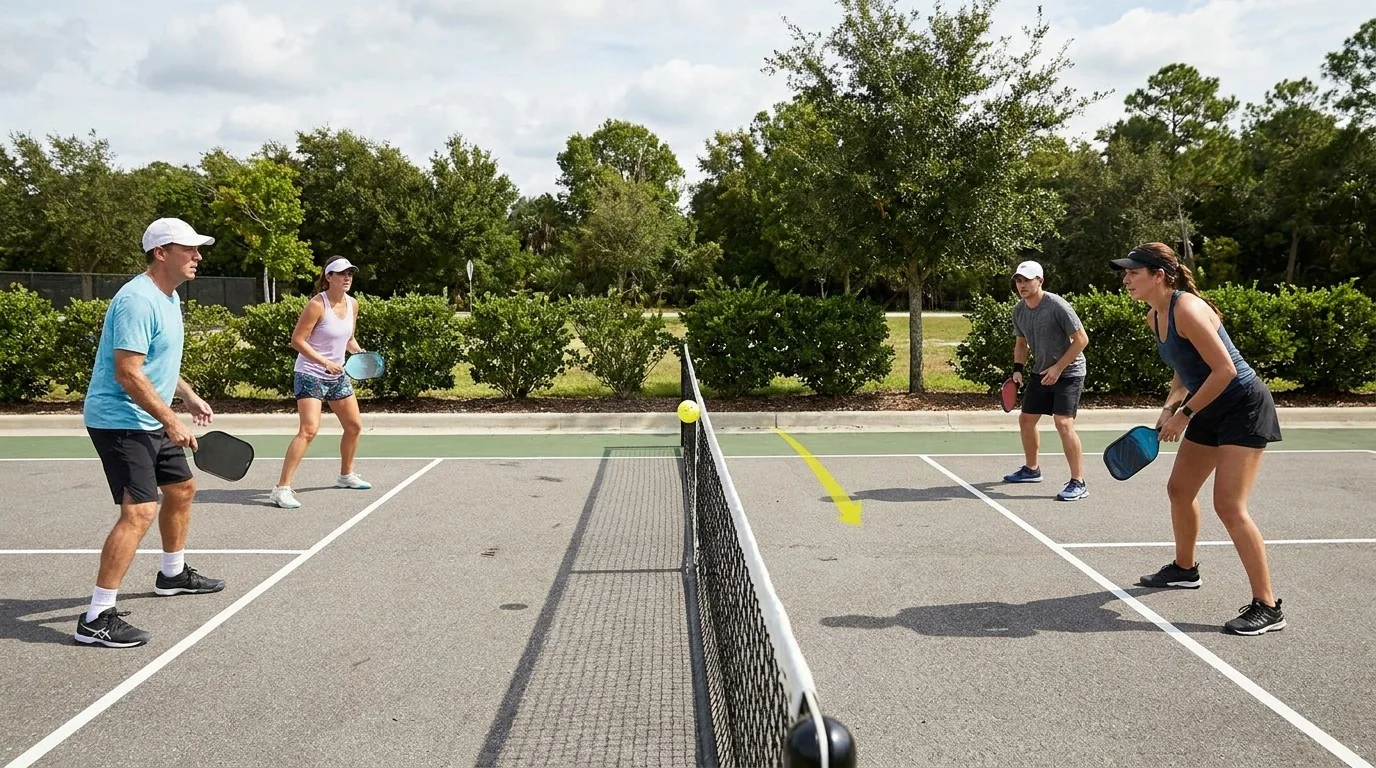
As a game finishes, look at the queue before stepping onto an open court. The next group may already be clear. In a four-on, four-off session, all four players leave and the next four enter. In a winners-stay or challenge-court format, only the players specified by that session rotate. The format belongs to the local session, not to the word “queue.”
If fewer than four people are waiting, ask how the group is formed. One, two, or three players might join those rotating off, wait for a complete group, or follow a venue-specific rule. There is no universal answer for an incomplete group. A quick question is fairer than silently rearranging the line.
Make the handoff easy for everyone
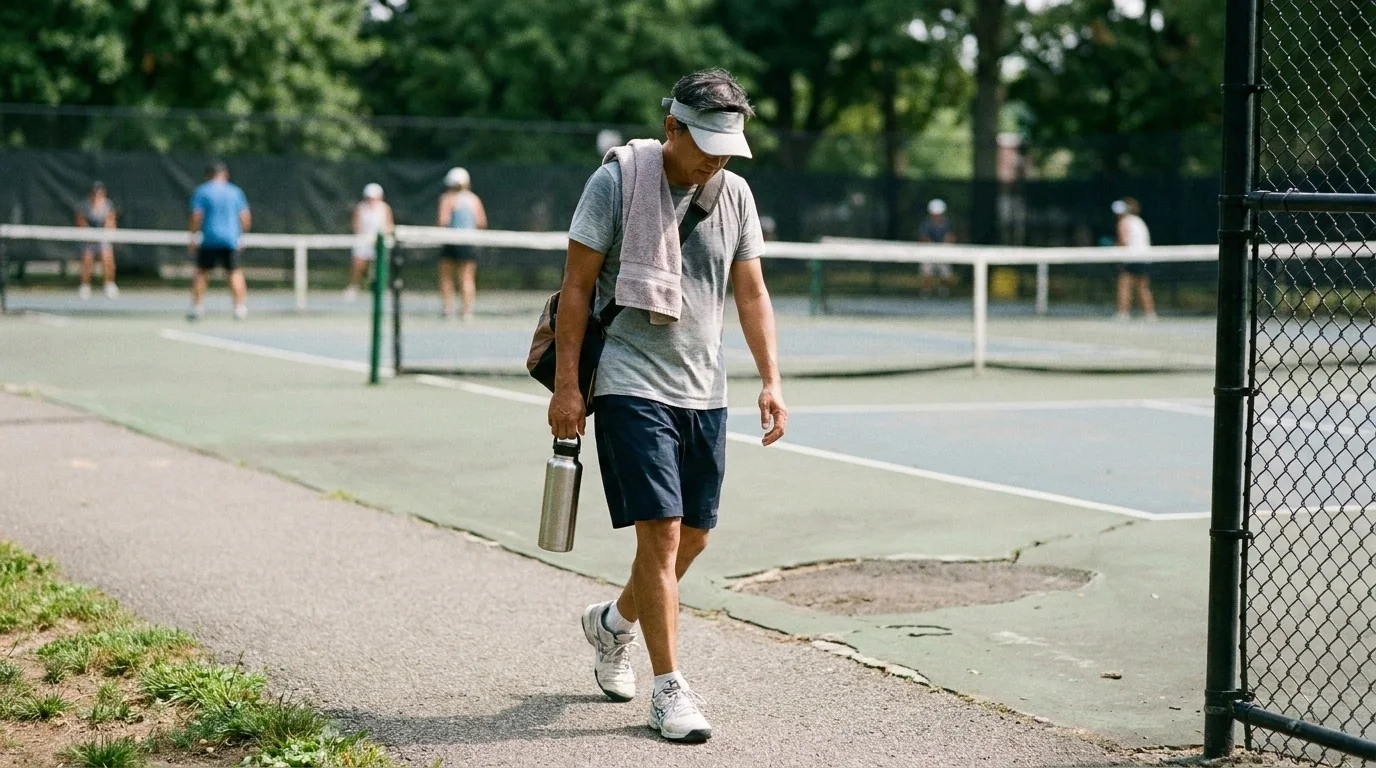
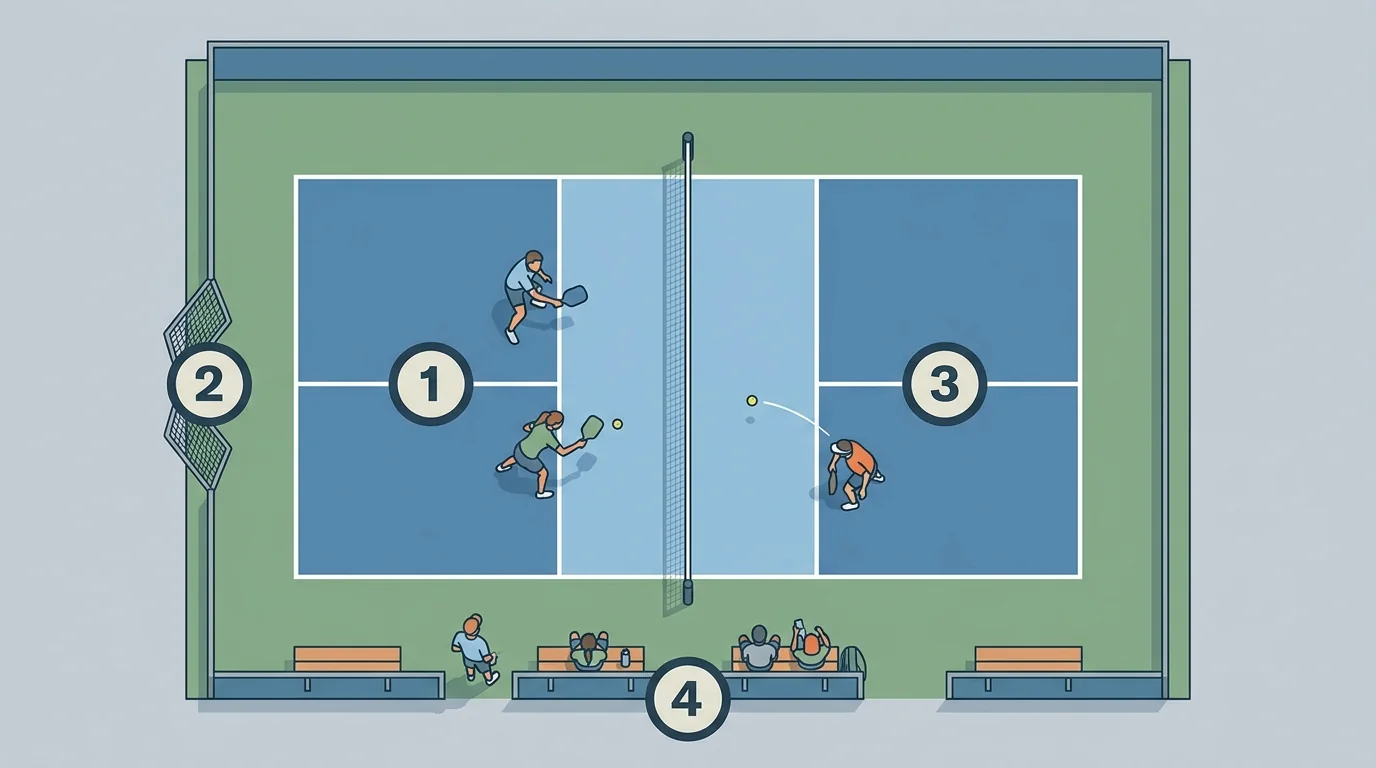
Waiting players should stand where they can watch without distracting the rally or stepping onto a live court. When your group is called, move promptly so the changeover does not hold up the next game. When your game ends, leave the playing area safely and return to the back of the queue if the format requires rotation.
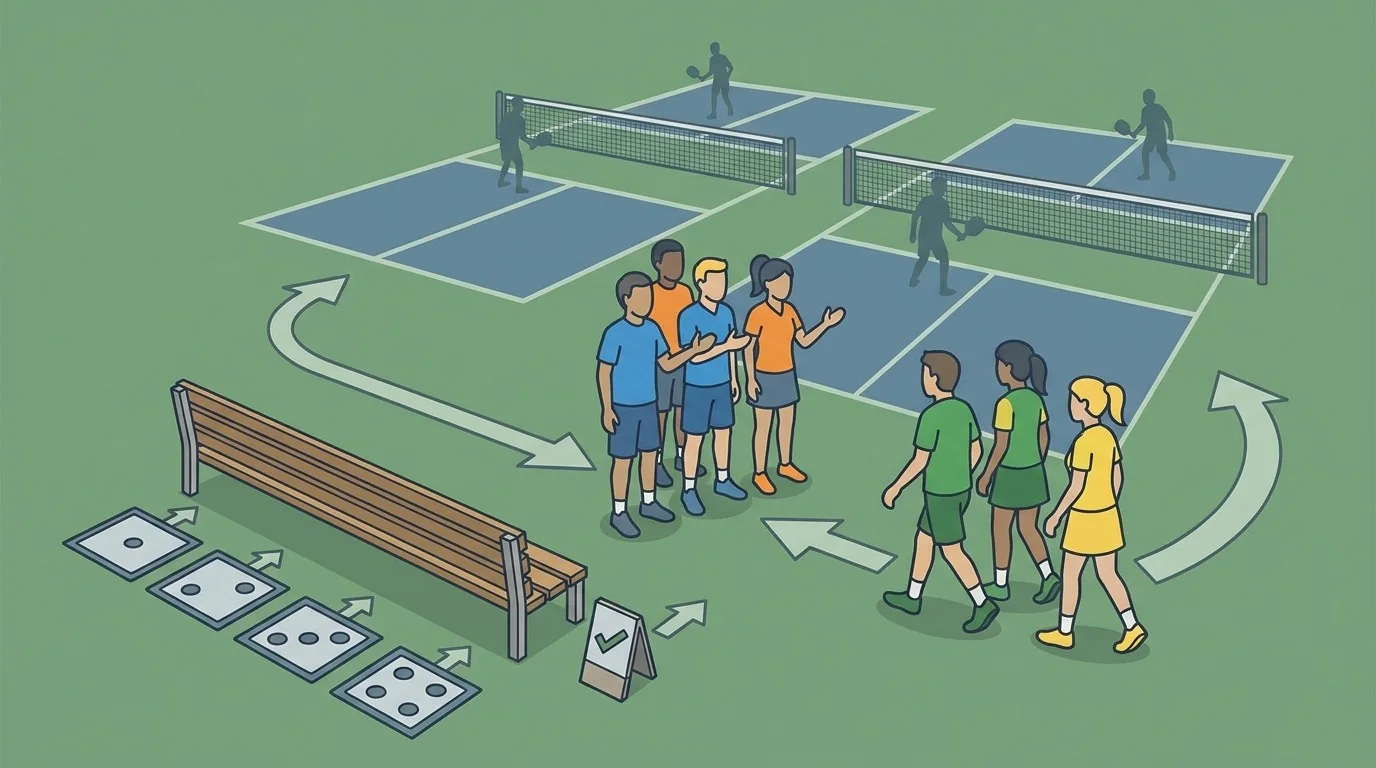
New players should not have to decode a private system. If someone looks uncertain, point out the queue and explain whether the session rotates all four players or keeps winners. If two people disagree, check the posted policy or ask the host. Clear, calm clarification protects both fairness and the friendly atmosphere that makes open play work.
Quick check before stepping on court
- Find the waiting area and read the local instructions.
- Ask whether the session uses four-on, four-off, winners stay, or another rotation.
- Add your place at the back and remain present.
- Do not hold a spot for an absent or unready player unless the group allows it.
- Check the queue when a court opens.
- Rejoin at the back if you want another game and the format requires rotation.
A pickleball paddle queue works when everyone can see it and follow the same local convention. Treat it as community etiquette, not an official playing rule. Ask before assuming, and give the next group a clear handoff when your game ends.