Pickleball Paddle Weight: Static Weight vs Swing Weight
Compare widebody and elongated pickleball paddles by reach, stability, maneuverability, sweet spot, and practical player fit.
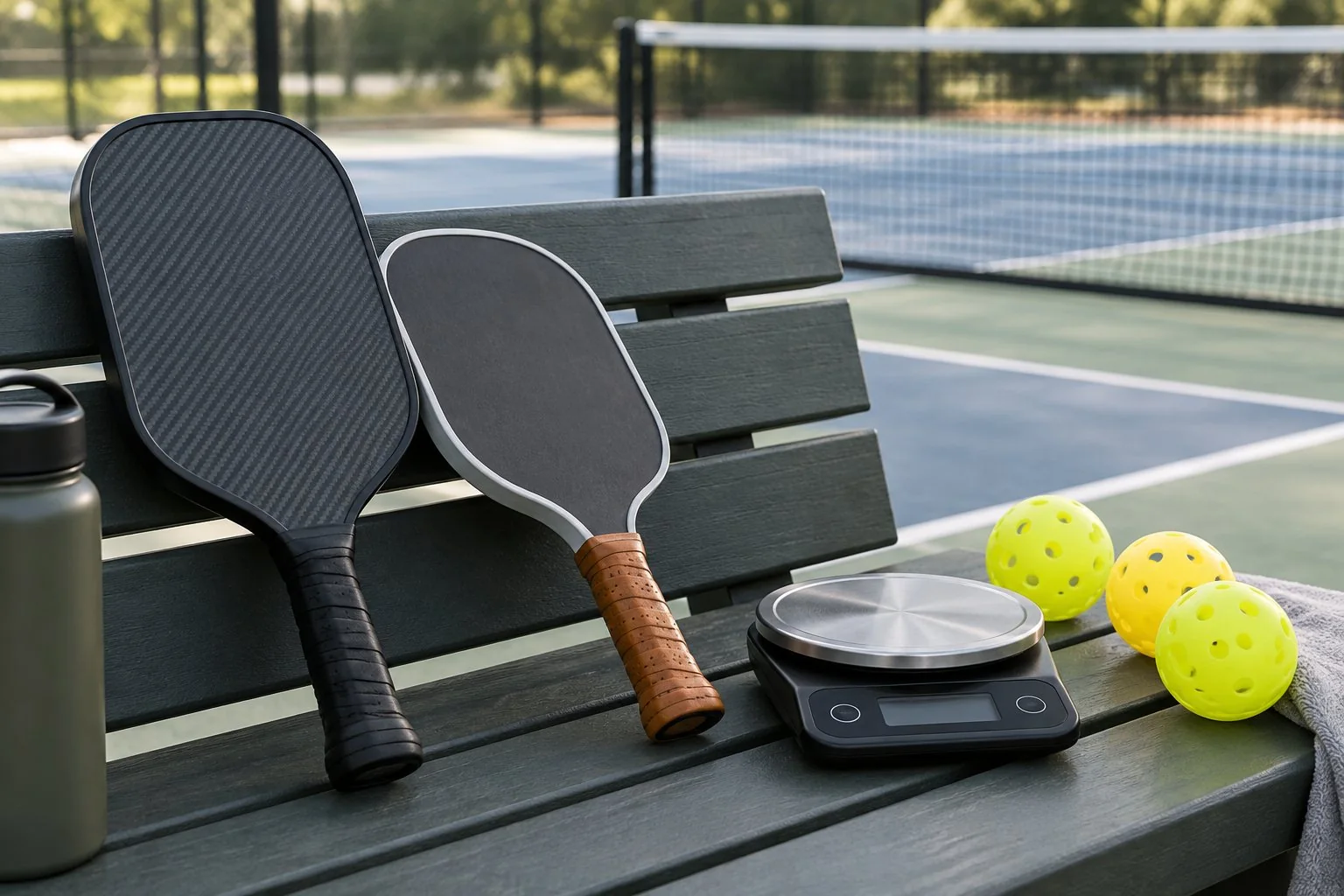
Paddle weight affects timing, stability, comfort, and how much effort a shot takes. The number printed in a product listing is useful, but it does not tell the whole story. Two paddles with the same static weight can feel very different because their balance and mass distribution change how they move through the swing.
Static weight is only the starting point
Static weight is the paddle’s measured weight before you swing it. A lighter paddle often feels quick during hand battles and may be easier on a player who is still building strength or returning from an arm issue. A heavier paddle can feel more solid when blocking pace and may add depth without requiring a frantic swing.
Neither range is automatically better. A light paddle can become unstable when contact is off-center, while a heavy paddle can arrive late if your preparation is slow. Core thickness, face construction, grip size, and your technique all affect the result. Use the listed weight to narrow the field, not to make the final decision.
The grip can change effective weight too. An overgrip, replacement grip, or edge tape adds mass and may shift the balance toward the handle. That can make a paddle feel easier to control even though its scale weight has increased.
Swing weight explains how the paddle moves
Swing weight describes the resistance you feel as the paddle rotates. Mass near the head contributes more to that sensation than the same mass near the handle. A head-heavy paddle may produce strong plow-through on drives and overheads, but it can demand earlier preparation and more work during quick exchanges.

A handle-heavy paddle can feel fast at the net because the head changes direction readily. The trade-off may be less automatic stability against a hard ball. Balance is personal: a player who loves hands battles may prioritise quick rotation, while a baseline player may prefer a steadier head through contact.
Pay attention to fatigue, not just the first five minutes. If your forearm tightens, your elbow feels sore, or your swing becomes shorter late in a session, the paddle may be too demanding even if the shots feel powerful at the start.
A practical test before buying
Begin with ten easy volleys, ten blocks against moderate pace, and ten deep returns. Then repeat the drill with quick forehand-to-backhand changes. Notice whether the paddle reaches the ball on time, stays stable when contact is imperfect, and lets you relax your grip. Those observations are more useful than a generic promise of power or control.
For doubles players who spend much of the rally at the kitchen, a manageable swing weight and quick recovery are often valuable. Players who drive frequently from the baseline may appreciate more mass through contact, provided they can prepare early and remain comfortable.
Choose the lightest paddle that still feels stable for your ball speed, or the heaviest paddle you can swing repeatedly without tension. Check the complete design—weight, balance, handle, and shape—rather than assuming one specification guarantees the right feel.