Pickleball Wall Rally Drill: Keep Your Paddle Ready While You Move
Build a steadier pickleball ready position with a wall rally: keep the paddle up, move with small steps, contact in front, and recover for the next ball.
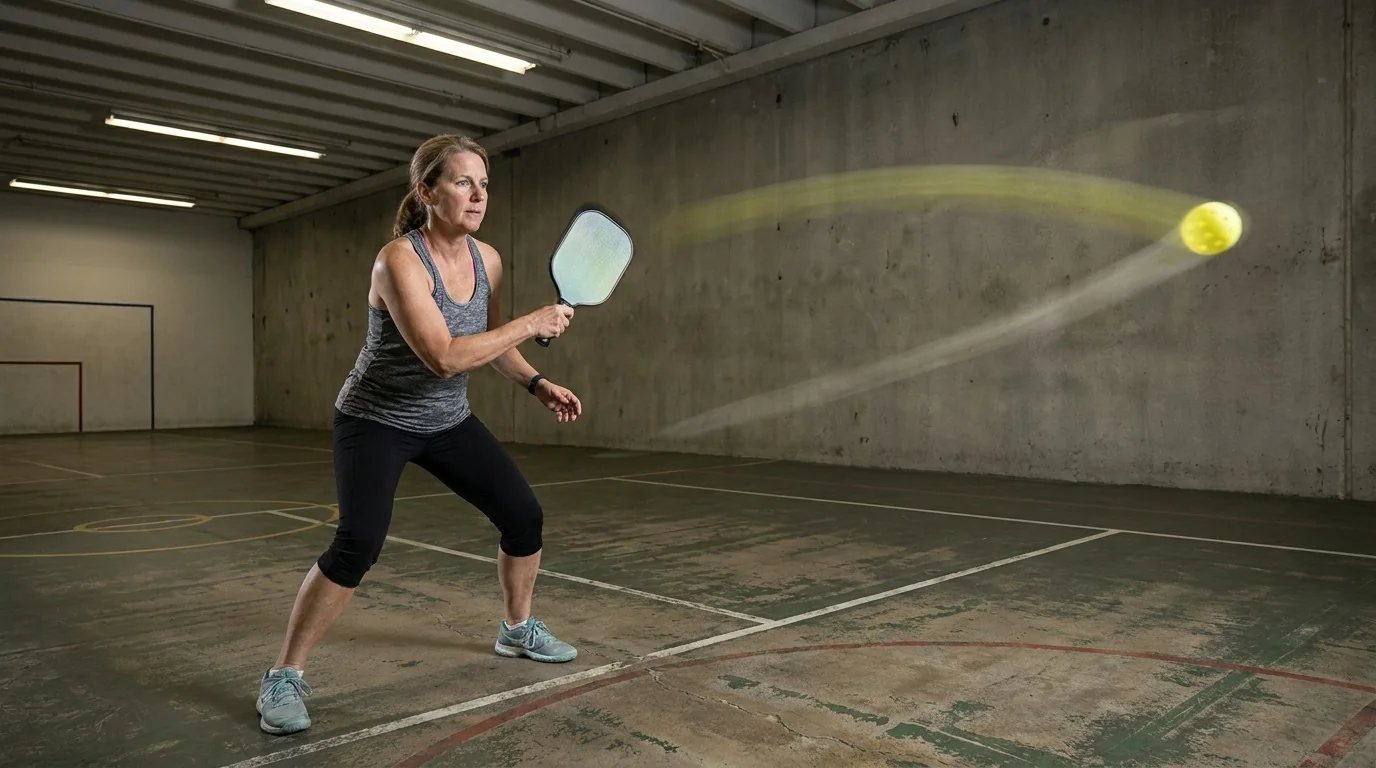
A wall rally is useful because it gives you many chances to check the same habit: paddle up, feet balanced, and body ready to move again. This pickleball wall rally drill is not a test of how hard you can hit. It is a controlled way to connect your ready position to the next adjustment step.
Build the ready position first
Stand far enough from a clear wall to let the ball travel safely back to you. Hold the paddle in front of your torso, keep the elbow comfortably bent, and stay light on the balls of your feet. Your knees should be soft rather than locked. Keep your chest available to turn, not tilted backward.
The paddle does not need to point at one exact angle for every ball. Keep it high enough that you can move it to either side without dropping it first. The useful check is simple: after each contact, can you return to a balanced base before the next ball arrives?
Drill 1: steady wall rally
Begin with gentle forehand contacts. Send the ball to a repeatable area of the wall and let it rebound to a comfortable height. After every hit, bring the paddle back in front and make a small recovery step. Do not chase speed. Stop if the ball forces a rushed lunge or if your contact point moves behind your body.
When the rhythm is stable, alternate forehand and backhand contacts. Turn the shoulders and move the feet; do not reach across the body with a fixed stance. Keep the swing compact so the rebound stays predictable. If the ball rises too high, reduce the swing and soften the pace rather than trying to rescue the rally with a larger motion.
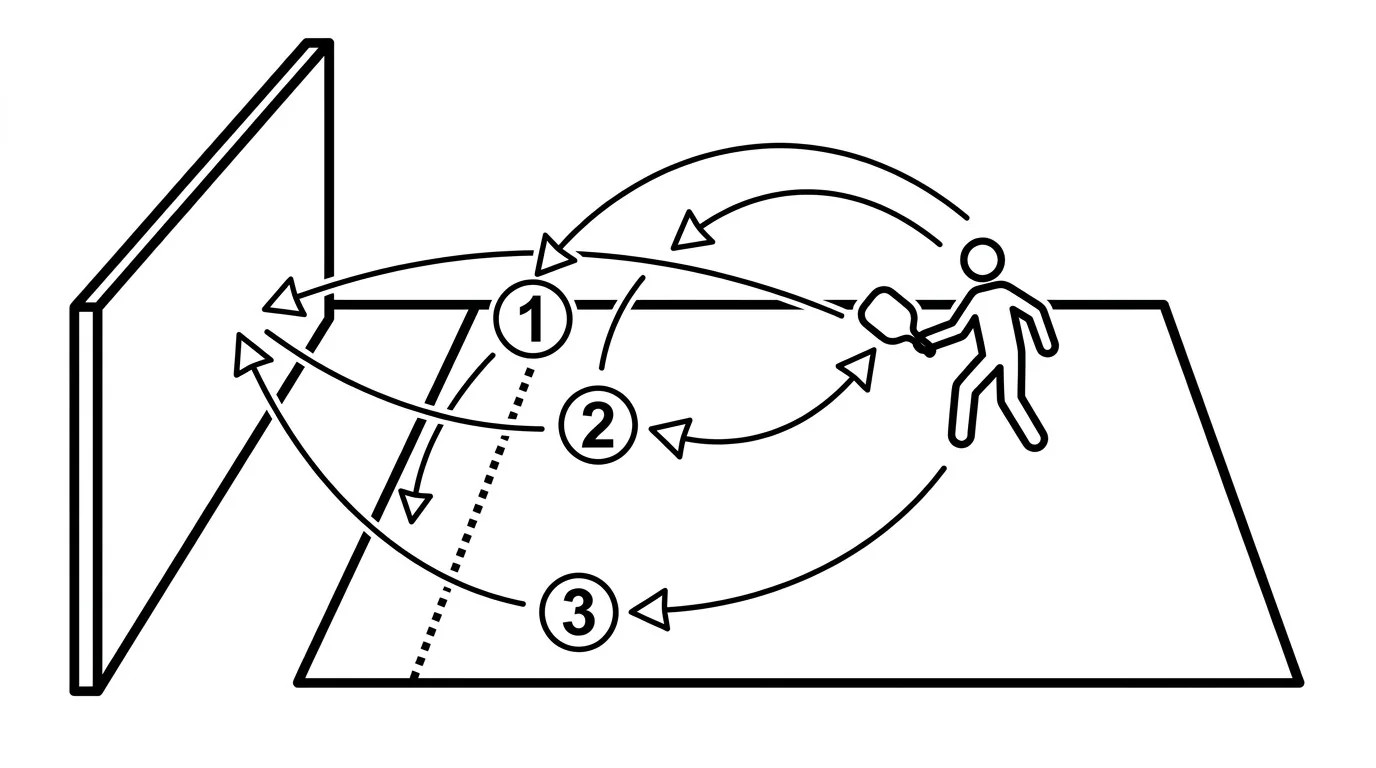
Drill 2: add small movement
Start with two or three comfortable contacts in the middle. Then send the next ball a little to one side. Use short adjustment steps to arrive behind the ball, contact in front, and return to your base. The movement should be quiet enough that you can keep the paddle prepared while your feet work.
Alternate a middle ball with a slightly wider ball. Your goal is not to cover the whole court. Your goal is to notice whether the feet move before the arm reaches. If you are falling sideways, shorten the target and slow the feed. A smaller movement performed in balance teaches more than a dramatic save.
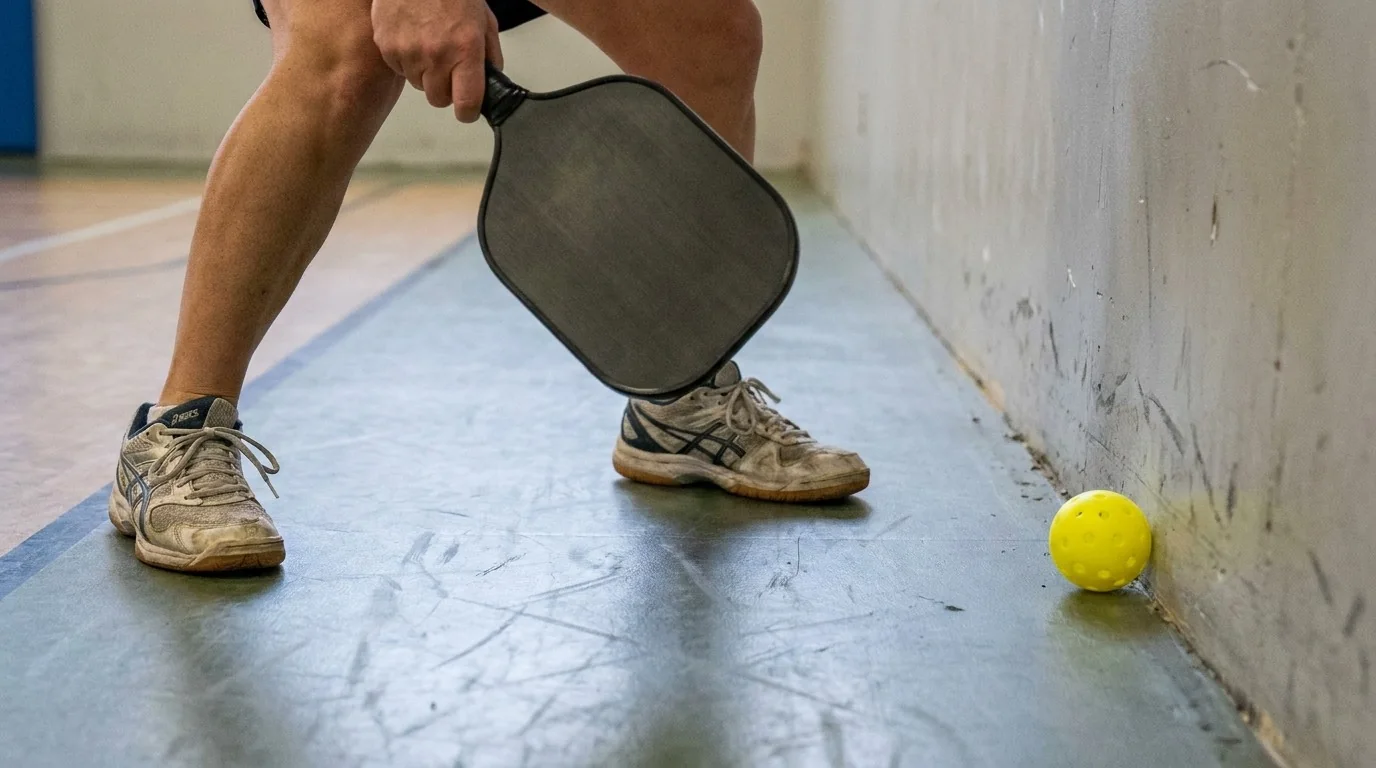
Drill 3: use a contact cue
Ask a partner to call “forehand,” “backhand,” or “hold” before the rebound reaches you. On a forehand or backhand call, make the smallest useful step and prepare the paddle early. On “hold,” keep your base and let the ball come to you without unnecessary movement. This adds a decision without turning the exercise into a race.
You can also use the opponent-contact cue from normal play: begin your split step as the other player would strike the ball, then move once you know the direction. The wall cannot reproduce every match situation, but it can make the sequence of prepare, read, move, contact, and recover easier to feel.
Common corrections
If the paddle keeps dropping, reduce the swing and pause briefly in the ready position after each contact. If you are late to the ball, begin the shoulder turn sooner and use your feet to create space. If the ball flies unpredictably, check whether you are contacting too far back or changing the face during the swing.
Keep the drill cooperative with yourself. A clean rally with controlled movement is the target. Finish each repetition in a stance that would let you respond to the next ball, then gradually widen the target or increase the pace only when that base remains reliable.