Pickleball Practice Transfer Test: Turn Drills Into Rally Skills
A practical guide to ball machine practice: set useful feeds, train one variable at a time, add movement, and measure recovery as well as contact.
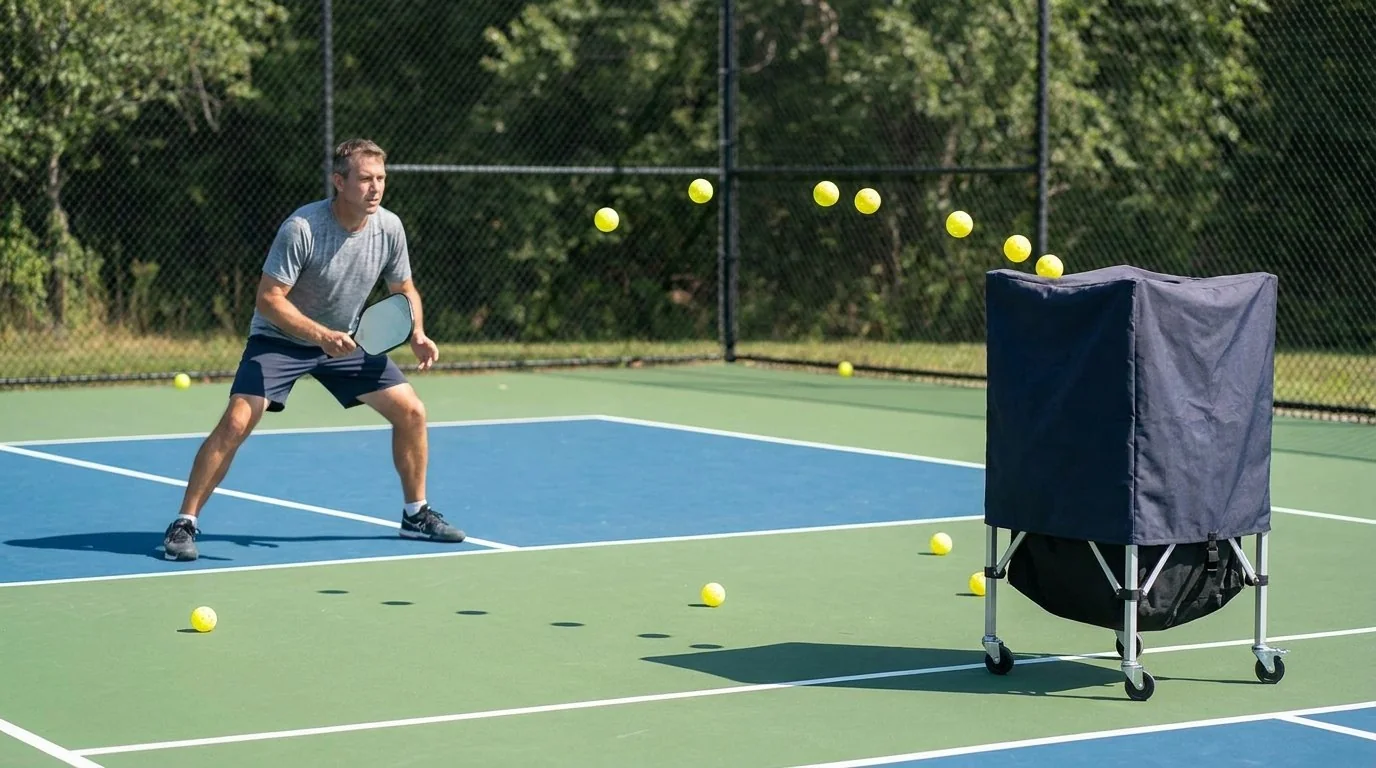
A pickleball ball machine is valuable when every feed has a job. Use it to repeat a skill with enough consistency to notice what changes, then add the movement and recovery that make the shot useful in a rally. The machine supplies the same ball; you still have to choose the target, move well, and judge the result.
Set the machine before you start
Make the court safe first. Put the machine where it will not obstruct a player, aim the feed away from walkways, and gather loose balls before they become a trip hazard. Begin with moderate speed and a generous target. If the feed is too fast or unpredictable, you cannot tell whether an error comes from technique, timing, or a ball that was never manageable.
Keep the first block short. Hit ten forehands to a deep target, pause, and look at the result before changing the setting. Hold the paddle ready between feeds and start each repetition from the court position you would use in a point. A long stream of balls is not the goal; each repetition should tell you something.
Train one variable at a time
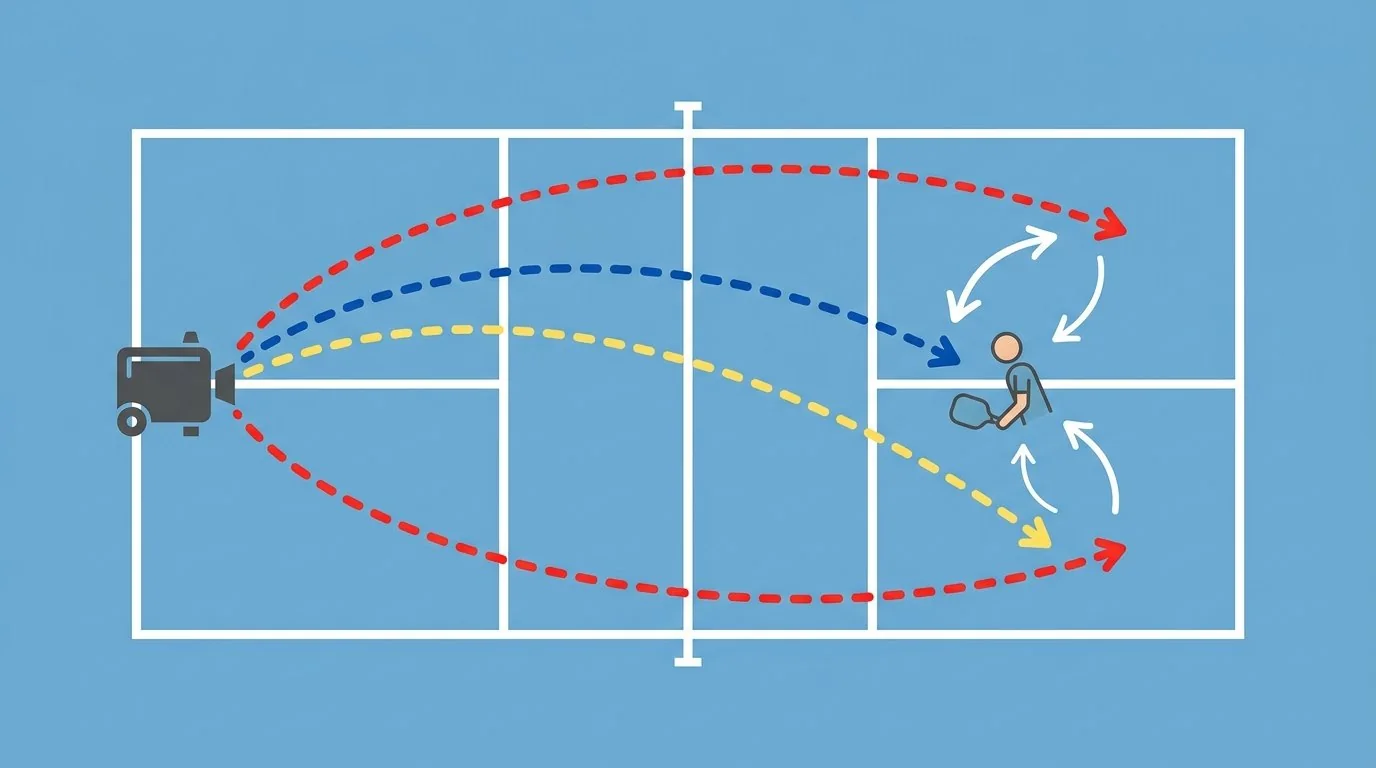
Start with contact. Use a repeatable feed and focus on meeting the ball in front, controlling the paddle face, and sending the ball toward a large target. Keep that feed while you add the recovery step. Only then change direction, depth, or pace. When every setting changes together, the cause of an error disappears.
Use three practical drill blocks
In a contact block, feed ten balls to one side and count only clean contacts that land in the intended zone. In a movement block, alternate two targets so your feet must adjust before the swing. In a rally block, use a sequence that requires the shot, recovery, and ready position before the next feed. Keep the settings simple enough to evaluate without guessing.
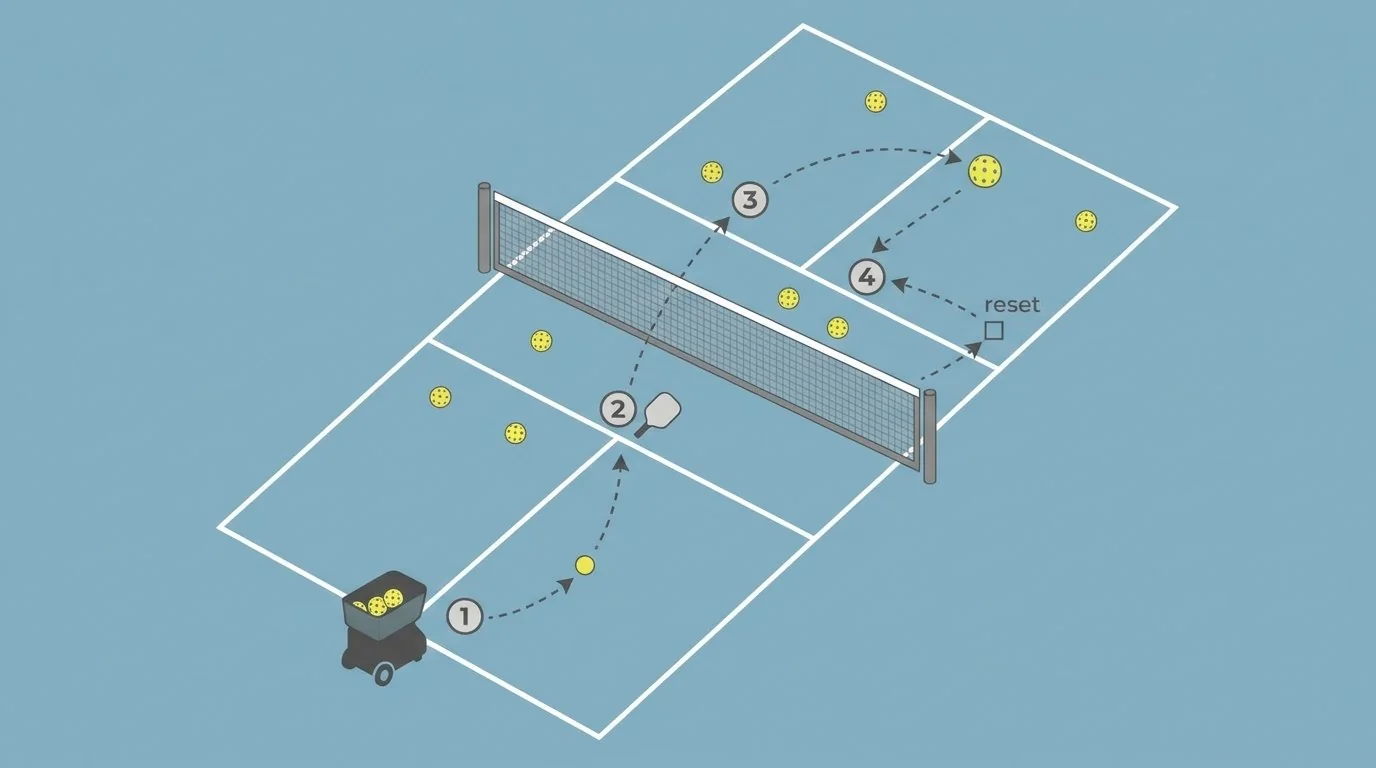
Do not let the machine rehearse a bad habit. If you are reaching, falling backward, opening the paddle face, or finishing without recovering, slow the feed and shorten the sequence. Move the machine or reduce the angle if the ball repeatedly forces an unsafe lunge. Good repetitions should resemble shots you can use against a person.
Add decisions after technique is stable
When the basic feed is reliable, add small choices. Alternate a comfortable ball with a lower one and decide whether to reset or drive. Mix wide and middle feeds, then choose the safer target instead of forcing the same stroke. A machine cannot read an opponent, so finish each repetition by imagining the next ball and recovering for it.
Use a simple scorecard: clean contact, intended target, balanced finish, and ready recovery. Count a repetition only when both the shot and the next position are acceptable. Otherwise, a high ball count can hide low-quality practice.
End by switching off the machine and shadowing the sequence, or ask a partner to feed a few unpredictable balls. That is the transfer test. If the machine produces perfect swings but your feet stop when the feed changes, the next session needs more movement and decision-making.
A ball machine should make practice clearer, not merely busier. Define the skill, choose a manageable feed, protect your footwork, and score recovery as carefully as contact. That is how repetition becomes a rally skill.