Pickleball Punch Volley: Control Pace at the Kitchen
Learn how to use a compact pickleball punch volley at the kitchen line to control pace, choose safer targets, and recover for the next ball.
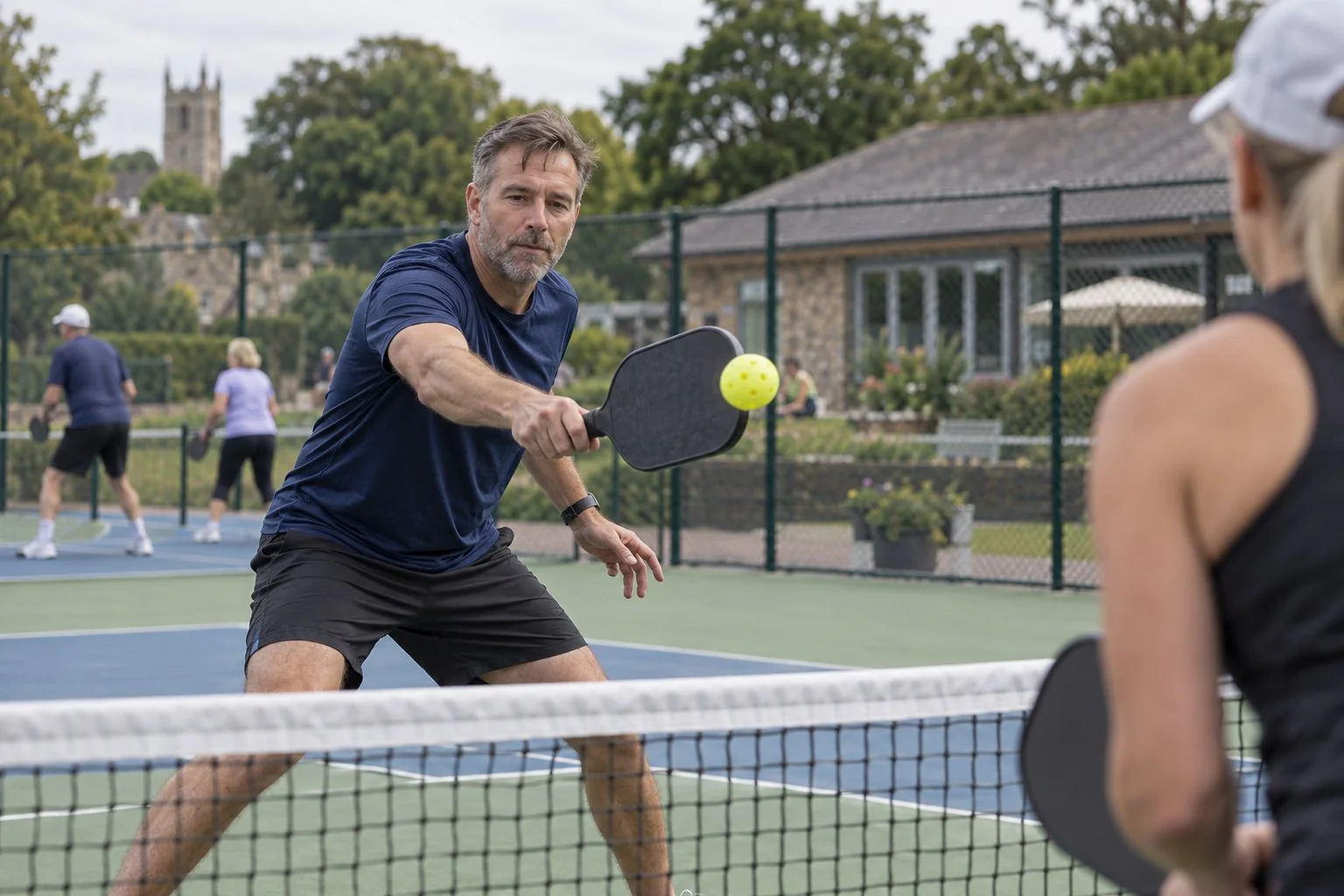
The punch volley is the useful middle ground between a passive block and a full swing. At the kitchen line, it lets you redirect a manageable ball with enough intent to pressure an opponent without taking your paddle out of position. The stroke is short; the decision behind it is what makes it effective.
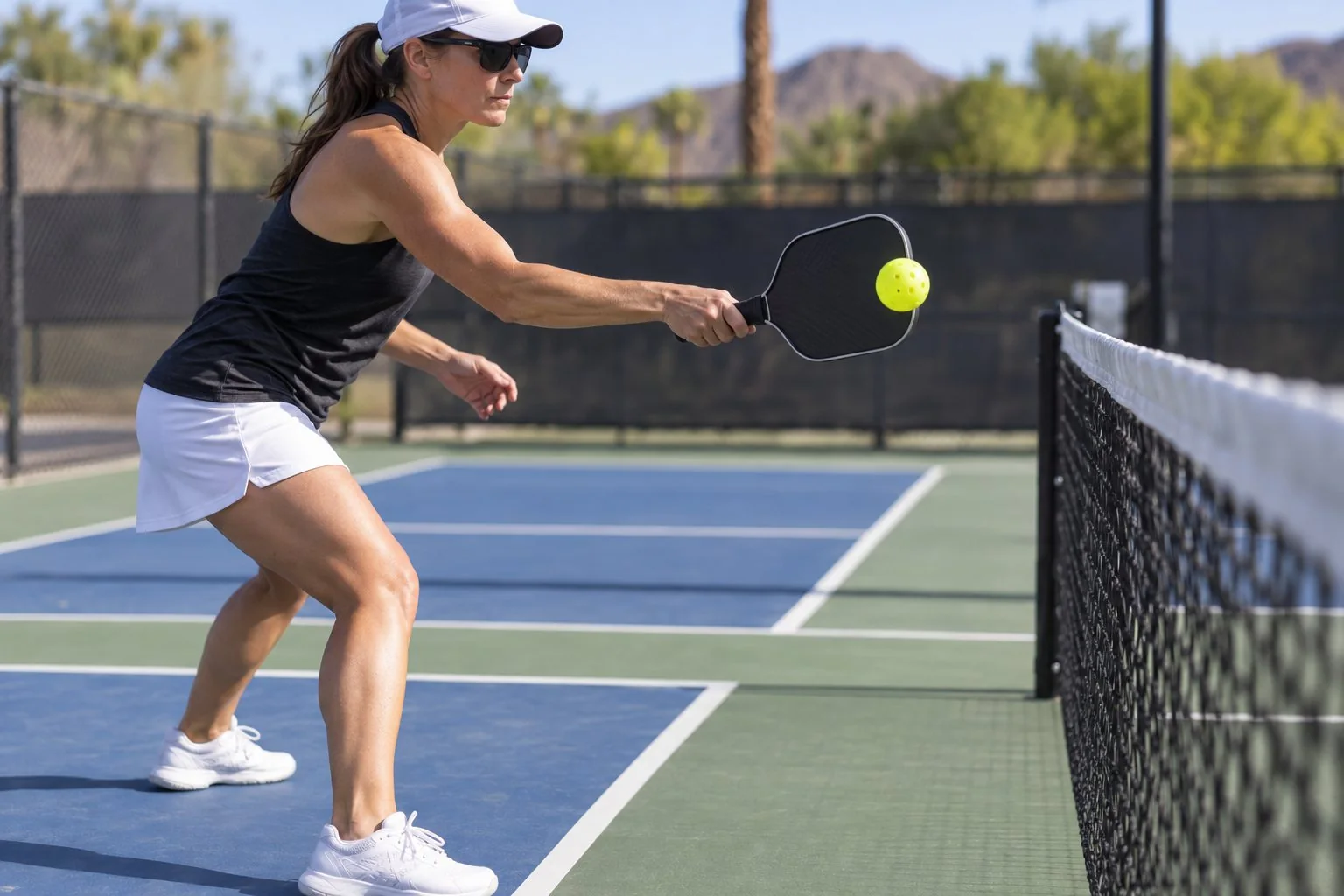
Start with a ready position that leaves options
Stand with your feet about shoulder-width apart, knees relaxed, and weight slightly forward. Keep the paddle up in front of your chest, with the head above the wrist and the face stable. A neutral or continental grip is a practical starting point because it lets you move quickly between forehand and backhand contacts.
Keep the grip firm enough to control the face but relaxed enough that your forearm is not rigid. The goal is not to squeeze harder when the rally speeds up. Instead, keep your hands quiet and make a small adjustment with your feet when the ball is too close or too far away.
The punch works best when the ball is around net height to upper-body height and you can contact it in front of you. If the ball is low, you are late, or the opponent has jammed you, a softer block or reset is usually safer. If the ball is clearly sitting up, you may have room for a roll or a stronger attack. Treat the punch as a choice, not a shot you must force on every volley.
Make contact in front
As the ball arrives, use a short forward push with the shoulder and forearm. Keep the wrist quiet and avoid a backswing behind the body. The paddle should travel only far enough to meet the ball and send it toward the target; a large swing makes the contact late and leaves you exposed to the next ball.
Contact slightly in front of the lead side, then let the paddle finish in front of your body. The face angle depends on ball height and target, but avoid lifting the paddle dramatically. A controlled forward path is easier to repeat than a wrist snap or a scooping motion.
Choose a target before you punch
Placement usually creates more trouble than extra pace. Start by looking at the opponent’s feet, especially when they are moving forward or recovering from a wide ball. A ball dropping near the shoes forces an upward defensive reply and gives your team time to prepare for the next shot.
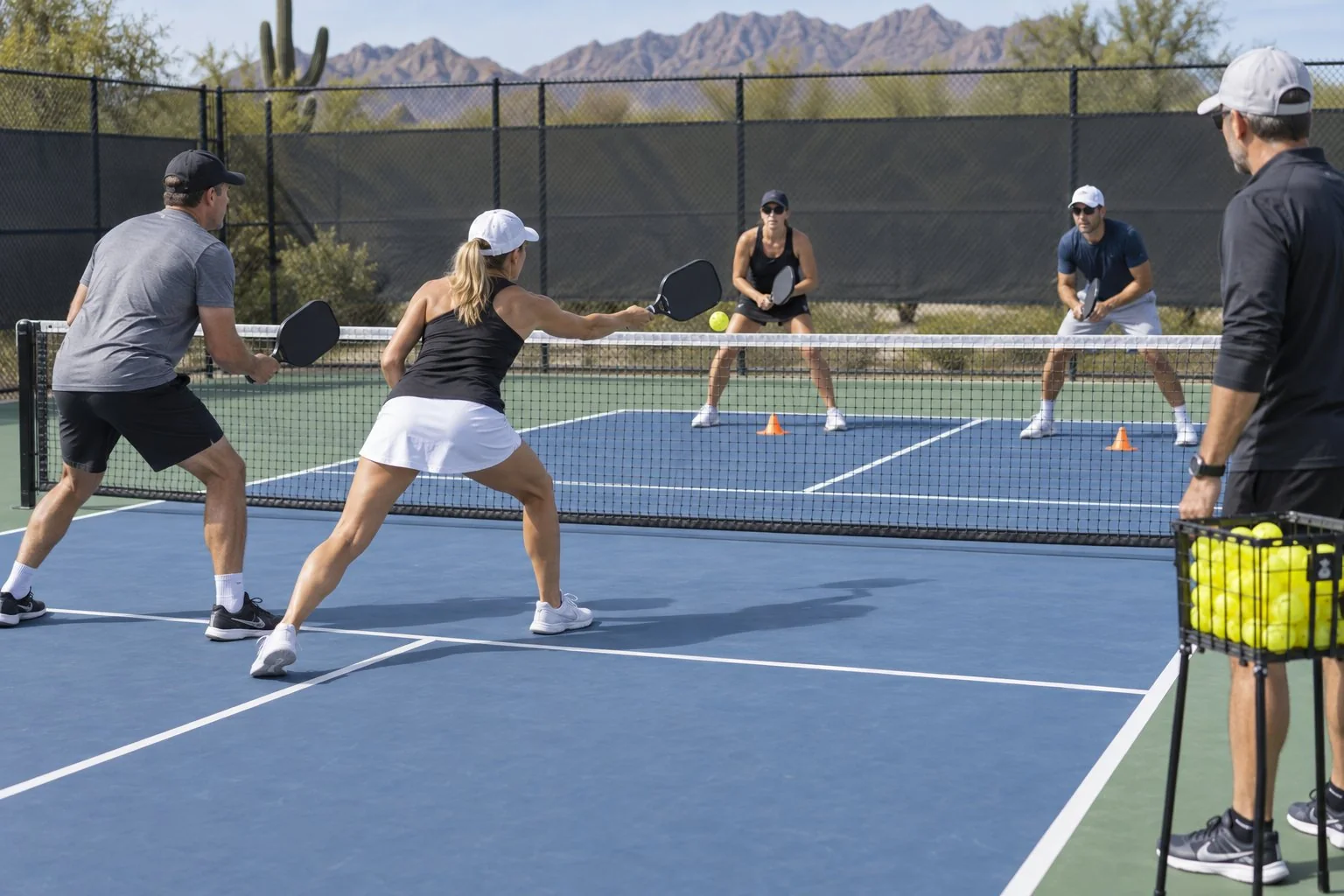
In doubles, the seam between partners is another useful target when both players are moving or leaving a gap. Use it with enough margin that you are not gambling on a narrow line. The outside shoulder or non-dominant side can also disturb an opponent’s ready position, but watch how that player counters before repeating the idea.
After the punch, recover immediately. Bring the paddle back to the ready position, regain balance, and expect the ball to return. Do not watch the shot or admire a clean contact. A compact finish is valuable because it prepares you for the next exchange as quickly as possible.
Four drills that build control
- Shadow punches: Without a ball, rehearse the ready position, tiny forward push, contact in front, and instant recovery. Keep the motion compact on both sides.
- Half-speed partner feeds: Stand at the kitchen line and return comfortable feeds to a large target. Count controlled landings rather than winners.
- Feet-and-seam targets: Place two safe targets on the opposite court. Alternate between the opponent’s feet and the middle seam while keeping the same compact stroke.
- Decision rally: Have a partner mix low balls, comfortable chest-height balls, and high floaters. Call “block,” “punch,” or “roll” before contact, then check whether the choice matched the ball.
Common mistakes are easy to spot. A backswing that travels behind the hip usually means the motion is too large. A wrist snap often sends the face unpredictably. Reaching instead of sliding creates jammed contact. Finally, punching a low ball down without lowering your body can produce a pop-up or a net error.
The reliable sequence is simple: paddle up, move into a comfortable contact distance, punch forward with a quiet wrist, aim at a useful space, and recover. With repetition, the shot becomes less about hitting hard and more about taking time away while keeping your own position secure.