Pickleball Reaction Base: Land Balanced Before You Move
Learn to land balanced as your opponent makes contact, then use a neutral base to react from the baseline, transition area, and kitchen.
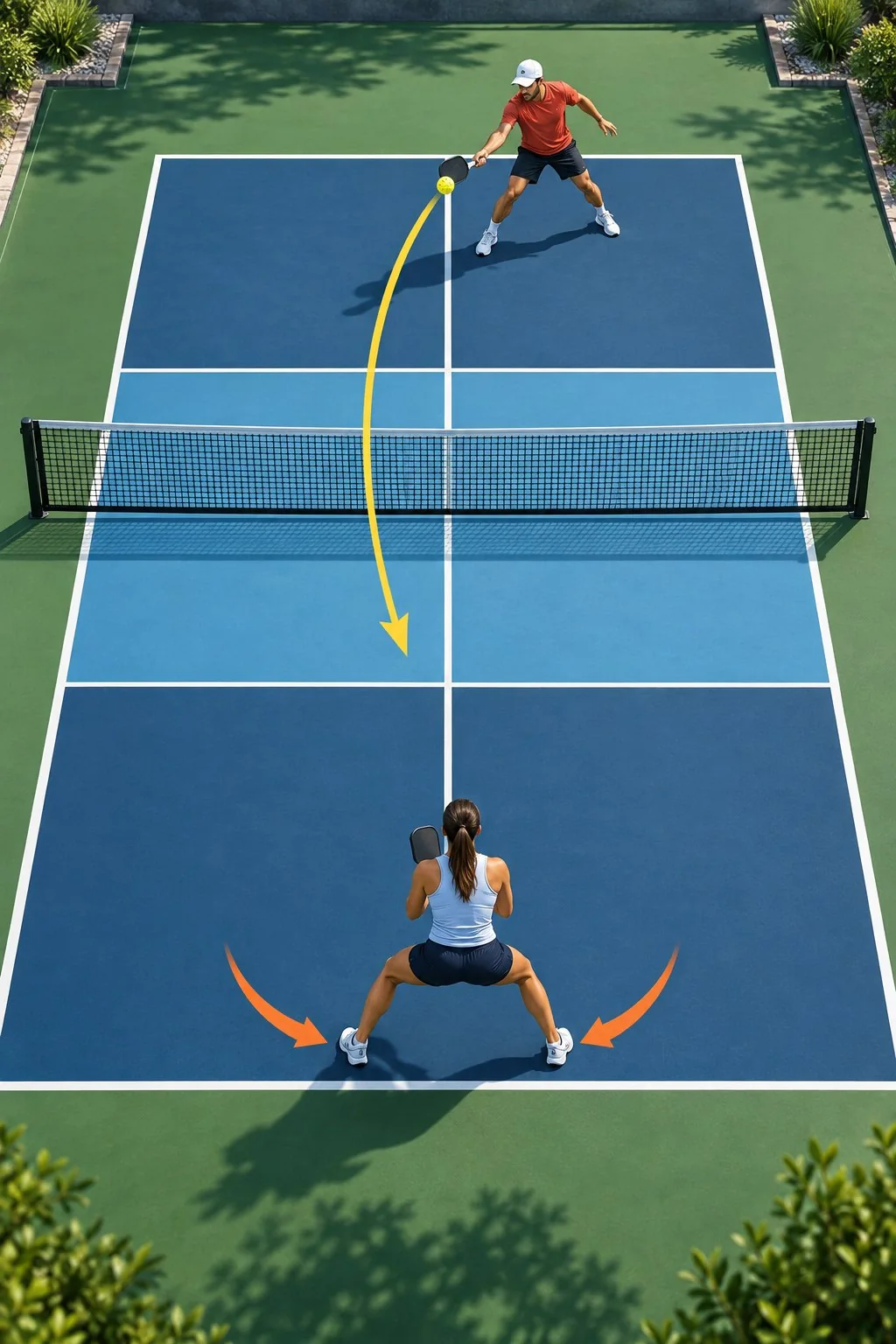
A reliable pickleball reaction base is not a jump for its own sake. It is a small, well-timed landing that puts both feet under you just as the opponent sends the ball. From that balanced base, you can push left, right, forward, or back without first having to untangle your momentum. The habit is useful at the baseline, while moving through transition, and during quick exchanges at the kitchen.
Build the landing, not the leap
Start with feet comfortably apart, knees soft, and weight on the balls of your feet. As the opponent begins the final part of the swing, make a small hop. You should be briefly airborne when the paddle meets the ball, then land with both feet ready to push in any direction. Keep the movement low; there is no need to jump high or travel forward.
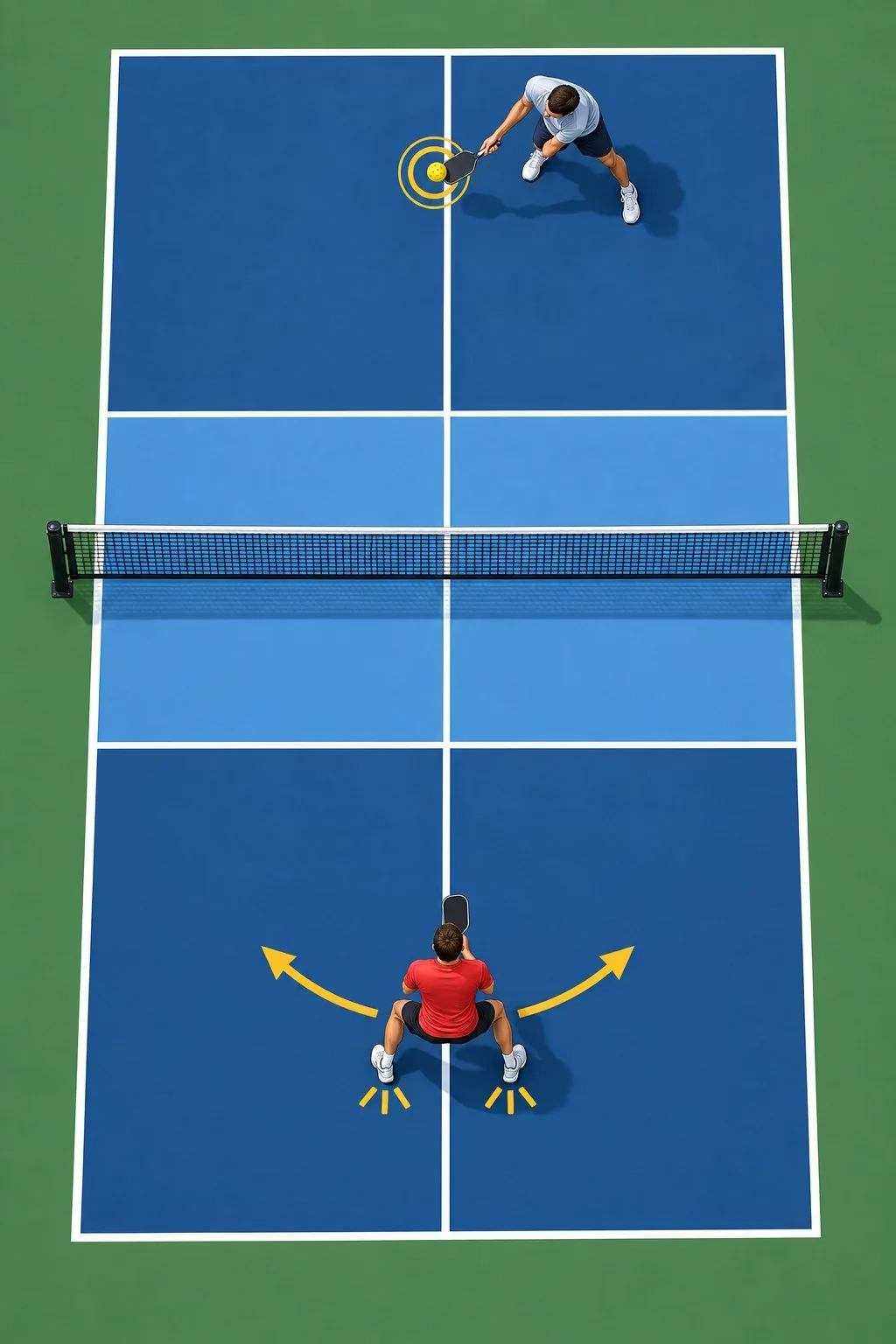
The landing should feel like a quiet reset of your body. Your base widens enough to support you, your head stays level, and your paddle remains in front. Do not land with your weight already drifting toward the side you expect the ball to travel. The point is to delay that commitment until the ball leaves the opponent’s paddle and gives you real information.
Time the split step to contact
Timing matters more than height. Beginning too early leaves you planted before the ball’s direction is clear. Beginning too late means you are still rising or landing when you need to play the ball. Practise starting the hop just before contact, being in the air at contact, and landing as the ball begins its flight.
A partner can make the timing visible. Stand across the net and ask them to call a neutral cue as they strike. Your job is not to guess the shot; it is to match the landing to the contact. Once the rhythm is familiar, remove the verbal cue and watch the paddle instead. Against a fast hitter, this small delay between reading contact and choosing a direction can prevent panic steps.
Use the base in every court zone
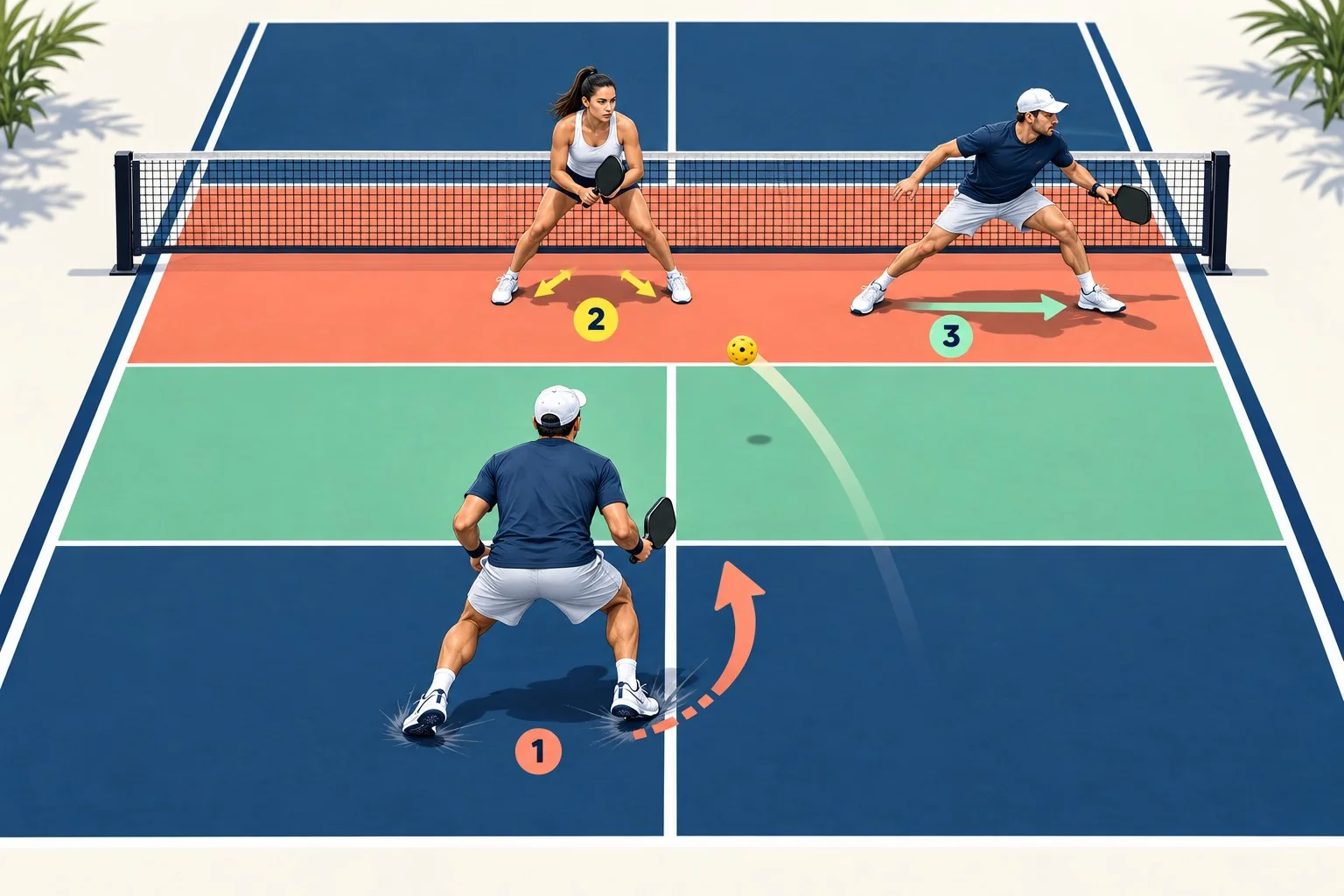
At the baseline, the landing stops you from leaning through a return or a deep groundstroke. After the return, it helps you organise the first forward steps instead of running blindly. In the transition area, the same base lets you stop before a low ball reaches your feet. Settle, play a controlled reset when necessary, and then move again rather than trying to strike while still drifting.
At the kitchen line, keep the hop especially compact. Land with the paddle up and the shoulders facing the net, then use a short push from the outside foot when the ball goes wide. The landing is preparation, not a signal to lunge. If the ball comes directly at you, hold the base, protect the body with the paddle, and let the contact decide whether you block, reset, or counter.
Practise the pattern under pressure
Begin without a ball. Stand in ready position, make the small hop, land balanced, and point your chest toward an imagined ball only after the landing. Repeat ten times while keeping the head quiet. Then add side pushes: a partner points left or right after your landing, and you take one controlled step in that direction before returning to base.
For a court drill, start at the baseline while a partner feeds manageable balls. Split on every contact, move to the shot, and recover to a neutral base before the next feed. Repeat from the transition area, using a soft reset when the feed is low and fast. Finish with kitchen-line feeds that alternate left, right, and body balls. The goal is not maximum speed. It is to land ready, choose from evidence, and make the next movement without a scramble.
Common faults are easy to recognise. A tall jump wastes time. A landing with feet too close removes your push-off. A hop timed when the opponent starts the swing leaves you waiting. And a player who lands while already leaning has guessed rather than prepared. Keep the hop small, match it to contact, and let the first push happen only after the ball’s direction is visible.