Pickleball Return Decision: Two Hands, Slice, or Forehand Runaround
Choose the right backhand return for the serve: build a stable two-handed stroke, use a slice against pace, and run around only when recovery is safe.
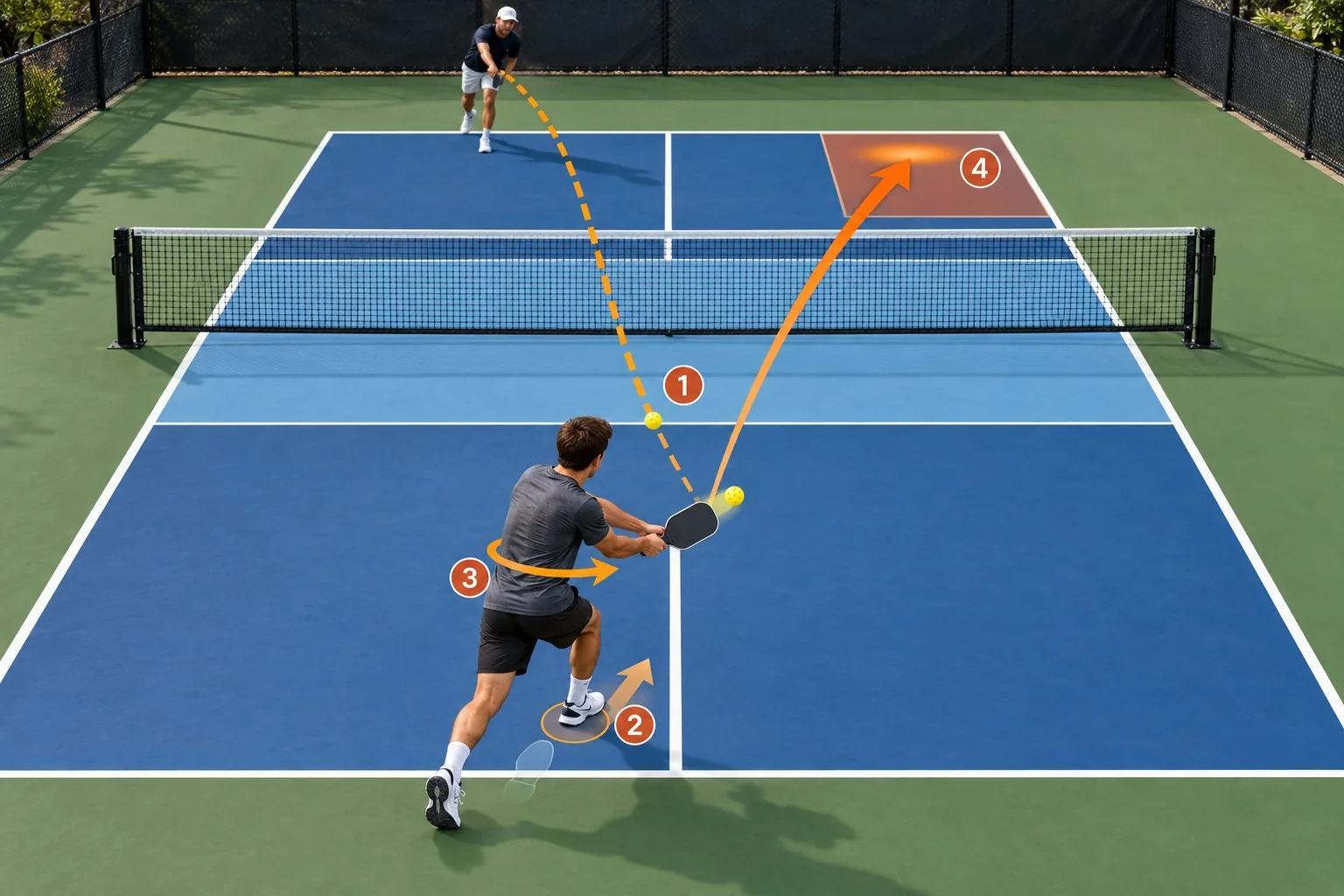
A reliable pickleball return decision does not require a spectacular swing. It requires a decision that fits the serve, a stable paddle face, and a return that gives you time to reach the kitchen. For most players, a two-handed backhand is the dependable starting point. A compact slice can absorb pace, while a forehand runaround is useful only when the ball and your recovery time make it safe.
Build the two-handed backhand return
The two-handed return gives the paddle a steadier platform against a deep or fast serve. Place your dominant hand lower on the handle and your non-dominant hand above it. Keep the grip firm enough to prevent the face from wobbling, but do not squeeze so hard that your shoulders become rigid.
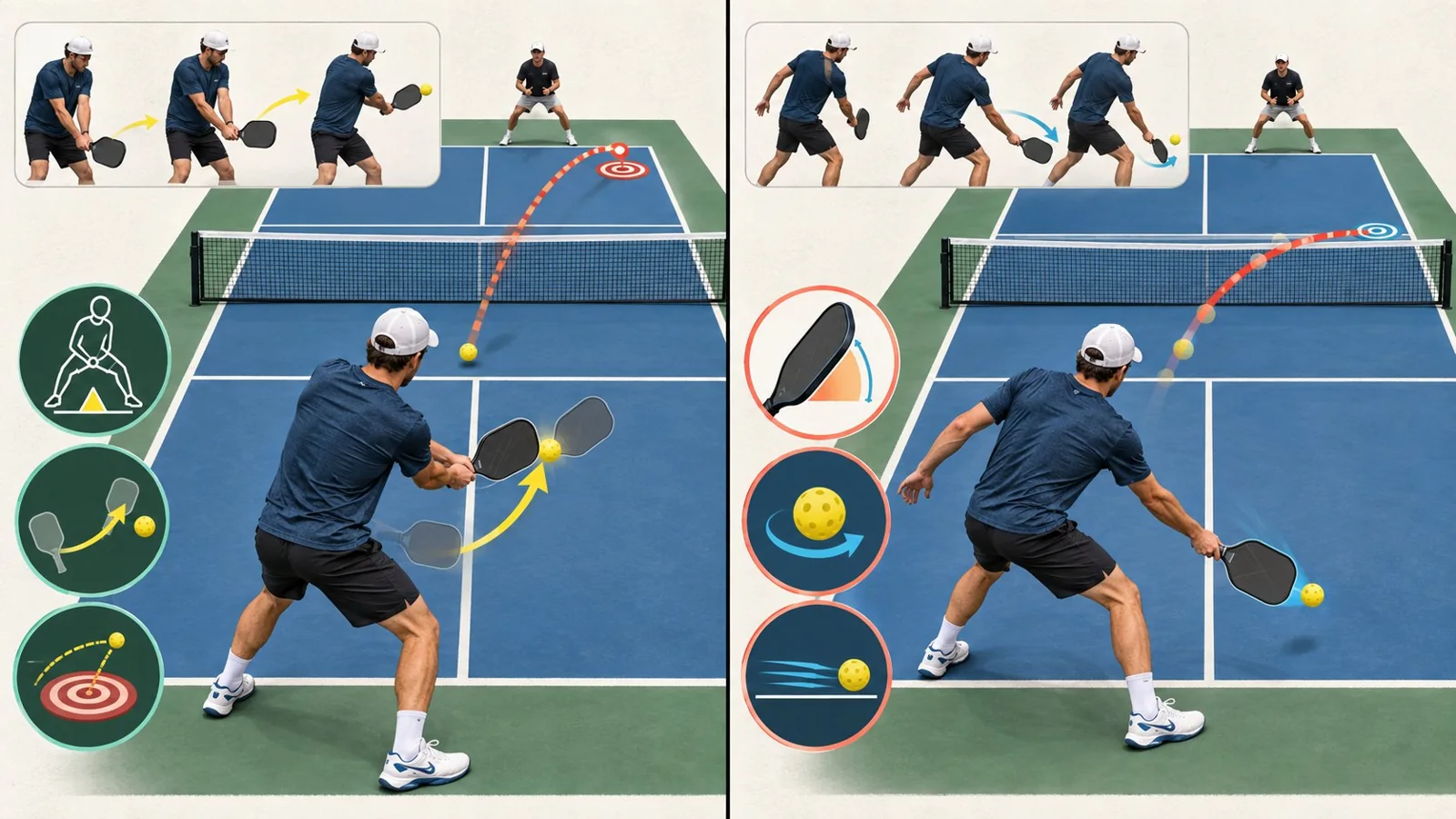
Start balanced with slightly bent knees and the paddle prepared near the back hip. As the serve approaches, shift forward rather than falling away from the ball. The contact should be in front of your body with both arms extending toward the target. Use a compact low-to-high path; a large looping backswing costs time and makes a deep return harder to control.
Stay down through contact. If you stand up too early, the paddle face often changes and the ball floats short. Let the follow-through finish in front of you instead of wrapping high over the shoulder. The goal is a repeatable return that lands deep enough to make the serving team play its next shot from behind the baseline.
When a slice is the better tool
A one-handed slice is valuable when the server has real pace or when you need to slow the exchange. Hold the paddle with a continental, hammer-like grip, keep the preparation short, and brush under the ball with a slightly open face. The backspin helps keep the return low and can buy you time to move forward.
The slice still needs depth. A soft ball that lands in the middle of the court gives the serving team an easy third shot, so keep the swing controlled while sending the ball toward the back portion of the court, preferably toward the opponent’s backhand. Against a strong server, the slice is not a retreat from offense; it is a way to neutralize speed and arrive at the kitchen under control.
Decide whether to run around the backhand
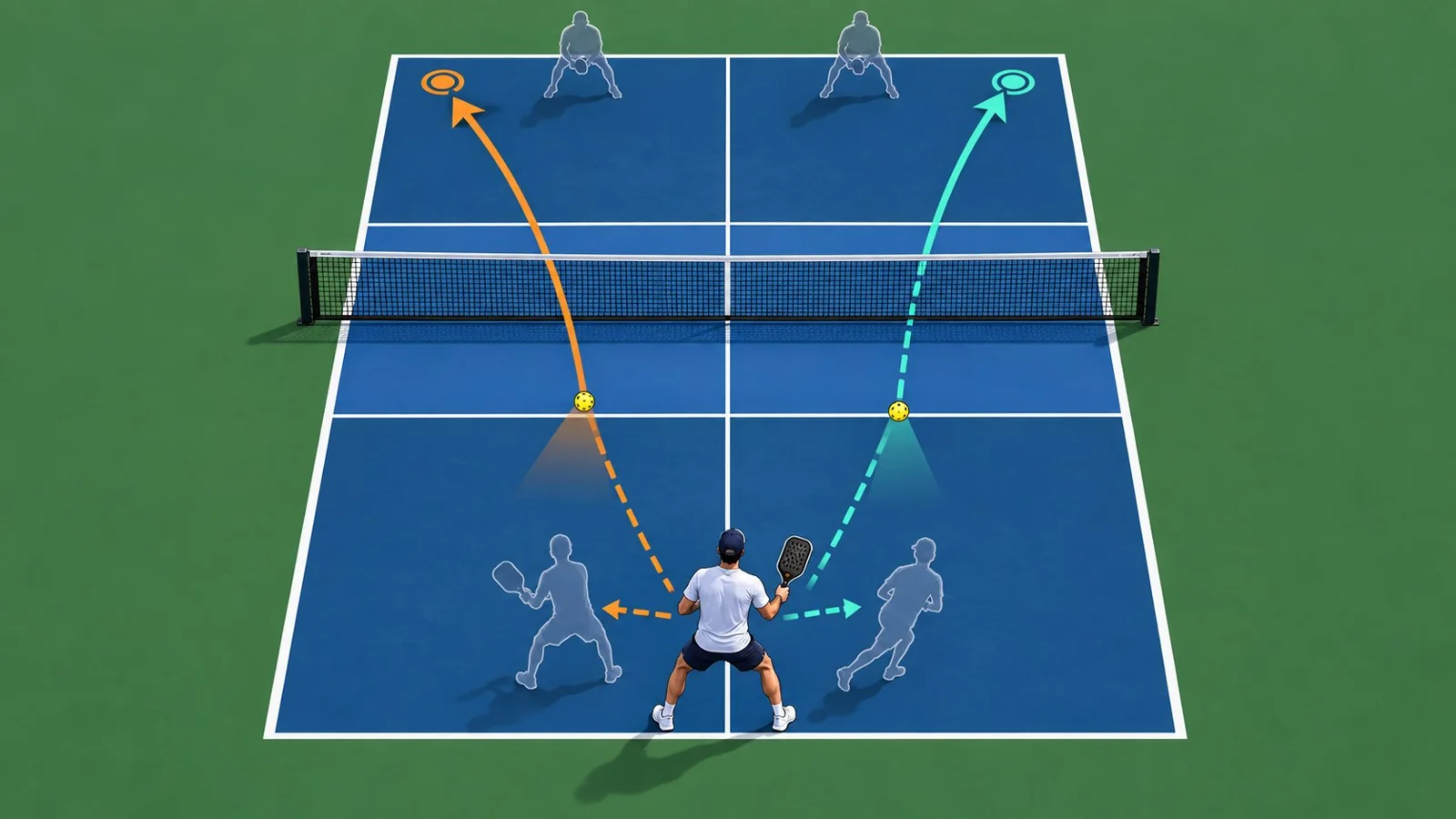
Running around the backhand can be effective when the serve is short, your forehand is a genuine strength, and you have enough time to recover after the return. Make the move with your feet, create space beside the ball, and send a controlled forehand deep. Do not choose it simply because the forehand feels more comfortable.
A deep, wide serve is usually a reason to stay with the backhand. Running around it can pull you out of position and leave a large opening for the next ball. The same caution applies when your opponent is quick enough to attack the space you abandon or when your doubles partner would have to cover too much court.
Use a simple rule during games: choose the two-hander when you need stability, the slice when you need to absorb pace and buy time, and the forehand runaround only when the serve gives you room. After every return, move toward the kitchen and finish in a balanced split step before the serving team strikes its next ball.
A focused practice progression
Begin with feeds to the backhand side and rehearse the two-handed stroke at half pace. Score only returns that stay deep and leave you balanced. Next, have a partner alternate firm serves and ask you to choose between the two-hander and slice without changing your starting posture. Finally, mix short and deep serves. Run around only the short ones, then recover immediately; stay with the backhand on the deep wide feeds.
This progression trains the decision as well as the stroke. A dependable return is not the one that looks most powerful. It is the one that survives pressure, pushes the serving team back, and gets you to the kitchen ready for the next exchange.