Pickleball Serve Direction: Read the Receiver Before Choosing a Target
A practical guide to pickleball serve direction: read the receiver, choose useful target zones, vary before becoming predictable, and let the return shape the next shot.
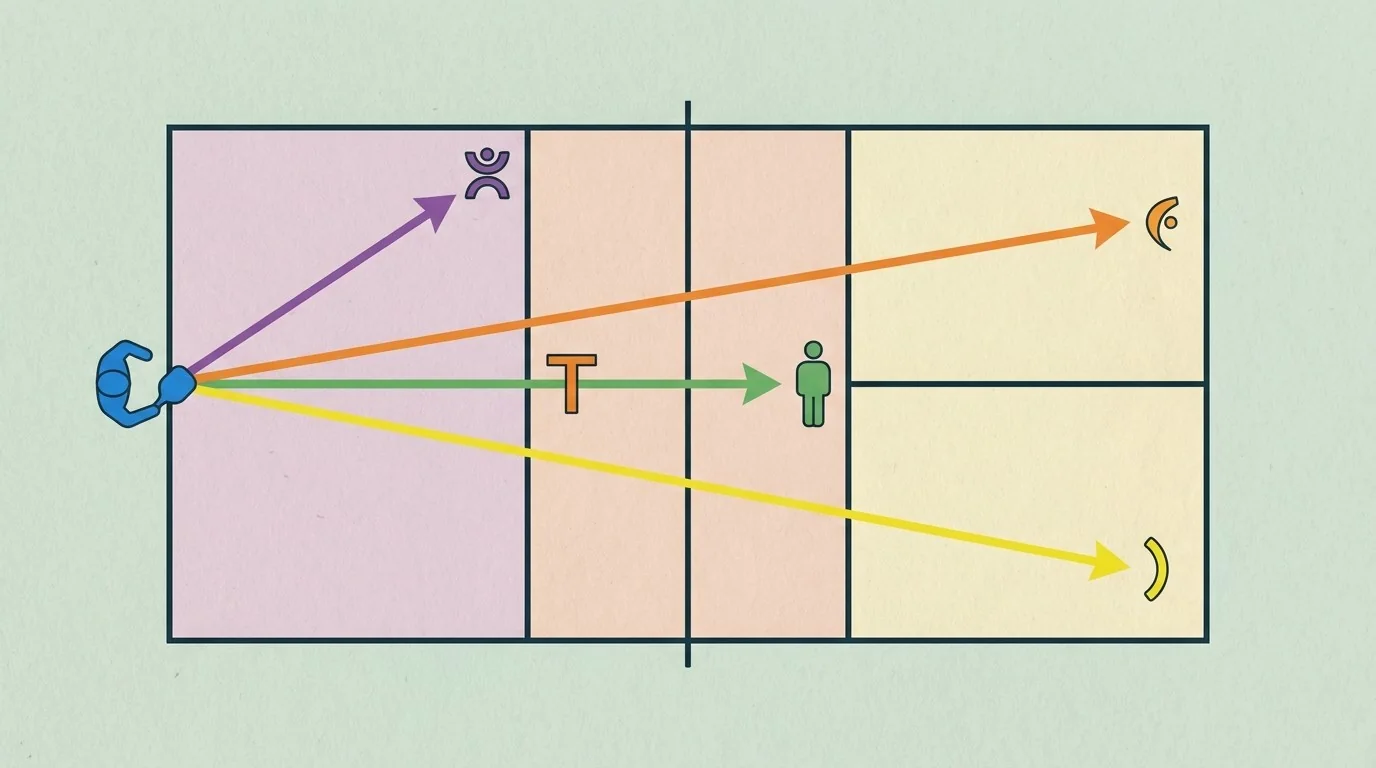
A pickleball serve does not need to flirt with the line to do useful work. Its first job is to land deep enough to keep the receiver back. Its second job is to make the return less comfortable, so the serving team can read the next ball and choose a sensible third shot. Start with a reliable depth target, then use the receiver’s position and recent returns to choose the direction.
Protect depth before chasing a corner
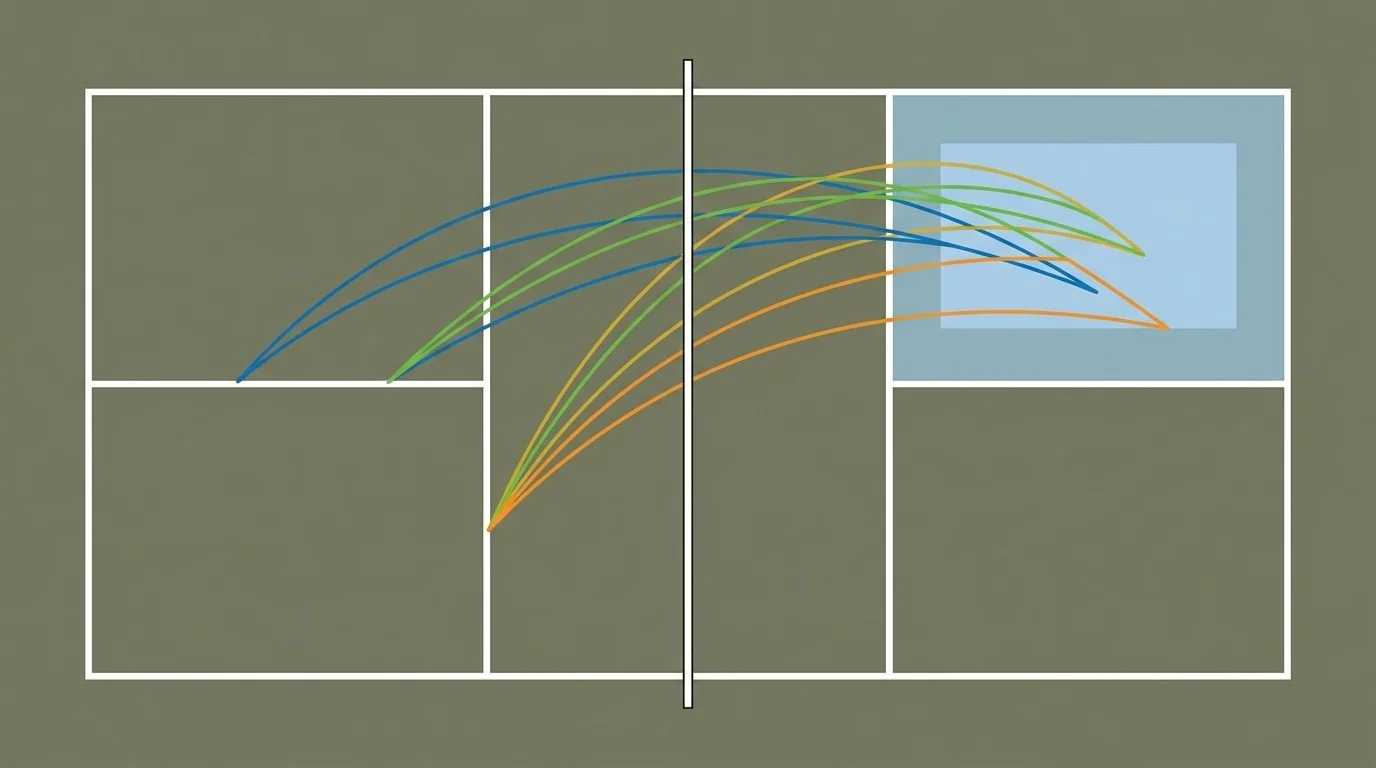
A serve landing in the back third of the diagonal service box makes the receiver deal with the baseline and leaves less time to step forward. A short serve can do the opposite. Even when it reaches a difficult-looking angle, it may give the receiver an easy move in and a stronger contact.
Leave room from both the baseline and the sideline. Think of the target as a usable area, not a painted corner. If you are missing long, take a little pace or spin off while keeping the same deep intention. If every serve finishes safely in the middle, you may be giving away the pressure that depth provides.
Choose a target that fits the receiver
Deep backhand
The deep backhand is a practical starting point when the receiver returns that side with less pace or confidence. Aim inside the lines. Then watch the result. A shorter or higher return tells you the target is helping the next shot, even if it does not produce an immediate mistake.
Body or hip
A serve toward the body removes comfortable swing space. The receiver has to decide whether to move away, step in, or play the ball from where they are. Use this as a change-up and aim at a broad body zone rather than a tiny spot.
Deep and wide
A deep wide serve can pull the receiver sideways and alter the angle of the next ball. The nearby sideline makes it less forgiving, so keep a practical margin. Use it when the receiver’s position makes the wider angle worth the added risk.
Short angle
A short wide serve is a specialist option, not the base of a dependable pattern. It invites the receiver forward. Save it for situations where the starting position and known habits make that risk reasonable.
Read the receiver before you serve
Look at the feet, the paddle side, and the recent returns. A player shading toward the backhand may be preparing to run around it. That can make the body or forehand side a useful variation. A receiver standing close to the baseline is usually better challenged with depth than with a short idea. Against a left-handed player, remap the backhand corner before you choose.
One observation is not a permanent rule. If the receiver changes position or starts handling a target comfortably, change with them. The serve should respond to what the opponent shows rather than repeat a pre-match plan without feedback.
Build a pattern, then interrupt it
Predictability makes a good target easier to handle. Establish a dependable deep target for a few points, then move the ball when the receiver begins leaning or setting up early. A body serve can interrupt a deep-corner expectation. A wide serve can punish a receiver who is overcommitting toward the middle.
The change-up works because it changes preparation. Keep the main target available so the pattern remains credible. Variation is useful only when the serve still lands often enough to create pressure.
Let the placement shape the third shot
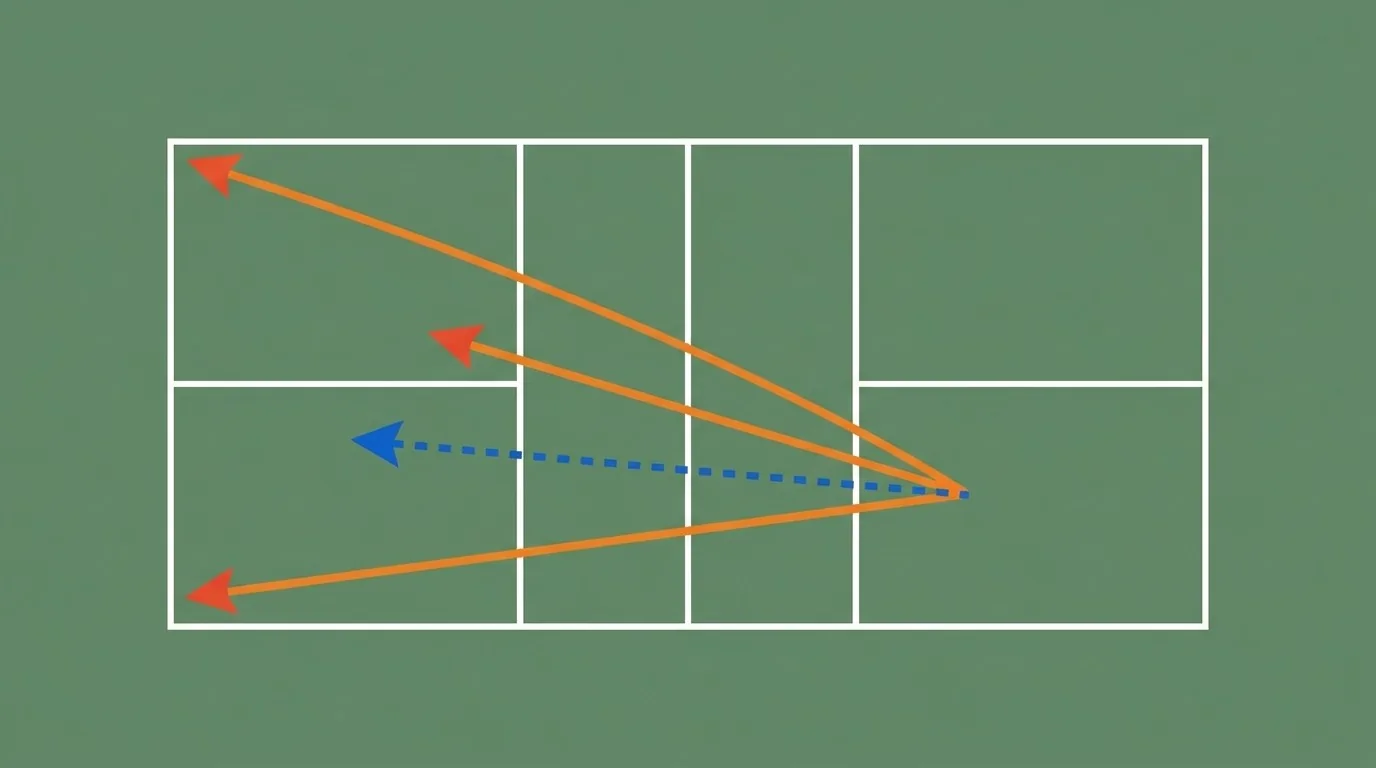
Choose the serve with the next ball in mind, but do not force the outcome. A deep backhand serve may bring a shorter return toward the middle or backhand side. A wide serve may open one lane while changing the return’s distance and angle. A body serve may produce a defensive contact with little pace. These are possibilities, not guarantees.
The server and partner should notice where the receiver made contact and where the ball is actually going. Then choose the third shot. Drop, drive, or play a safer neutral ball according to the return’s height, depth, and your balance. Placement creates options. It does not promise a particular return.
Practise zones instead of guessing
Place a broad marker in the back third of each service box. Hit a group of serves to the deep backhand zone, then repeat to the body and wide zones. Record makes and faults. A target that looks impressive but produces too many faults is not ready for a match pattern.
Next, practise a simple sequence: two or three deep serves to establish the location, followed by one change-up. Have a partner stand in different starting positions and describe the return as comfortable, rushed, or jammed. Finish with points in which you name the intended zone before serving, then choose the third shot from the return that actually arrives.
A useful serve routine is straightforward: protect depth, choose a zone that fits the receiver, vary before becoming predictable, and let the real return decide what comes next.