Pickleball Serve Follow-Through: Finish Balanced for Better Depth
Complete your pickleball serve with a smooth follow-through, better depth control, and a balanced recovery that prepares you for the return.
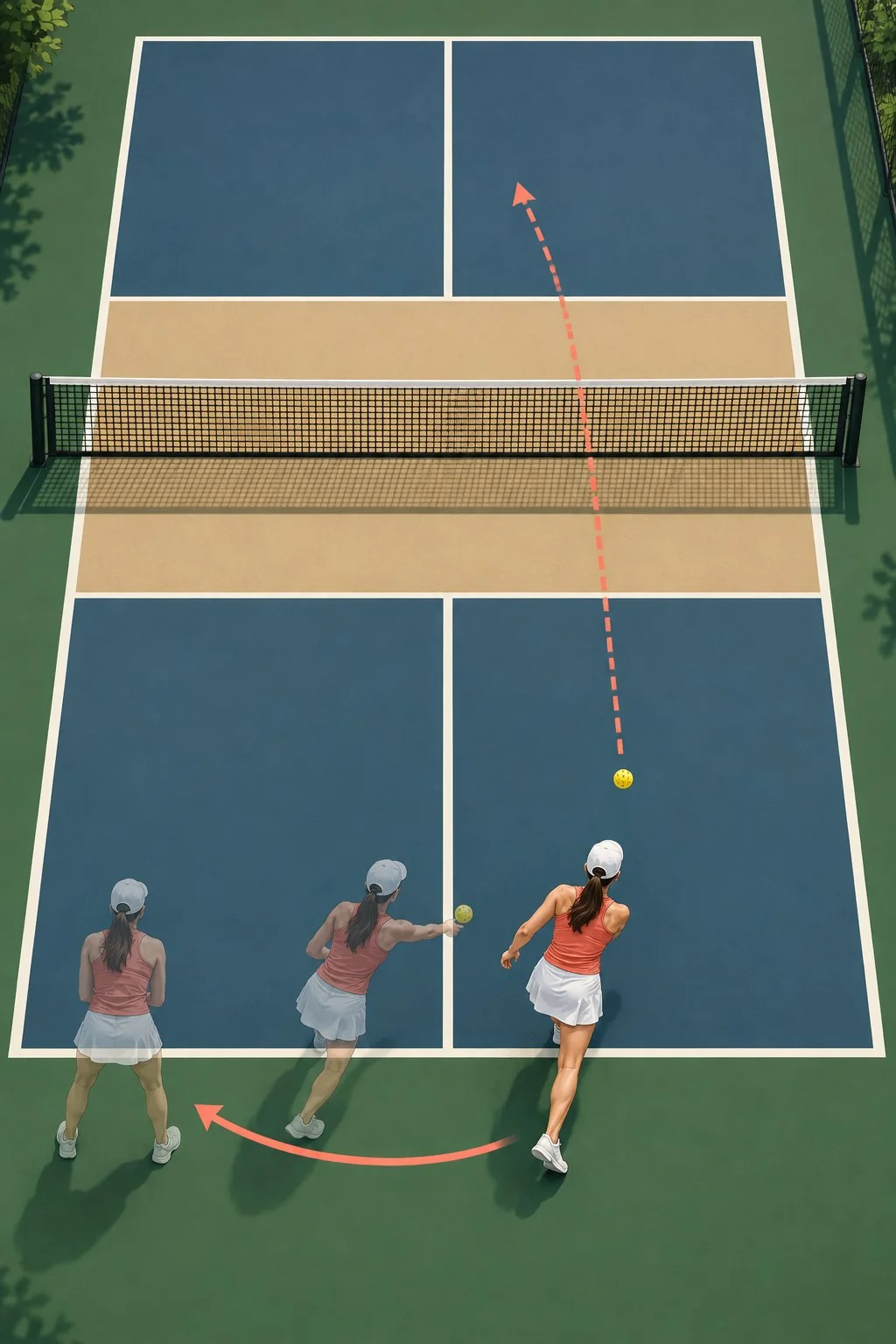
A serve can look powerful and still leave you poorly prepared for the return. The missing piece is often the finish. A complete pickleball serve follow-through helps the ball leave on a stable path, supports depth, and lets your body settle into a ready position instead of falling away or stopping abruptly.
Let the finish complete the motion
Start behind the baseline in a comfortable athletic stance. Load without lifting your head, then let the legs, trunk, shoulder, arm, and paddle work in sequence. The serve is underhand, so the ball should be contacted legally below the waist and in front of the body. The finish should be the natural continuation of that motion, not an extra flourish added after contact.
After contact, continue the paddle toward the intended service-box target. A cut-off motion can make the face change suddenly and can leave the ball short or inconsistent. A smooth finish does not require maximum force. Keep the grip relaxed enough for the paddle to accelerate, and let the body’s forward transfer create useful depth rather than trying to manufacture pace with the arm alone.
Your chest and hips should rotate through the shot while your head stays quiet. The back heel may lift as weight transfers forward, but do not let the body drift over the baseline before contact. Finish with your weight organized over a stable base, then regain your neutral position for the next ball.
Use the finish to control depth
A serve that lands deep gives the receiver less time and makes the return more demanding. To find that depth, first choose a broad target rather than aiming at the exact corner. Keep the same release and swing rhythm, then adjust the amount of forward transfer and the paddle path in small steps. If the ball repeatedly lands short, avoid simply swinging harder; check whether you are decelerating or stopping the finish.
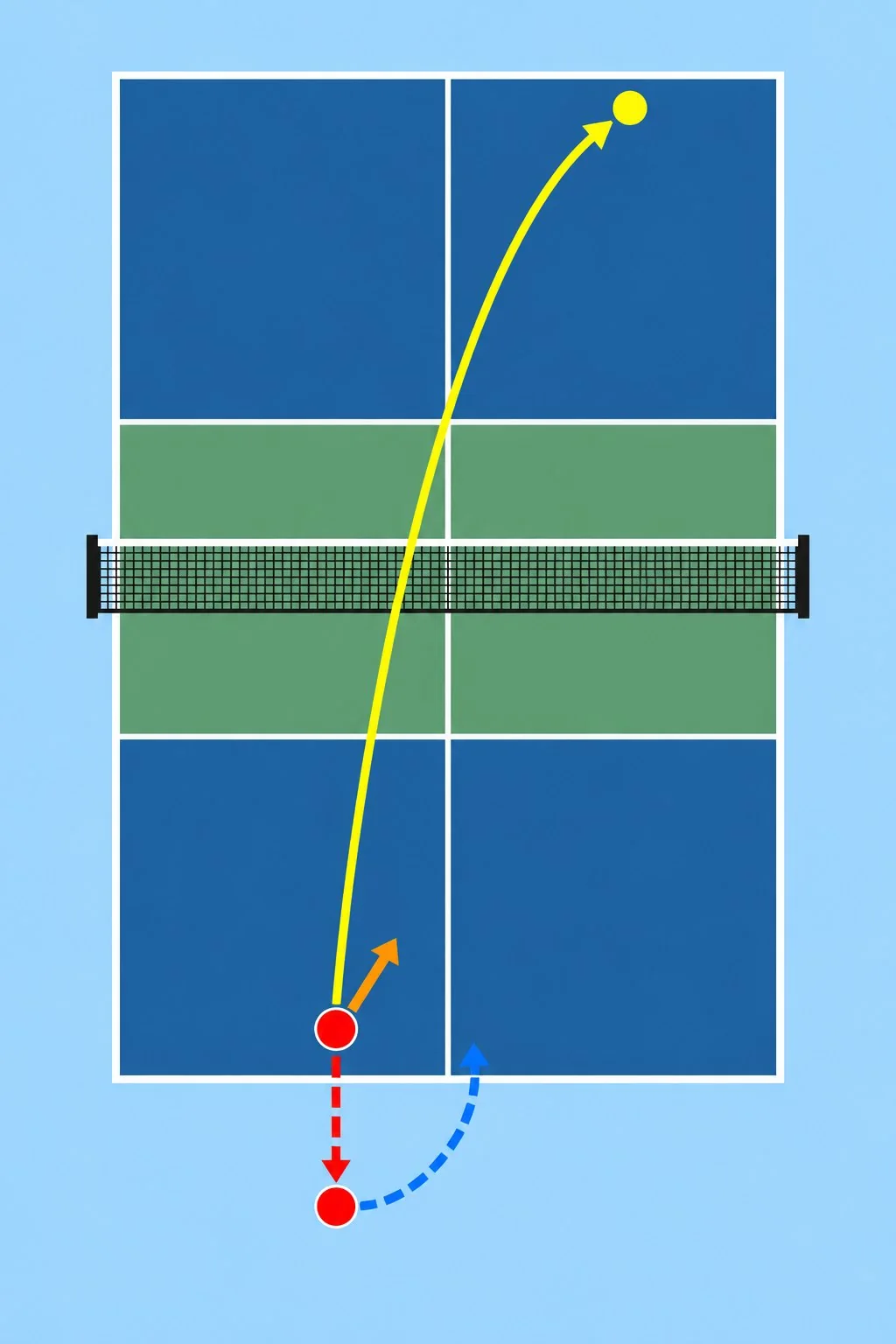
If serves fly long, the cause may be an early forward drift, late contact, or an unstable paddle face. A complete finish is not permission to over-rotate. Keep the ball in front, preserve a repeatable contact window, and allow the follow-through to travel through the lane you selected. The goal is a predictable arc that clears the net with margin and drops near the back of the service box.
Spin can change the flight, but the body sequence should remain familiar. A controlled low-to-high brush can help a topspin serve dip; a wrapped path can create lateral movement. Do not rebuild the entire motion for every variation. Keep the finish quiet and balanced so the serve remains recognizable under pressure.
Recover before the return
Serving is not finished when the ball crosses the net. Once the ball leaves the paddle, bring the paddle back to a ready position, lower the center of gravity slightly, and read the receiver’s contact. Do not admire the ball or remain frozen in the finish. The recovery step should put you in a useful place for the return that is most likely to come back.
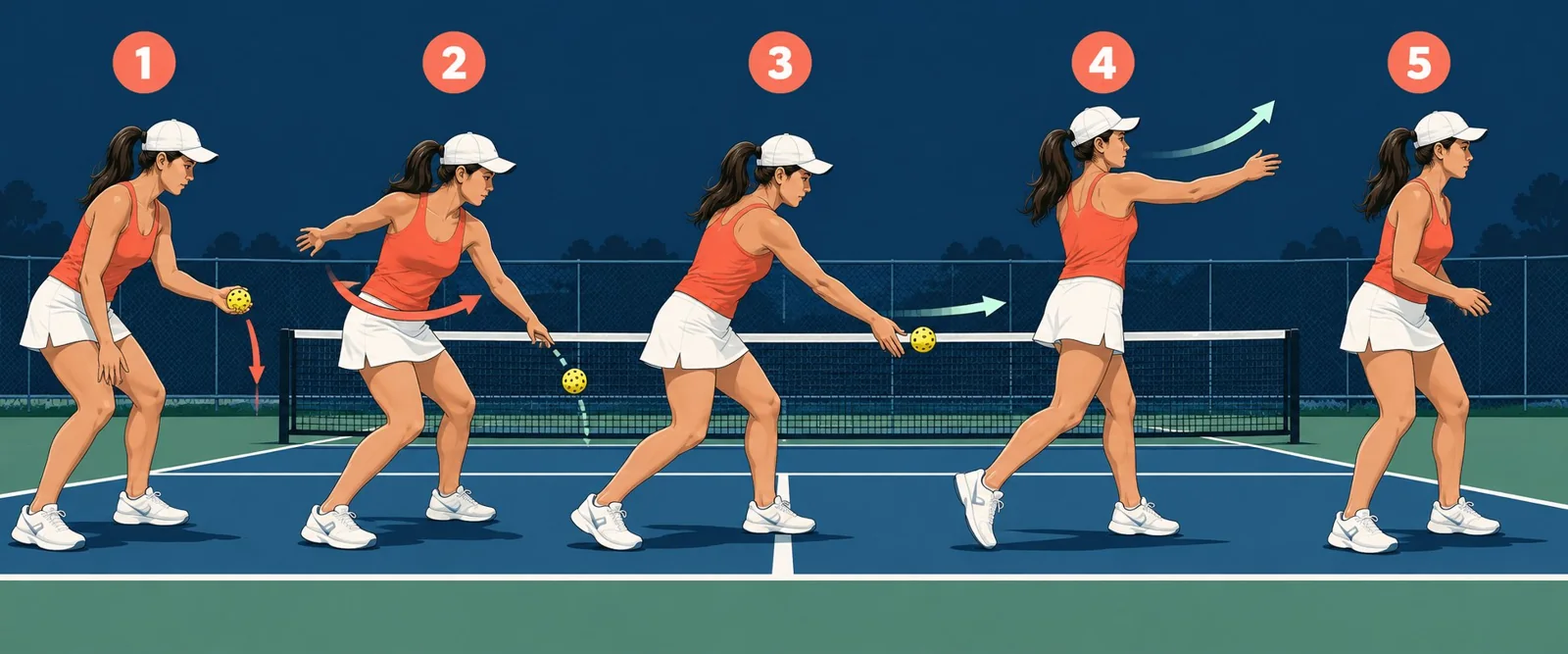
Practise this as one chain: set the stance, load, swing, finish, recover. Begin with shadow repetitions at half speed and hold the final balanced position for a moment. Then hit sets of serves to one generous deep target. Count a repetition only when the serve is legal, the finish is complete, and you can recover without a stumble.
For a practical progression, make three sets of ten. In the first, focus only on a calm sequence and stable finish. In the second, keep that sequence while pursuing depth. In the third, alternate two target zones without changing the routine. If the ball drifts, identify whether the stance, contact, paddle face, or finish changed before adding speed.
A dependable serve does not need a dramatic ending. It needs a finish that stabilizes the flight and leaves you ready. Complete the motion, land balanced, recover early, and let measured repetitions turn that sequence into a reliable start to every point.