Pickleball Serve Recovery: Split, Read, and Cover the Return
A practical guide to pickleball serve placement: build depth, choose backhand or body targets, vary direction, and recover ready for the return.
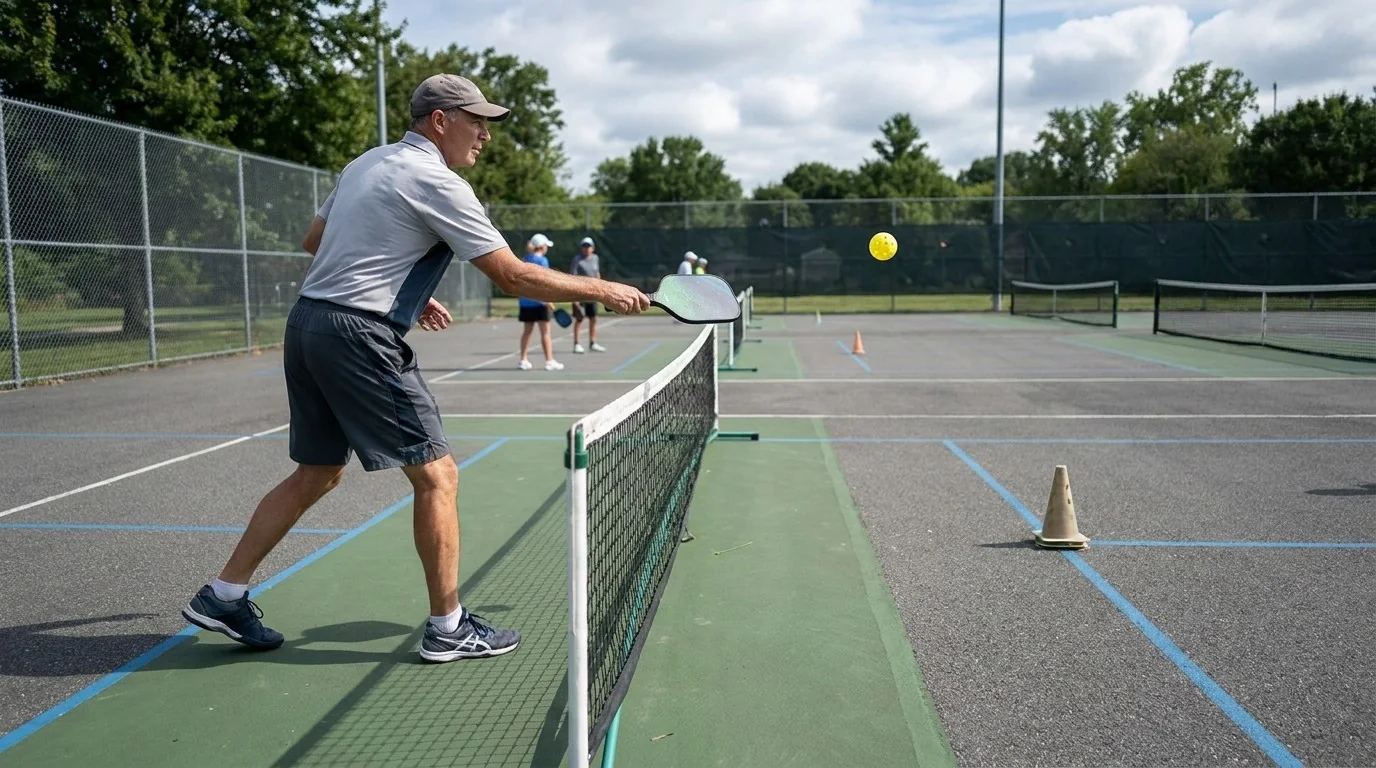
A good serve does not finish when the ball crosses the net. The next job is to split, read the return, and cover the space that the return makes available. If you recover on a fixed route every time, a deep return, a sharp angle, and a ball through the middle can all catch you late. Build the serve and the first recovery step as one decision.
Finish the serve in balance
Keep the serve motion repeatable and finish in a position from which you can see the return. Aiming deep with margin can push the returner farther from the kitchen, but it does not guarantee a particular reply. Avoid leaning or falling toward the target. Your first recovery step is easier when your weight is available in both directions.
As the ball travels, bring the paddle back to a useful ready position and keep your feet active. Do not start running toward one spot before you know where the return is going. The serve creates a situation; the return tells you which part of the court needs protection.
Use the split step to read the return
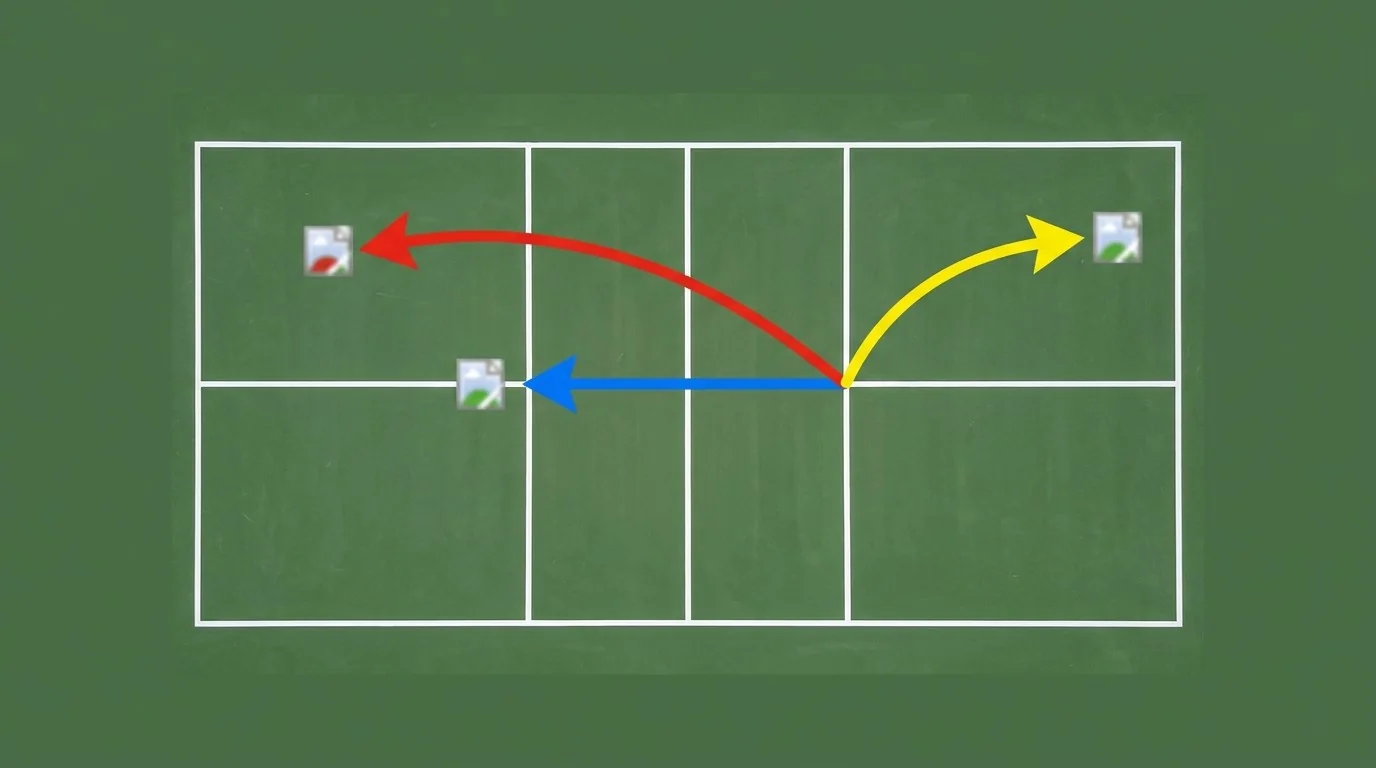
Take a small split step as the opponent makes contact. Land balanced rather than jumping high or drifting forward. From that base, you can move toward a ball hit through the middle, cover a crosscourt angle, or adjust to a return that stays closer to the sideline.
The timing matters more than the size of the step. If you split too early, you may be waiting while the opponent is still shaping the shot. If you split after the ball has already left the paddle, your first movement is late. Watch the contact and let the landing prepare your next step.
Read direction before choosing the route
A deep center return may come back through the middle, while a wide return can create a crosscourt angle that needs more coverage. Read the returner's contact, paddle face, and body position, then move toward the likely path. Do not confuse a target you hoped for with the ball that was actually hit.
In doubles, agree on middle-ball responsibility before the rally begins. The server and partner should not both chase the same return, and neither should leave the seam open because each expected the other player to move. A clear call helps, but the call does not replace watching the ball.
Cover the next ball without overcommitting
Recover far enough to protect the most likely return, but do not sprint past a useful defensive position. A small adjustment step may be enough when the return is central. A wider ball may require a larger move, followed by another split step or a controlled stop before the next contact.
Keep the paddle up while you move and avoid crossing your feet when a quick lateral adjustment will do. If the return is strong or angled, protecting balance is more valuable than reaching an ideal line too early. You still need to handle the next shot after the movement.
Practise the serve-to-recovery sequence
Start with ten serves to one broad deep zone. After each serve, have a partner return normally while you focus on the split step and first move. Count a repetition as useful when you finish balanced, read the direction, and reach a position from which you can play the next ball. Do not score the drill only by whether the serve itself lands in.
Then vary the return: one through the middle, one crosscourt, and one wider ball. Keep the serve routine similar and change only the recovery decision. In doubles, add an early middle call and check whether both players remain clear of the same ball.
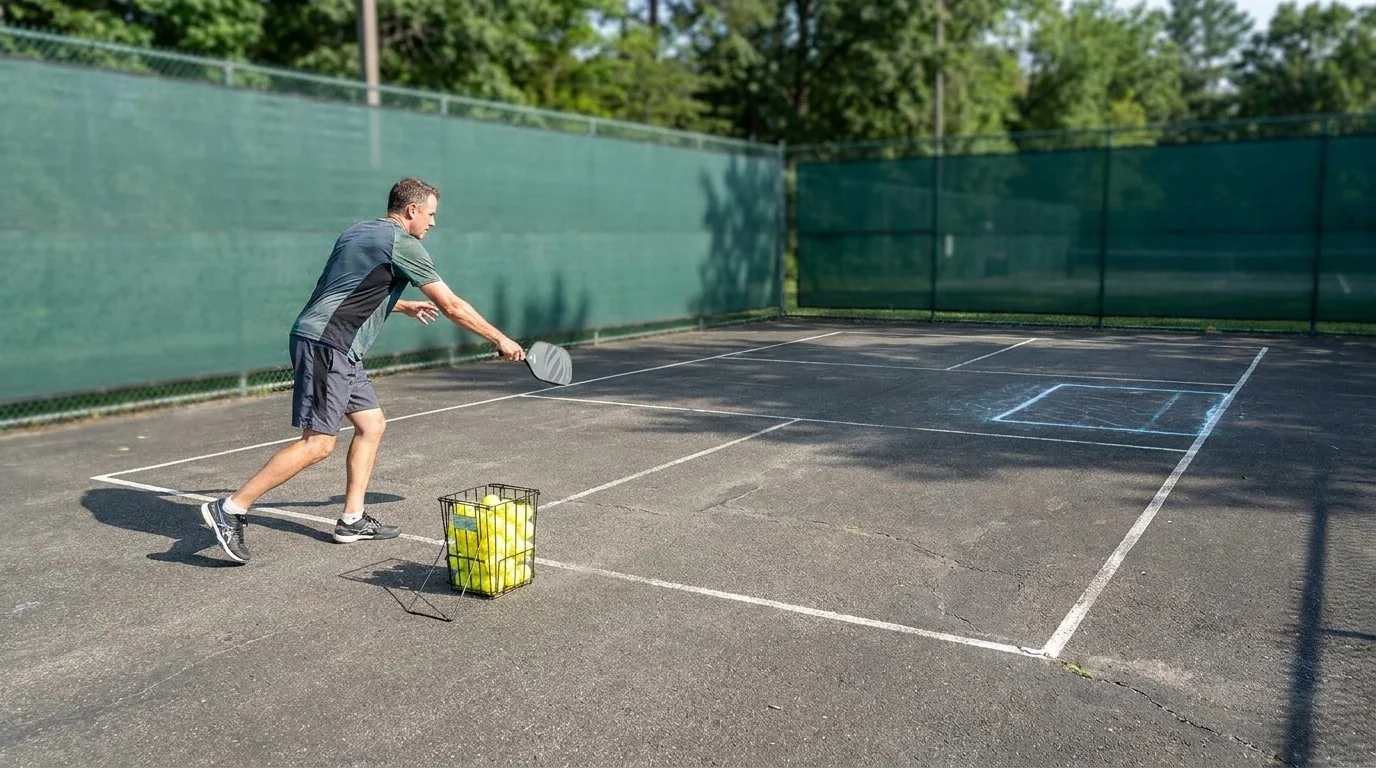
When you are late, check the sequence rather than simply moving faster. You may have split too early, waited too long, watched the target instead of the contact, or taken a recovery route that ignored the return angle. Fix one cue at a time and repeat the pattern.
Serve recovery becomes more reliable when the steps stay simple: finish balanced, split on contact, read the direction, and cover the next ball without outrunning your position. The goal is not to predict every return. It is to give yourself a ready base and enough time to make the next decision.