Pickleball Serve Stance: Set Your Base Before the Swing
Learn how to set a repeatable pickleball serve stance, create a contact point in front, and practise accurate diagonal placement.
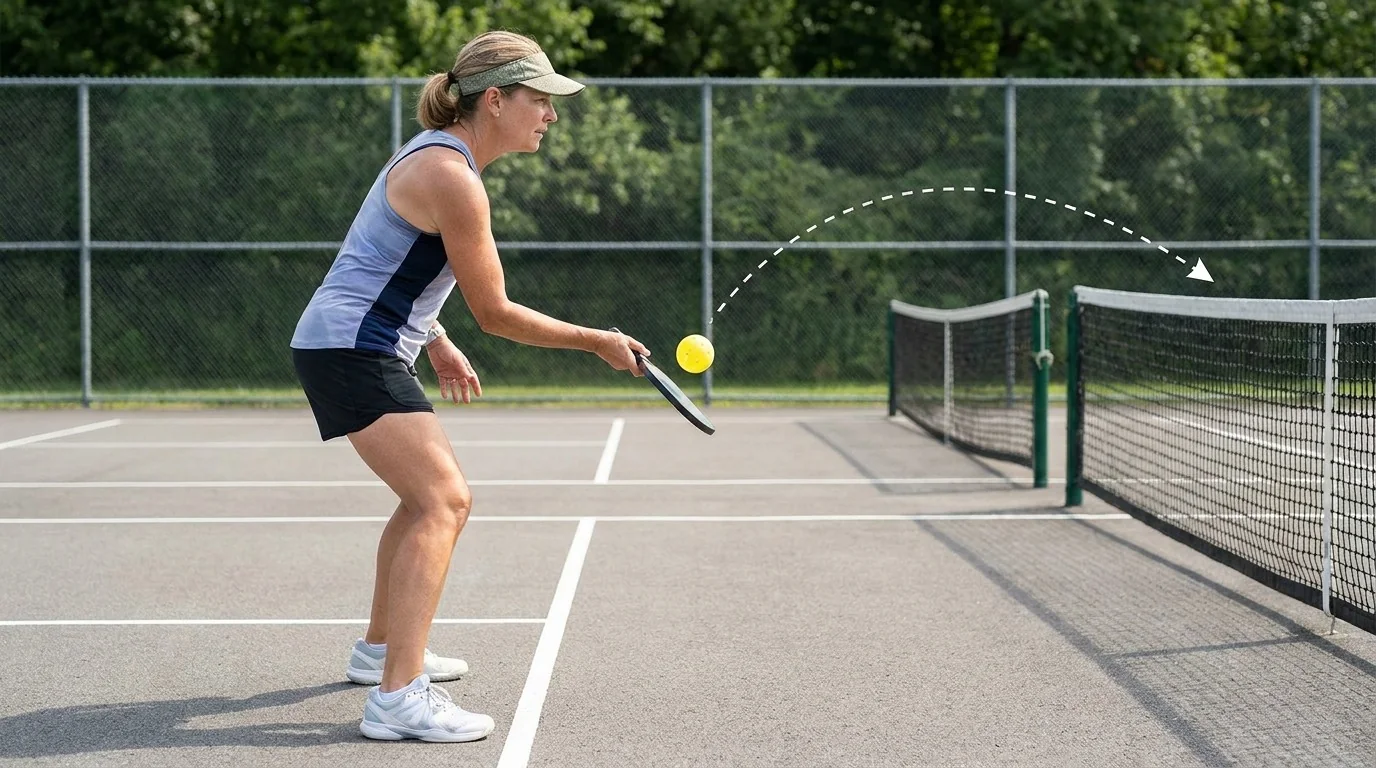
A dependable pickleball serve stance gives you the same starting point every time. Set your feet, keep the ball in front of your body, and stay balanced through contact. That base matters for both a volley serve and a drop serve: when the meeting point is predictable, you can work on direction and depth without rebuilding the whole motion on every attempt.
Build the contact point in front
Start behind the baseline with your feet comfortable and your shoulders relaxed. The ball should meet the paddle in front of your body, not beside the hip and not behind the shoulder. When contact drifts backward, the paddle face becomes harder to control and the torso often turns or leans with it.
Use small adjustments rather than a last-second reach. Before the serve, notice where you release or drop the ball. Then place your body so the ball comes to the same general window in front of you. If you have to lean across yourself or stretch behind your balance point, stop and reset the setup instead of trying to save that repetition.
Match contact height to the serve motion
There is no single contact height that fits every legal serve. The useful window depends on the motion you are using and on how the ball is released.
For a volley serve, keep the release and paddle path controlled. The contact must remain below the permitted height, and the service motion needs to stay continuous. Do not let a late reach or a sudden lift change the shape of the swing. Set the body first, then let the paddle travel through the ball.
For a drop serve, let the ball bounce naturally before you hit it. After the bounce, allow it to rise into a comfortable window in front of your body. The bounce gives you a different timing problem from a volley serve, but the same balance check applies: you should be able to make contact without stepping over the baseline or falling away from the target.
Direct the serve without losing balance
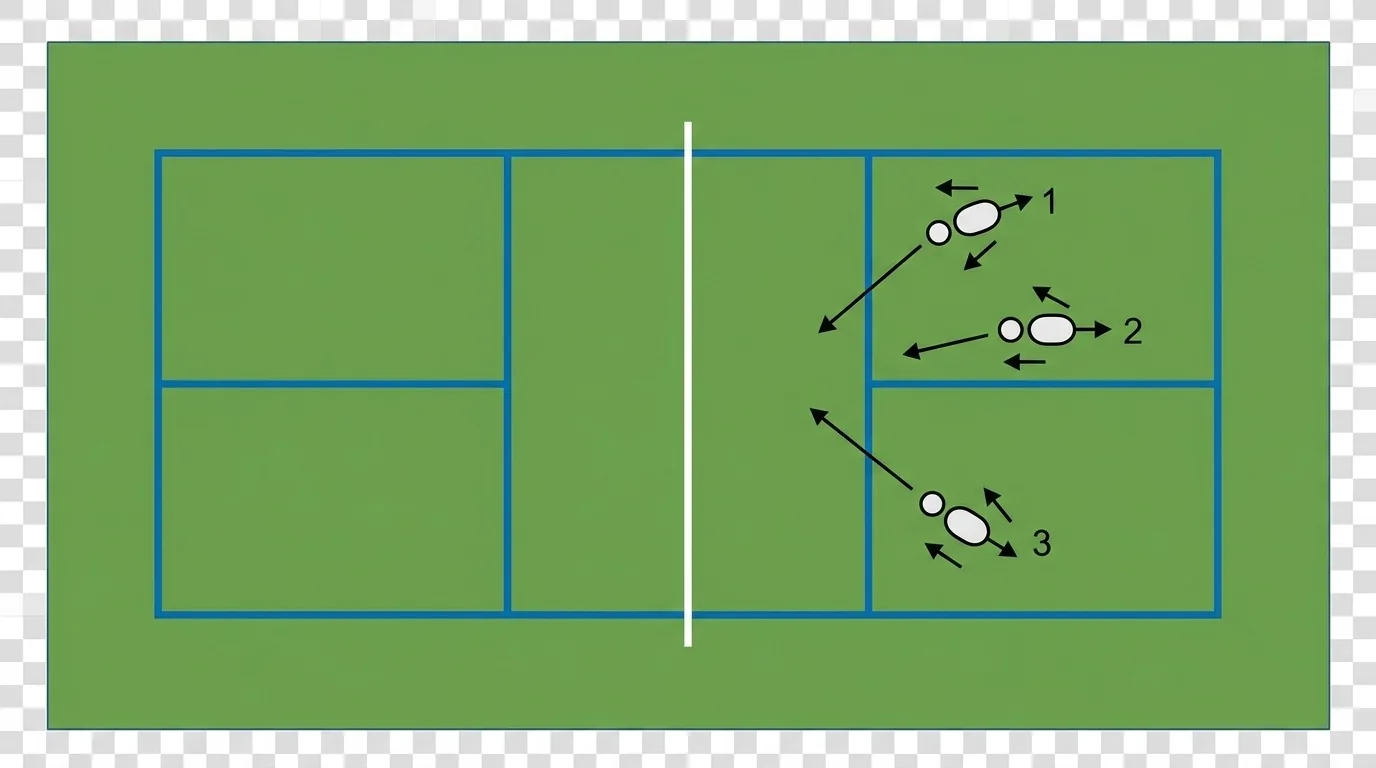
A contact point slightly in front gives the paddle room to send the ball toward the intended diagonal service court. Keep the swing compact enough that the paddle face does not open or close unpredictably. Finish with your weight under you, then be ready to move into the next legal position. An exaggerated follow-through should not carry you onto the court before the ball is struck.
Depth is useful, but do not sacrifice a repeatable contact point to chase the back line. First make the serve legal and directional. Once that is stable, adjust the release, contact height, or paddle path one small amount at a time. If all three change together, you will not know which change helped or caused the miss.
Practise one variable at a time
Begin with shadow swings. Mark an imaginary meeting point in front of your lead hip and rehearse the same stance, turn, and balanced finish. Then serve while checking only three cues: where the ball is released or bounced, whether contact is in front, and whether you can finish without losing your base. Use a target in the diagonal service court, but score the repetition for the process as well as for the landing location.
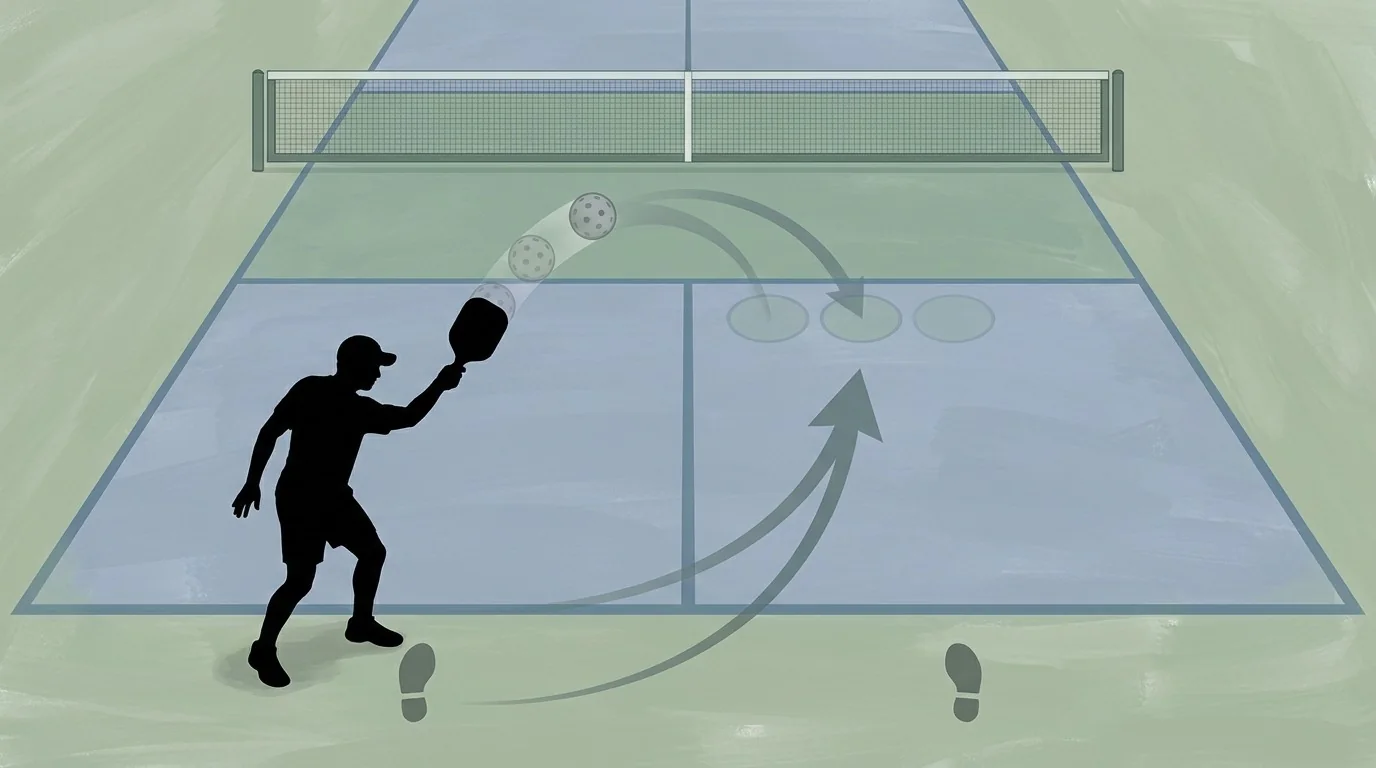
If the ball repeatedly goes into the net, check whether contact is late or the paddle face is too closed. If it sails long, do not simply slow the arm. First check whether contact has moved behind you or the release has drifted forward. Make one small adjustment, then repeat enough serves to see whether the contact point is becoming predictable.
A quick pre-serve checklist
Before each serve, confirm four things: you are behind the baseline, the ball will meet the paddle in front, the paddle face is aimed toward the diagonal service court, and your finish will leave you balanced. The checklist is short because it should be usable during practice, not because every serve will look identical.
A reliable serve grows from the same sequence: stable setup, repeatable release or bounce, contact in front, controlled paddle direction, and balanced recovery. Practise that sequence before chasing extra speed or spin. When the base stays quiet, changes to placement become easier to see and repeat.