Pickleball Serve Target Map: Deep, Body, and Wide Choices
Use a simple pickleball serve target map to choose depth, body pressure, or width, then adapt the next ball to the return that arrives.
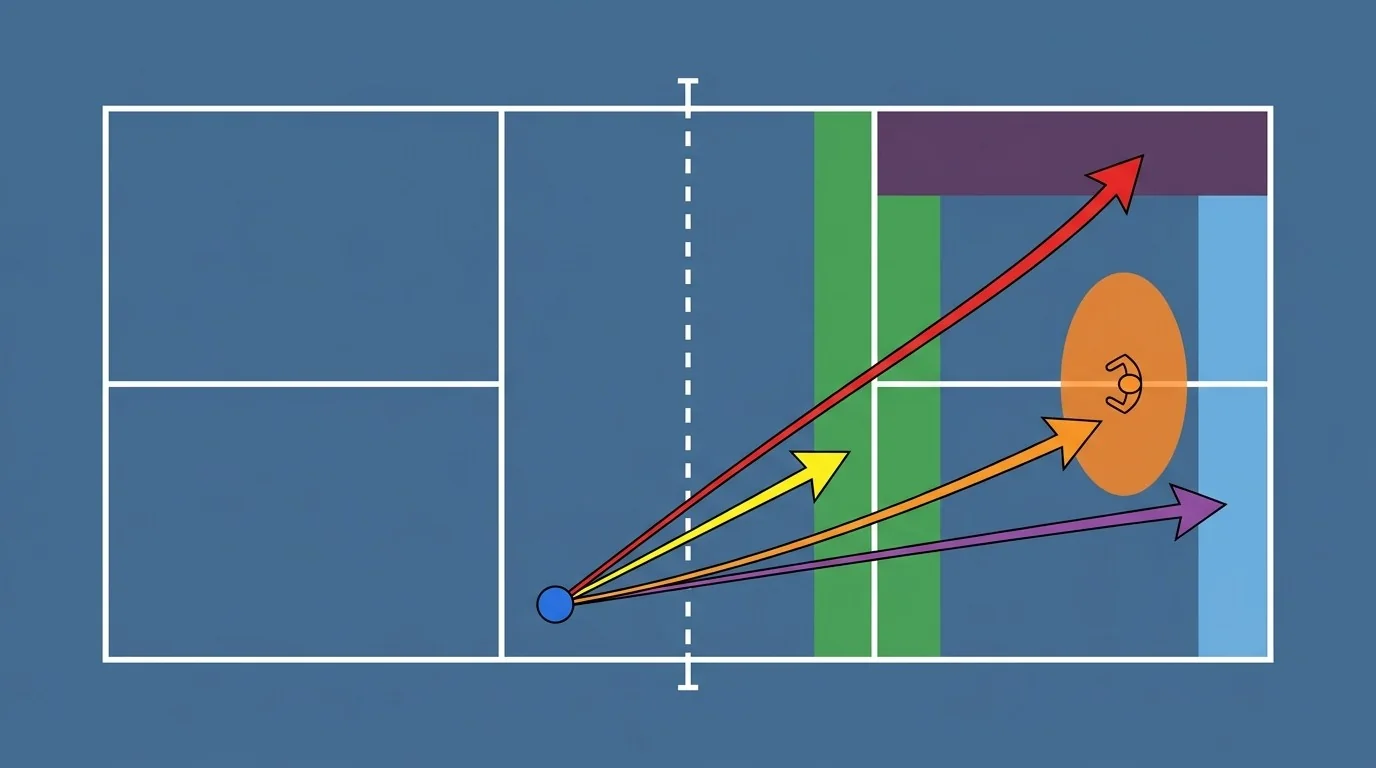
Pickleball serve placement works best when you treat it as a decision, not a search for an ace. The serve should make the return less comfortable and leave your team with a clearer third-shot choice. Start by protecting depth. Then choose the target that fits the returner’s position and recent habits.
Put depth first
A serve that reaches the back third of the diagonal service box keeps the receiver near the baseline and gives them less time to move forward. A short serve, even one aimed at an awkward angle, lets the receiver step in and strike with better leverage.
Leave usable room from the baseline and sideline. Think in zones rather than aiming at a painted corner. If you are missing long, take a little pace or spin off while keeping the same deep intention. If every serve lands safely in the middle, you may be giving up the pressure that depth can create.
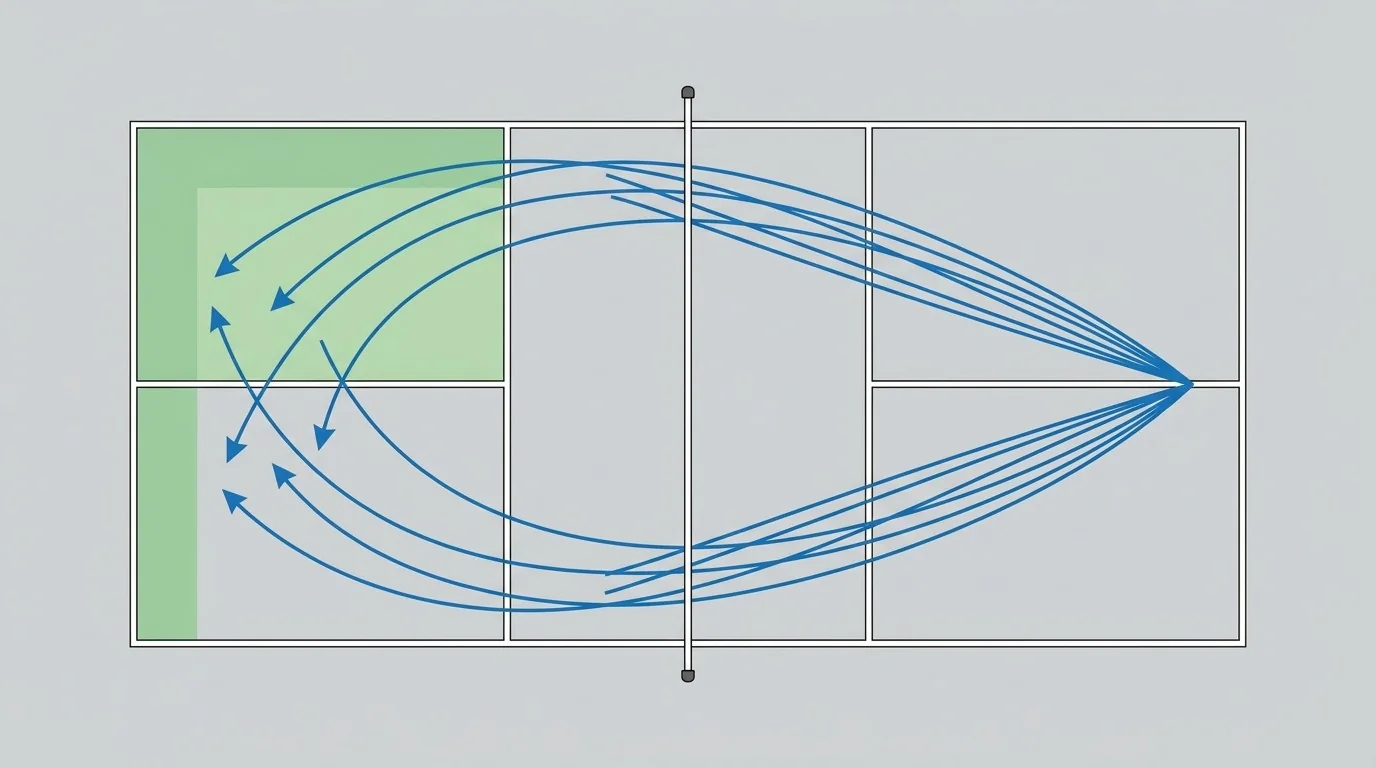
Choose a target that fits the receiver
Deep backhand
The deep backhand is a sensible default because many recreational players return that side with less pace or confidence. Aim inside the lines, not at the corner itself. Then judge the return. If it arrives shorter or higher, the target is helping you prepare for the next ball.
Body or hip
A body serve takes away comfortable swing space. The receiver must decide whether to move away, step in, or handle the ball where it arrives, often with less time than a side target allows. Use it as a change-up and aim at a practical body zone instead of a tiny spot.
Deep wide
A deep wide serve can pull the receiver sideways and change the angle of the next ball. It also carries more risk because the sideline is close. Leave enough margin and use it when the receiver’s position makes the angle worthwhile. Wide is not automatically better than deep middle or deep backhand.
Short angle
A short wide serve is a specialist option, not the foundation of a dependable pattern. It gives the receiver a chance to move forward, so use it sparingly and only when the starting position and observed habits make the risk reasonable.
Read before you serve
Watch the receiver’s feet, paddle side, and recent returns. A player shading toward the backhand may be preparing to run around it, which can make the body or forehand side a useful variation. A receiver close to the baseline is usually challenged more effectively with depth than with a short idea. Against a left-handed player, remap the backhand corner before choosing the target.
One observation should not become a permanent rule. If the receiver adjusts, adjust with them. The serve should respond to what the opponent is showing, not to a target chosen before the match and repeated without feedback.
Build a pattern, then change it
Predictability makes a good target easier to handle. Establish a reliable deep target for a few points, then change location when the receiver starts leaning or setting up early. A body serve can interrupt an expectation of the deep corner; a wide serve can punish an overcommitment toward the middle.
The change-up matters because it alters the receiver’s preparation, not because every variation is automatically stronger. Keep the main target available so the pattern remains believable.
Connect the serve to the third shot
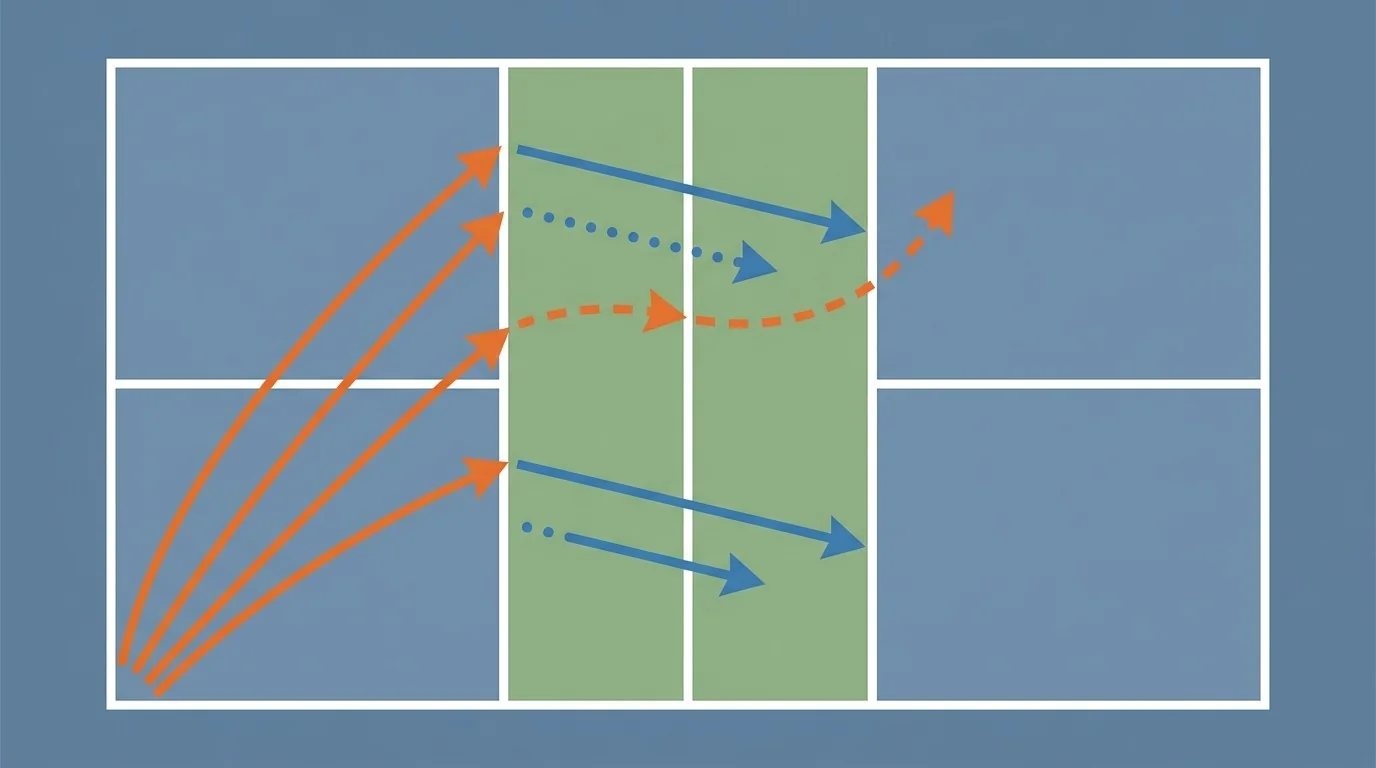
Choose the serve with the next ball in mind. A deep backhand serve may produce a shorter return toward the middle or backhand side. A wide serve can open one lane while changing the distance and angle of the return. A body serve may create a defensive contact without much pace. None of these outcomes is guaranteed, so read the return you actually receive instead of forcing a preplanned third shot.
The server and partner should notice where the receiver makes contact and where the ball is likely to travel. Treat the third shot as a decision: drop, drive, or use a safer neutral ball according to height, depth, and balance. Placement creates possibilities; it does not promise a particular result.
Practise the zones
Place a broad target marker in the back third of each service box. Hit a set of serves to the deep backhand zone, then repeat with the body and wide zones. Track makes and faults. A target that looks impressive but produces too many faults is not ready for a match.
Next, practise a pattern: two or three deep serves to establish the location, followed by one change-up. Have a partner stand in different starting positions and report whether the serve produced a comfortable, rushed, or jammed return. Finish with points in which the server names the intended zone before serving, then chooses the third shot from the return that actually arrives.
A useful serve-placement routine is straightforward: protect depth, choose a workable zone, change before becoming predictable, and let the return determine the next shot.