Pickleball Service Foot Faults: The Rules Players Most Often Miss
Learn where both feet must be during a pickleball serve, which boundary mistakes are common, and how to build a legal pre-serve routine.
A service can look perfect until a player’s foot touches the wrong part of the court. Foot faults are easy to miss in a fast recreational game, especially when the server is concentrating on contact, spin, and placement. Knowing the basic boundaries makes calls calmer and helps everyone start the rally from a legal position.
Where the server must stand
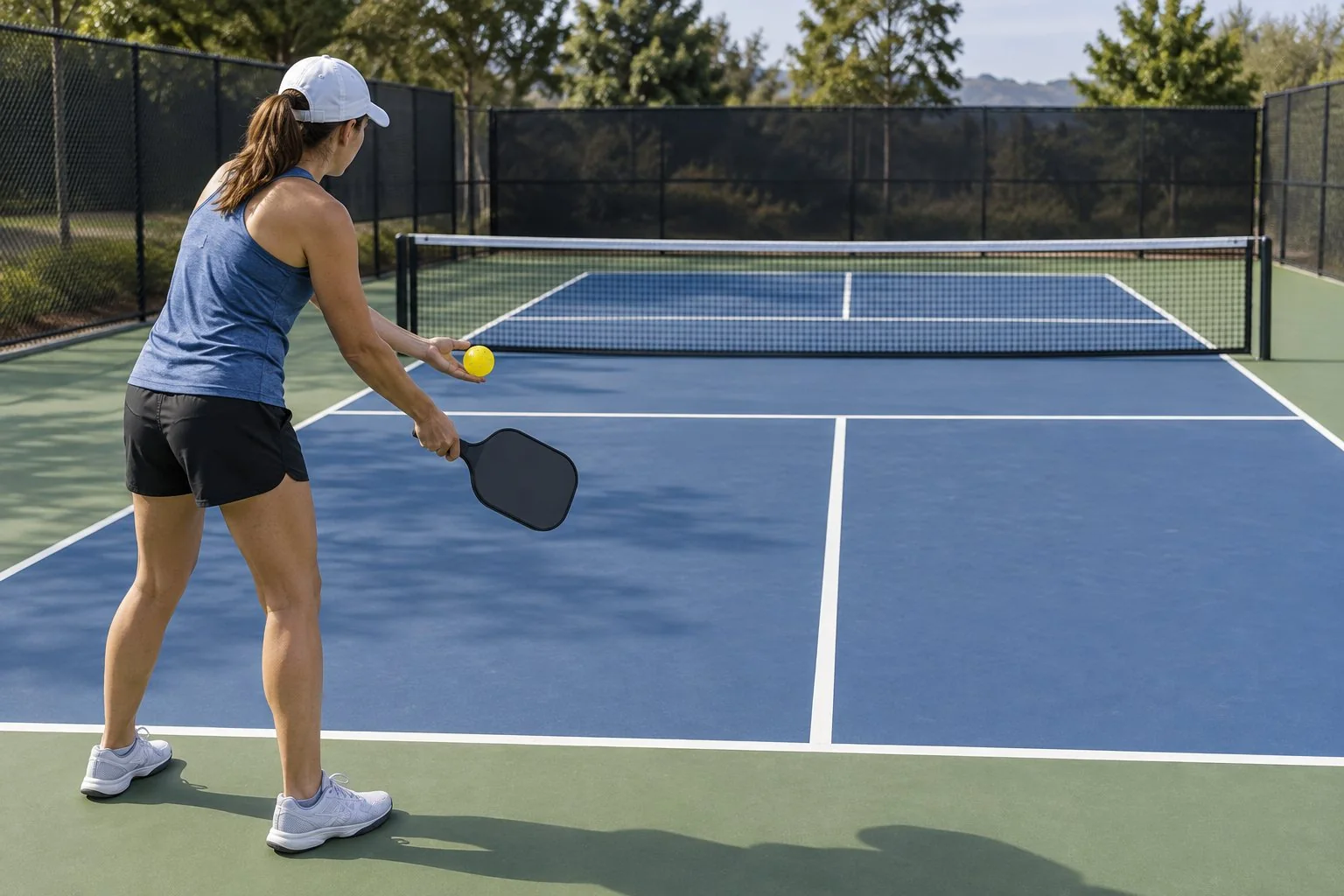
Before the ball is struck, the server must be positioned behind the baseline. The feet cannot touch the baseline or the court inside it. They also cannot touch an imaginary extension of the sideline while the serve is being made. In practical terms, give yourself a little space behind the line instead of balancing with a toe on its edge.
The rule applies to both feet. A player may stand behind the baseline with one foot slightly ahead of the other, but neither shoe may contact the baseline, the court, or the sideline extension. The server must also remain on the correct side of the center line for the score. A quick glance at the feet during the pre-serve routine is often more useful than trying to correct the position after the ball is gone.
Common foot faults during a serve
The most obvious mistake is stepping on the baseline. A less obvious one happens when momentum carries a foot forward as the serving motion begins. A server may start legally and then step onto the court before contact. Another frequent error is setting up so close to the sideline that the outside foot touches the imaginary line extending beyond it.
Moving the feet to create a better angle can also cause trouble. Once you are in position, avoid shuffling across the boundary while bouncing the ball or beginning the motion. If you need to reset, stop, step back, and begin again. This routine is slower than rushing, but it prevents an argument over whether a shoe crossed the line.
The receiver has boundaries too. The receiver should be ready in the correct service court and must allow the serve to bounce before returning it. That does not turn every awkward receiving stance into a foot fault, but players should still avoid standing in a way that blocks a clear view of the server’s feet or the ball.
How to prevent a foot fault in games
Build the same setup into every serve. Stand a comfortable step behind the baseline, check the correct side, set both feet, and then start the motion. Practise the routine at half speed first. Ask a partner to watch the feet rather than the ball, or record a few serves from the side. A short video often reveals a creeping front toe that feels stationary during play.
If a teammate or opponent raises a concern, pause and reset without turning it into a personal dispute. In casual play, a clear explanation and a replay of the serve may be enough. In organized competition, follow the event’s officiating procedure and let the referee or responsible official make the call.
The safest habit is simple: leave visible room behind the baseline, keep both feet still through contact, and check your side of the court before every serve. A legal starting position gives the rally a cleaner beginning and removes one avoidable source of tension from the game.