Pickleball Shoe Traction: How to Test a Court Shoe Before You Buy
A practical way to test pickleball shoe traction, lateral stability, fit, outsole pattern, and wear before and after real court sessions.
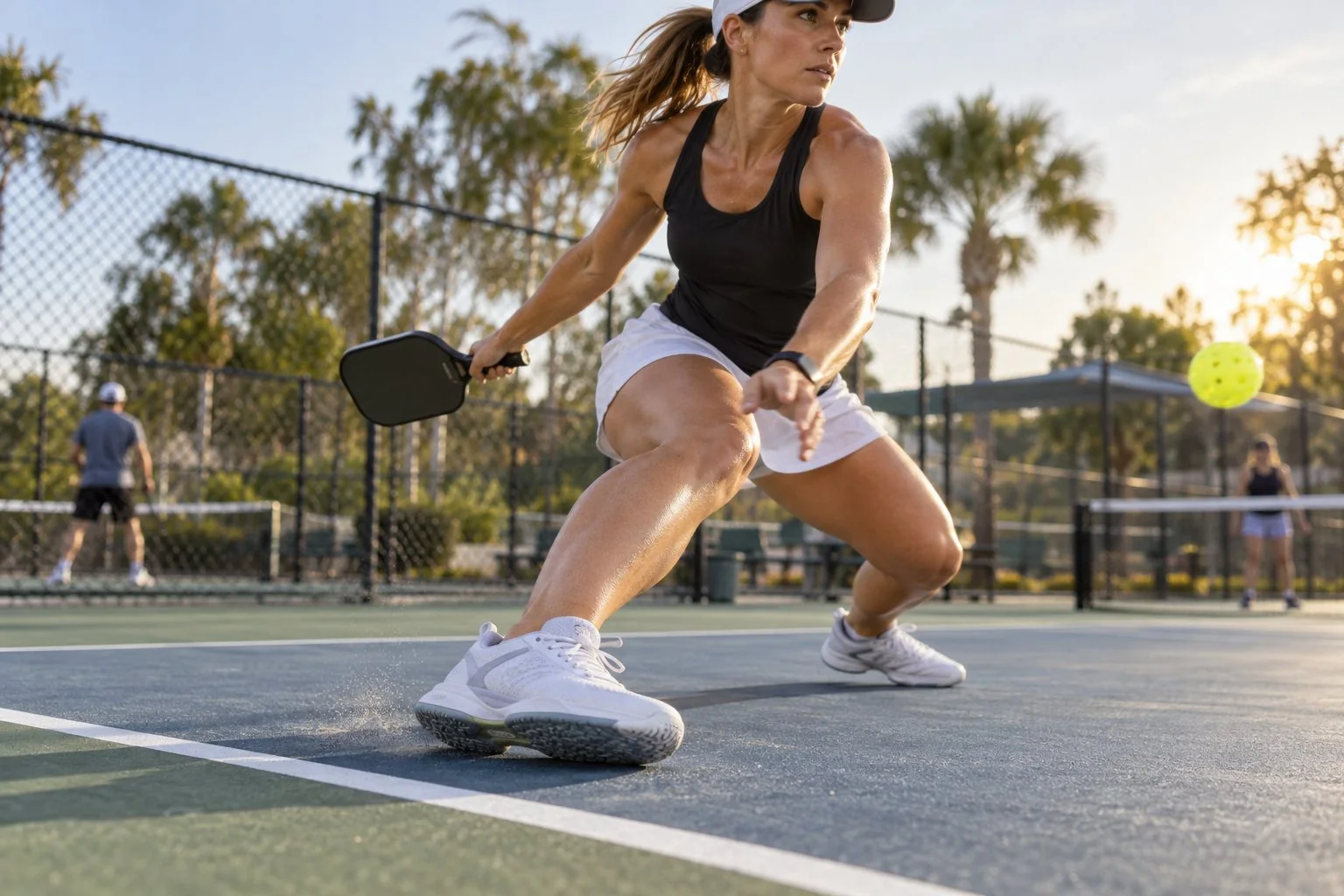
Court shoes are often judged by appearance, cushioning, or a familiar brand name. Traction is harder to assess from a product page, yet it determines whether you can brake, push laterally, and recover without the foot sliding under you. A useful test does not require a hard sprint. It asks whether the shoe stays predictable during the small, repeated movements that define pickleball.
Start with the movement your game actually uses
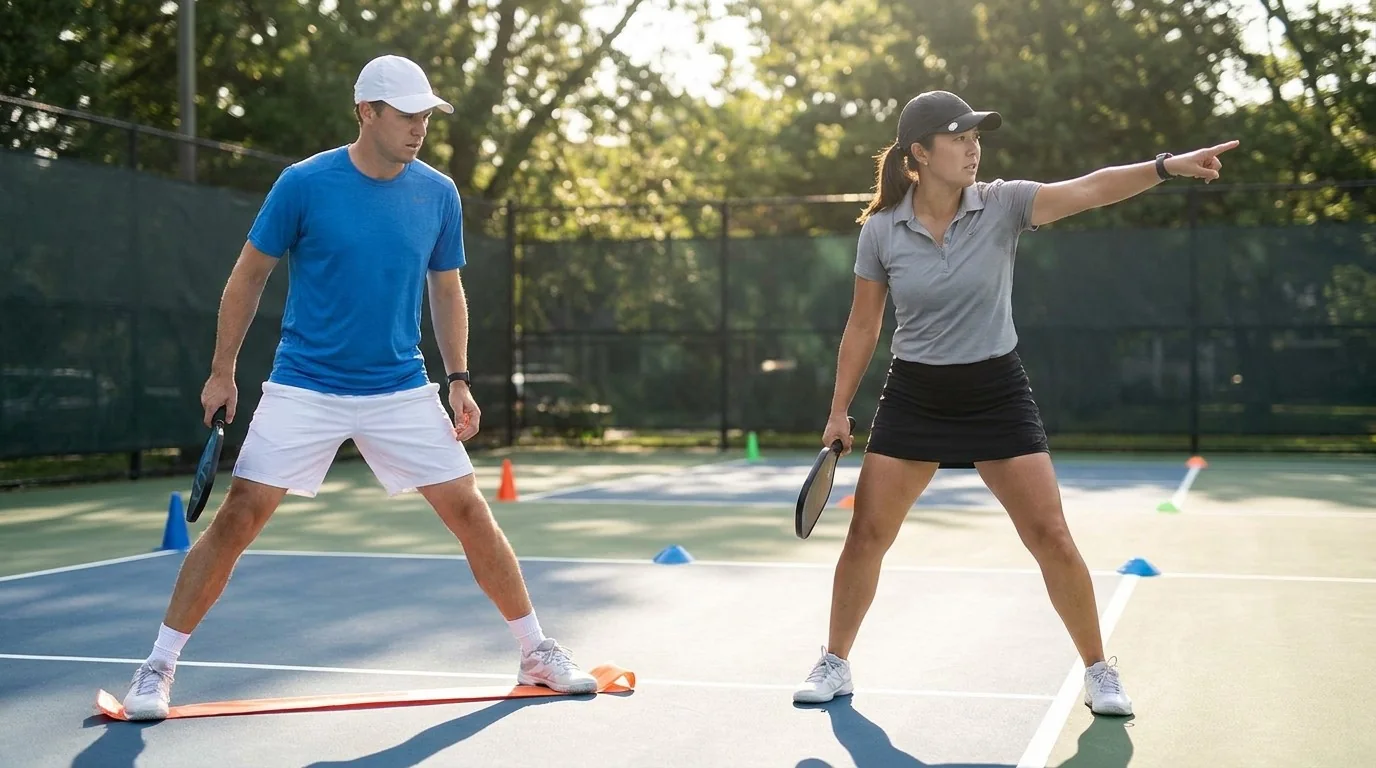
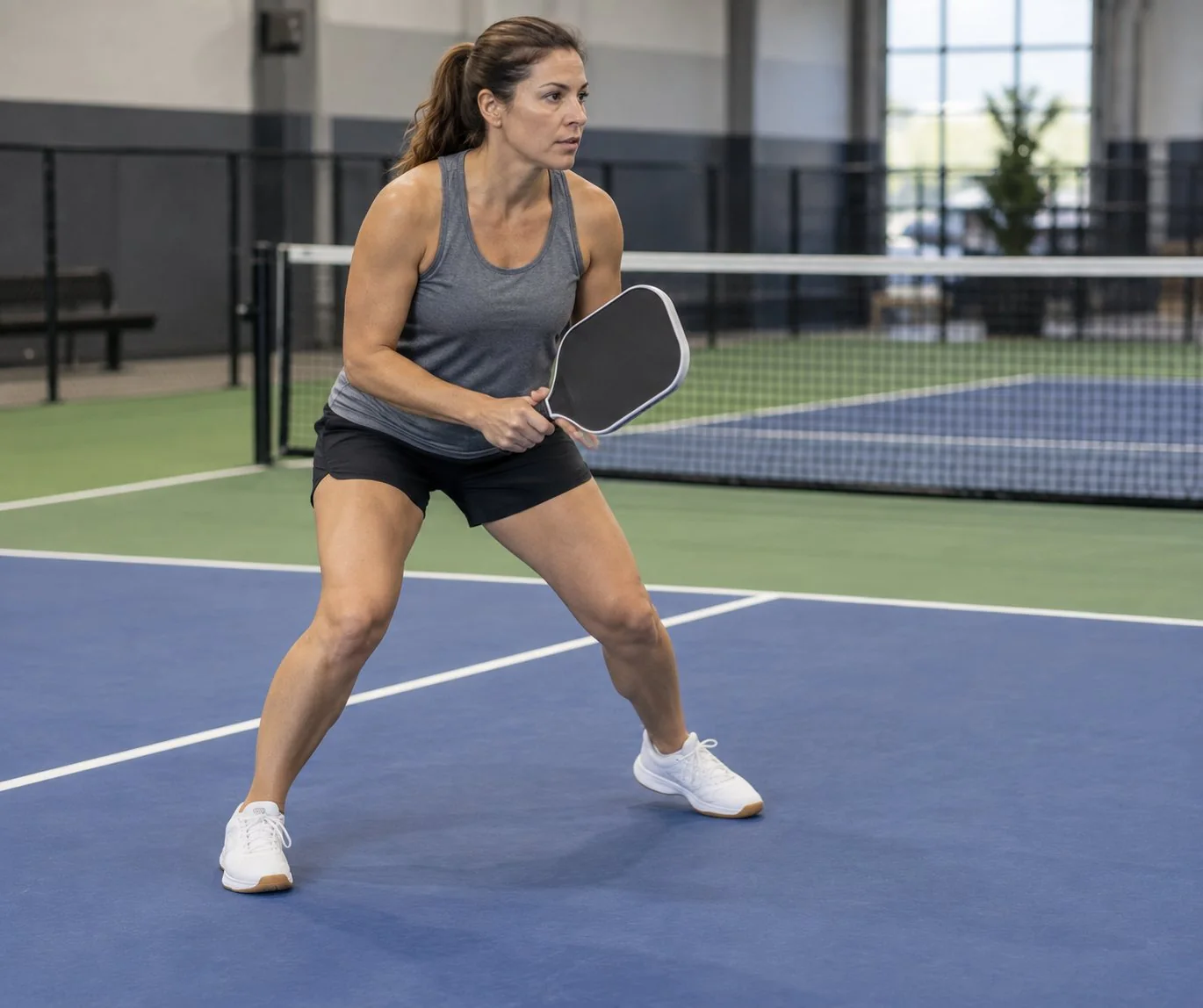
Pickleball footwork is built from short starts, split steps, side shuffles, crossover steps, and controlled stops. Test a shoe while wearing the socks you normally play in. On a clean section of the intended surface, take two relaxed shuffle steps in each direction, pause, and repeat with a slightly quicker push. The shoe should let the sole grip without feeling stuck, while your heel and forefoot remain supported.
Do not confuse softness with traction. A plush upper may feel comfortable while the outsole still twists or slides during a lateral stop. Notice whether your foot moves inside the shoe, whether the heel lifts, and whether the sole rolls at the outside edge. Those signs point to fit or stability problems, not simply a need to move more carefully.
Inspect the outsole, then test the edges
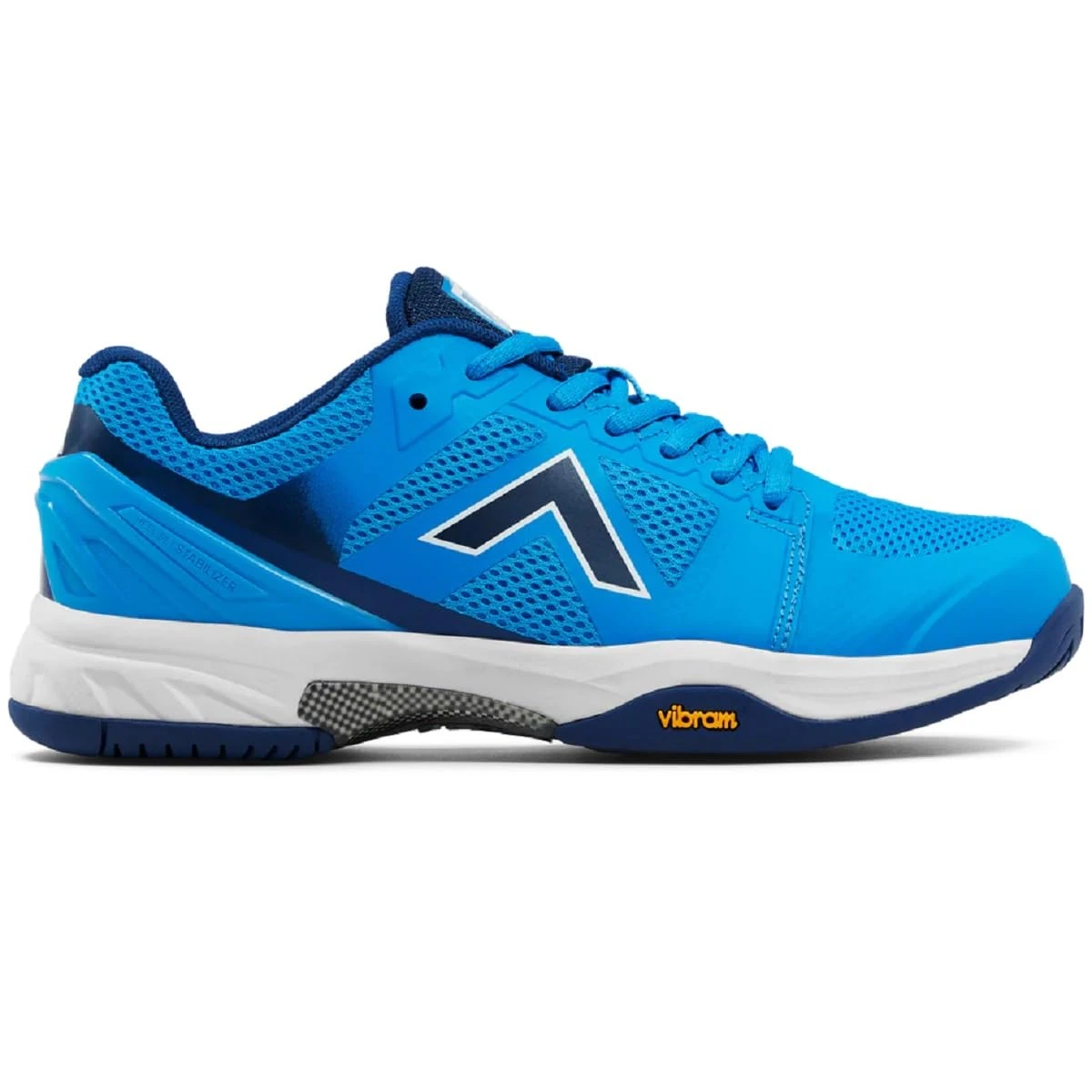
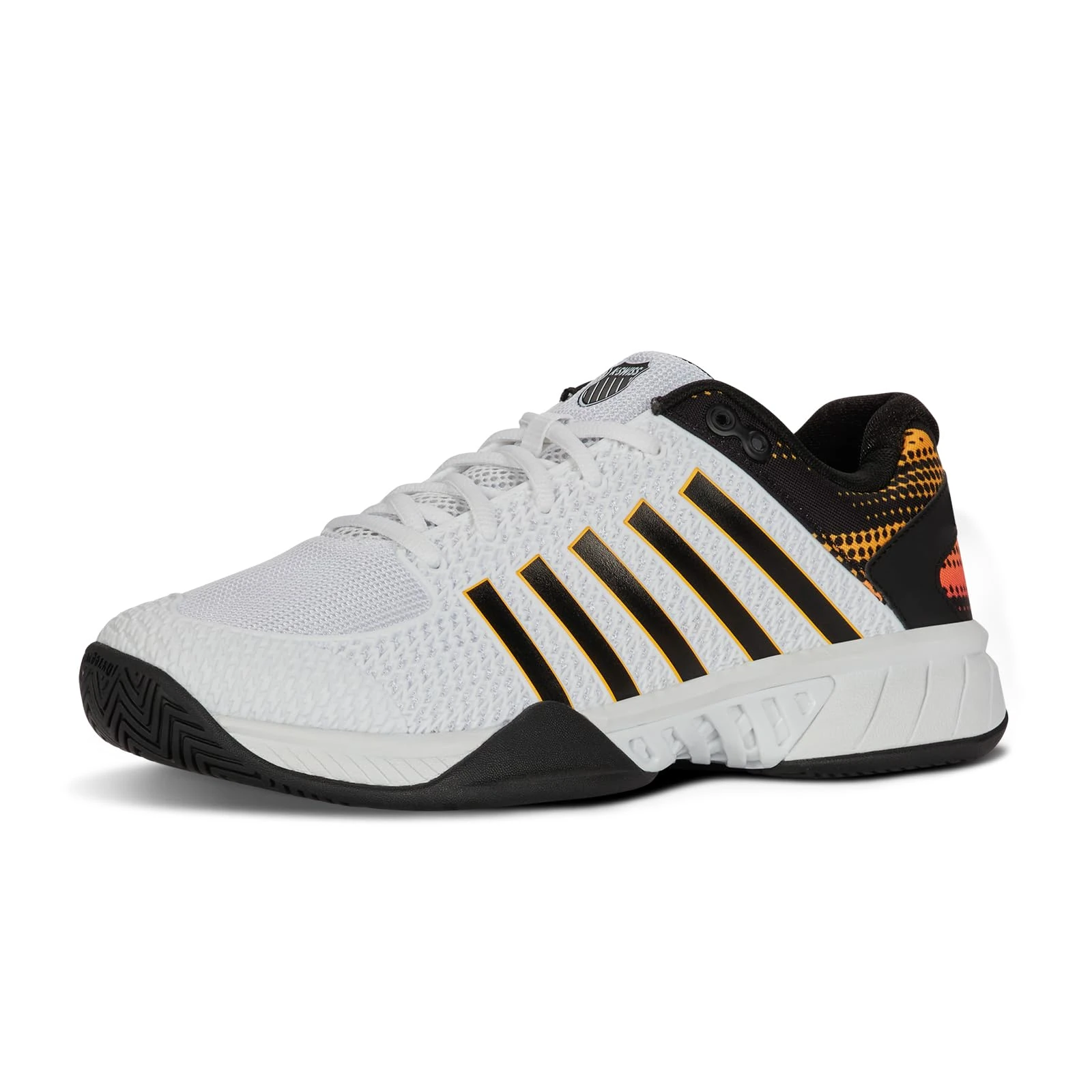
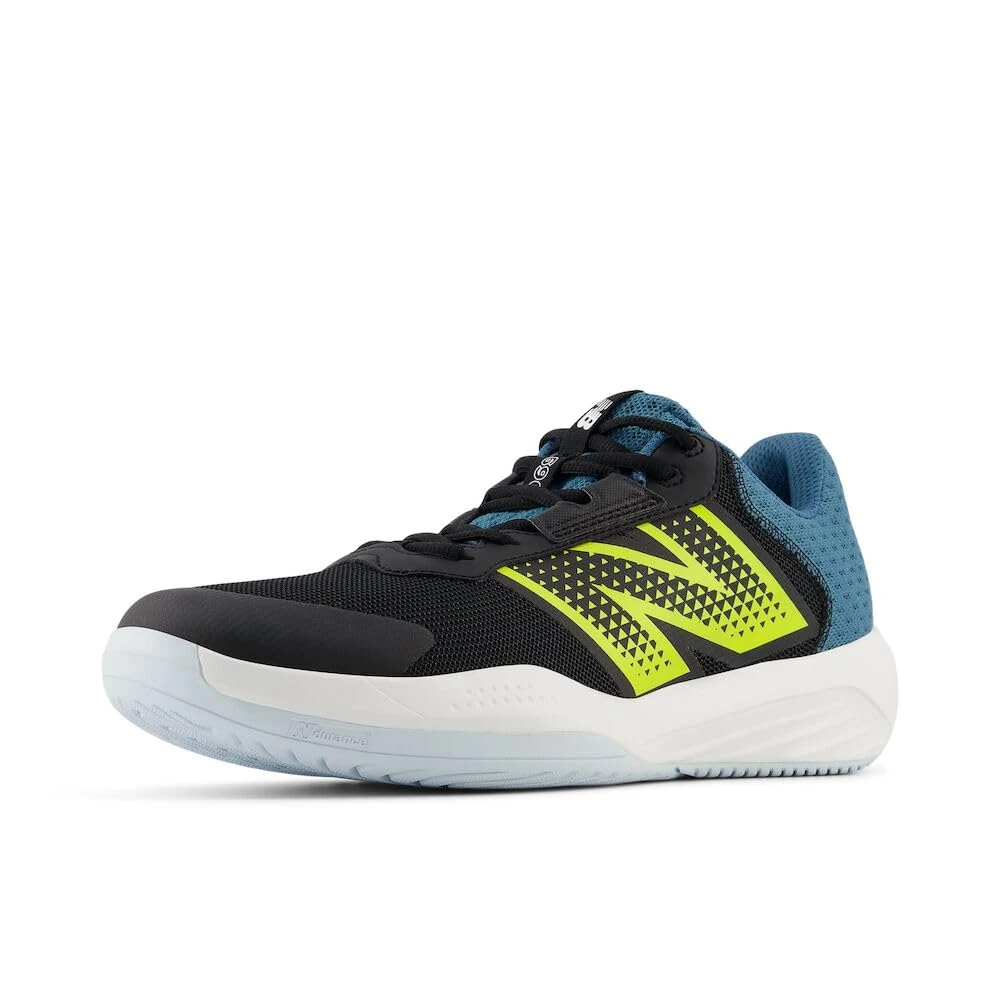
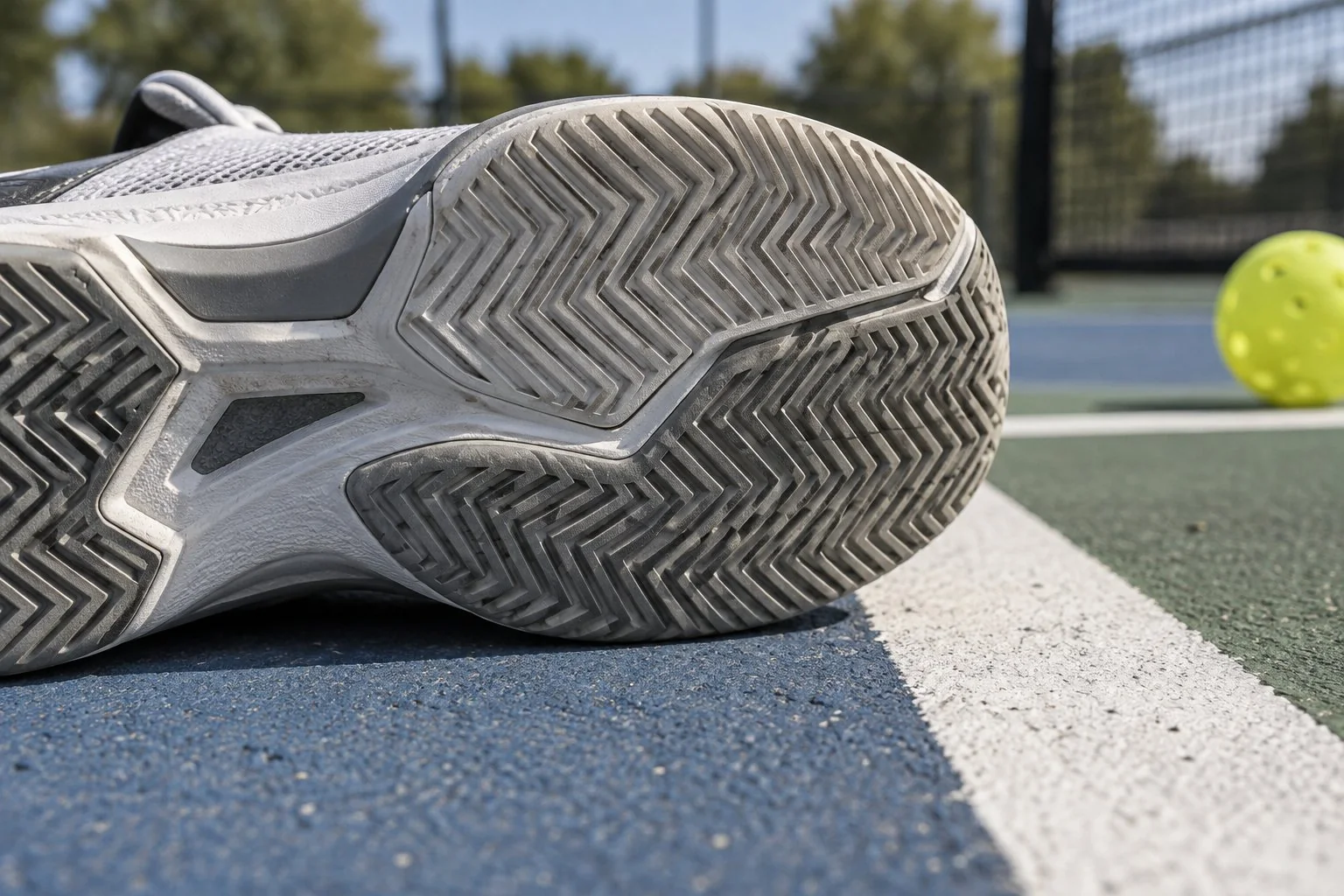
Look at the rubber pattern across the forefoot, heel, and outer edge. A continuous, well-shaped contact area is useful for repeated side-to-side movement; a deep pattern alone does not guarantee grip. Check that the outsole is intended for the surface where you play. Indoor court flooring and outdoor acrylic can demand different compounds and patterns, so a shoe that feels excellent in one venue may behave differently in another.
Use a quiet corner for a simple edge test. Plant one foot, keep the knee comfortably bent, and make a small lateral push without twisting aggressively. Repeat with the other foot. The shoe should remain aligned with your body rather than folding sharply at the side. Stop immediately if the surface is dusty, wet, or unsuitable for testing. Never turn a store test into a maximal slide.
Check traction without creating new injury risk
A grippy shoe is not automatically a safe shoe. If the outsole stops abruptly while your body continues rotating, the knee, ankle, or hip may absorb an awkward load. Progress from walking to shuffling, keep the steps short, and test only on a dry surface. A secure result feels controlled: you can slow down and push again without bracing against a sudden catch.
Compare both shoes after several minutes. Look for pressure at the little toe, rubbing at the heel, numbness under the forefoot, or laces that loosen. These details matter because discomfort changes footwork late in a session. A shoe with excellent rubber can still be a poor choice if the fit makes you avoid a proper split step.
Recheck grip as the shoe wears
Traction changes with dust, moisture, court residue, and outsole wear. Before play, wipe visible dirt from the sole with a suitable dry or slightly damp method and let the shoe dry fully. Do not apply household oils or sticky substances. During the season, inspect the high-wear areas under the forefoot and outer heel. If the pattern is smooth, uneven, cracked, or no longer predictable, replace the shoe rather than trying to compensate with shorter steps.
The best buying decision is therefore practical: match the outsole to your main court, confirm that the shoe fits securely, perform a progressive lateral test, and repeat the check after real sessions. Traction should make ordinary pickleball movement feel calm and repeatable—not dramatic.