Pickleball Singles Court Positioning: Bisect the Angle to Cover More Returns
Use the opponent’s contact point and likely passing angles to choose a stronger singles position at the non-volley line.
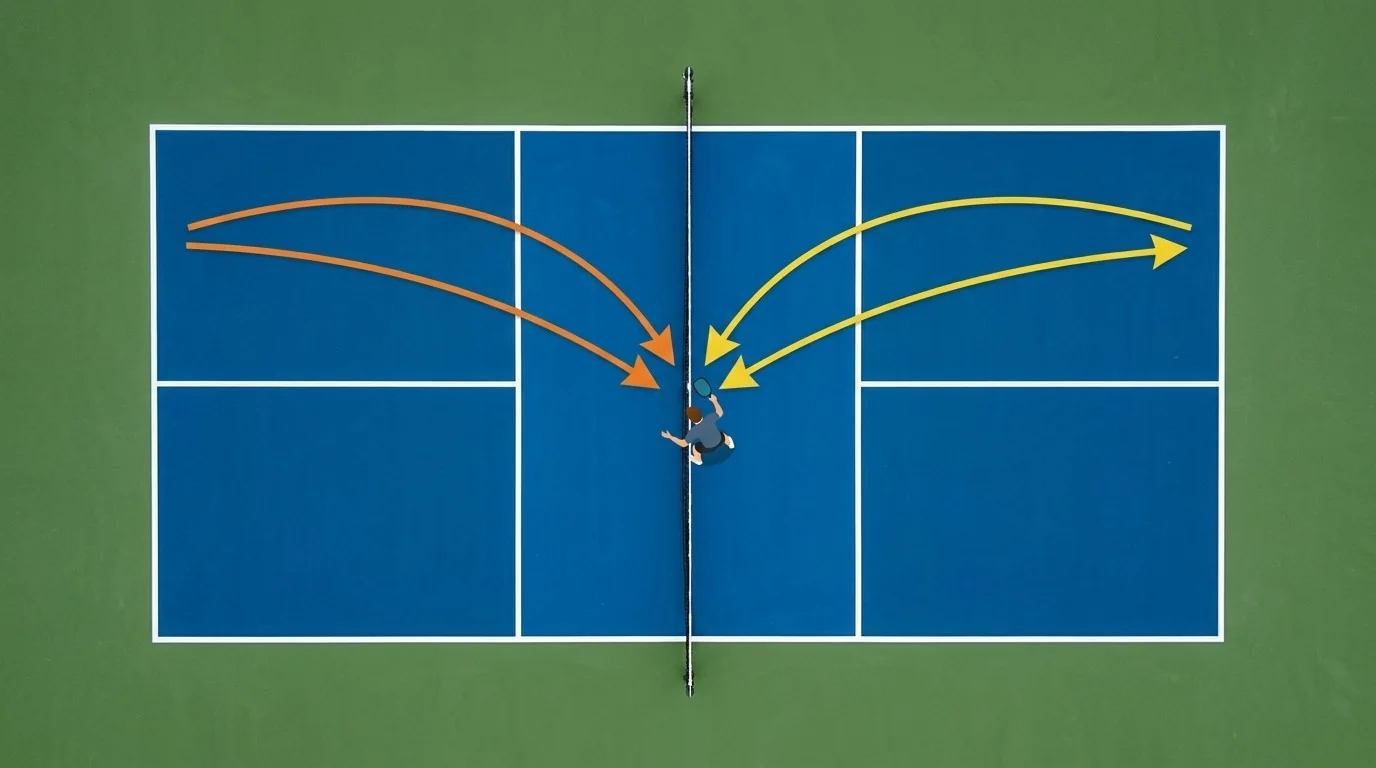
In singles, a deep ball that pulls your opponent toward a sideline can create an advantage, but only if your next position protects it. Do not automatically move to the geometric center. Read the opponent’s contact point and the passing angles that are actually available, then stand between the two strongest options. This is the practical idea behind bisecting the angle: the harder shots are pushed closer to the sidelines while you protect the more useful middle space.
Why moving straight to center can give away the advantage
A common singles sequence is to hit a deep return or groundstroke toward a corner, advance to the non-volley line, and then move directly to the middle. Advancing makes sense, but the last step can undo part of the work. If the opponent is still wide, the geometric center may leave a comfortable passing lane open.
Singles uses the whole court, and there is no partner to cover the space you leave exposed. After a deep wide ball, the opponent may try a hard passing shot beyond you at the non-volley line. Your position should therefore follow the opponent’s contact point, not a fixed habit of standing in the middle.
Stand between the likely passing angles
Picture the two widest legal paths the opponent can use to send the ball past you. One path goes toward one sideline; the other goes toward the opposite sideline. Position yourself approximately halfway between those realistic options. A central pass becomes less convenient, while either sideline attempt requires a tighter, riskier angle.
This position does not guarantee that you will reach every ball. It makes the opponent’s easiest route less easy. Keep your hips and shoulders facing the ball, hold the paddle up and in front, and stay ready to move either way. The position is active, not a mark you occupy for the whole rally. Change it when the contact point changes.
When the opponent is near a sideline
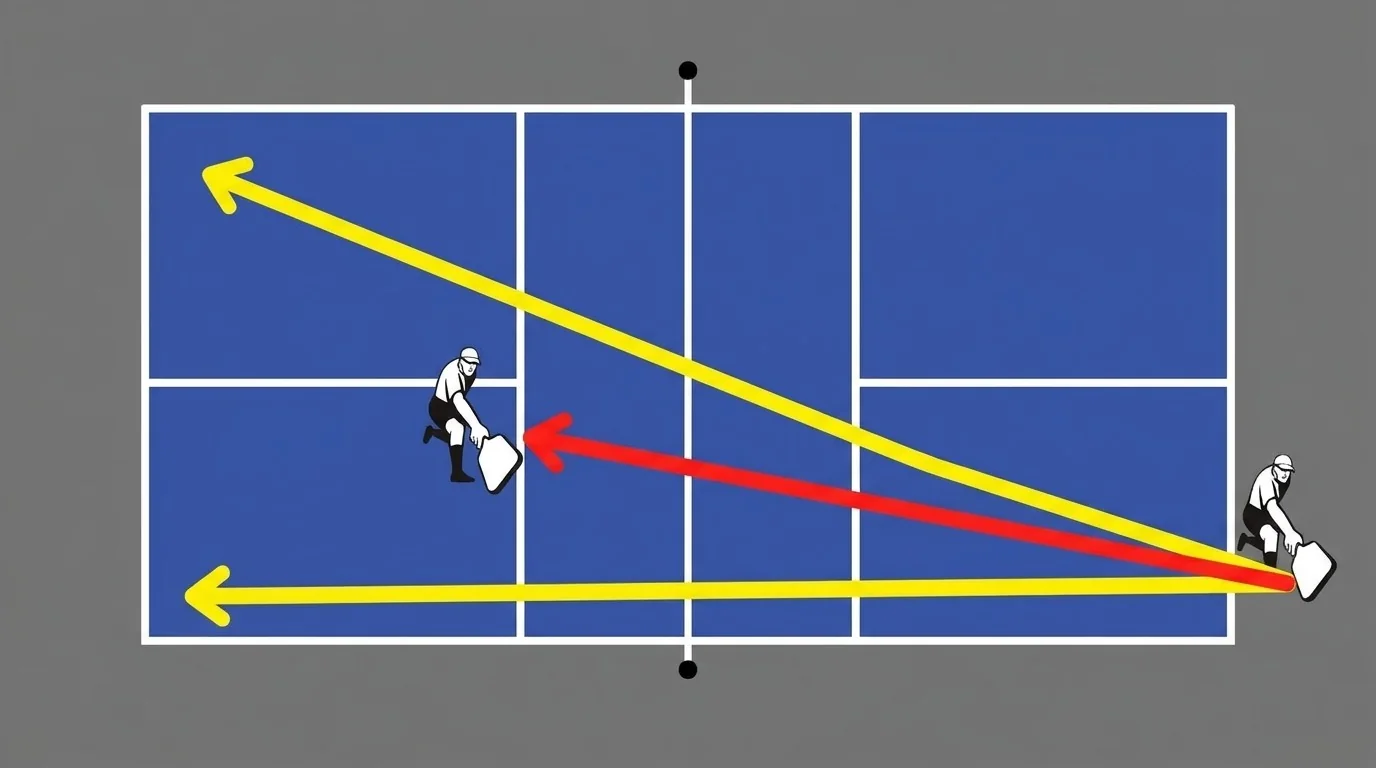
If the opponent contacts the ball near their own sideline at the baseline, shade slightly toward that same side while staying at the non-volley line. From there, you are closer to the middle of the two realistic passing angles created by that contact point. Do not drift so far that you abandon the line. The goal is to balance the likely crosscourt and down-the-line options.
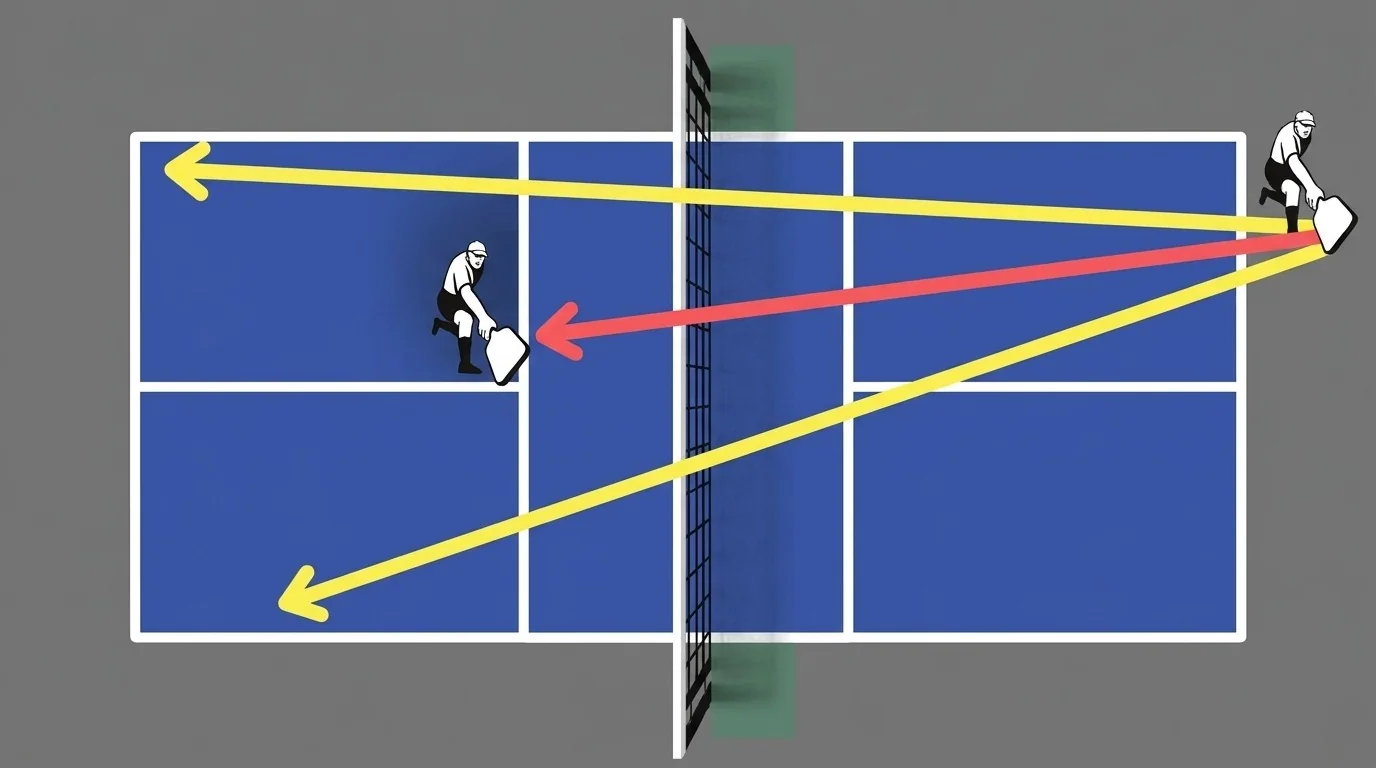
Use the same idea from the opposite side. When the opponent moves near the other sideline, shade toward that side instead of returning automatically to the geometric center. A small adjustment can shorten the distance to the more probable passing lane while leaving the opponent with a difficult edge target.
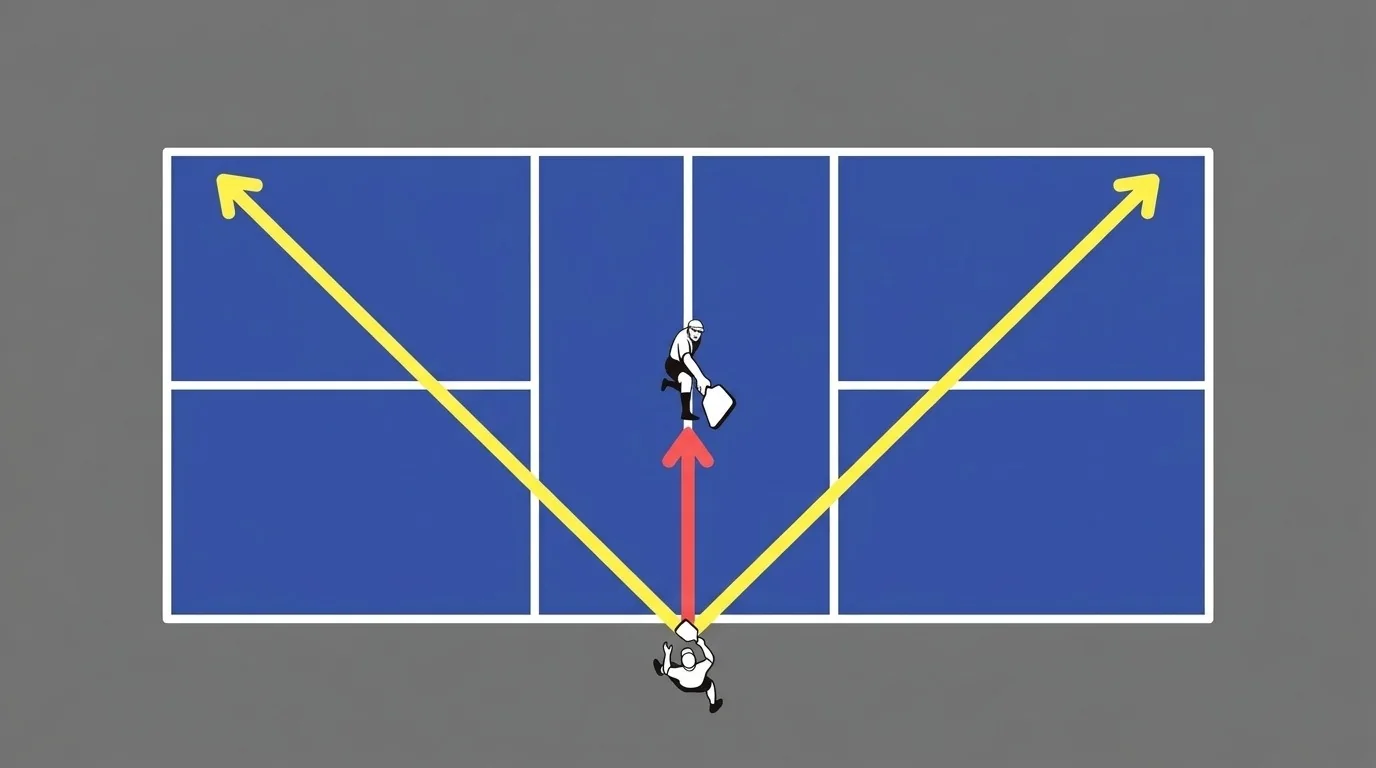
When the opponent contacts from the center
When contact happens near the center of the baseline, the passing angles are more balanced. Your starting position should then be near the center of the non-volley line as well. Keep the paddle ready and stay square because the opponent can choose either side without first moving wide.
Use a short decision routine
After hitting a deep singles shot, run through this sequence:
- Read the contact point. Is the opponent near a sideline or closer to the center?
- Picture the two passing angles. Include the line and crosscourt routes that can realistically land in.
- Stand between them. Shade toward the opponent’s side when the contact point is wide.
- Stay square and ready. Keep the paddle up, shoulders facing the ball, and weight prepared for the next step.
- Adjust after contact. Your position changes when the opponent moves or the ball creates a different angle.
The aim is not to find one perfect spot. It is to remove the opponent’s most comfortable route and make the next shot a harder decision. Compared with advancing to the center every time, angle-bisecting gives you a more purposeful starting position for the next exchange.