Pickleball Spacing: Find the Right Distance From the Ball
Learn how to find the right distance from the ball in pickleball, adjust with small steps, keep contact in front, and practise balanced spacing.
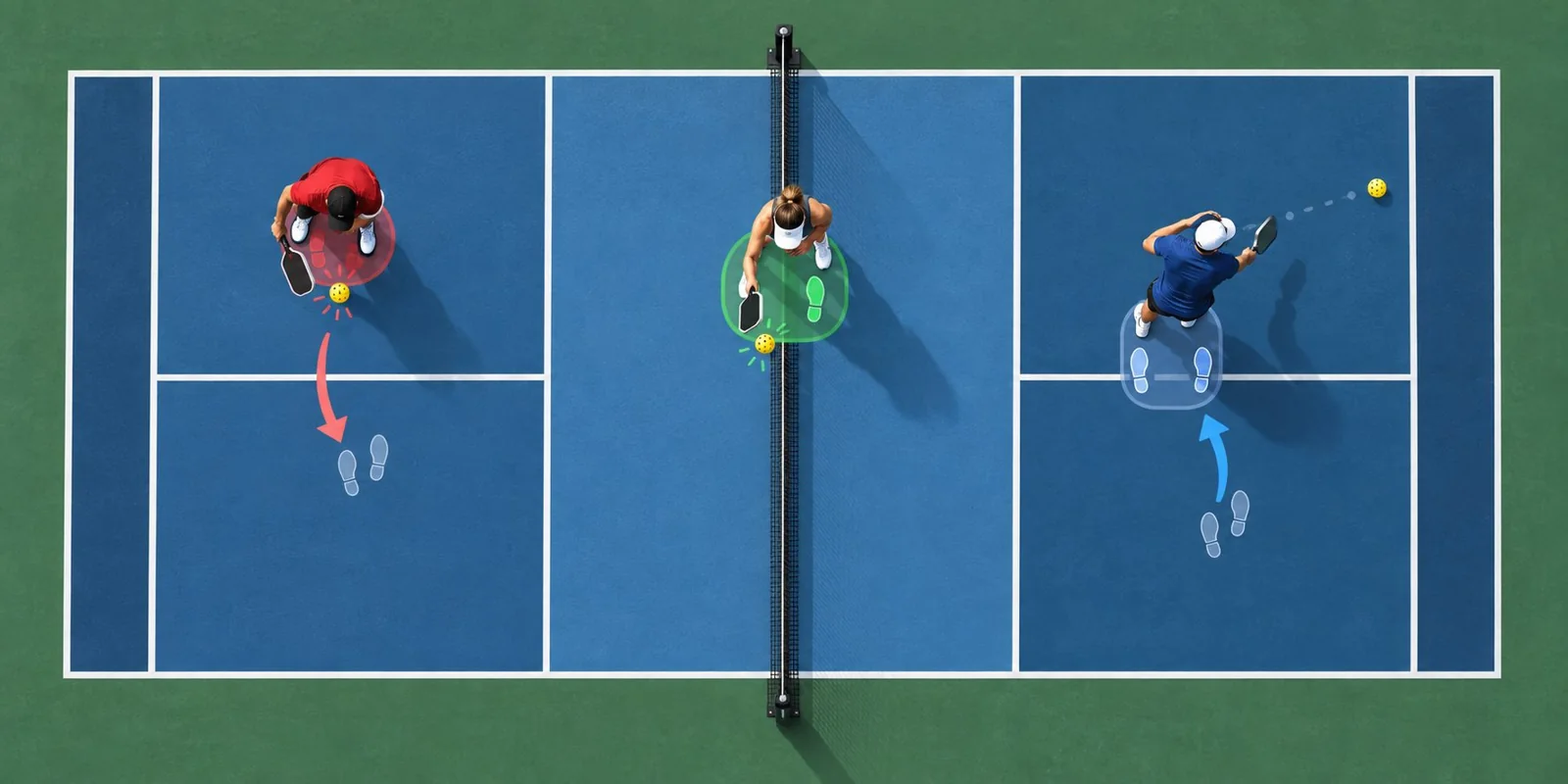
Good pickleball spacing makes every shot easier: you have room to swing, your contact stays in front, and your feet can recover for the next ball. The goal is not to stand far away from every ball. It is to arrive at a distance that matches the shot, your balance, and the time available.
What the right distance feels like
Start in an athletic ready position with the paddle in front and your knees unlocked. When the ball approaches, avoid solving the problem with your arm alone. Use small steps to place your body beside the ball, then let the paddle travel through a comfortable contact point in front of your torso. You should feel able to finish the stroke without falling toward the sideline or crowding your ribs.
Too close is easy to recognise: the elbow gets trapped, the swing becomes a jab, and the ball leaves with little direction. Too far creates the opposite problem. You reach, lose your base, and often contact the ball late. In both cases, the mistake began with the feet, not the paddle face.
A useful check is to freeze at contact during a shadow swing. Your hitting arm should have space to move, your head should remain over your base, and your next step should still be available. The exact distance changes with height, reach, and shot, so use the quality of the movement—not a ruler—as your guide.
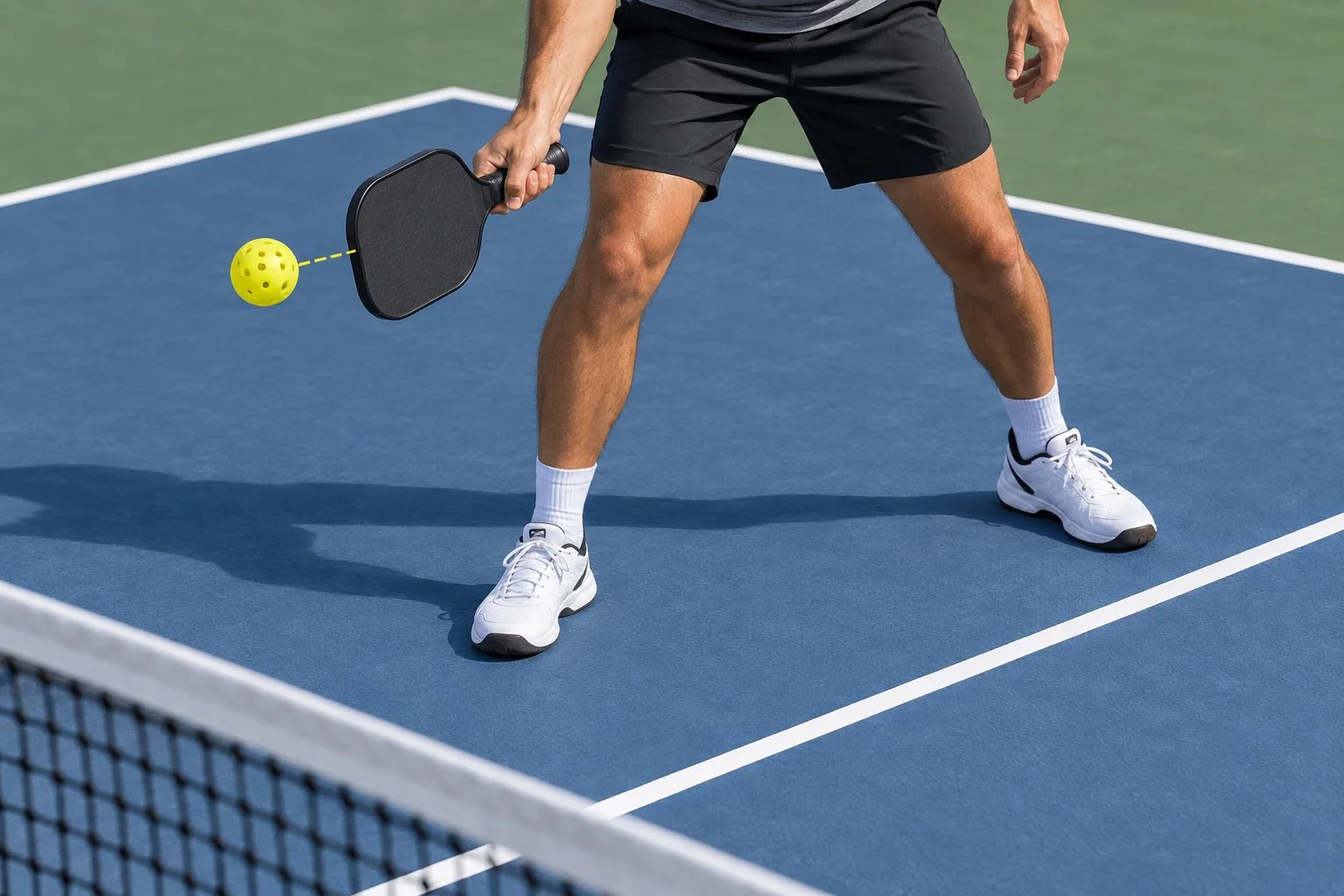
Adjust the distance for each shot
At the kitchen, keep the preparation compact. A dink or block volley needs a stable base and only a small gap between the body and the ball. If the ball moves wide, shuffle first; reach only as a last resort. On a drive from the baseline, create more lateral room so the paddle can accelerate on a smooth path. Step to the ball instead of twisting your torso to find it.
Transition balls demand patience. If the ball drops toward your feet, do not sprint through contact. Brake with short steps, lower your center of gravity, and decide whether you can reset it softly. If you are still moving forward when the paddle meets the ball, the extra momentum can lift the shot or send it long. A split step before the opponent’s contact helps you move in the correct direction instead of guessing early.
After each shot, recover your feet and paddle together. A player who reaches the correct contact distance but finishes sprawled is not ready for the reply. In doubles, keep enough room to move laterally with your partner and avoid creating a gap through the middle.
Three drills to build better spacing
Begin with shadow swings. Pick a forehand and backhand contact landmark, then rehearse a small adjustment step, a balanced stop, and a finish with the paddle ready. The movement should be quiet and repeatable rather than fast.
Next, use gentle self-drops or partner feeds. Send balls slightly left, right, near, and deep. Your first job is to move your feet until the ball sits in a comfortable window; your second job is to choose a controlled target. Start without pace, then vary height and direction as your spacing improves.
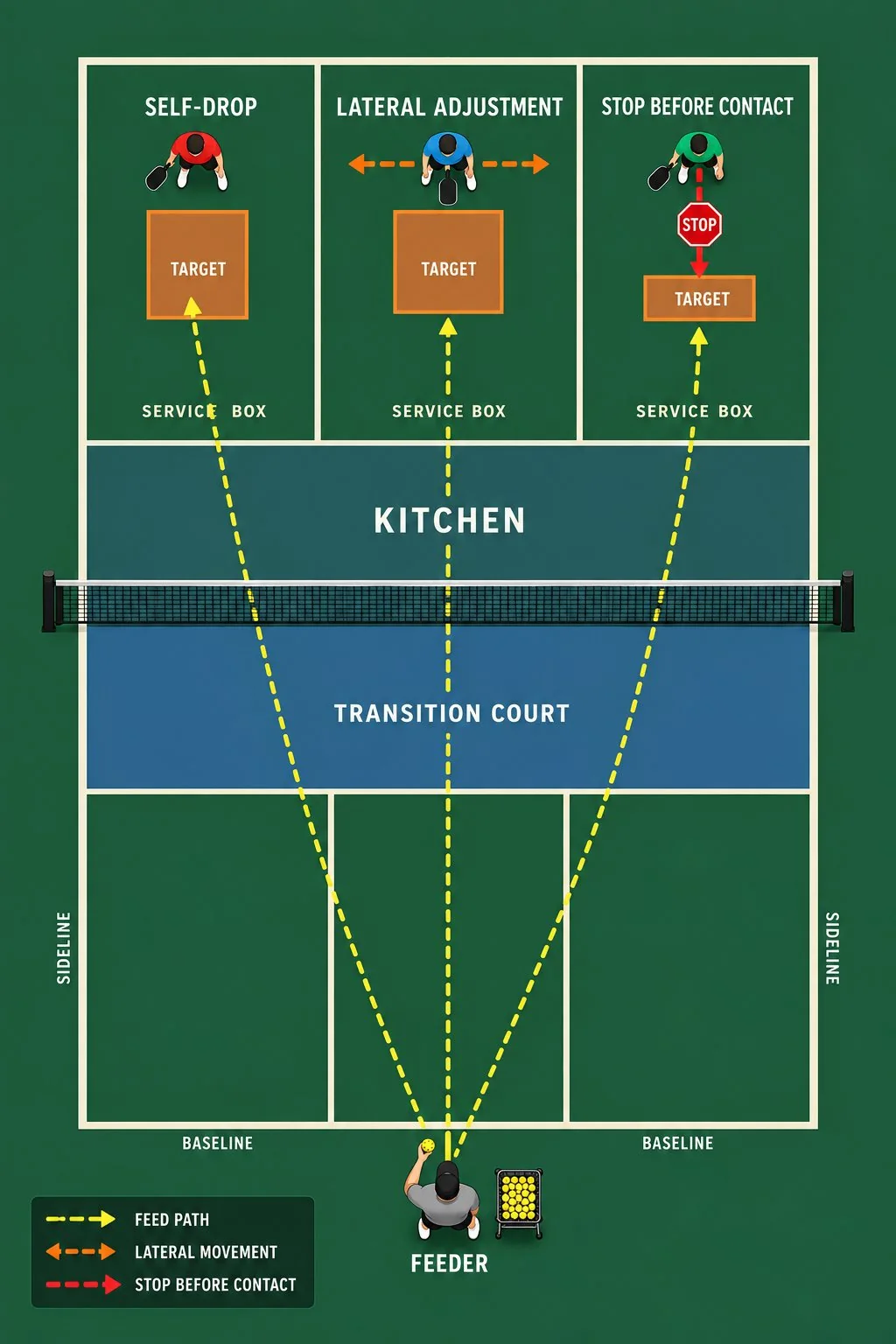
Finish with a decision drill. The feeder alternates a playable ball with a low or wide ball. For the playable feed, hit and recover. For the difficult feed, use a reset or a safer target. Score the quality of your spacing: Were you jammed, reaching, or balanced? That feedback is more useful than counting winners.
Common fixes are simple: move earlier, take smaller steps near contact, stop your forward momentum before a short ball, and keep the paddle in front while you adjust. When your feet create the right space, clean contact becomes a repeatable result rather than a lucky moment.