Pickleball Speed-Up Drill: Train the Block, Counter, and Recovery
A four-player pickleball drill for reading a speed-up, choosing a compact block or counter, and recovering with your partner.
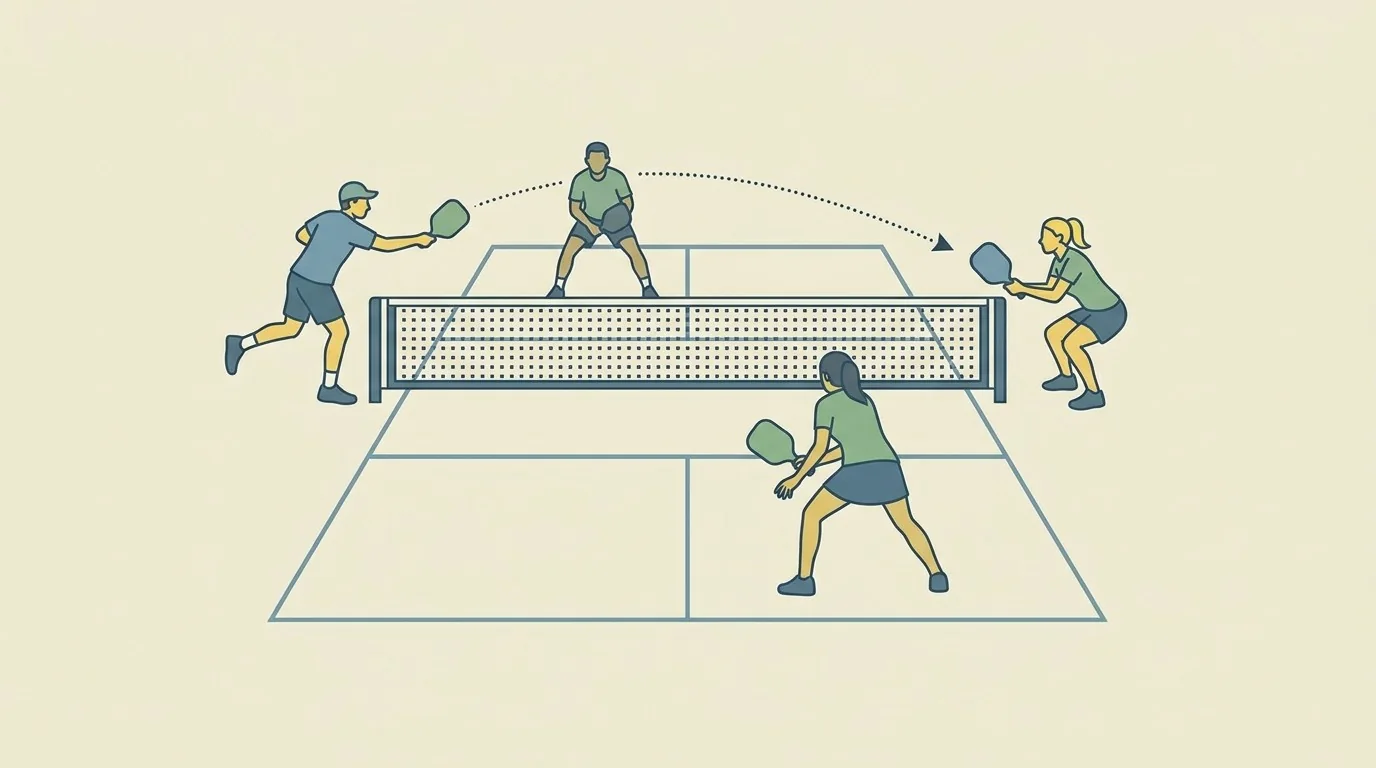
The best way to defend a kitchen speed-up is not to wait for a faster reaction. It is to rehearse the same small decisions until the paddle, feet, and partner movement stay organized under pressure. This drill gives four players a clear pattern: exchange a few cooperative dinks, create a speed-up from a balanced ball, defend with a compact block or counter, then recover together.
Set up the speed-up drill
Use four players, two on each side, with everyone starting near the non-volley-zone line. Choose one pair as the attacking team for the first round. Begin with cooperative crosscourt or straight-ahead dinks. The attacking pair should wait for a ball they can contact from balance rather than forcing the first opportunity.
Before the first feed, agree on the target and the pace. A safe speed-up can go toward the defender's body edge or an open court area. Do not aim at a player's face, and stop if the feed becomes unsafe or the players lose control. The point of the drill is decision-making, not maximum speed.
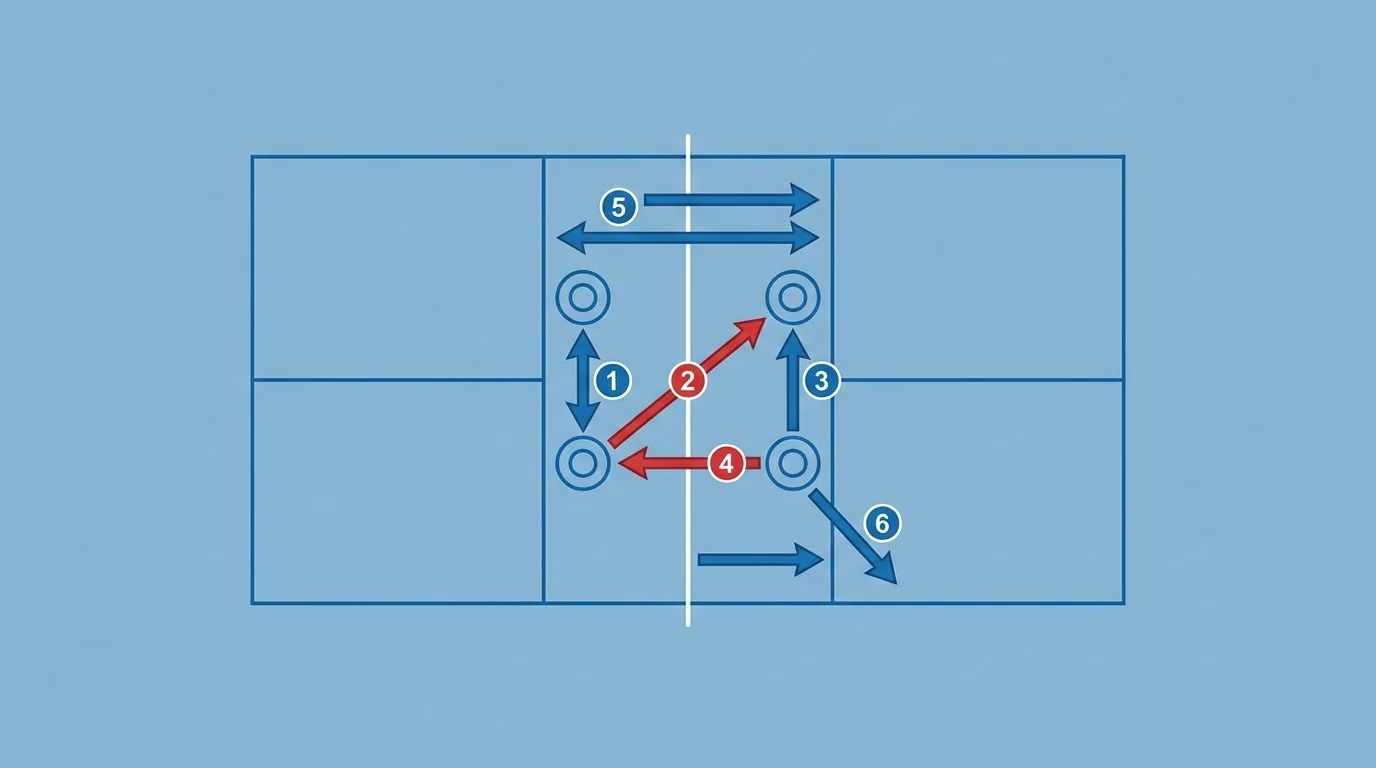
Run one complete sequence
- Dink until the ball is attackable. Keep the exchange cooperative and watch the ball's height. The attacker should be balanced with enough room to swing without reaching.
- Speed up with a compact motion. Choose the body edge or open space, keep the swing controlled, and expect the ball to come back quickly.
- Read before choosing the reply. If the incoming ball is low or you are moving, play defense. If the ball arrives high enough and your feet are set, a controlled counter may be available.
- Block with the paddle in front. Use a short backswing, a stable face, and a grip that is firm enough for control but not clenched. Let the incoming pace help the ball travel.
- Counter only from balance. A counter is a compact forward response, not a large swing. Keep the target conservative and be ready for another exchange.
- Recover immediately. After contact, return the paddle to a neutral ready position and reconnect with your partner. Both players should move laterally so the middle does not open.
The defender's first job is to make the next ball playable. A soft block into the kitchen can slow the rally and give both teams a chance to reset. A punchier counter is useful only when the contact point and body position support it. If you are reaching, falling backward, or contacting below net height, choose the block.
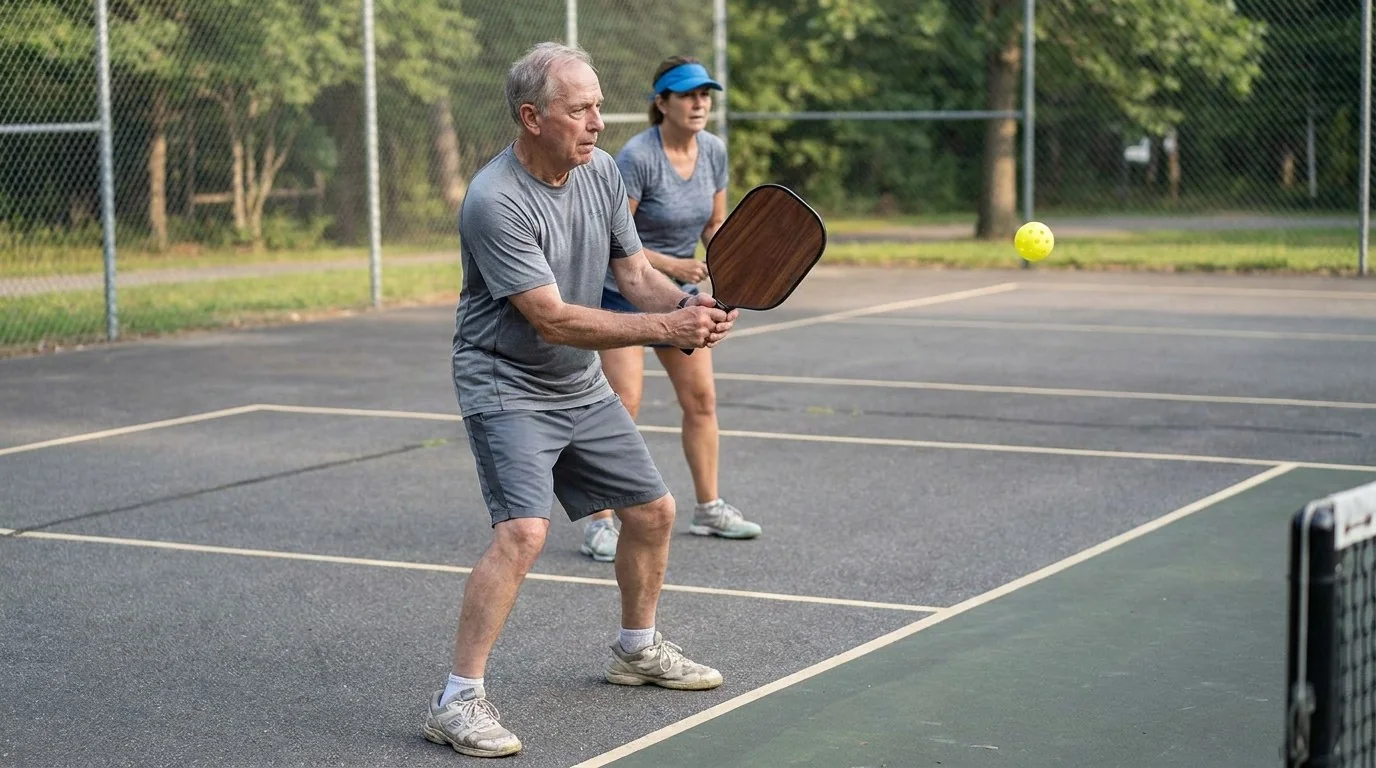
Add pressure without losing the purpose
Start with a predictable speed-up so the defender can learn the shape of the response. After several clean repetitions, let the attacker choose between the body edge and open court. Then remove the designated attacker and allow either team to speed up after the cooperative dink phase. Keep the same priorities: balanced attack, compact defense, immediate recovery, and safe partner spacing.
Change one variable at a time. You can vary the number of dinks, the speed-up target, or whether the defender must block before countering. Do not increase every variable at once. If the rally becomes a contest of harder swings, slow it down and return to the original pattern.
Common errors to correct
A low dink is not a good invitation to attack. Players also lose control when they take a full backswing after the speed-up has already arrived, squeeze the grip and pop the block up, or watch the first contact instead of recovering for the next one. Partners often make the same mistake by standing still after the ball crosses the net.
Use a simple coach's cue: paddle up, block short, recover together. Rotate the attacking designation every three starts, then play the drill live. Finish with a few points in which the only goal is to identify the right defensive choice. The drill has done its job when the block or counter becomes a calm decision rather than a panic swing.