Pickleball Split-Step Timing: Land Ready for the Opponent's Contact
A practical guide to pickleball split-step timing: match the landing to opponent contact, build a balanced base, and practise directional reactions through the court.
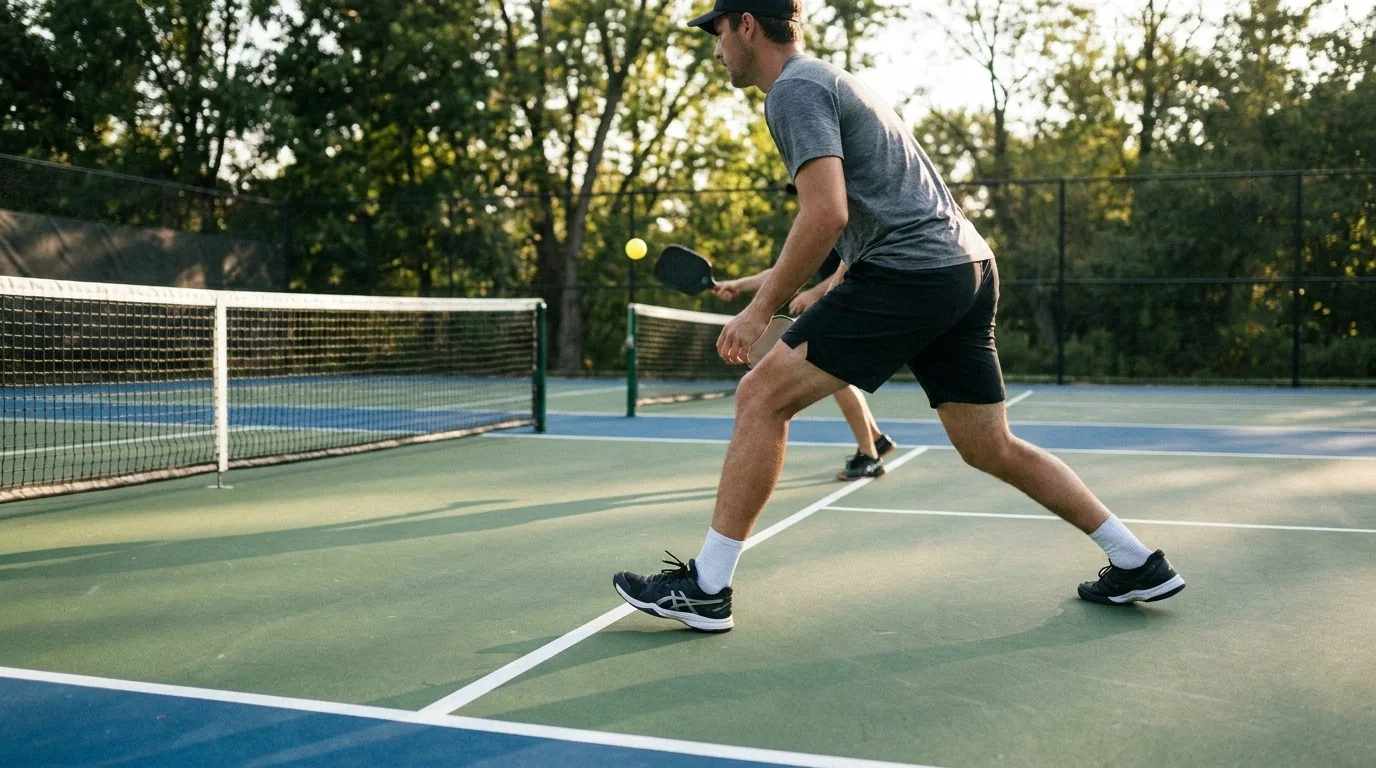
Good pickleball split-step timing is not about jumping high. It is a small, timed landing that gives your feet a balanced platform as the opponent contacts the ball. From that platform, you can push in the direction the shot requires instead of staying stuck in the movement that came before it.
What the split step does
A split step is a short hop that ends with both feet ready to move. It briefly absorbs forward or sideways momentum, widens your base, and keeps your weight available on both legs. The goal is not height. The goal is to land prepared.
That matters throughout a rally. At the kitchen, the landing helps you react to a fast ball. In the transition area, it can stop forward momentum before a low reset. At the baseline, it gives you a stable starting point for a wide ball or a deep return. The same movement has different value depending on where you are and what the opponent is about to do.
Time the landing to contact
The most useful cue is the opponent's contact, not the moment you see the ball's entire flight. Begin the small hop just before the opponent strikes. You should be in the air around contact and land as the ball leaves the paddle. That sequence leaves you grounded when the direction becomes clear.
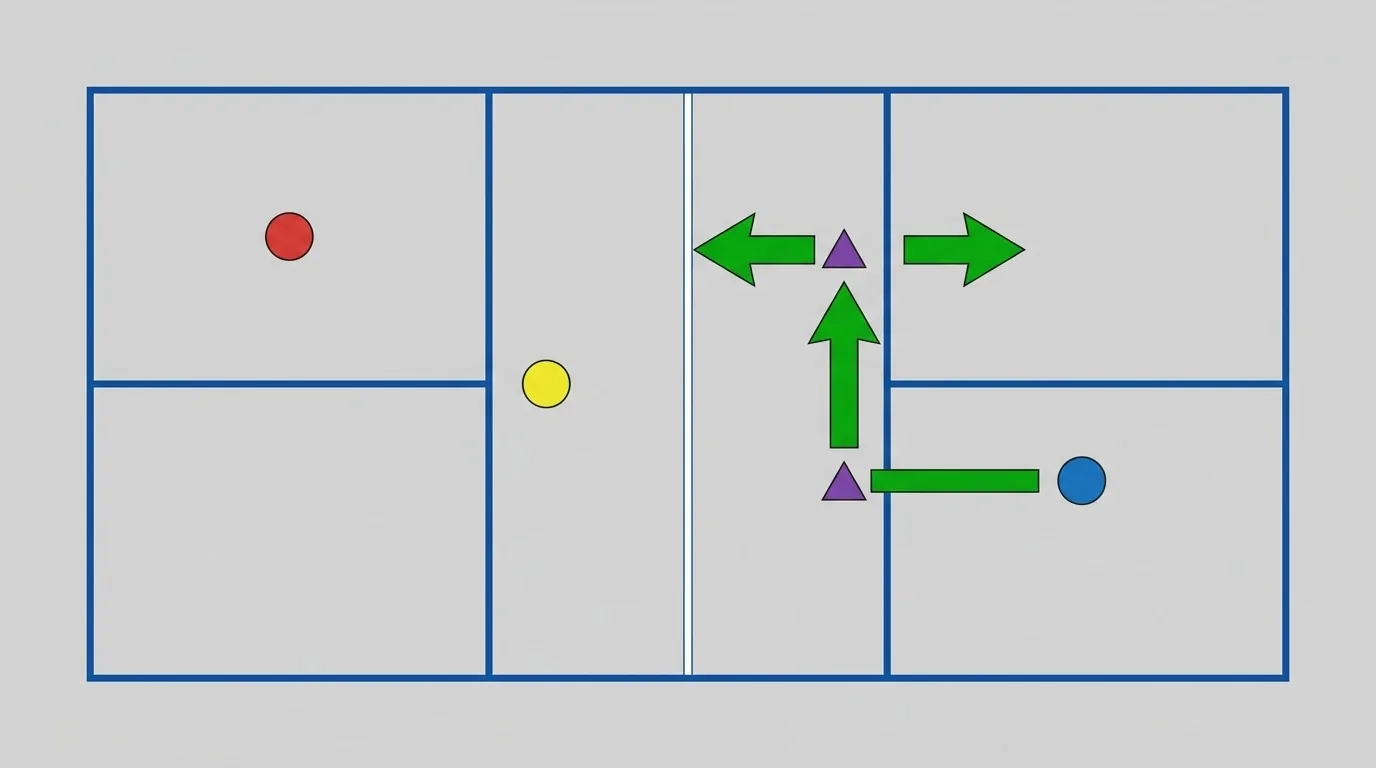
If you land too early, your legs become still before you know where the ball is going. If you land too late, you are still moving when you need to change direction. Watch the opponent's preparation and paddle movement, then make your landing part of the contact rhythm. The ball's flight is useful information, but it should not be the first cue that organizes your feet.
Build a useful base
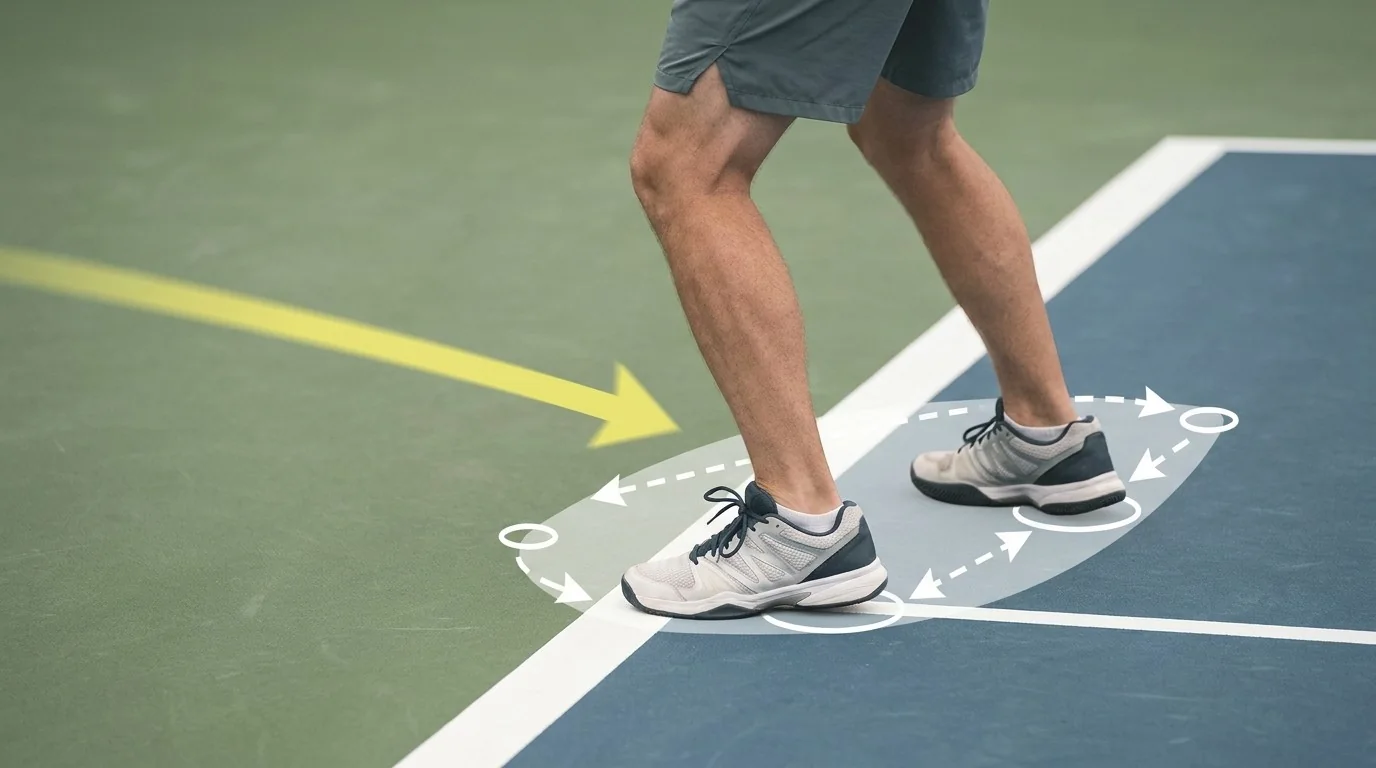
Land softly with your feet roughly shoulder-width apart, knees flexed, chest balanced, and paddle ready in front of your body. Avoid landing with crossed feet or with most of your weight already committed to one side. A quiet landing makes the next step easier to control.
The split step does not replace adjustment steps. After landing, use short steps to get behind the ball and create a comfortable contact point. If the ball is wide, push from the outside leg. If it comes toward the middle, stay organized rather than reaching across a locked base. Your first push should support the shot, not force your body to catch up afterward.
Use it in the transition area
Players often rush from the baseline toward the kitchen and keep running while the opponent hits. That makes a low reset difficult because the body is still carrying forward momentum. Split, land, and settle before contact so you can absorb pace with better balance.
You do not have to reach the kitchen line in one run. Advance behind a controlled shot, land ready for the reply, then take the next step when the ball permits it. The split step is a checkpoint that helps you move forward without giving away your feet.
Fix common timing errors
- Landing before the opponent strikes: delay the hop so the landing matches contact.
- Jumping too high: keep the movement small and quiet; extra height wastes time.
- Feet too narrow: widen the base enough to push in either direction.
- Still moving forward: use the split step to absorb momentum before a reset or volley.
- Reaching after landing: take adjustment steps so the ball is in front of your body.
- Watching the ball only: read the opponent's contact and paddle preparation as early cues.
Practise the rhythm
Start without a ball. Stand in the ready position while a partner gives a clear hand or paddle-contact cue. Split just before the cue, land with both feet balanced, and point your first push toward a called direction. Keep the hop low and repeat the timing before adding speed.
Next, have a partner feed alternating balls left and right. The feeder should make contact while you are landing, not after you have already chosen a direction. Add forward feeds from the transition area and practise stopping before the contact cue. If the timing slips, slow the feed rather than making the hop larger.
Finish with a cooperative rally built around one rule: land ready for every opponent contact. Count balanced landings rather than winners. When the rhythm is reliable, add unpredictable targets and faster exchanges while keeping the same small, controlled movement. The useful sequence is simple: read the opponent, split before contact, land balanced, push toward the ball, and recover for the next reply.