Pickleball Split Step: Timing Your Next Move
Learn the pickleball split step: time the landing, stay balanced at the kitchen, read the opponent, and use measured drills to build a reliable first move.
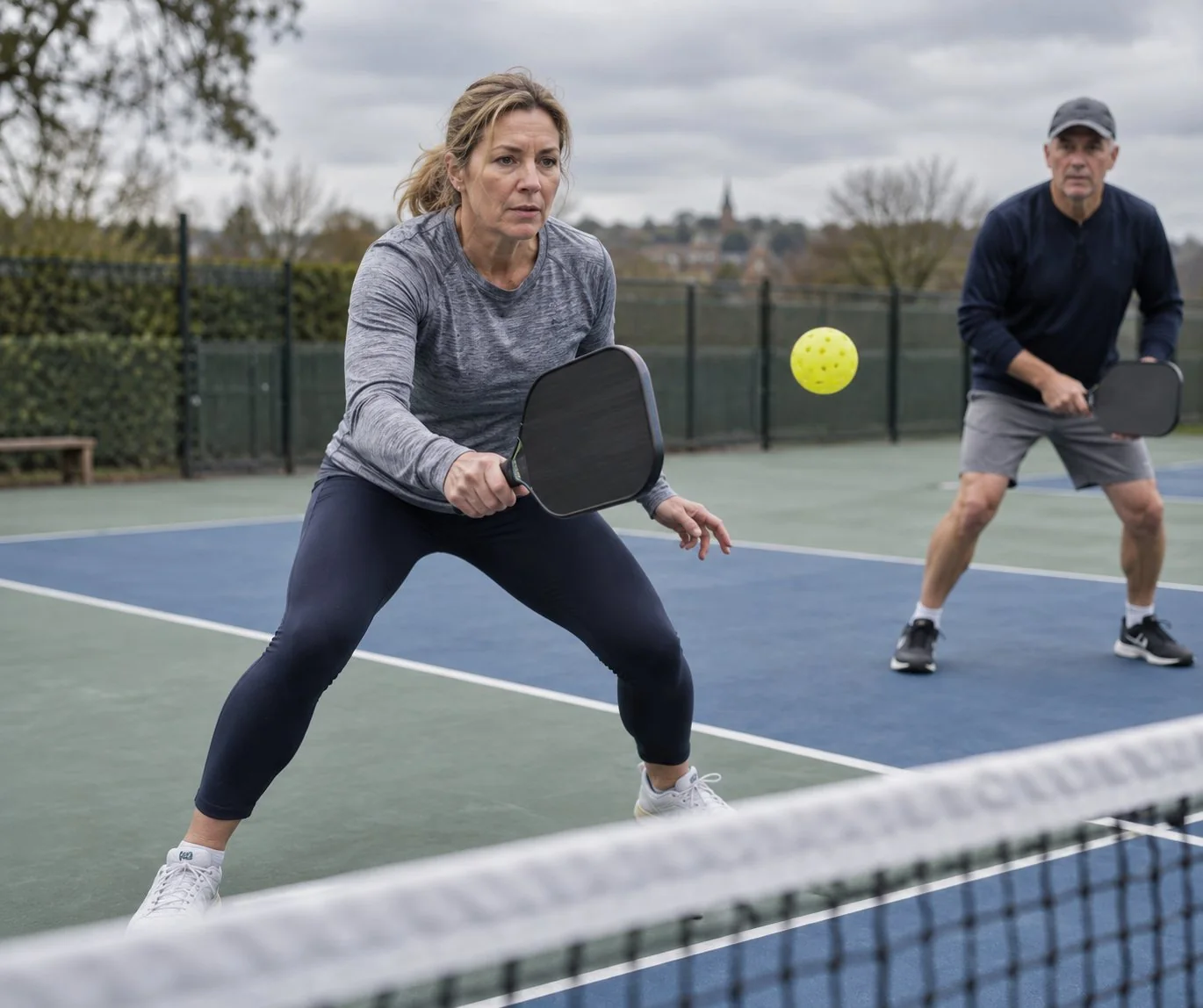
pickleball split step starts with a balanced landing, a paddle held in front, and a clear read of the opponent’s contact. The goal isn’t to jump into a shot. It’s to land ready, absorb the next ball, and move in the direction the rally demands.
What is a pickleball split step?
A split step is a small, balanced hop that ends as the opponent strikes. Your feet land apart, your knees soften, and your weight stays available for either side. It is not a deep squat or a large jump. The timing matters more than the height.
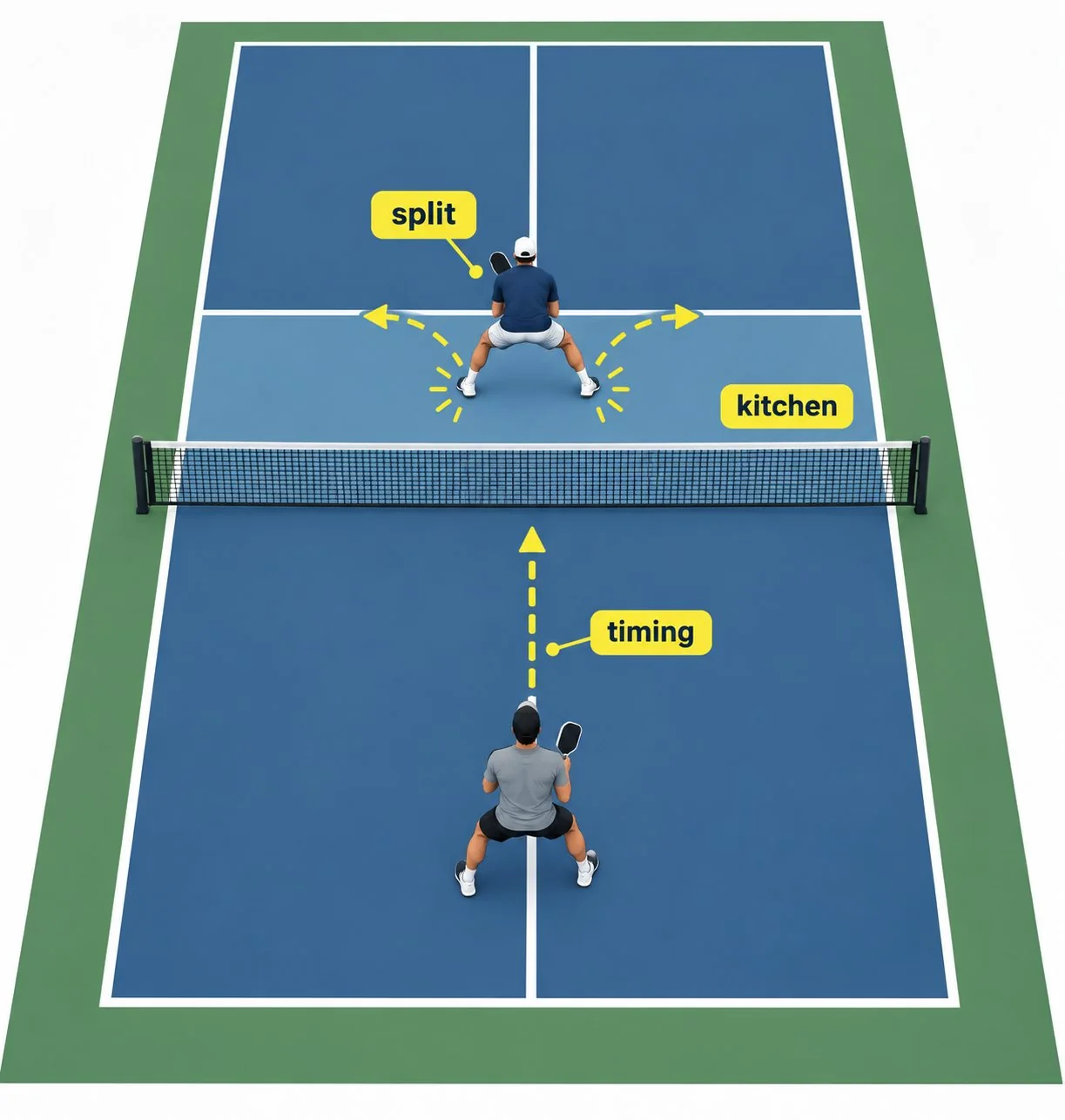
At the kitchen line, the split step helps you respond to a drive, dink, or speed-up without leaning in advance. Landing too early leaves you waiting; landing too late leaves your weight moving in the wrong direction.
How do you time it?
Watch the opponent’s paddle and begin the small hop as the forward swing approaches contact. Land close to contact, then push from the foot that matches the ball’s direction. Keep the paddle in front of the chest so the feet and hands can work together.
Use a measured drill. Have a partner hit 20 moderate balls while you count balanced landings. If 15 landings let you move without crossing your feet, your drill result is 75%. That number describes the session, not a guaranteed match rate. Record early landings separately from late ones because they require different timing changes.
Where should you recover?
Return to a position that protects the middle without abandoning your partner. Small adjustment steps are safer than a wide leap, especially near the non-volley zone. In doubles, communicate before switching sides. A perfect split step cannot repair a large communication gap.
Read the ball’s height before choosing the next move. A low ball may call for a reset or block. A high ball can allow a controlled attack. Keep the recovery cue short: land, read, move.
Which drills build timing?
Start with stationary feeds. Do three sets of 10 balls: one to the forehand, one to the backhand, and one with random direction. Suppose the successful balanced reactions are 8, 6, and 7. The session shows 80%, 60%, and 70% by group. Change only the landing moment in the next set.
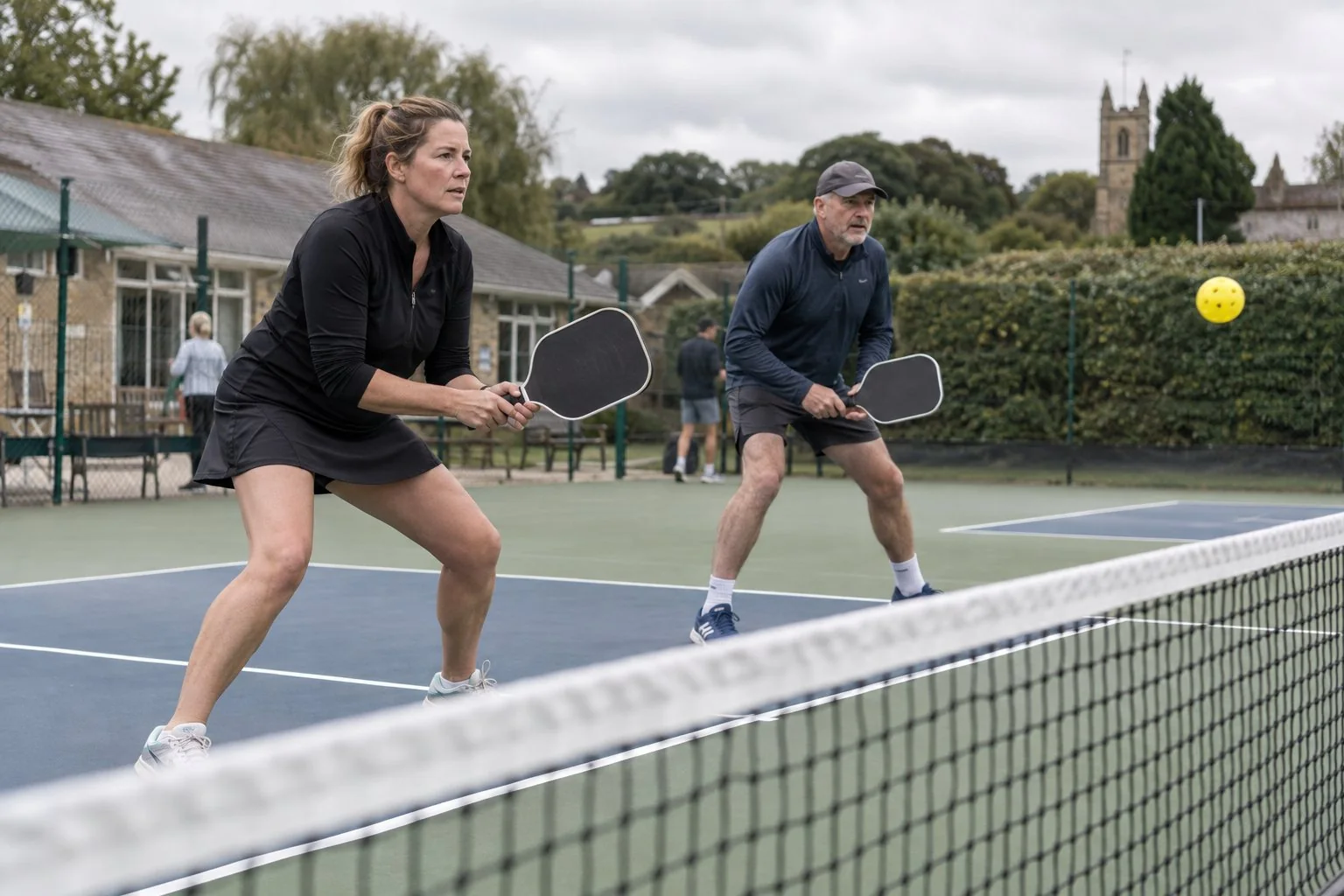
Then add movement. Begin one step away from your normal position, recover to the middle, and split before the feed. Lower the pace if your feet cross or your paddle drops. Stop if pain changes your landing.
Quick checklist
Land balanced. Knees soft. Paddle forward. Watch contact. Move after landing. Recover before the next ball.
Review the same cue from both sides of the court. Start slowly, then add one variable at a time: direction, depth, or movement. A partner can call the result after each ball, but should not interrupt the rhythm. Keep a short record after the session, including the most common miss and the position where it happened. This makes the next practice specific instead of turning every error into a general instruction. Rest between sets, drink water, and stop when fatigue changes your footwork or contact. The drill is useful only while the movement remains controlled.