Pickleball Stray Ball Rules: When an Outside Ball Stops Play
A practical guide to handling outside distractions and stray balls, stopping play safely, and restarting a pickleball rally fairly.
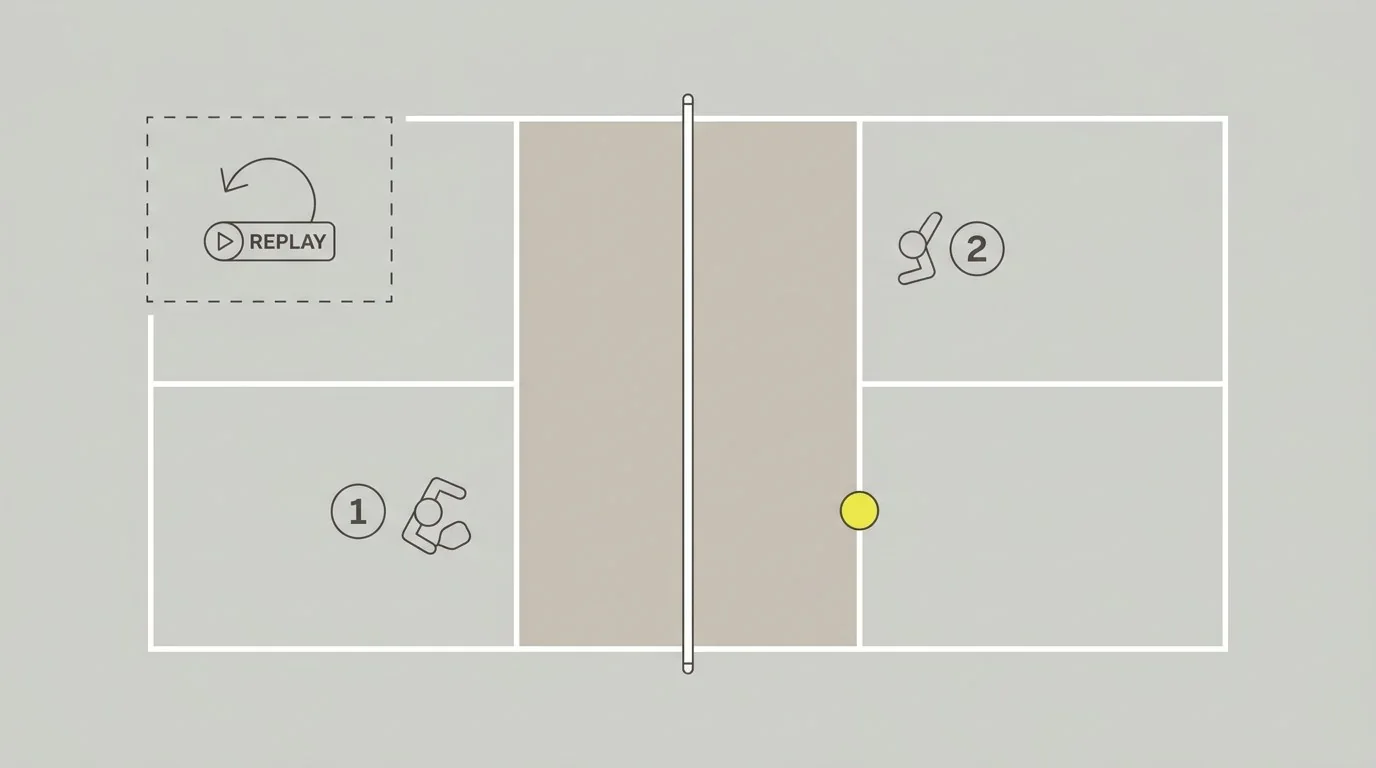
A stray ball can turn an ordinary rally into a safety issue. The right response is to stop when the interruption affects play, explain the reason, and restart with the same score and service order when the rules call for a replay. Keep that decision separate from a fault, a line call, or a ball that was already dead.
When an outside ball requires a stop
A replay cancels the rally without awarding a point. The score stays the same, and the same player serves again from the correct service position. The same player serves again, from the same correct service position, and the score does not change. Do not use “replay” as a synonym for “I am not sure.” If a ball is clearly in or out, make the appropriate call. If a player commits a fault, the result is a fault rather than a replay. The restart is reserved for circumstances identified by the rules or agreed before play in a clearly casual format.
A loose ball rolling onto the court, a ball entering from another court, or a serious outside distraction can prevent fair continuation. A loose ball rolls onto the court, a ball from another court enters the playing area, or an unexpected outside distraction materially affects play. Players should stop promptly when the interruption creates a safety or fairness problem. If the rally can continue safely and the event has no effect, do not manufacture a replay after the result is known.
Keep replays separate from service lets
A service let is different from a general replay in everyday language, but it also means the serve is made again without changing the score. In organized play, the correct call depends on the applicable rule and event procedure. A serve that touches the net and still lands legally in the receiver’s correct service court is not automatically a let under modern pickleball rules. Judge the serve by its landing, the receiver’s position, and any actual fault—not by the sound or appearance of net contact alone.
If the serve lands out, lands in the non-volley zone, misses the required service court, or breaks another service requirement, it is a service fault, not a let. A receiver who is not ready can request a pause before the serve; after making a genuine attempt to return, the receiver generally cannot turn an unsuccessful return into a replay request. Agree on readiness before the server begins.
Use a short decision sequence
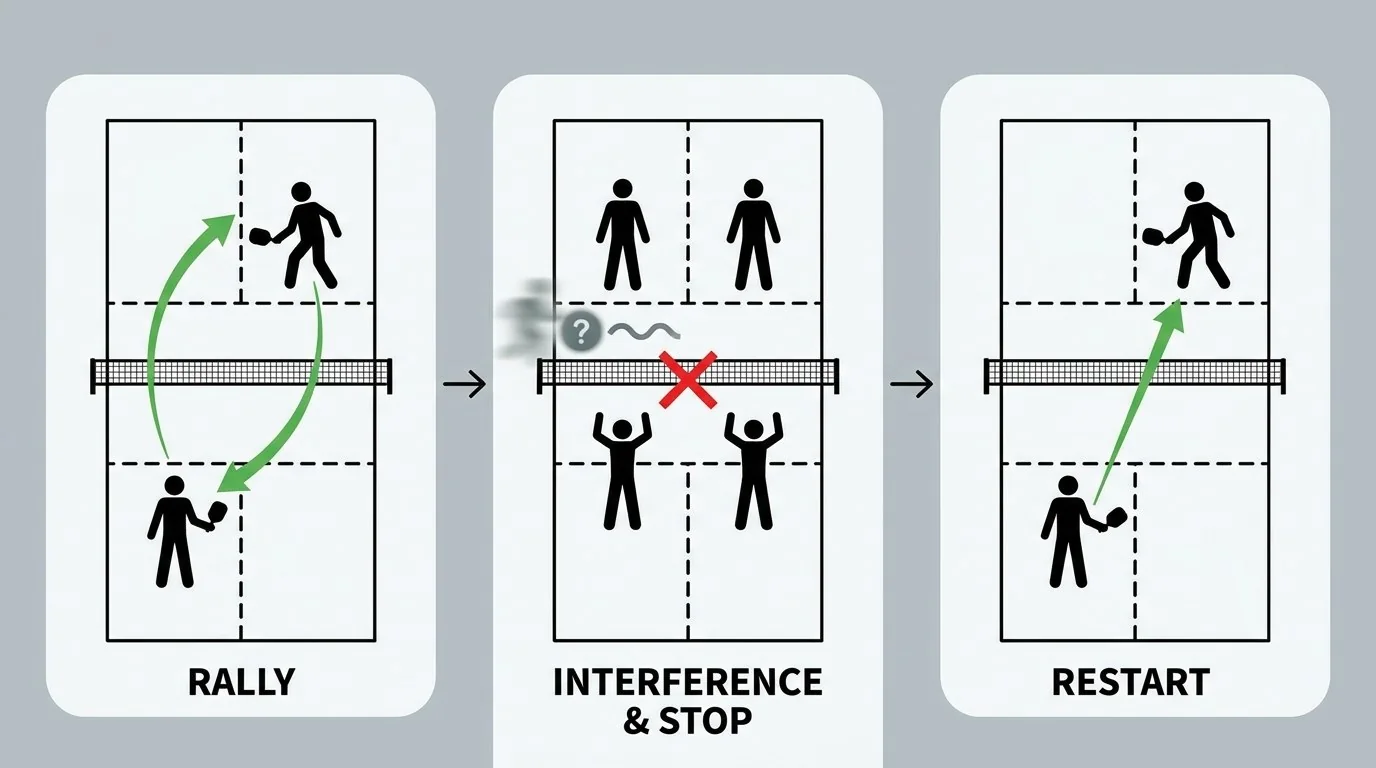
Use a short sequence. First, identify whether the ball was already dead because it bounced out, struck a permanent object, or caused a fault. If so, apply that result. Second, ask whether an outside event entered the playing area or materially distracted a player before the rally ended. Third, stop play immediately if continuing could create danger or erase useful evidence. Finally, state the reason in one sentence and restart with the same score and service order.
In doubles, both partners should communicate rather than make competing late calls. A player who sees a ball from another court should say “ball” loudly and stop the rally; the pair can then explain what happened. Opponents should not be pressured to accept a replay merely because one team lost a favorable position. The event must have affected safety or fair play, and the call should be timely.
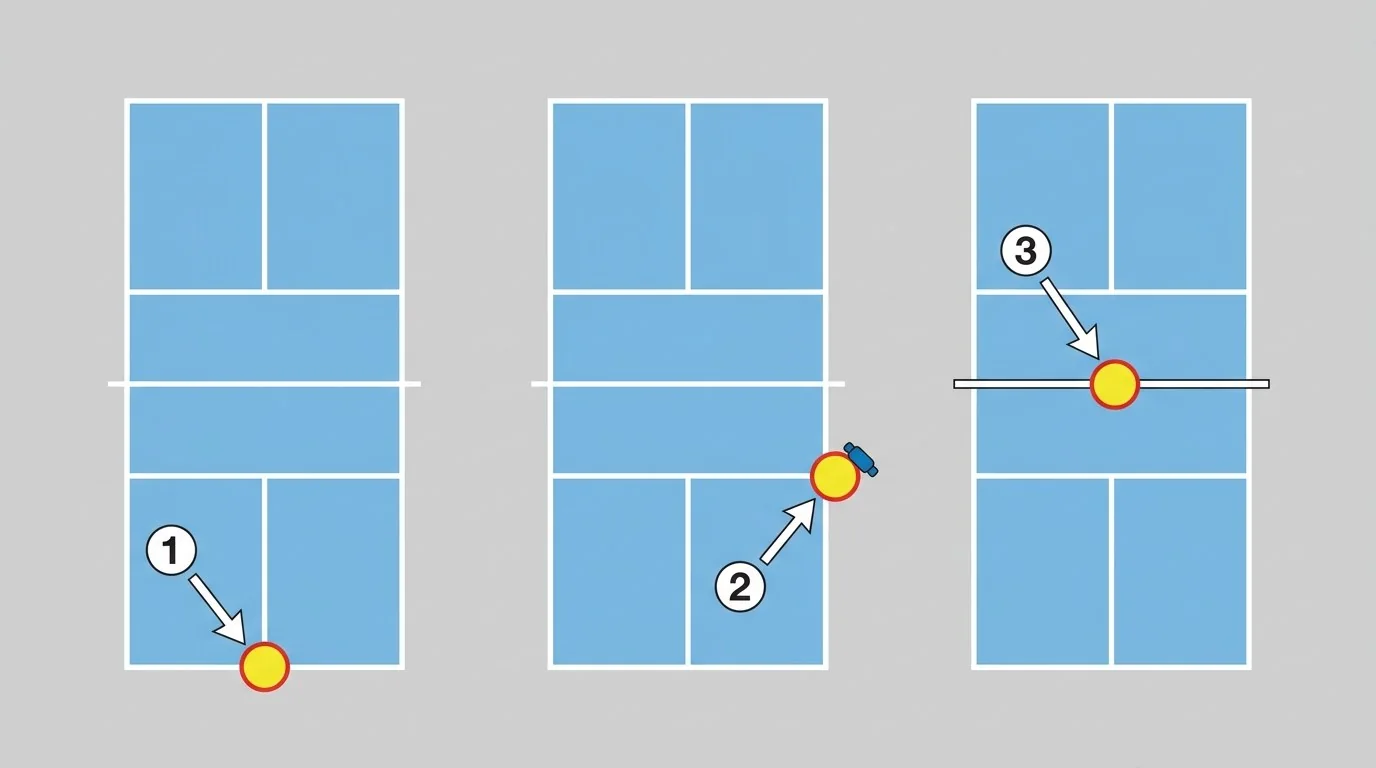
Confirm the restart before the next serve
Before the next serve, confirm four details: the score is unchanged, the same server is serving, the correct service court is used, and everyone understands why the rally was restarted. If the interruption happened after a clear fault, do not erase the fault unless the event’s rules specifically require it. If nobody saw the line clearly, that uncertainty is normally handled by the applicable line-call convention, not automatically by replaying the point.
Before the game, agree that outside balls stop play, late appeals do not rewrite completed rallies, and safety comes first. Apply the same standard to both teams. A replay should restore a fair chance, not provide a second chance whenever the first result was inconvenient.