Pickleball Stroke Choice: Let Footwork Decide Forehand or Backhand
Choose the cleaner pickleball forehand or backhand contact by reading the ball, moving your feet, and protecting your balance.
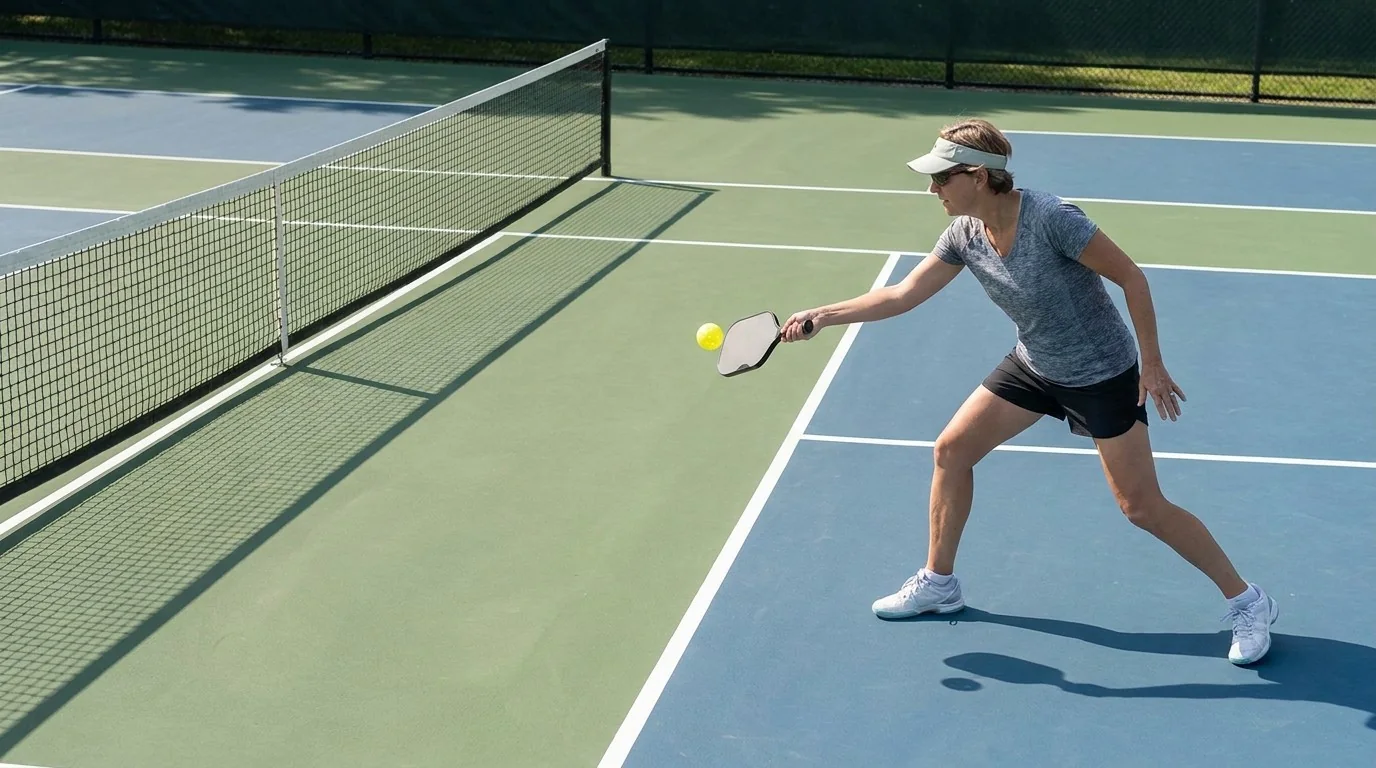
Choosing between a forehand and a backhand is not a loyalty test. The useful stroke is the one that gives you space to contact the ball in front, stay balanced, and recover for the next exchange. Let your feet create that contact instead of deciding from habit.
Read the ball before choosing a side
Watch the incoming ball’s height, speed, direction, and distance from your body. A ball arriving comfortably on your forehand side may invite a natural forward swing. A ball moving toward the backhand side may be easier to handle with a compact one- or two-handed preparation. The opponent’s shot name does not make the decision for you. Your position does.
Move first and create room
Footwork often decides which stroke is available. Move early enough to keep the ball in front rather than reaching across your body. Use small adjustment steps when you need to fine-tune the distance. On a wide ball, move your feet while keeping the paddle ready; stretching the arm at the last moment makes the paddle face harder to control.
A forehand can provide reach and a longer swing path, but it becomes awkward when contact drifts behind the hip. A backhand can form a compact barrier when time is short, but it still needs preparation. Turn the shoulders, organize the paddle, and arrive with a base that can support the recovery.
Compare the contact windows
Choose the forehand when the ball is in front of that side, your spacing is comfortable, and the swing can finish toward the target without pulling you off balance. Choose the backhand when the ball is entering that side, a compact preparation buys you time, or changing to a forehand would require a late reach across the body.
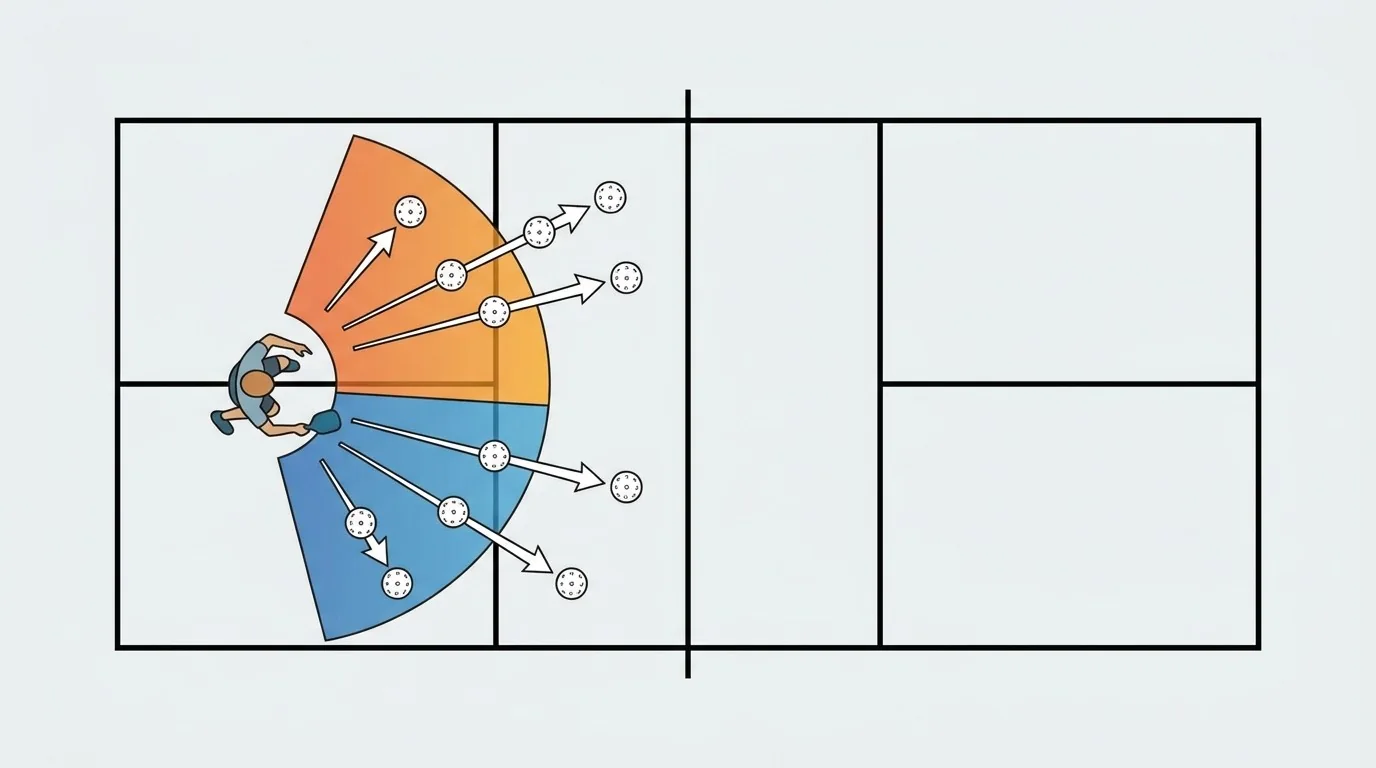
The choice can change during the rally. As the ball changes direction or height, reset the paddle and adjust your feet. At the kitchen line, a short, compact motion is often more dependable than a large swing. From deeper in the court, you may have time to turn and use a fuller stroke, but balance and net margin still matter.
Keep the body and paddle organized
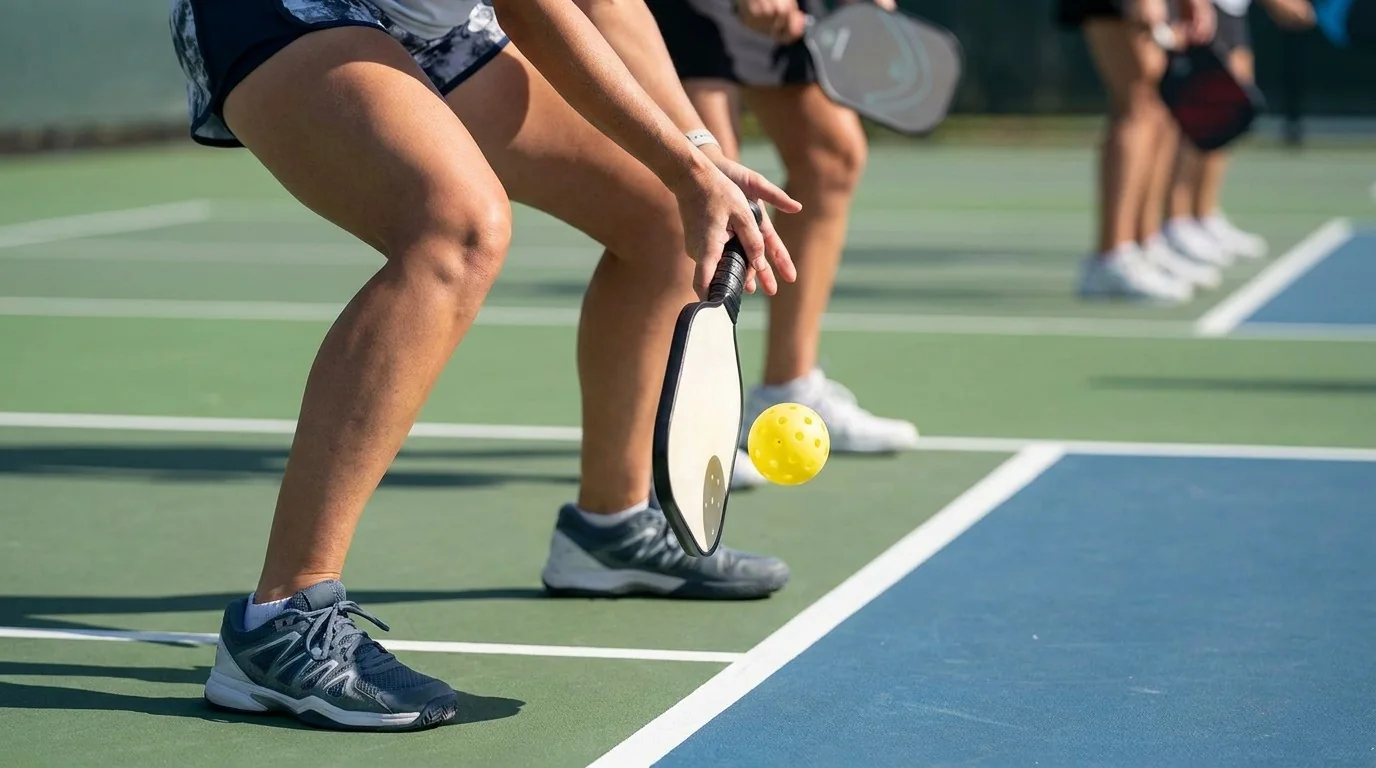
Prepare before the ball reaches your contact zone. Keep the paddle in front, relax the grip enough to absorb pace, and avoid letting the paddle head drop as you split step. Meet the ball at a comfortable height whenever possible. A low contact may require a higher defensive shape; a contact that gets behind you makes direction much harder to control.
For a backhand, turn the shoulders and keep the elbows connected to the preparation instead of reaching with a straight arm. For a forehand, do not open the chest too early. In both cases, finish under control and recover toward the next likely ball.
Practise the decision, not only the stroke
Have a partner feed balls to the middle, forehand side, and backhand side without announcing the direction. Move your feet first, then choose the contact that leaves the most room. Count a repetition only when you make balanced contact and return to a ready position.
Vary the feed’s height and pace next. With a low ball, use a safe shape that clears the net. With a ball above the net, decide whether a controlled attack is justified rather than attacking automatically. If you are late, choose the side that gives you the largest margin and keeps the rally playable.
A simple rally rule
Choose the side that gives you the clearest contact in front, the steadiest base, and a useful target with room for error. That decision can change with position and time. Read early, move your feet, keep the motion compact when pressure rises, and recover before admiring the shot.