Pickleball Third-Shot Drive: Read the Ball Before You Swing
Choose the third-shot drive from the ball in front of you: read return depth, bounce height, opponent position, and your ability to recover.
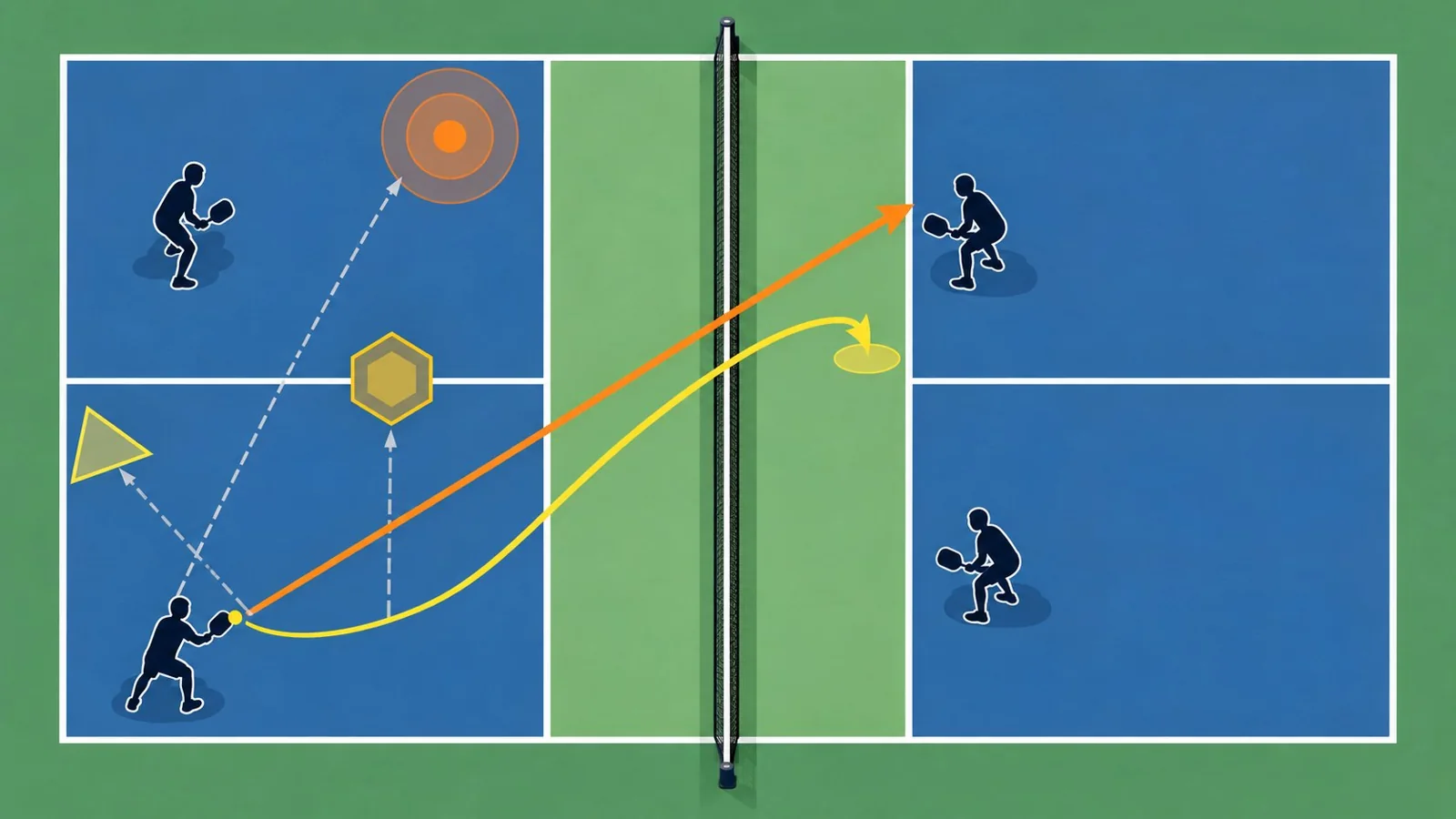
The pickleball third-shot drive is not a default power shot. It is a decision made in the short window after the return bounces. Drive when the ball gives you height, space, or a moving opponent to pressure. Drop when a deep return pins you back and both opponents are already settled at the kitchen. Once that read becomes automatic, the third shot stops feeling like a guess.
Read the return before choosing the shot
Start with three questions: How deep did the return land? How high will the bounce rise? Where are the opponents when the ball comes back? A short return in the transition area usually gives you a better drive window because the ball is closer, the angle is flatter, and the defending team has less time. A deep return that keeps you near the baseline usually favors a higher-margin drop.
Height is the quickest filter. A ball that rises around waist height or higher can often be driven with a controlled downward path. A low ball below the waist asks for more lift and more margin, especially when your feet are still moving. This is a guide, not a rigid rule: a high ball hit while leaning backward is still a poor drive, while a lower ball can be managed when your base is stable and the target is safe.
Then watch the opponents, not only the ball. If one player is still moving toward the kitchen, drive at that player’s feet or body and make the reply difficult while they are in motion. If both players are already at the line with paddles ready, a drive that arrives chest-high can become their attack. In that situation, the drop buys time and helps you advance.
Build a controlled third-shot drive
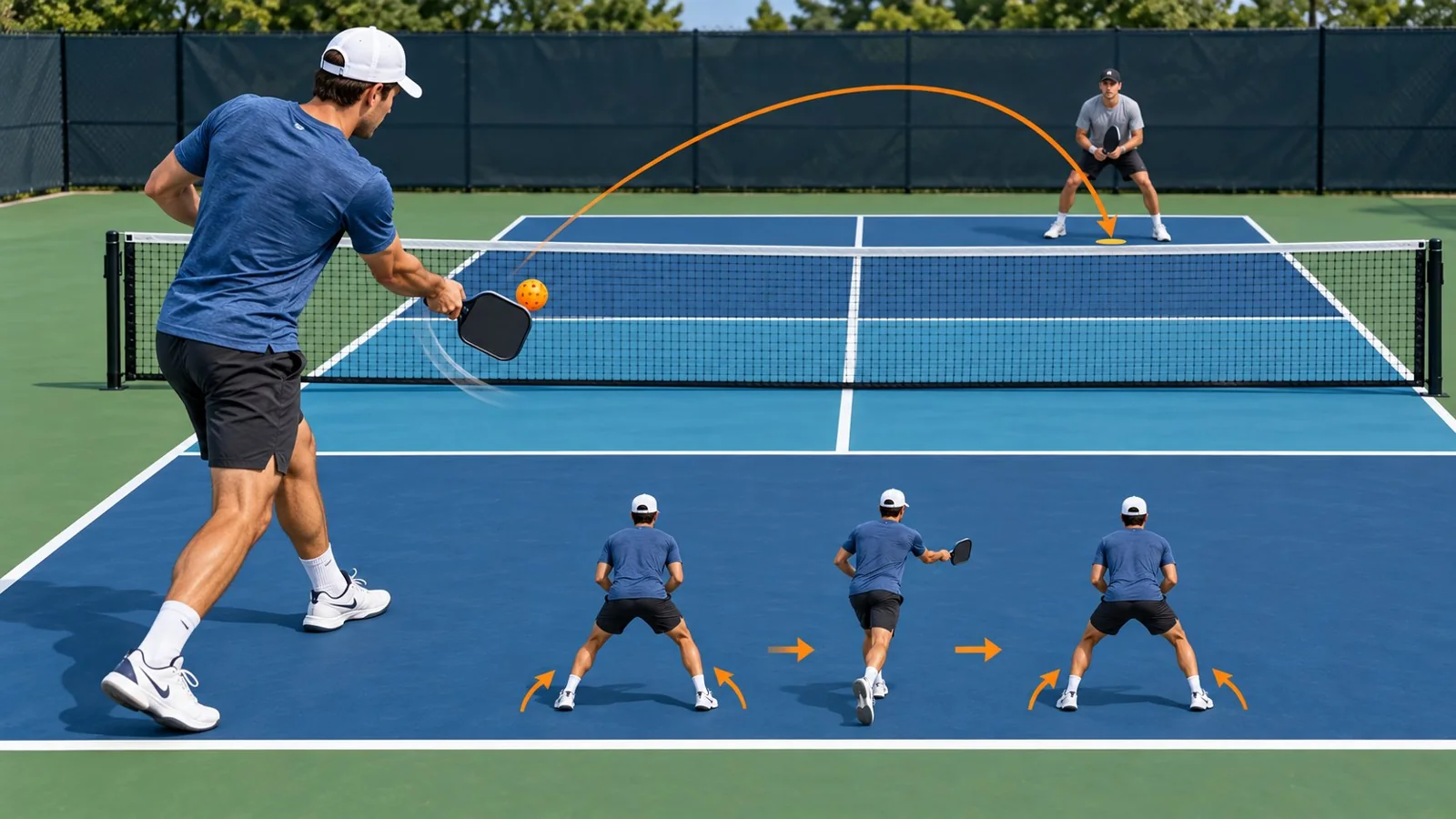
Land a compact split step as the returner contacts the ball. From that loaded position, move into the bounce rather than swinging while your weight is falling backward. Contact just after the peak of the bounce, slightly in front of the leading hip. When the ball has already passed the hip, the paddle tends to drag across the body and the shot loses both direction and margin.
Use the legs and torso, not an isolated arm heave. The swing can be firm, but the backswing should stay manageable. Brush up through the back of the ball to create topspin, then finish toward the target. Topspin helps the ball dip toward the opponent’s feet after it clears the net; a flat ball that travels at the chest is easier to volley aggressively.
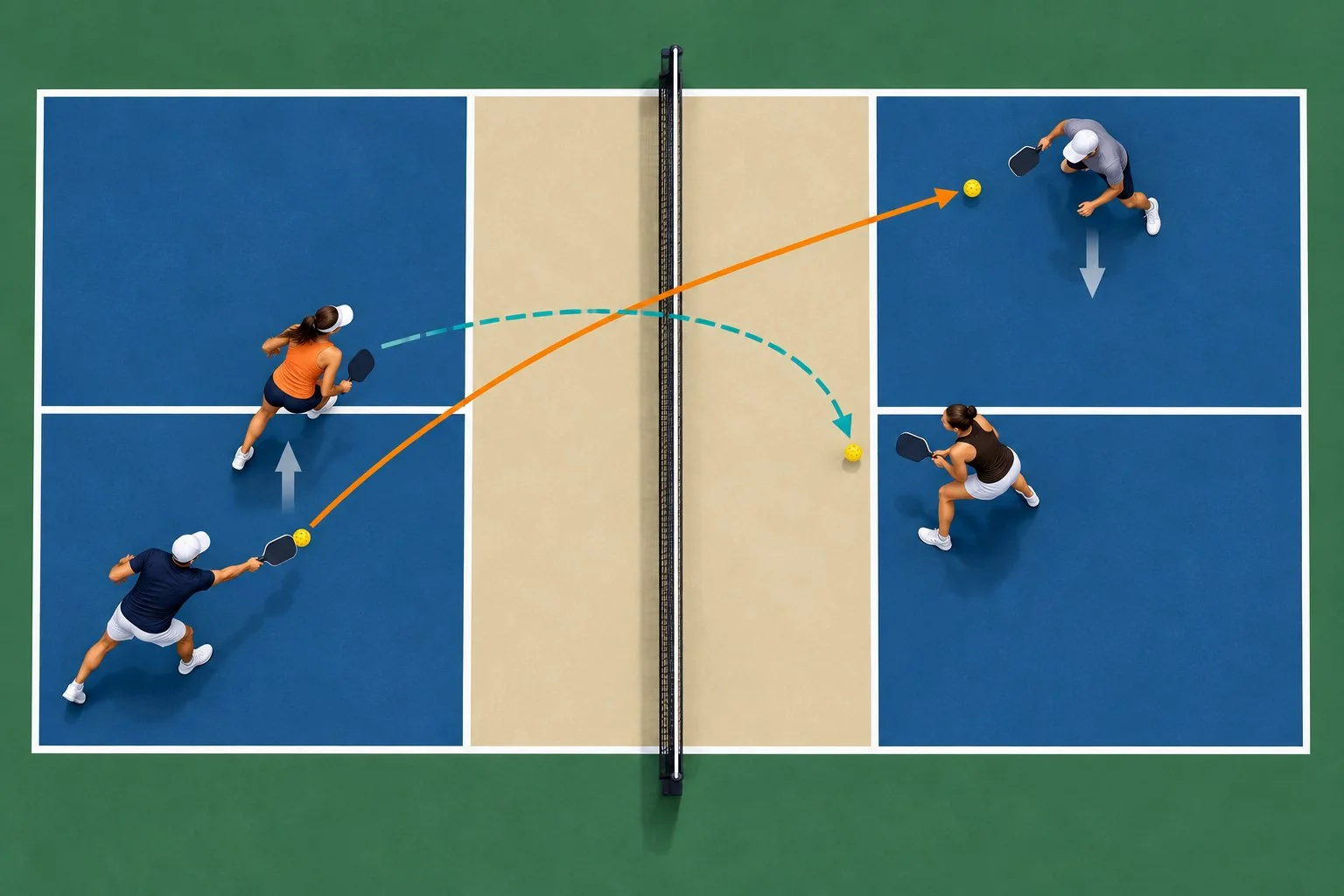
Cross-court is a useful default because it gives you more court length and a lower path over the middle of the net. Aim for the moving player’s feet, a vulnerable backhand, or a safe gap between opponents. Save a down-the-line drive for a clear opening rather than choosing the sideline simply because it looks available.
Treat the drive as the start of the next shot
A successful drive rarely finishes the point by itself. Its value is often the defensive reply it creates. Move forward two or three controlled steps after contact, then prepare for the next ball in the transition zone. If the opponents block the drive softly, use the following shot to drop into the kitchen and keep advancing. This drive-to-drop pattern is safer than standing at the baseline waiting to admire a fast ball.
Avoid four common traps. Do not drive a deep, low return just because you feel obliged to attack. Do not hit a half-speed ball with no topspin or clear target. Do not choose down-the-line without enough sideline margin. And do not remain still after the swing; the advantage disappears if your feet never follow the ball.
Practise the read, not only the mechanics. Have a partner vary the return: some balls short and high, others deep and low. Call “drive” or “drop” before contact, then execute the chosen shot with a specific target. Start with simple targets at the feet and middle, and add movement only after your base remains stable. The best third-shot drive is not the loudest one. It is the one that fits the ball, pressures the right opponent, and leaves you ready for the next exchange.