Pickleball Third-Shot Drive Targets: Choose Body, Feet, or Middle
Learn how to choose pickleball third-shot drive targets by reading the receiver, then use body, feet, or middle placement to create a manageable fifth shot.
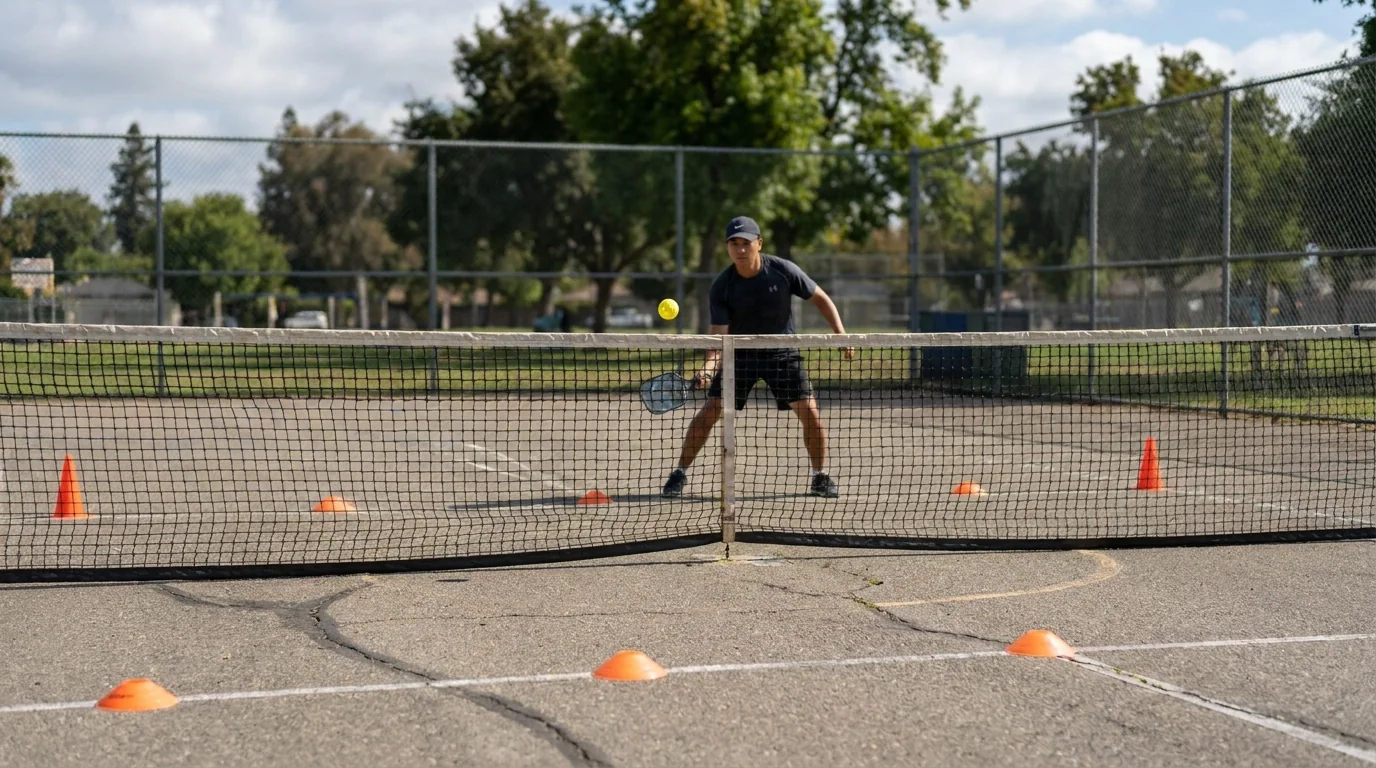
A third-shot drive earns its place when it makes the next reply awkward. It does not need to win the point outright. Read the receiver’s movement and balance, choose a target that creates a problem, move forward only as far as the shot allows, and get ready for the fifth ball.
Read the receiver before you pick the target
Begin with the return and the receiver’s position, not with a preselected swing. If the return is short enough for you to step in and stay balanced, a drive can change the pace and put the receiving team under pressure. If the return sends you deep, leaves you reaching, or makes you hit while leaning back, a drop is usually the better option. Being able to swing hard is not a reason to drive every third ball.
Watch the receiver as the ball travels. Someone still moving toward the kitchen has a changing contact point and may struggle with a ball at the feet. They must stop, lower the paddle, and control the reply at the same time. A receiver who is already set may be more vulnerable at the body, where the ball can jam the swing and shorten the time for a clean volley.
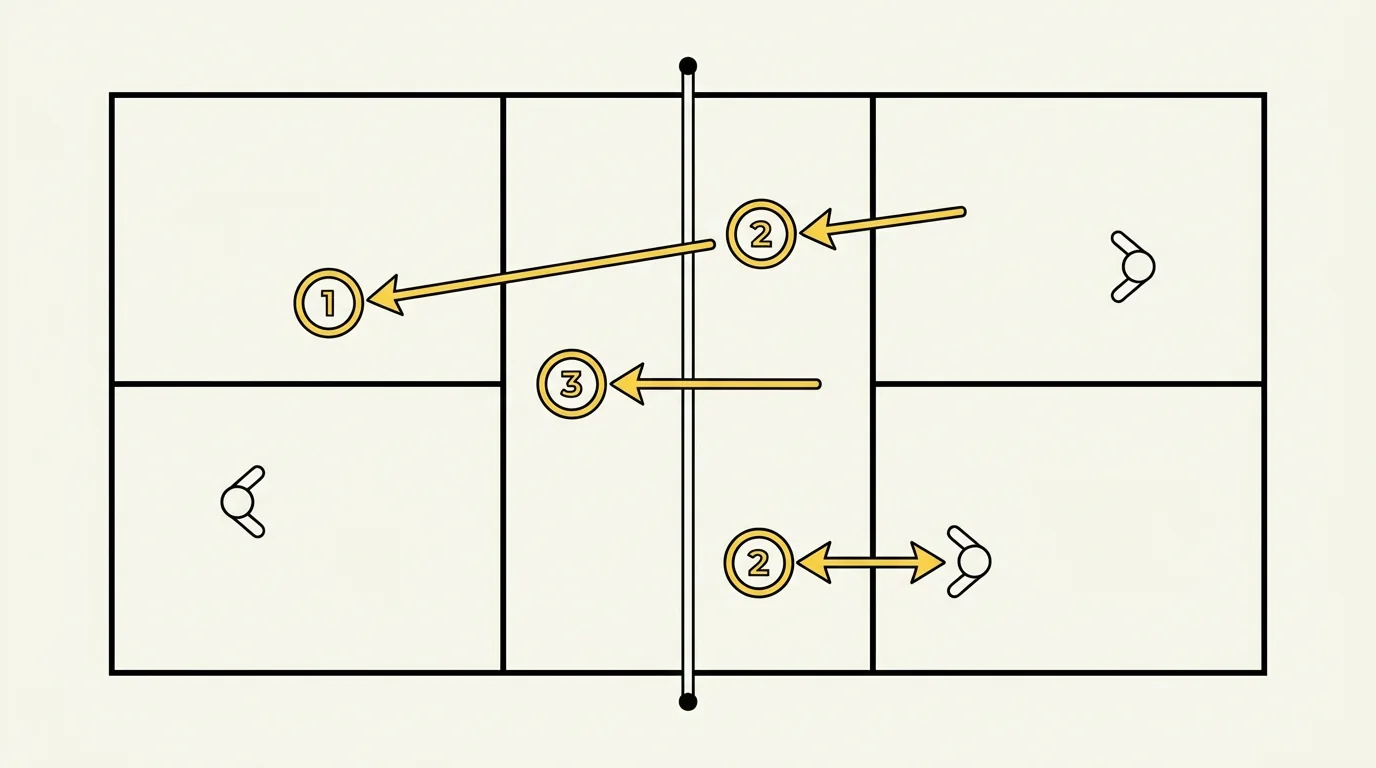
The middle can work when partners are not communicating clearly or both are shading toward the sidelines. It gives you more room than a narrow sideline target, but it is not automatically safe. A well-organized pair may call the ball and counter it comfortably. Use the middle when it creates hesitation, not simply because it is the largest open-looking area.
Build the drive around balance and controlled pace
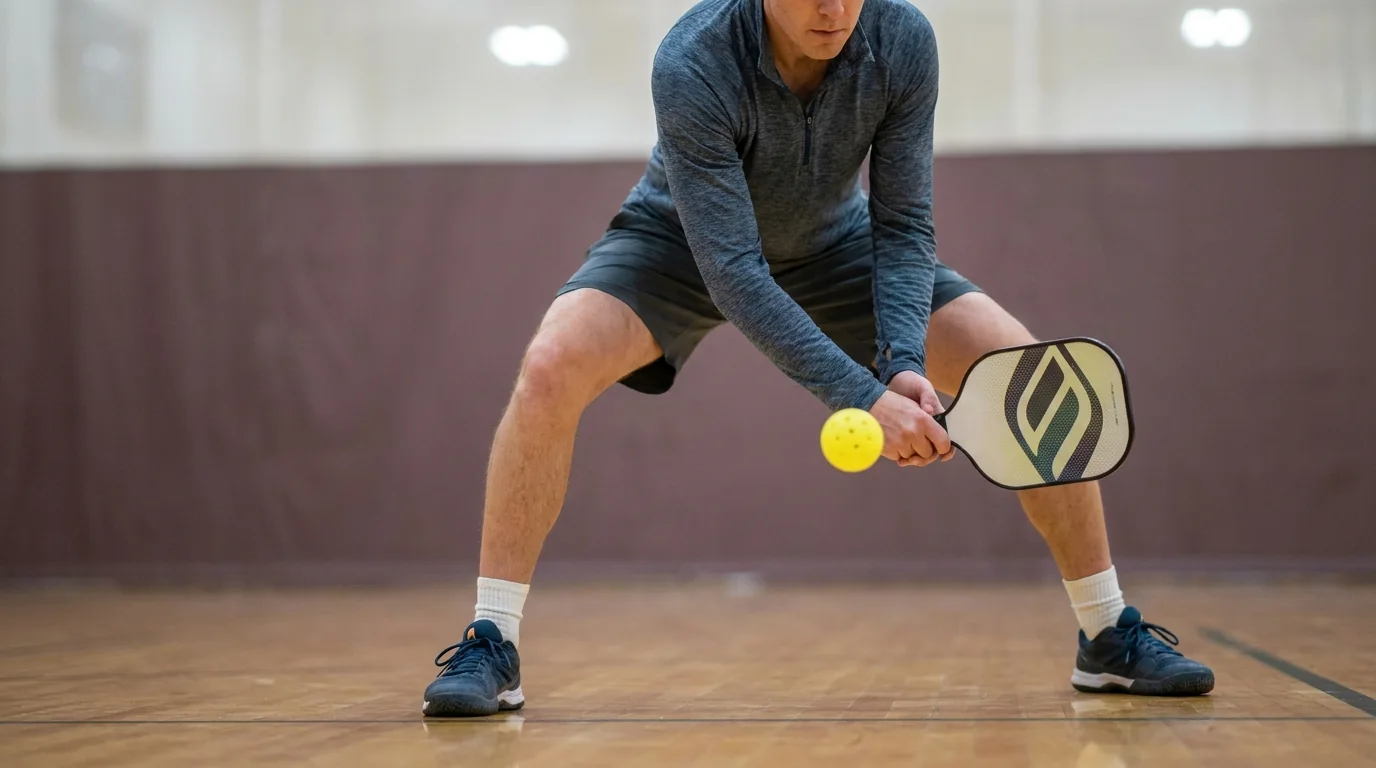
Set your feet before contact whenever the ball gives you time. Keep a comfortable knee bend, prepare the paddle low, and make enough room for contact in front of your body. A compact low-to-high swing can add topspin and help the ball dip. The drive needs enough pace to disturb the receiver, but extra speed is not automatically useful. Overhitting costs you recovery time and sends the ball long.
Give each target a clear purpose. Send the ball toward the feet of a receiver who is moving forward or holding the paddle high. Against a set player, choose a body lane that forces a quick forehand-or-backhand decision. For a middle drive, identify the gap and be ready for either opponent to take it. While learning the pattern, keep a sensible margin from the lines.
After contact, take only the ground your shot earns. Move forward one or two steps, then slow down and split step as the receiver makes contact. If you keep running toward the kitchen, a block or counter can find you off balance. A soft block may leave you with a shorter transition shot; a pop-up calls for a more decisive move forward. The drive starts the sequence. It does not mean the rally is finished.
Practise the decision, not only the swing
Have a partner feed three return patterns: a short ball, a deep ball, and a ball that arrives while you are moving. Call “drive” or “drop” before contact. On drive feeds, call “feet,” “body,” or “middle,” then recover to a balanced transition position. The exercise links the visual cue to the target instead of repeating the same stroke from the same spot.
Start with ten controlled drives that land in before changing direction. Then alternate the three targets while keeping the preparation smooth. Finish with live points and choose the target only after you see the receiver move. Count a repetition as successful when the ball lands safely, the target creates a difficult reply, and you are balanced for the next contact.
The common mistakes are easy to recognize. Driving while leaning back usually costs you depth control. A tight grip makes the swing rigid and can send the ball high or long. Watching only the ball can hide the receiver’s position and lead to the wrong target. Treating every drive like a winner invites reckless pace. The better objective is narrower: pressure the next contact, then play the fifth shot.
A drive, drop, or medium-pace ball can keep the receiver from settling into one rhythm. Change targets only when your balance and preparation remain repeatable. A well-chosen body, feet, or middle target is worth more than a harder swing with no plan.