Pickleball Third-Shot Drop: Read the Bounce Before You Swing
A practical third-shot drop guide: read the return, choose a safe flight shape, control the bounce, and earn permission to move forward.
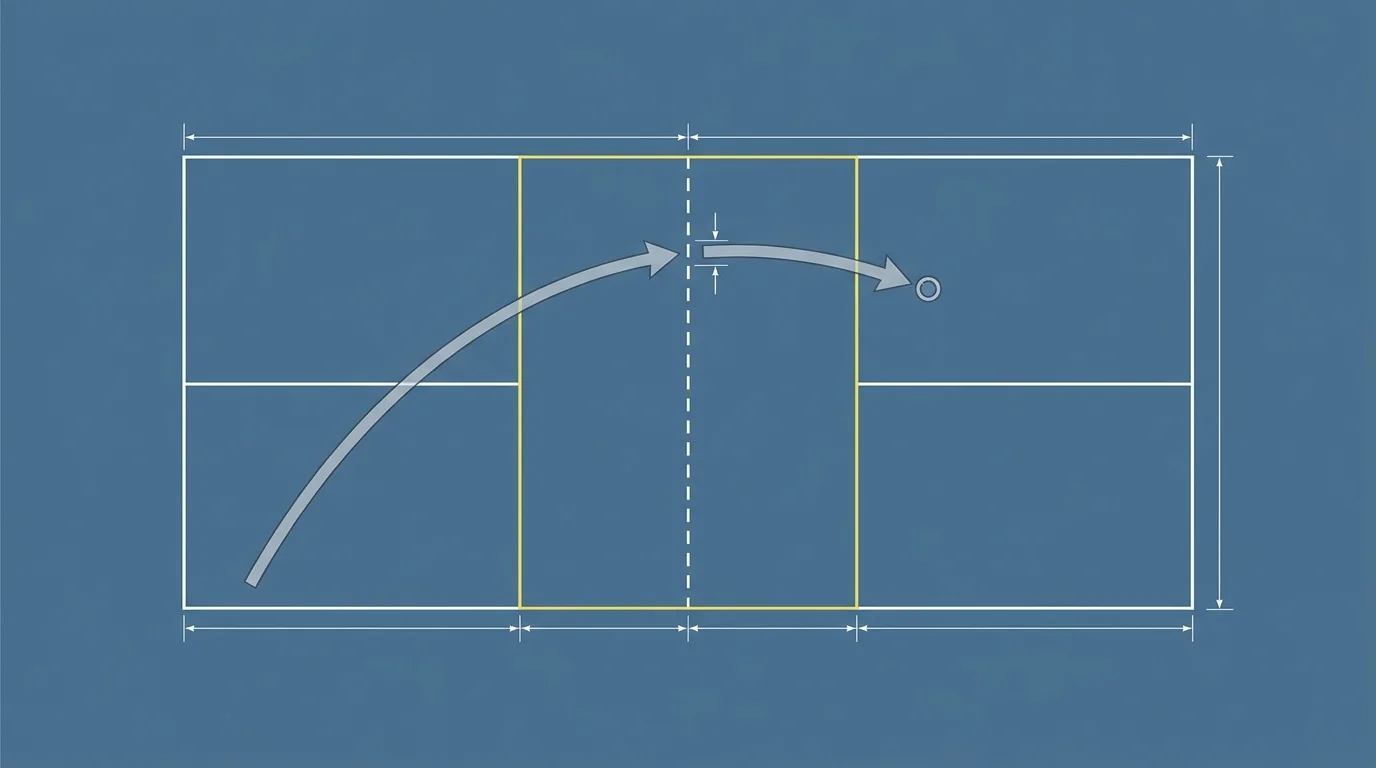
The third shot is a problem to solve after the return: where did the ball bounce, how much time do you have, and what contact will your opponents be ready to make? A third-shot drop can turn that awkward moment into a slower exchange. It is not meant to win the point immediately. It is meant to make the next ball manageable.
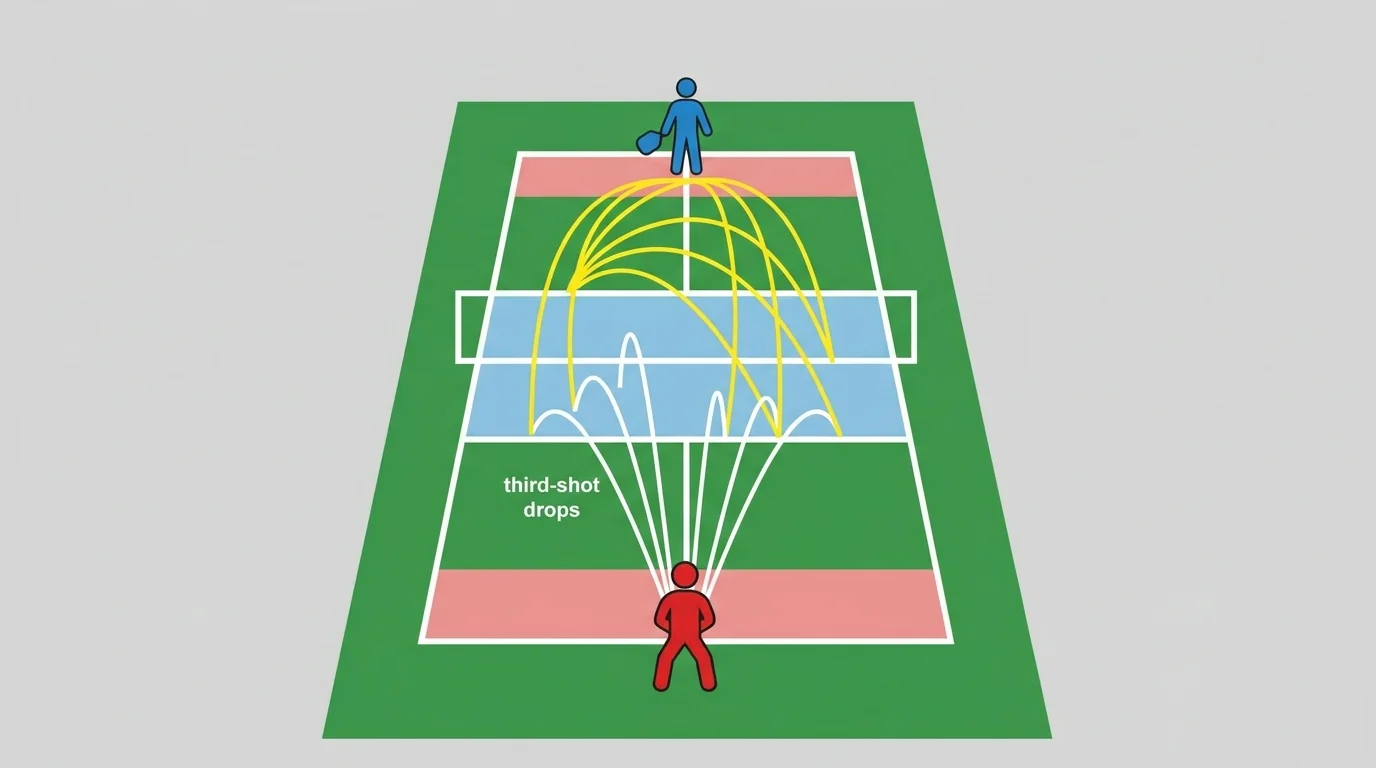
The serve starts the point, the return is the second shot, and the serving team’s next contact is the third. A drop travels high and soft enough to land in the non-volley zone, often called the kitchen, instead of arriving as an easy ball at the opponents’ paddles. That landing matters because the returning team normally reaches the kitchen first.
Read the return before choosing the drop
Start with the bounce, not with a swing you decided on in advance. A deep return may push you back or make contact late. A low return leaves little room to shape the ball. A high, comfortable bounce gives you more options, but only when your feet and balance are organized. If you are reaching or drifting sideways, a softer ball with more margin makes more sense than forcing a perfect drop.
Move behind the bounce when you can, set the paddle in front, and let the ball enter a comfortable contact window. Then read the opponents. If both players are settled near the kitchen, the drop should make them contact from below or deal with a ball they cannot attack comfortably. If one opponent is moving or the return creates a clear pressure window, another third-shot choice may be reasonable. Let the ball and the situation choose.
Shape the ball for a low landing
Think of the drop as a controlled arc, not simply a soft hit. A useful flight clears the net with modest margin and then falls into the kitchen without a high bounce. The source guide gives roughly one to three feet above the net as a practical reference. The exact height depends on your contact, court, and ball, but the principle stays the same: clear the tape, then descend into the kitchen so the opponent does not get an easy attack.
Use a compact, relaxed motion. The paddle face, contact point, and finish should work together instead of relying on a last-second wrist flick. The ball may use topspin, slice, or little spin; the landing and bounce are the real test. If it lands short but jumps high, it may still give the opponent an attack. If it clips the net, add margin. If it sails deep, soften the motion or create a higher arc.
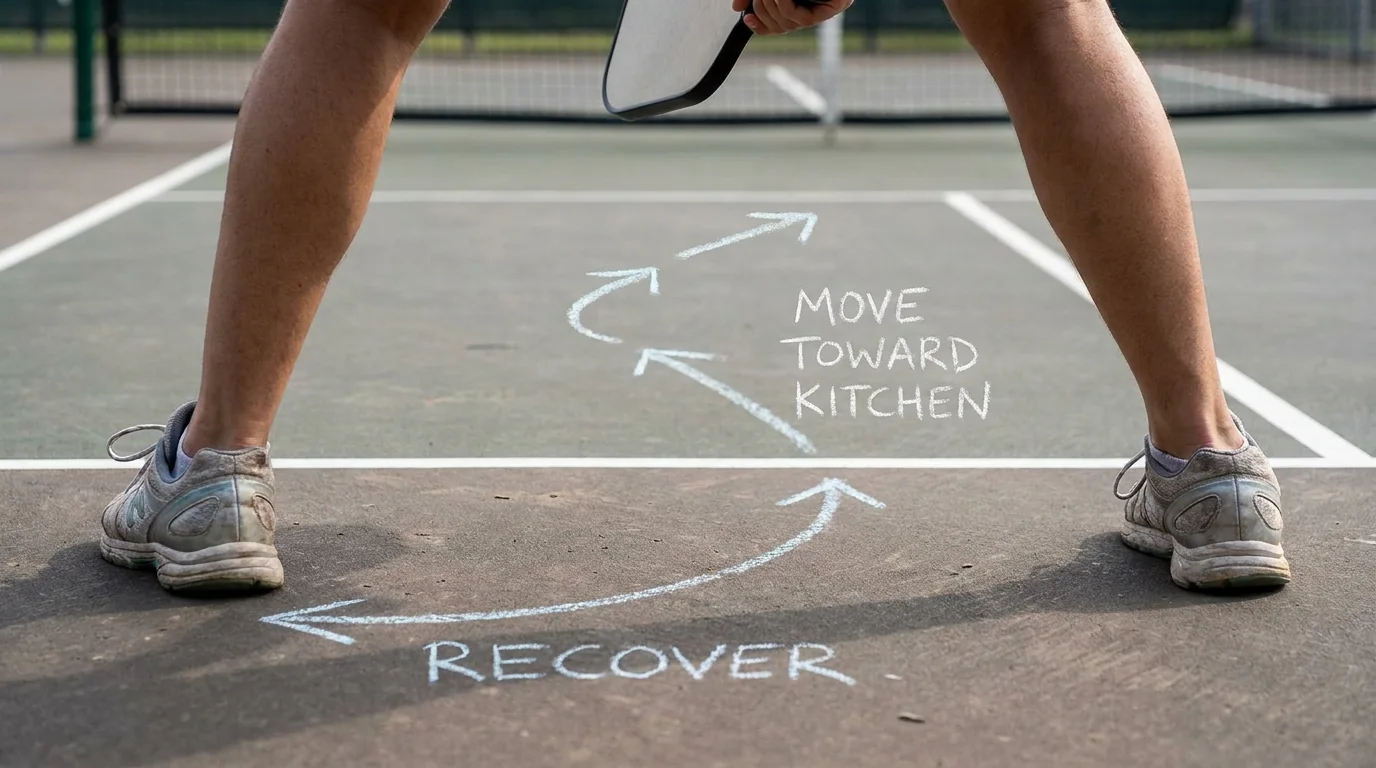
Do not sprint forward just because the drop landed in. Move when the shot forces a low, late, reaching, or defensive response. If the opponents are balanced and ready to attack, hold your ground. Forward movement is earned by the quality of the reply, not by the shot number.
Build the shot with progressive practice
Begin with isolation. One player stands near the kitchen line while the other starts around the baseline. The kitchen player feeds, and the baseline player repeats drops while focusing on contact, arc, and landing. Vary the feed. Deeper or lower balls teach you to read before swinging. The feeder can also keep a controlled volley deep, asking the baseline player to create several usable drops in sequence.
Next, play a simple 7 to 11 game. The kitchen player needs 11 points while the baseline player needs 7, reflecting the positional advantage. Start with a feed, then score according to whether the baseline player creates a safe path forward. This turns technique into a decision: repeat the drop, adjust its shape, or wait for a better ball.
Outdoor wind changes the problem. A no-spin push can work in calm conditions because the ball falls predictably after crossing the net. In stronger wind, spin may help reduce how much the ball is moved around, although adjustment still requires observation and practice. Watch the flight and change your margin when conditions demand it.
A reliable third-shot drop is not the only way to advance. It is a point-building tool. Practice until you can read the bounce, organize your feet, shape the flight, and recognize when the next step is available. The best drop sets up the contact that lets your team compete for the kitchen.