Pickleball Transition Braking Drill: Stop Before You Reset
A focused pickleball transition drill for braking before contact, landing ready, building a controlled reset, and carrying the habit into live rallies.
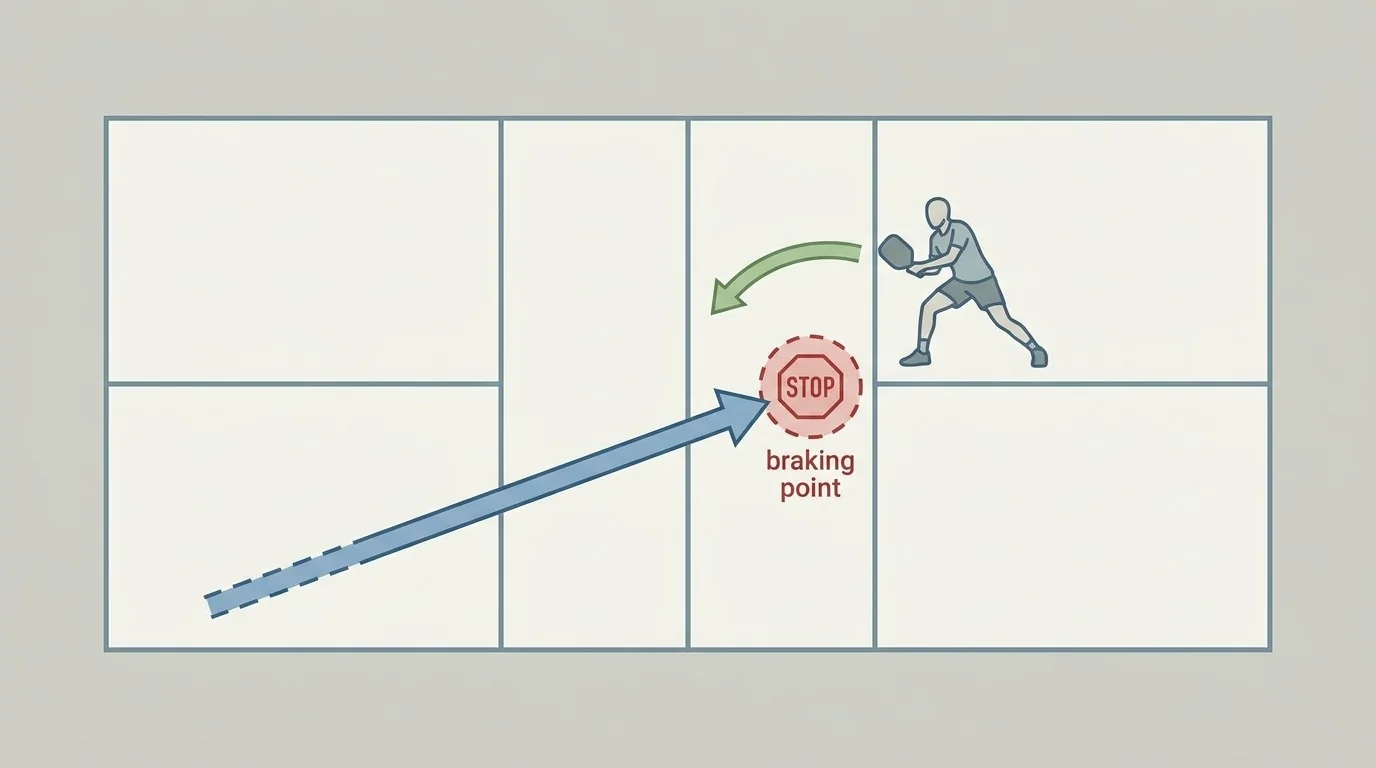
A transition-zone reset is easier when you stop trying to hit while your body is still running forward. This drill trains a simple sequence: move while you have time, brake as the opponent prepares to contact the ball, settle your base, then play the reset. The goal is not to reach the kitchen on every repetition. The goal is to make a balanced next decision.
Why the braking moment matters
After a third-shot drop or another soft ball, you can move forward while the opponent is still organizing. When the opponent is about to hit, continuing to run leaves your weight moving through the next contact. That makes a low reset harder to control and can force a reach, a pop-up, or a hurried swing.
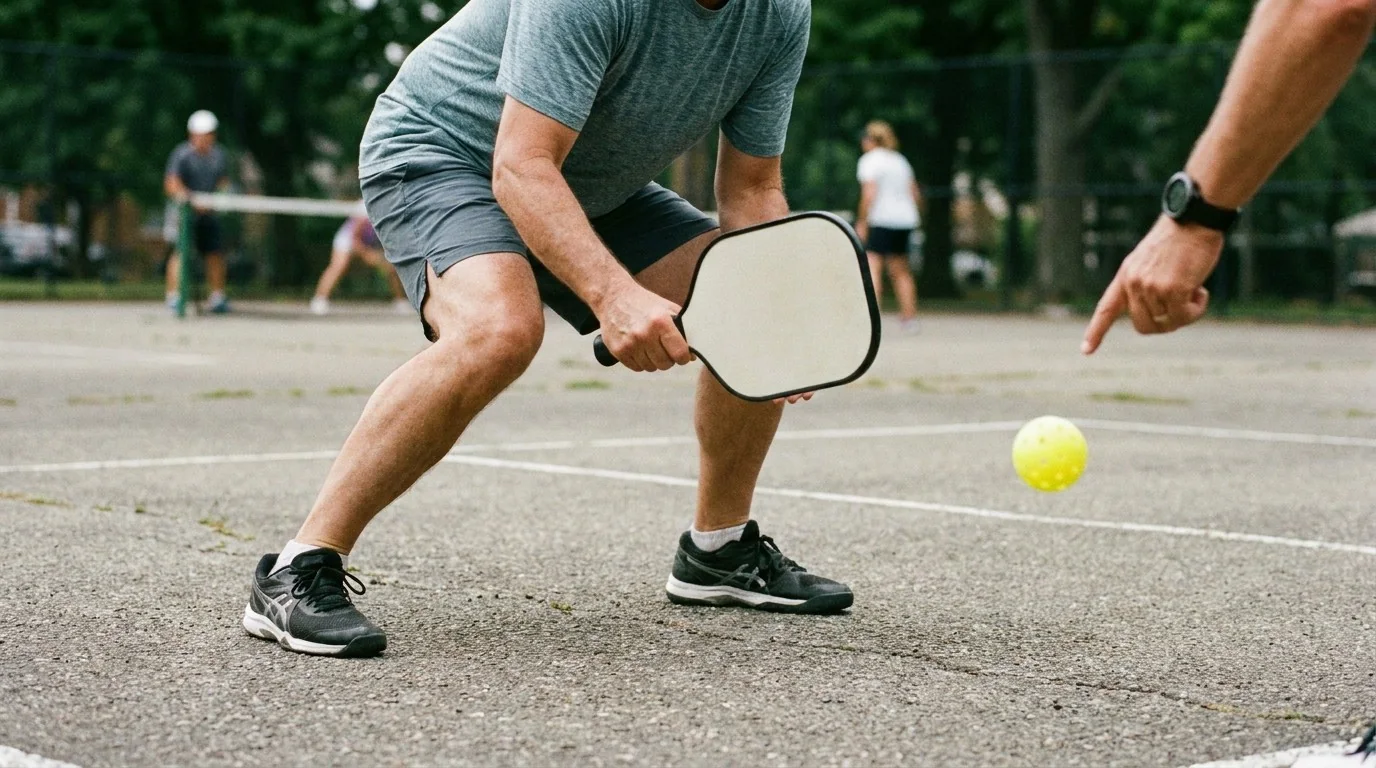
A small split step gives the body a chance to absorb forward momentum and prepare to move in either direction. It is not a high jump. Start the hop just before the opponent contacts the ball, then land around contact so the feet are available when the ball’s direction becomes clear.
The drill below separates the footwork correction from the shot, then adds the two together. It follows a useful practice rule: name the mistake, recreate the rally shape, isolate one change, add movement and choices, and finally test whether the correction survives a point.
Set up the transition drill
Use two players and one half of the court. The feeder begins near the kitchen line and the moving player starts around the baseline or transition zone. Use controlled feeds at first. The feeder should vary direction only after the mover can stop and settle without losing balance.
Place a visible reference near the middle of the transition area, but treat it as a cue rather than a finish line. The correct stopping point changes with the feed, the ball’s height, and the time available. Keep the paddle in front while moving, and do not let the reference marker replace watching the opponent.
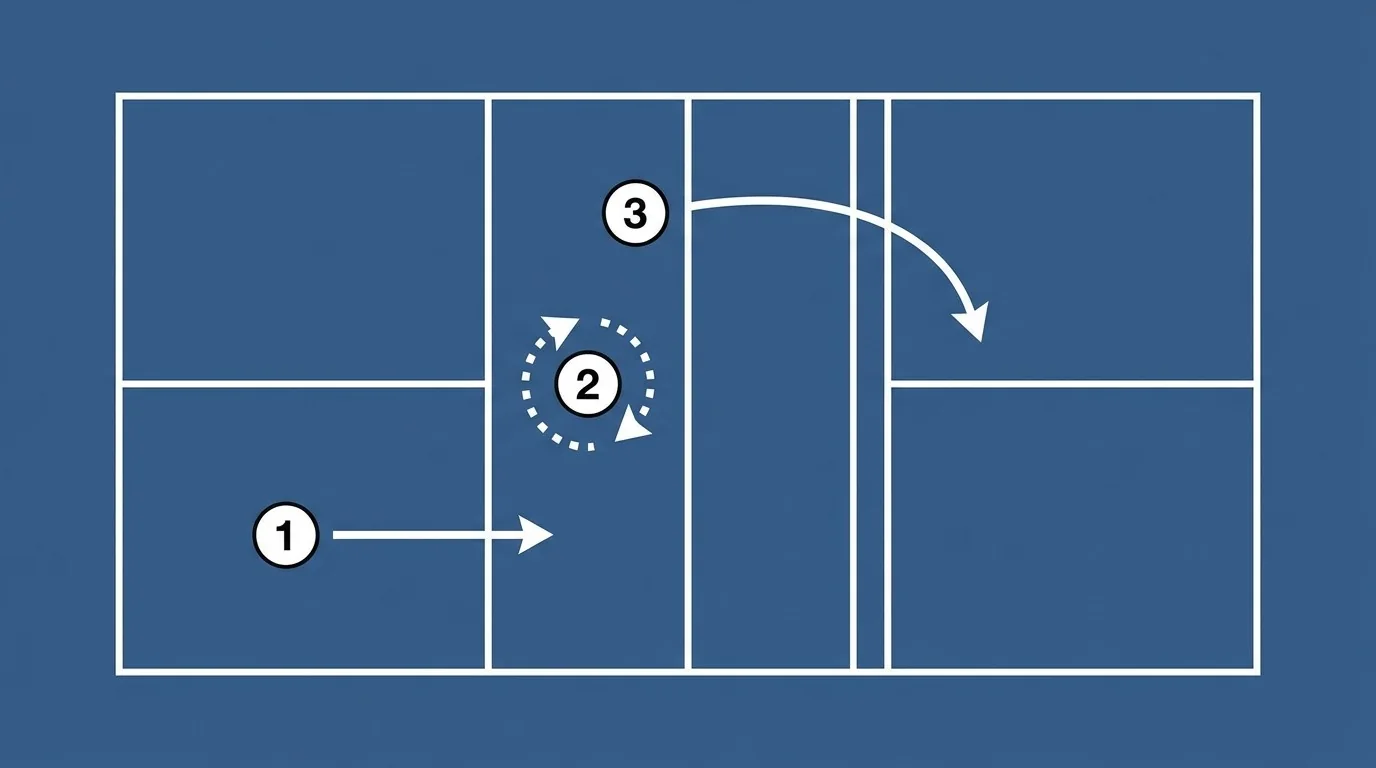
Run the progression
1. Shadow the movement
Without a ball, start in an athletic base and take two or three controlled steps forward. As the feeder gives a contact cue, make a small split step and land with the feet separated. Freeze briefly in a position from which you could move left or right. Check that the chest is not falling over the toes and that the paddle has returned in front.
Repeat with the cue arriving earlier and later. The point is to learn the rhythm, not to jump higher or cover more ground. If the landing is late, shorten the approach. If the player stops too early and cannot reach the next ball, allow one more controlled step before braking.
2. Add the low reset
The feeder sends a manageable ball toward the mover’s forehand or backhand. The mover advances, brakes before the feeder’s contact, lands the split step, and then chooses the stroke. Keep the swing compact. Contact in front when possible, use a stable paddle face, and send the ball with enough height to clear the net safely.
The reset is not successful merely because it lands in the kitchen. Also check whether the player was balanced at contact and whether the body could recover after the swing. A ball that lands softly but leaves the player falling forward has not solved the movement problem.
3. Change the direction
Once the basic pattern is steady, feed one ball to the forehand, one to the backhand, and one toward the body. The mover should not decide the direction before the feeder contacts the ball. Move, brake, read, then adjust the paddle and feet. Keep the feed controlled enough that the player can practise the decision instead of surviving a barrage.
Score two separate behaviors: whether the player landed ready around contact, and whether the reset was playable. Separating the scores shows whether the problem is movement, contact, or both. Do not raise the pace simply because the player can complete a few repetitions. Add speed only when the same balance and contact space remain.
Common errors and quick fixes
Running through the reset. Reduce the approach to one or two steps and make the contact cue earlier. The player should feel the feet settle before the paddle meets the ball.
Jumping after the ball is already moving. Start the split step from the opponent’s preparation rather than waiting to see the ball’s full direction. The landing should be ready around contact.
Stopping with the paddle down. Rehearse the return to a compact ready position during the shadow phase, then keep that same habit while feeding.
Chasing the kitchen line. Make balance at the next contact the success condition. A controlled reset from the transition zone is more useful than arriving at the line while still moving.
Adding random feeds too soon. Return to a repeatable direction, fix one correction, and then layer movement or uncertainty back in. A drill should expose a problem clearly, not hide it in chaos.
Take it into a live rally
Finish with a constrained point. The feeder may send a controlled transition ball, but the mover does not know whether it will go forehand, backhand, or body. The mover earns the right to advance after a balanced reset, then plays the point normally. Track whether the braking cue appears without a reminder.
A good practice result is not only a clean drill. Look for the same behavior in a rally: the player moves while time is available, lands ready near opponent contact, keeps the reset playable, and recovers the paddle and feet for the next ball. If the old rush returns, lower the feed speed and rebuild the sequence instead of adding more repetitions.
End the session by writing down one observable cue, such as “land ready before the reset.” That gives the next practice a clear starting point and keeps the drill tied to the mistake it was meant to fix.