Pickleball Transition Zone: Reset Before You Rush
A calm, practical guide to advancing through the transition zone with resets, split steps, and synchronized partner movement.
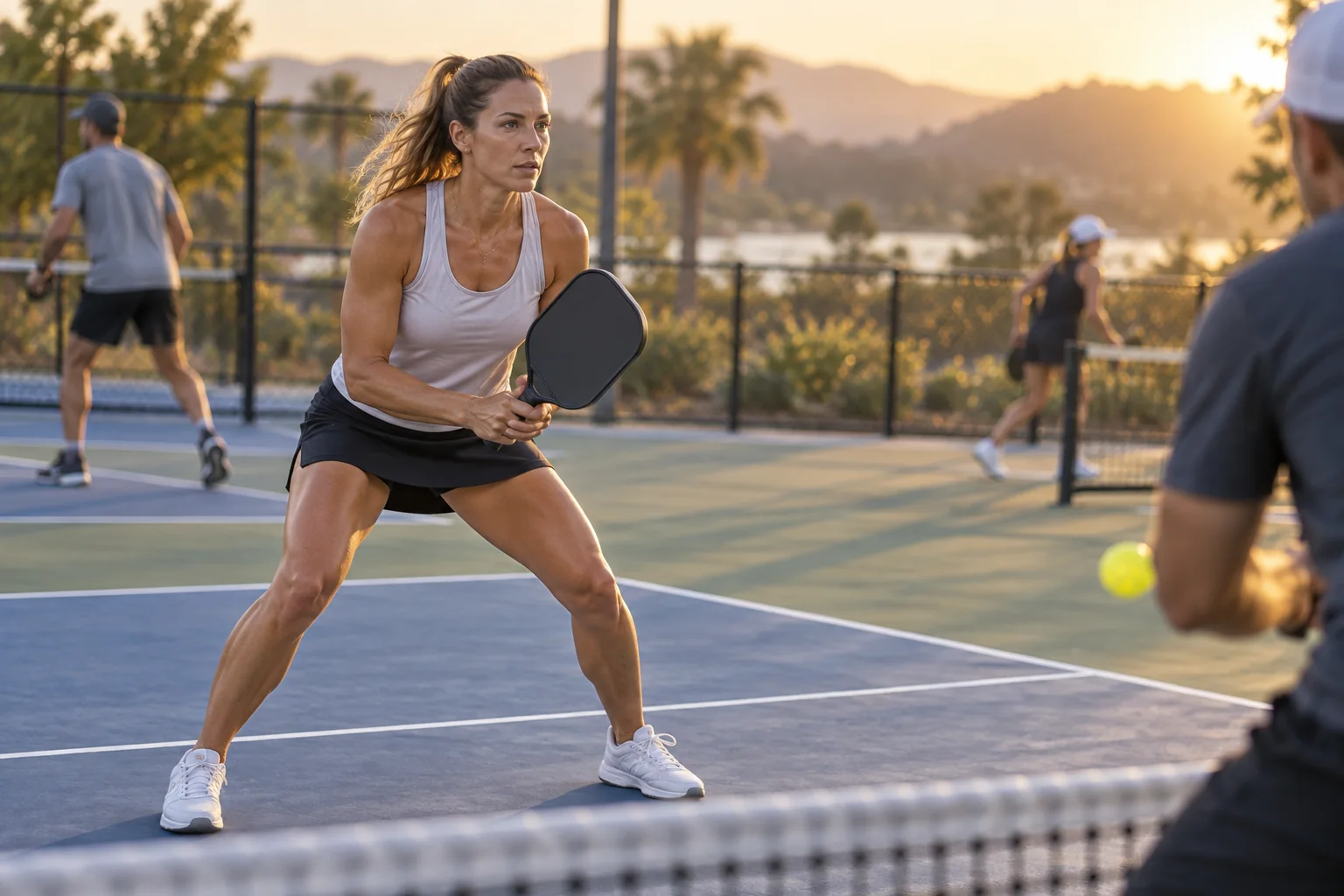
The pickleball transition zone is the space between the baseline and the kitchen line. It is where many points are won or lost because players feel pressure to sprint forward even when their last shot has not earned that movement. A better plan is simple: keep your intention moving forward, but let the quality of your ball decide how far your feet go. When the opponent must contact below net height, advance. When they can attack comfortably, stop, split-step, and prepare to reset.
Why the transition zone demands patience
The kitchen line is valuable because it shortens reaction time and gives a team more offensive options. However, standing in the wrong place while crossing the court can be worse than staying a few steps back. A high third shot, a floating drop, or a ball that lands deep can give the opponent a downward attack. If you continue running, the ball may arrive at your feet while your weight is moving forward and your paddle is late.
Think of every transition ball as a question: what contact will the opponent have next? A low ball that forces them to lift is a green light. A playable but uncertain ball is yellow: move a little, then stop in balance. A high or attackable ball is red: hold your ground, lower your base, and defend before trying to advance again.
The reset is your bridge to the kitchen
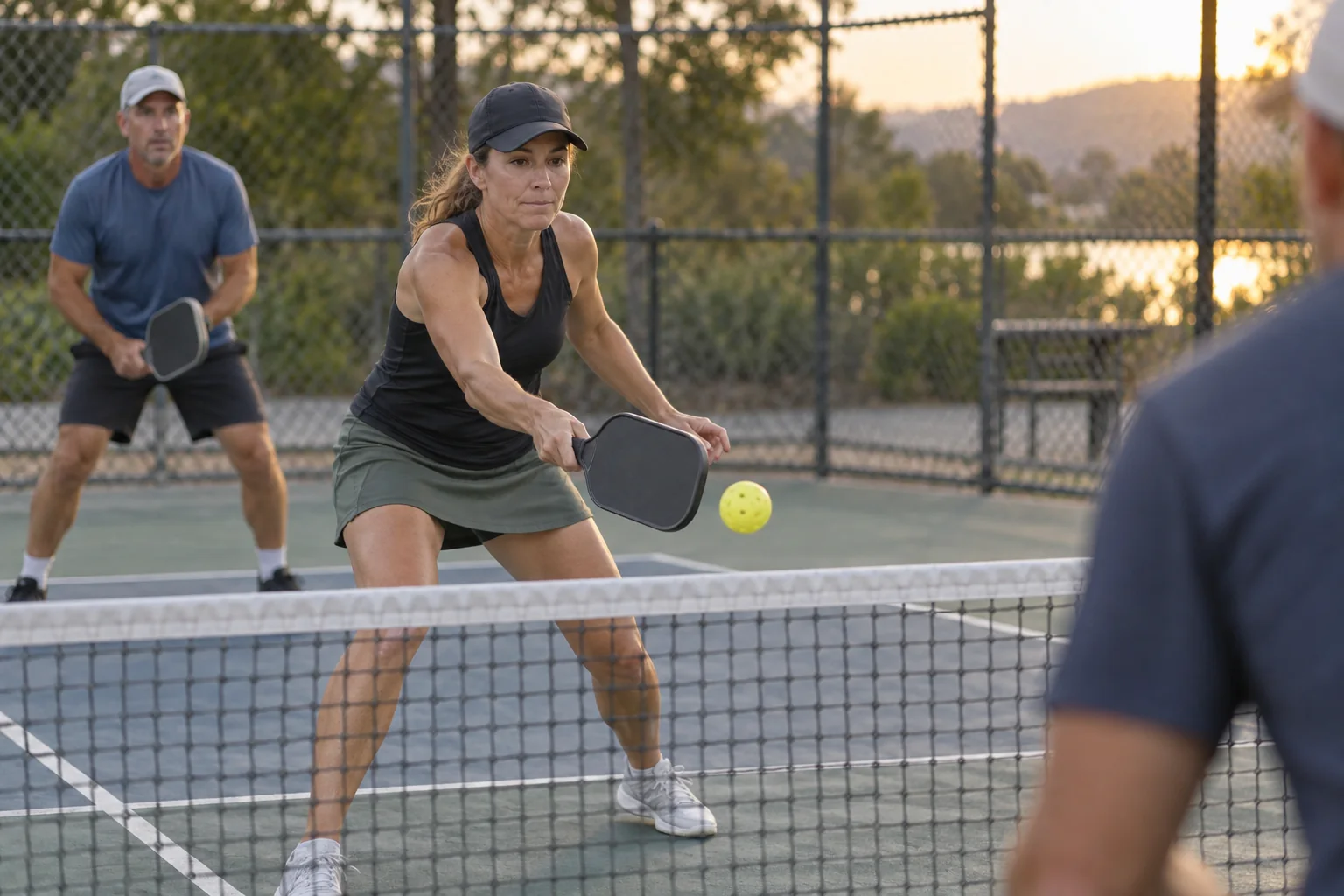
A reset is a soft shot that takes pace off the incoming ball and sends it low into the opponent’s kitchen. From the transition zone, use a compact motion rather than a large swing. Keep the paddle in front, soften the hands, and let the ball meet the face instead of stabbing at it. Your goal is not a perfect winner. Your goal is a ball that makes the next contact harder to attack.
Contact in front of the body gives you more control. Bend your knees and lower your center of gravity rather than reaching down with a straight back. If the ball is too low or too fast, a defensive block into a safe area may be smarter than forcing a precise reset. Once the opponent returns a lower, slower ball, take another measured step forward and prepare again.
Move with the shot, not ahead of it
The safest transition footwork is a sequence of small advances, a stop, and a split step as the opponent prepares to hit. Do not run continuously. After your paddle finishes the shot, recover your balance, watch the opponent, and move only while the ball is traveling. Stop before their contact so both feet can respond to a drive, dink, or angle.
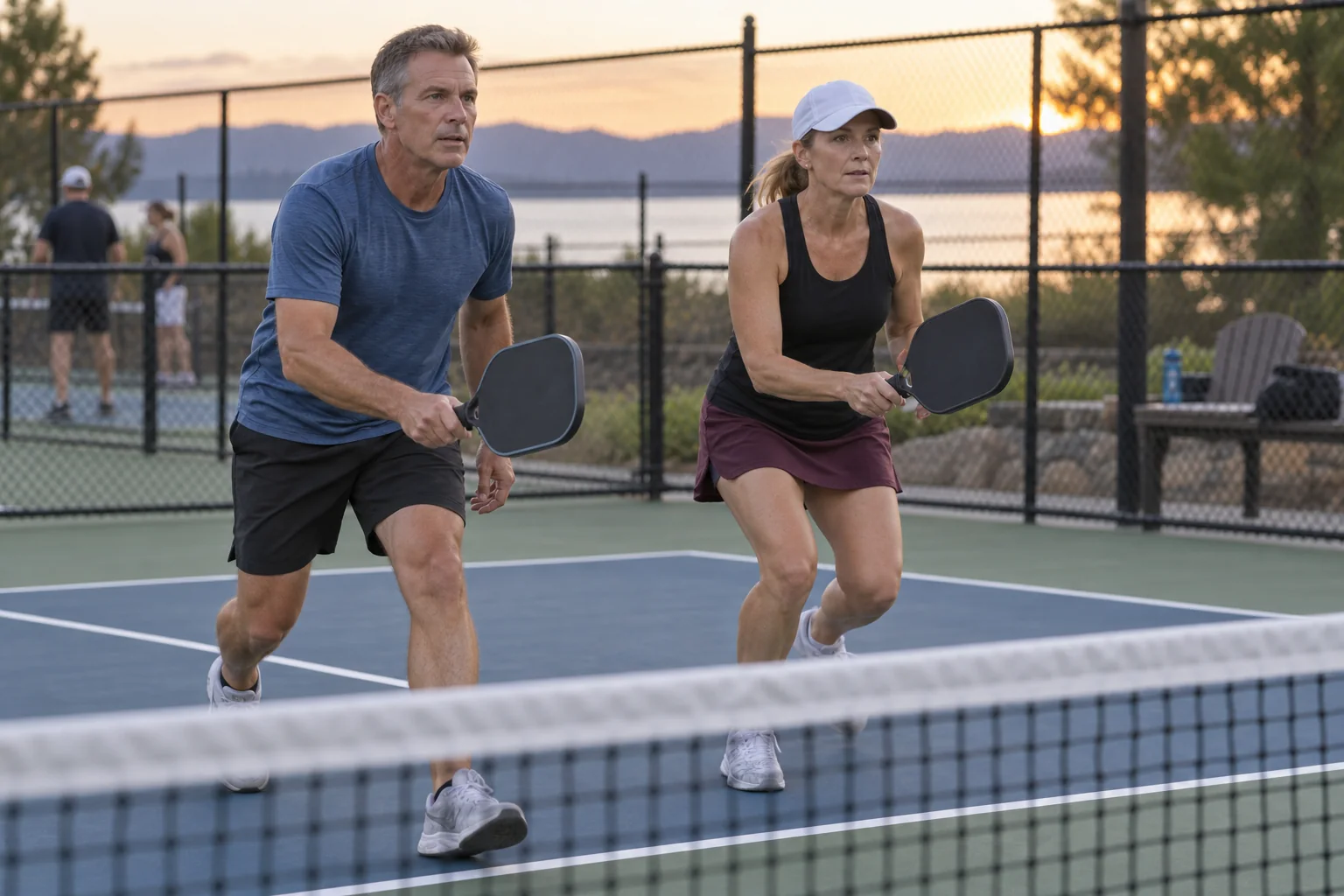
In doubles, both partners should progress together. A large gap creates an easy target in the middle and makes coverage confusing. Stay roughly level with your partner when possible, communicate early, and avoid stepping into the kitchen before the ball bounces there. Good spacing is more useful than being the first player to touch the line.
Three decisions that prevent transition errors
1. Read the opponent’s contact height
If their contact is below the net, expect a defensive lift and prepare to advance. If the ball is above net height, expect pace and pause. This read is more reliable than judging your own shot by appearance alone.
2. Protect your feet
When the ball is aimed at your shoes, use a short block or reset and give yourself room. Backing up one step can restore balance; it is not surrender. A balanced next ball is often better than a desperate forward lunge.
3. Recover to a neutral paddle position
Keep the paddle between your shoulders and the net, with the head up and the non-dominant hand available to support the throat. This neutral position lets you handle either side without a late grip change.
A practical transition-zone practice plan
Start with a cooperative drill. One player stands near the kitchen and sends medium-paced balls toward the other player’s feet. The player in transition attempts a reset, takes one small step only when the ball is low, then split-steps before the next feed. Repeat 10 balls, switch roles, and count successful low resets rather than winners.
Next, add a decision drill. The feeder mixes three balls: a low ball, a comfortable attackable ball, and a deep ball. On low balls, advance; on attackable balls, stop; on deep balls, recover and reset. Call “green,” “yellow,” or “red” out loud before contact. This makes the visual decision automatic under match pressure.
Finish with partner spacing. Begin side by side at the baseline, play a third shot, and advance in matching steps. If one partner stops, both stop. The repetition teaches the team to value synchronized balance over reckless speed.
The pickleball transition zone becomes much less intimidating when you stop treating it as a race. Move forward with purpose, but earn each step with a low ball, a stable split step, and a partner who is ready beside you. Calm resets turn uncertain space into a repeatable route to the kitchen.