Pickleball Two-Handed Backhand: Setup, Stability, and Recovery
Build a steadier two-handed backhand with earlier preparation, balanced footwork, contact in front, safer decisions, and progressive practice drills.
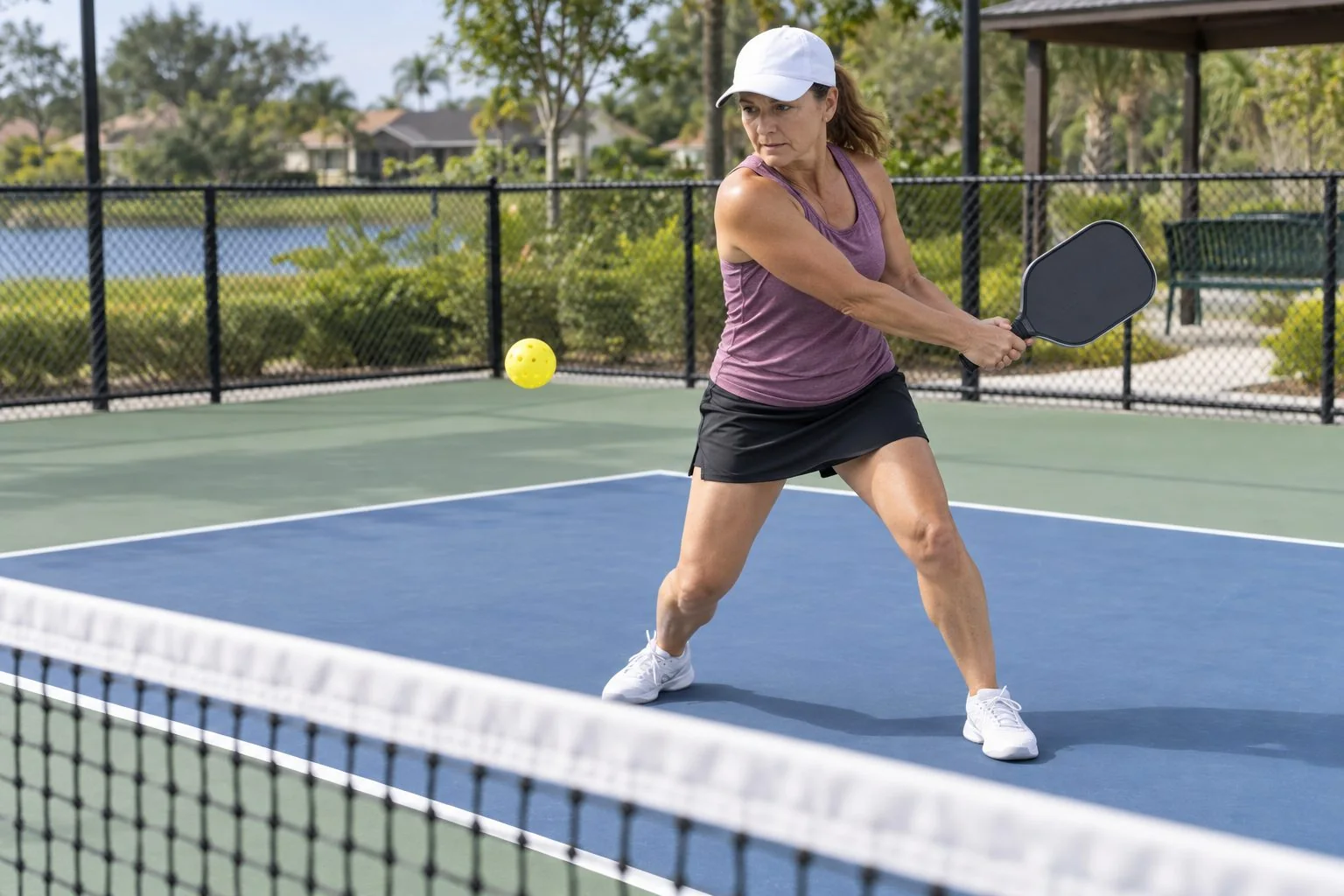
A reliable pickleball two-handed backhand is less about muscling the ball and more about arriving early, keeping the paddle in front, and using both hands as one connected unit. The extra stability is especially useful when a fast ball reaches your backhand side, but it only helps if your feet and contact point are organized first.
Build the setup before the swing
Start in a balanced ready position with the paddle in front of your torso. Your dominant hand stays lower on the handle and the other hand rests above it. Keep the grip firm enough to control the face, but not so tight that your shoulders and forearm become rigid. As soon as you read the ball to your backhand, turn your shoulders and hips together instead of pulling the paddle behind you with the arms.
The preparation should be compact. Take the paddle back only as far as your shoulder turn requires, then move your feet so the ball is in front of your body. A common error is waiting with the chest facing the net until the bounce is already rising. By then, the hands are late and the contact drifts beside the hip. Early preparation gives you time to choose a controlled drive, a block, or a softer reset.
At contact, let the upper hand contribute most of the forward acceleration while the lower hand guides the paddle path and direction. You do not need to roll the wrists aggressively. Keep the paddle face stable, meet the ball in front, and finish forward rather than wrapping into a large, theatrical backswing. If the ball is low, prioritize height and clearance over pace.
Move first, then decide how much to hit
The two-handed backhand cannot replace footwork. For a ball slightly outside your comfortable reach, use a small adjustment step before contact. For a wider ball, turn and move laterally so your torso can stay behind the hands. Reaching with locked elbows often produces a floating reply and leaves you leaning away from the next shot.
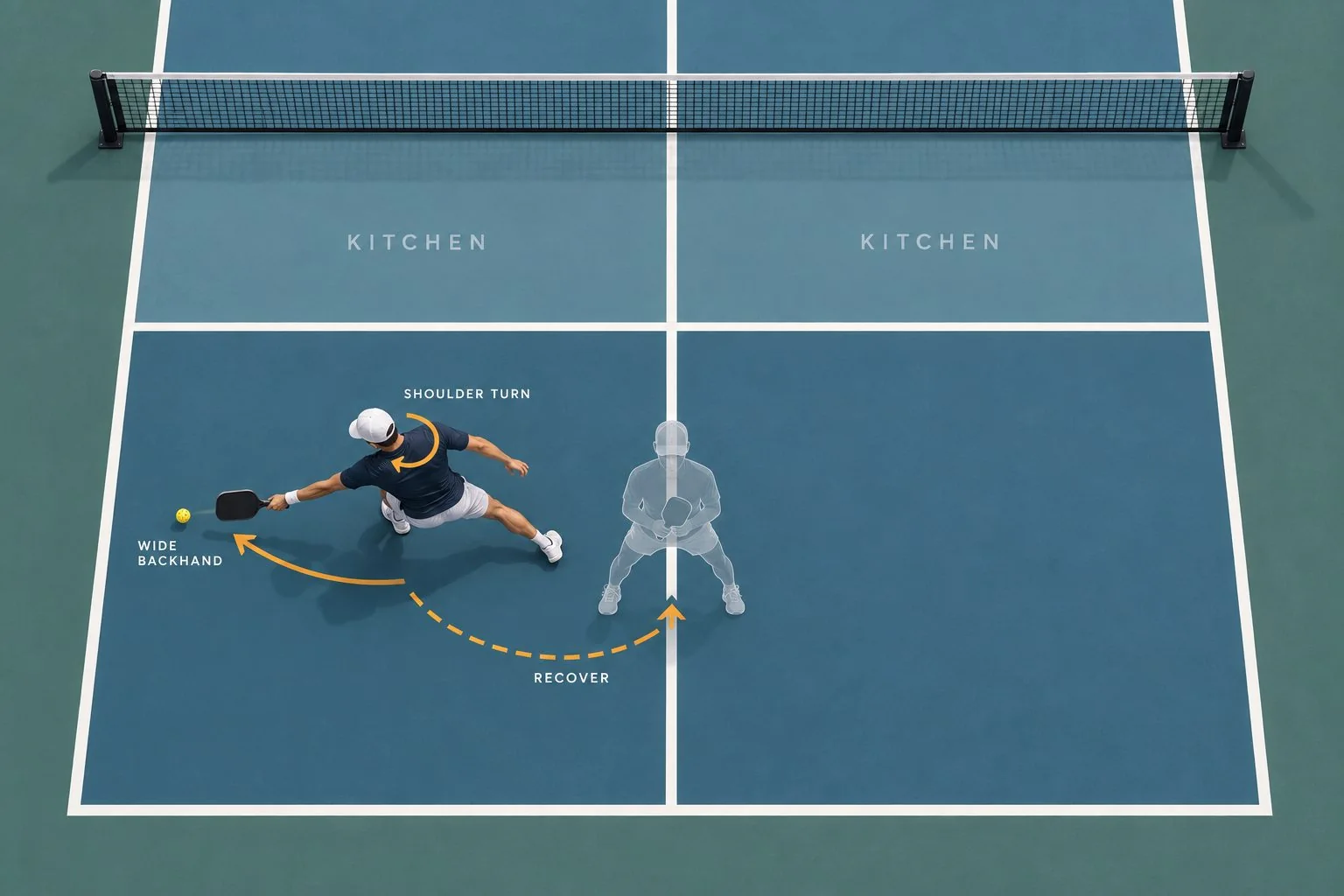
Use a simple decision check: are your feet balanced, is the ball in front, and can you see the target? If all three answers are yes, a compact drive or roll can apply pressure. If one answer is no, shorten the swing and play a block or reset. A two-handed backhand is valuable because it gives you a stable platform under pressure; it is not a reason to attack every ball.
After contact, recover the paddle to the front of your body and take the next small step toward your normal position. Do not admire a well-struck shot. In doubles, the reply may come quickly to your partner’s middle or back toward your feet. Finish balanced, keep your eyes up, and be ready to block the next ball.
A progression that makes the motion repeatable
Begin with shadow repetitions. Start in ready position, turn the shoulders, set the paddle, step toward an imaginary contact point, and freeze with the hands in front. Check that your head stays quiet and your weight is not falling backward. Ten slow repetitions with clean spacing are more useful than fifty rushed swings.
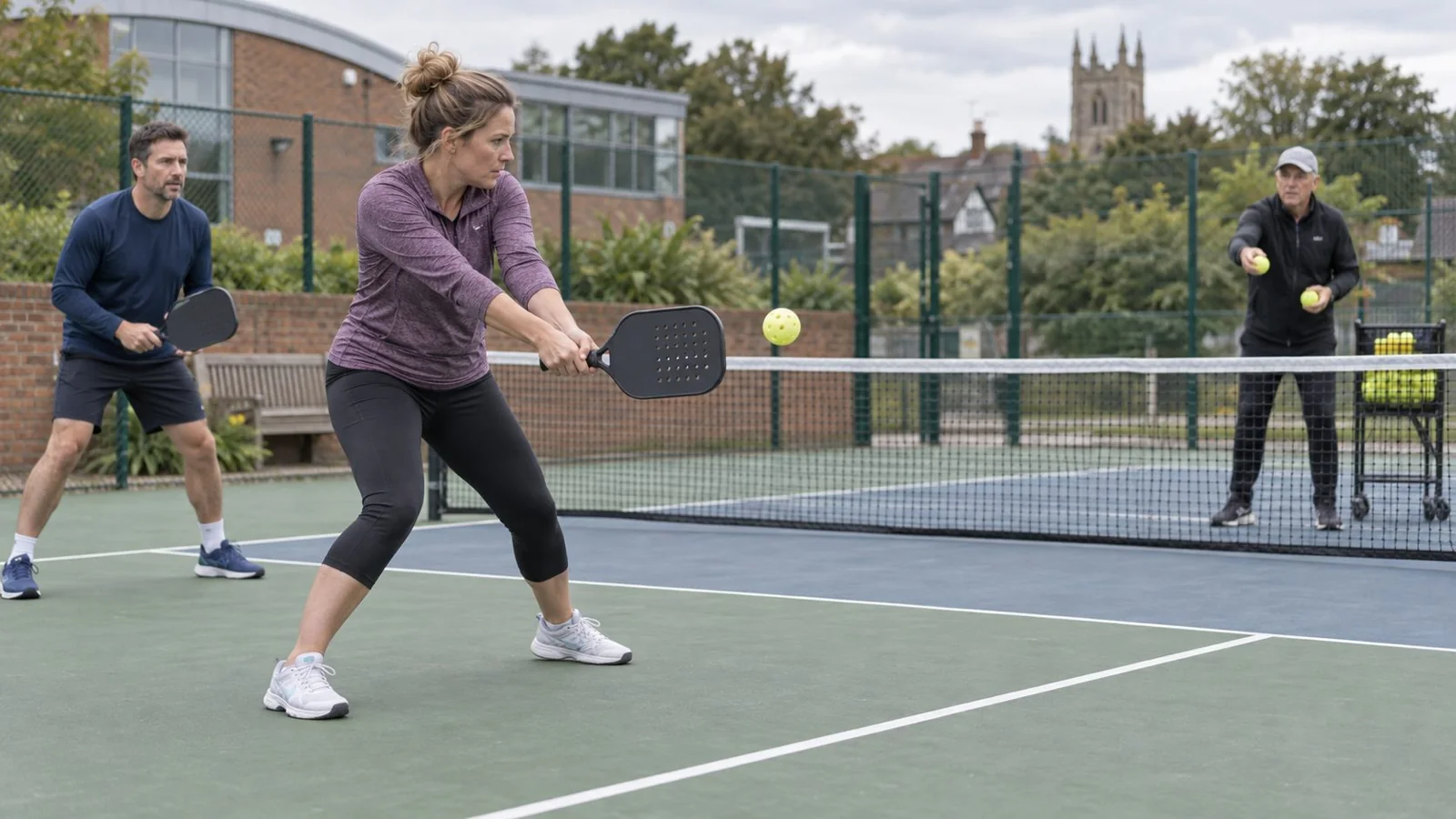
Next, ask a partner for gentle feeds to the backhand at one predictable height. Hit crosscourt with a controlled swing and count only balls that clear the net with room to spare. Then add movement: have the feeder alternate between a ball near the body and one that requires a lateral step. Call “drive,” “block,” or “reset” before contact so the exercise trains decisions as well as mechanics.
Finish with live points in which you judge the first backhand ball of each rally. Note whether the error came from late preparation, poor spacing, an open paddle face, or an overly ambitious target. That record tells you what to practice next. When the setup is early and the contact stays in front, the two-handed backhand becomes a calm, repeatable option instead of an emergency swing.