Pickleball Wind Strategy: Control Height, Depth, and Drift
A practical guide to adjusting pickleball height, depth, pace, and target zones in headwinds, tailwinds, and crosswinds.
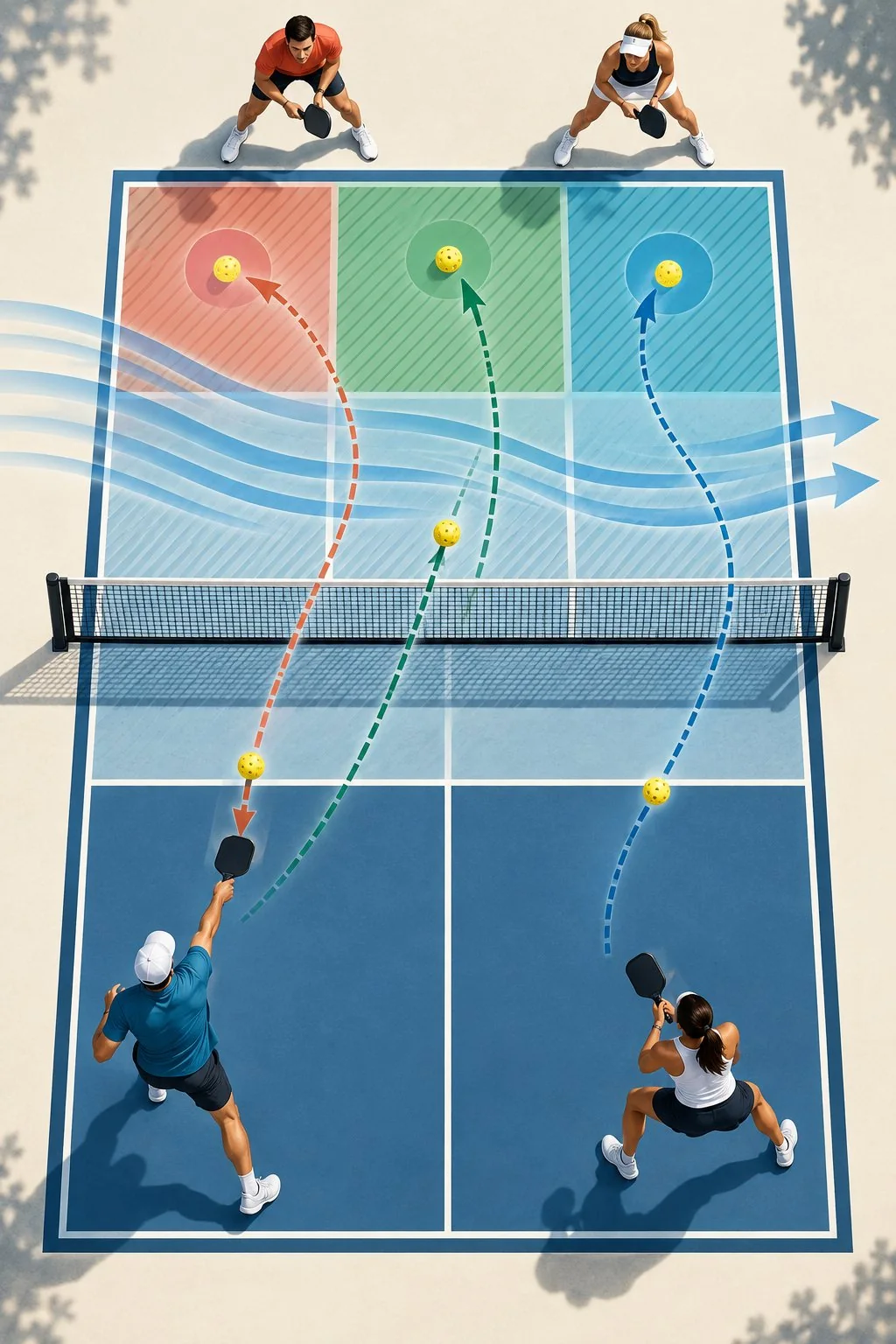
Wind does not require a completely different pickleball swing. It requires better decisions about margin, height, depth, and recovery. The same ball can land safely or drift wide depending on which direction the air is moving, so watch the flight and adjust rather than repeating a fixed stroke.
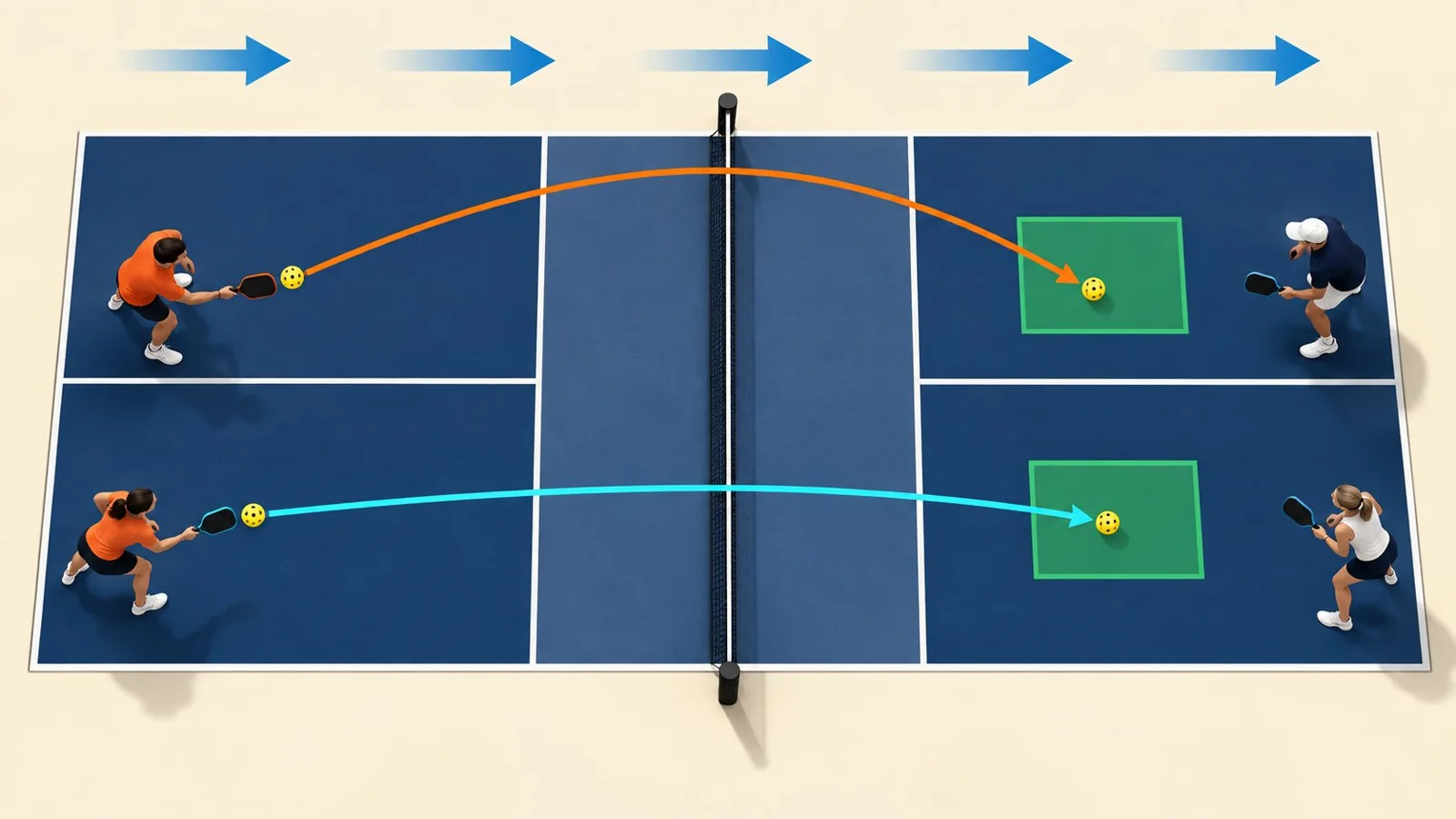
Read the wind before changing your swing
Start by identifying the direction and strength of the wind with a few simple balls. Watch whether a deep shot carries, stalls, bends sideways, or drops early. Use the net, fence, flags, and the ball itself as clues, but keep checking the flight after contact. Wind can feel different at the baseline and near the kitchen.
When hitting into the wind, the ball usually needs enough height and net clearance to avoid dying short. Add a controlled arc and aim farther inside the lines rather than swinging harder. Extra force can make the ball unstable and reduce your recovery time. When the wind is behind you, reduce the launch height and pace so the ball does not sail long. Protect depth by choosing a target with room before the baseline.
Adjust height, depth, and target together
Do not change only one variable. A higher ball into the wind may need a shorter target, while a lower ball with the wind may need more depth control. On drives and returns, keep a safe window over the net and aim through an inside corridor. On drops and dinks, use a softer contact and expect the ball to move after it leaves the paddle.
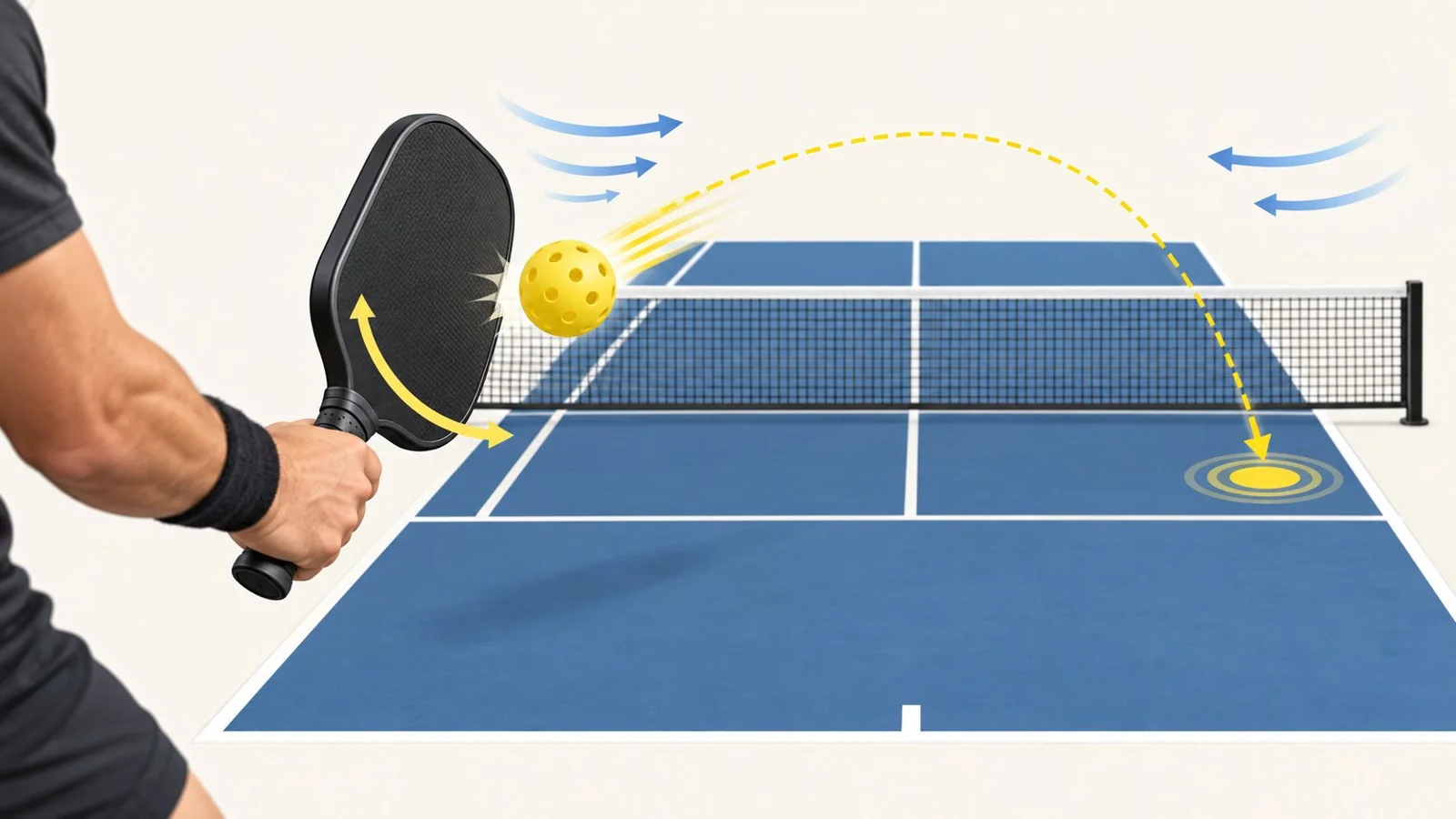
Crosswinds create a second problem: sideways drift. Aim away from the sideline that the wind is pushing toward, but do not chase the line. A target a little inside the court is often more useful than a perfect corner. In doubles, tell your partner early when a ball is drifting toward the middle or sideline so both players can move together.
Keep the contact and recovery organized
Wind exposes loose technique. Set your feet before contact, keep the paddle face stable, and avoid a large last-second wrist adjustment. If the ball moves across your body, take an adjustment step instead of reaching with the arm. Contact in front remains important, but the exact spot may move because the flight is less predictable.
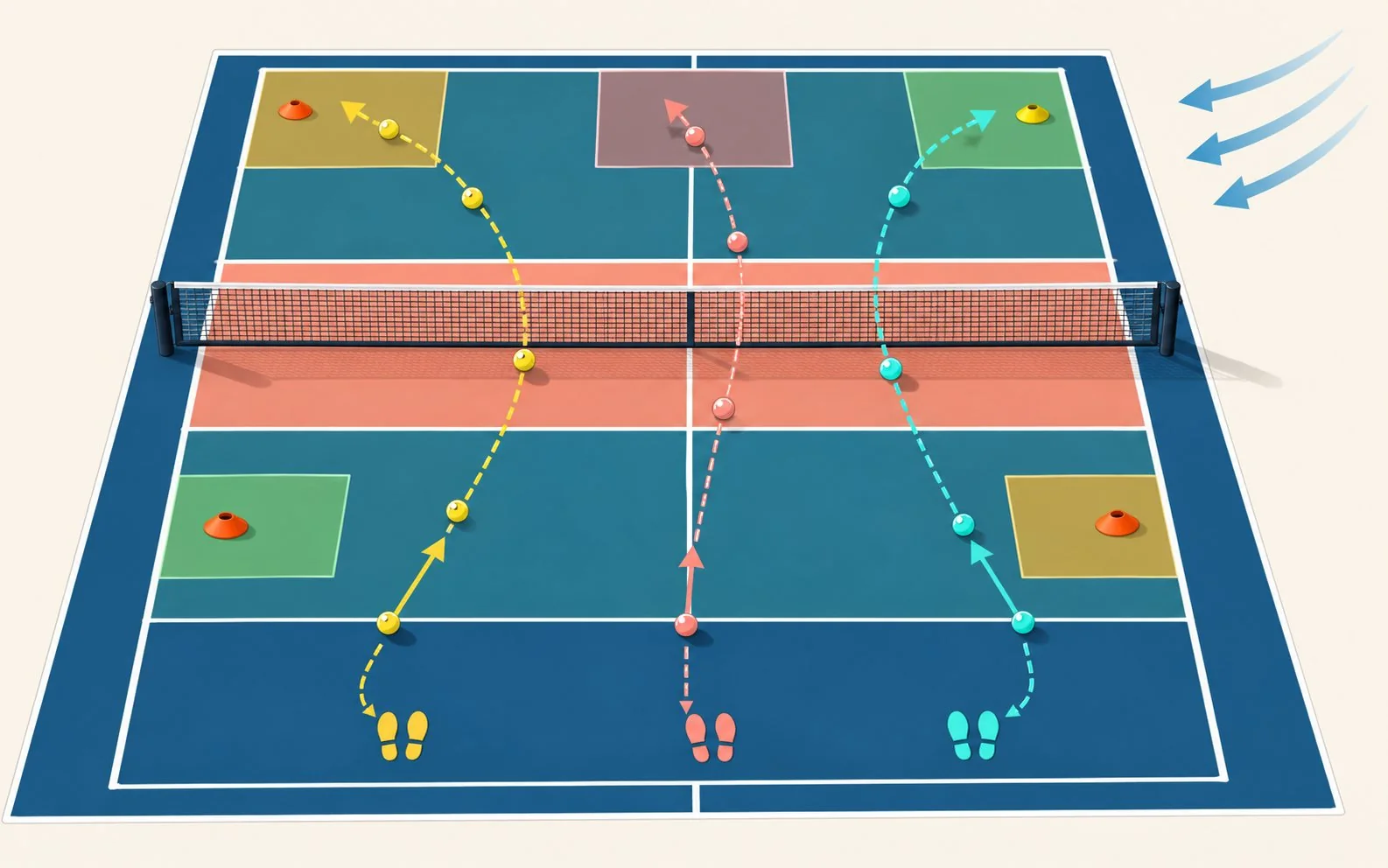
After every shot, recover as if the reply may arrive sooner or later than expected. A ball pushed by the wind can reach the opponent quickly, while a ball hit into the wind may give them more time. Return the paddle to ready position, regain your court responsibility, and do not admire a shot that looked good off the face.
Practice wind adjustments with simple constraints
Begin with three target zones: deep middle, deep corner with inside margin, and a shorter transition target. Hit ten balls in each direction and record whether they finished short, long, or wide. Do not change everything at once. First adjust height, then pace, then target position.
Next, practise a serve and return under the same crosswind. Use a repeatable pre-shot check: which way is the ball moving, where is the safe landing zone, and how much time will I have to recover? Add a partner only after you can keep the ball in play with a deliberate margin.
The most reliable wind game is patient rather than passive. Build a little extra space over the net, aim inside the boundaries, keep your contact balanced, and recover after the shot. When the air changes, change the plan—not the quality of your preparation.''