Two-Handed Backhand Block: Stable Defense Under Pressure
Build a steadier two-handed backhand block with a low paddle setup, compact contact, soft absorption, safer targets, and balanced recovery.
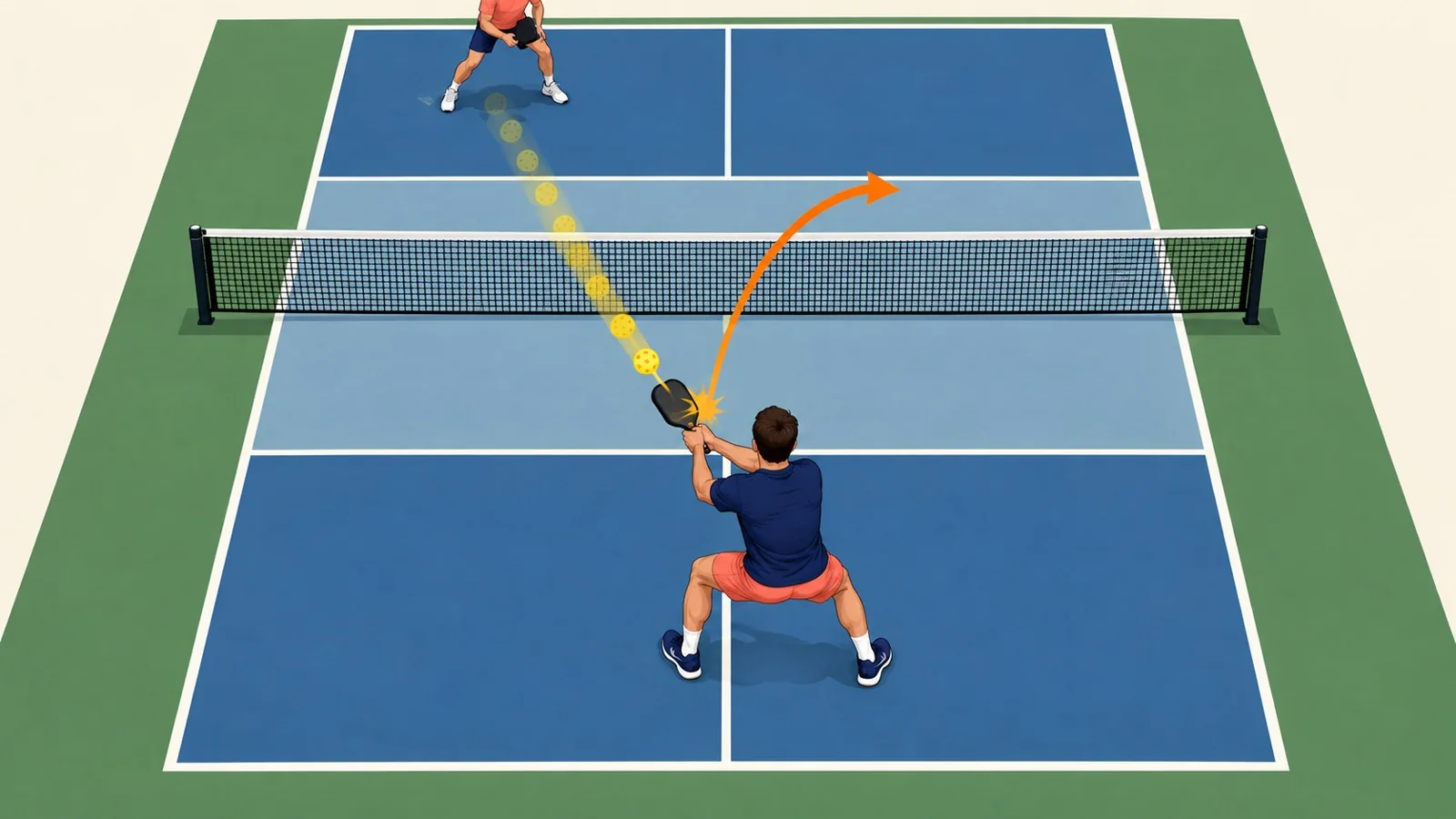
A fast ball in the transition zone can make a one-handed block feel unstable. A two-handed backhand block gives the paddle a quieter platform: both hands help hold the face steady while your knees and compact contact absorb pace. It is a defensive tool, not a desperate swing. The goal is to send back a manageable ball and recover before the next exchange.
Build the two-handed setup
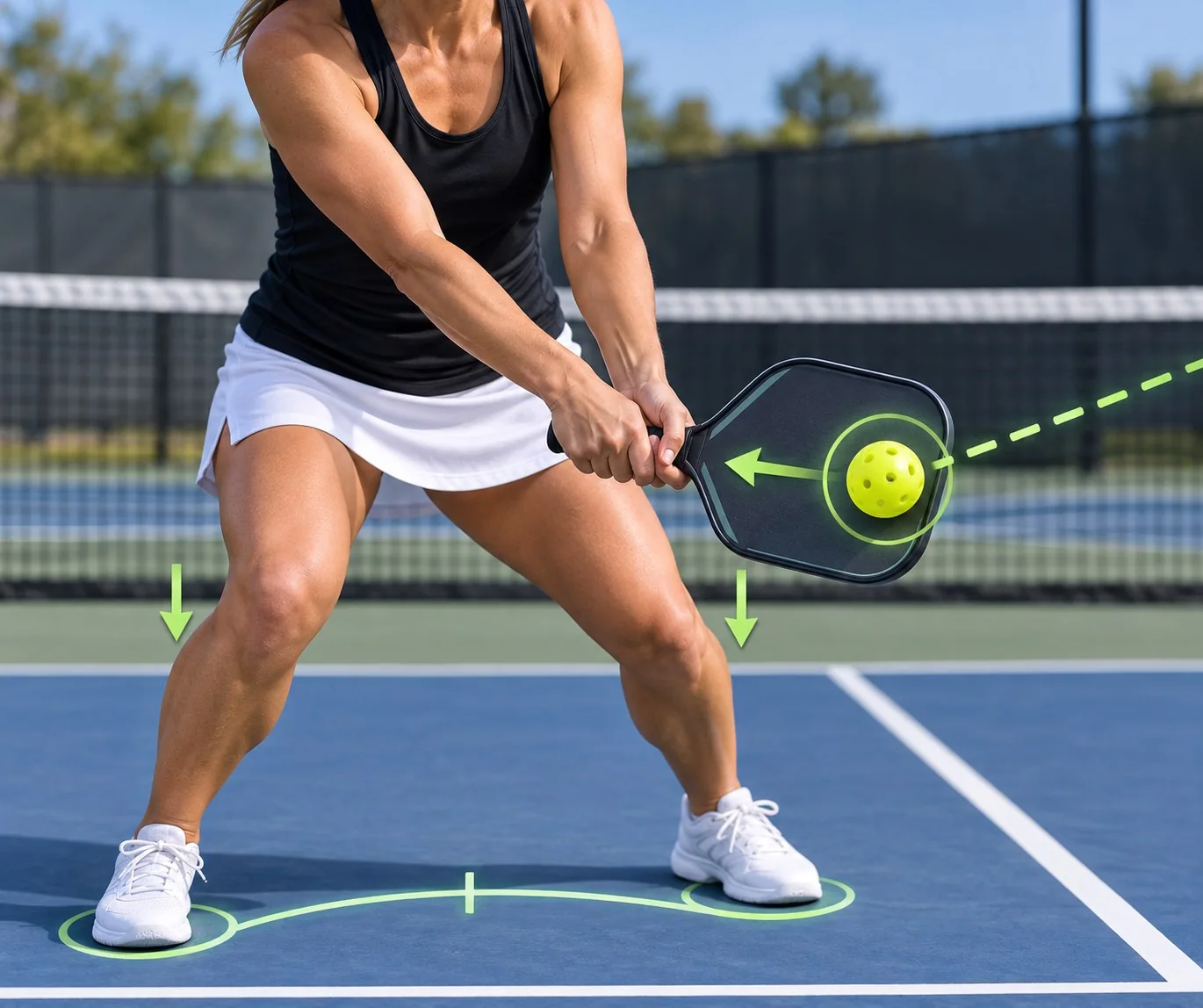
Start with the paddle low and in front of your body, not dangling beside your hip. Keep the knees bent and the weight balanced on the balls of the feet. A right-handed player places the left hand above the right, close to the paddle face, while the lower hand maintains the familiar continental-style support. Left-handed players reverse the arrangement.
The exact grip should feel secure without becoming rigid. If the hands squeeze too hard, the ball rebounds high and fast. Use enough pressure to keep the face from twisting, then allow the arms and paddle to yield slightly when the ball arrives. The low setup is especially useful when an opponent’s ball is dipping toward your feet.
Block the ball with compact contact
The two-handed block can be played from a volley or after a low bounce. In either case, keep the backswing extremely small. Let the paddle head remain below the ball’s level when necessary, then bring the face forward to meet the ball in front of the body. Do not scoop upward with a large arm motion; a slightly open, stable face creates a safer arc over the net.
Your hands should absorb the incoming pace rather than add another burst of speed. Think of the paddle as a quiet platform. The ball should travel low enough that the opponent cannot attack comfortably, ideally toward the kitchen or a difficult space near the feet. Watch the ball through contact and keep the shoulders quiet so the face does not wobble.
A two-handed block is most valuable against hard volleys or drives when a one-handed response feels late. It can also help a player who is still developing wrist stability. The trade-off is reach: both hands on the handle make it harder to cover a very wide ball or switch quickly to a forehand. Move your feet early instead of stretching the arms after the ball has passed your ideal contact point.
Recover after the block
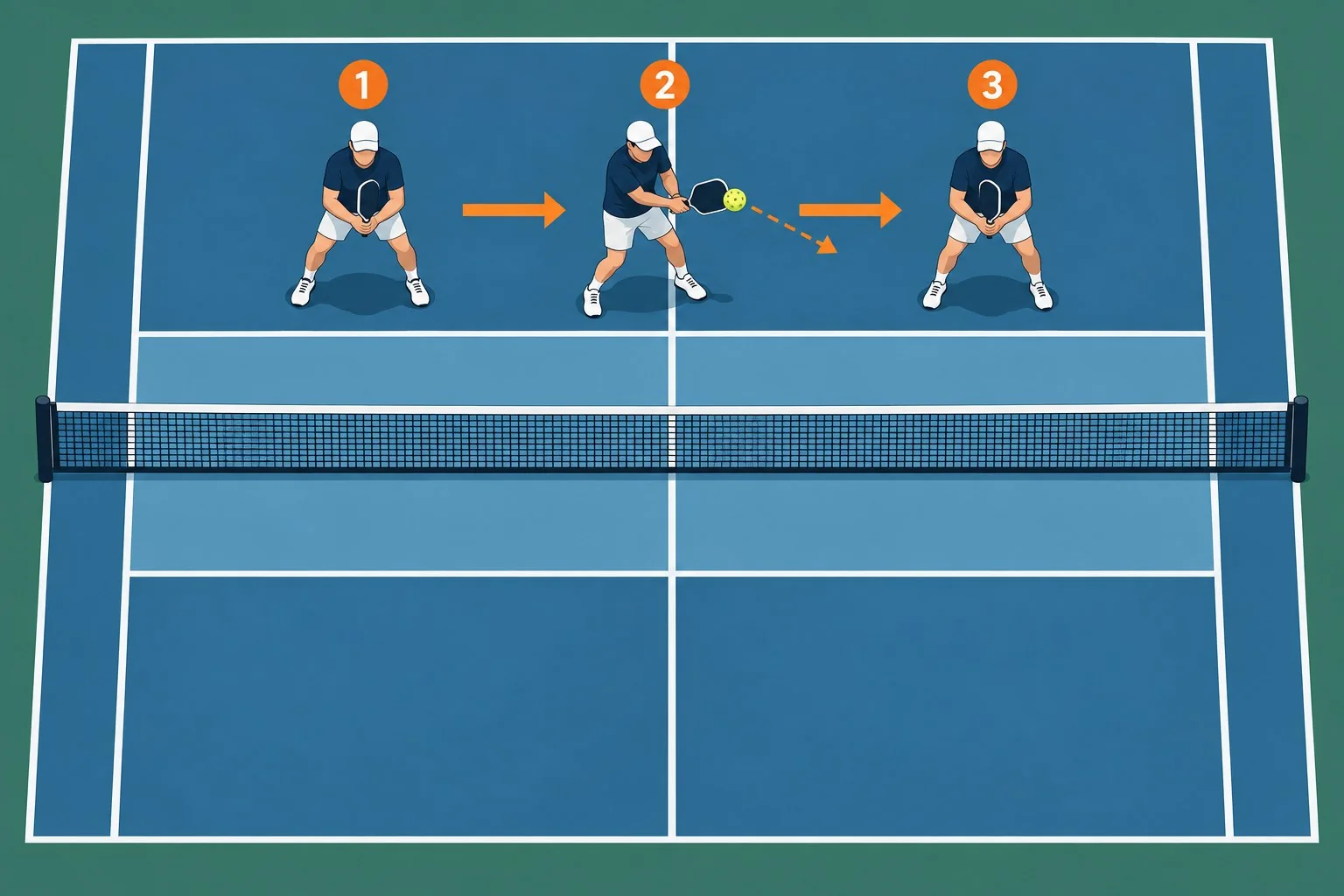
Do not admire the defensive shot. As soon as the ball leaves the paddle, return to a balanced ready position. Keep the base wide enough to change direction, release the non-dominant hand when a forehand or wide reach is required, and prepare for the opponent’s next choice. If your block lands high, hold your ground rather than charging forward; if it lands low and controlled, you may be able to improve your court position.
Practise the decision, not just the motion
Begin with controlled feeds to the body from the transition zone. Start with the paddle already low and two hands in place. Block ten balls while focusing only on a stable face and a low target, then repeat from the backhand side with a small lateral step. Progress to half-volleys after the basic contact feels reliable.
Next, have a partner alternate firm balls and softer balls. Use the two-handed block when the pace is heavy or the bounce is low; when the ball is slow and attackable, choose a more purposeful volley instead of automatically absorbing it. Finish with live points in which your partner speeds up only occasionally. After each rally, identify whether the error came from a late contact, an open face, excessive grip pressure, or poor recovery.
The shot becomes dependable when the setup, contact, and recovery form one sequence. Stay low, keep the paddle in front, use both hands to stabilize the face, and let the incoming pace do most of the work.